BABETTE: Hey Michel, I just hit F4 and the num lock key and the one with the little apple on it and it’s freaking out like it’s on acid or something.
MICHEL: Oy vey.
On acid, slang for taking the hallucinogenic drug LSD. (Babette seems to have hit the dashboard, the number lock, and the command key all at once, so the screen starts scrolling).
Oy vey, interjection used to express dismay, frustration, or grief. It is borrowed from Yiddish, loosely meaning “Oh woe is me”.
BABETTE: I love computers, I just know nothing about them. What does pushing that F3 button do? MICHEL: Annoy me to no end. BABETTE: What about the F4?
On a Mac, I think F3 is Mission Control, and F4 is Dashboard.
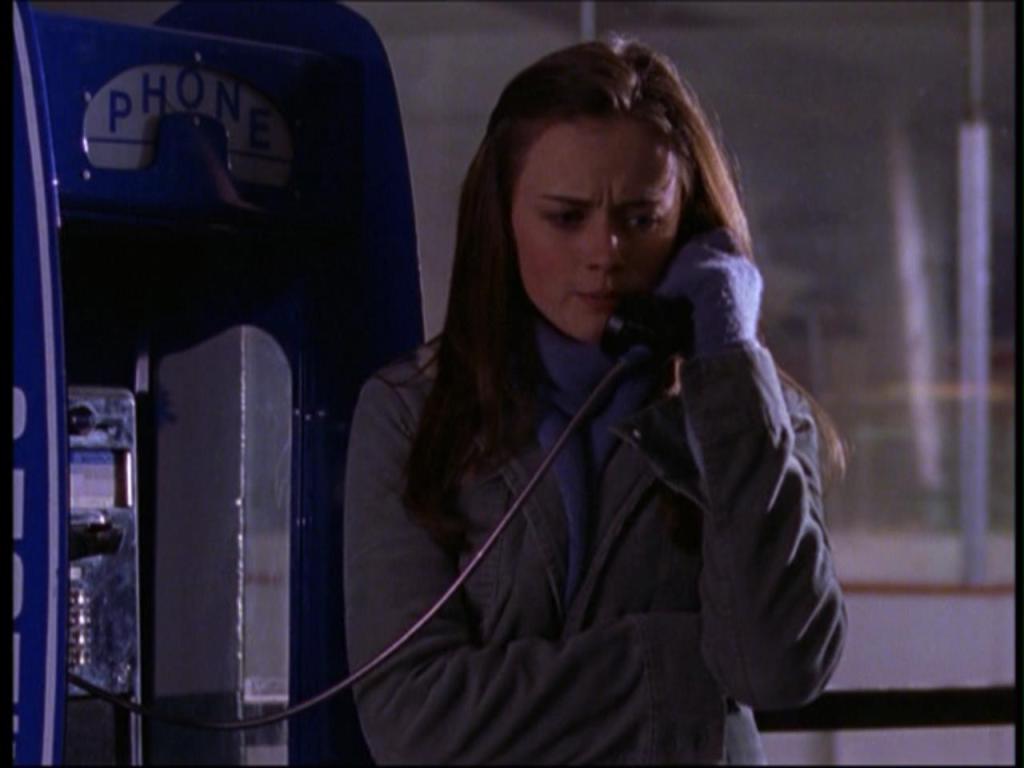
RORY: It’s me. I just wanted to let you know that this is the last weekend I spend sitting around like an idiot hoping you’ll call, okay? I’m not going to be that girl. From now on, I want a plan. I mean, a real plan with a time and a place, and I’m tired of hearing ‘Let’s hook up later.’ What does that mean anyway? What’s later? How do I set my watch to later? Later doesn’t cut it anymore, got it? And, yeah, you know, maybe I am spoiled. But guess what? I like being spoiled. I plan to go on being spoiled. And if that doesn’t sound like something that you can or want to do, then fine. I’m sure you’ll find another girl who doesn’t mind sitting around cleaning her keyboard on a Friday night hoping you’ll call, but it’s not going to be me. Oh, yeah, this is a message for Jess.
Having seen Dean with a new girlfriend, one who he is just about to take out on a date after the hockey game, Rory seriously loses it with Jess and leaves him a long ranting message. Finally, she is being honest with him! (Albeit by phone message).
Unfortunately, when Jess turns up with concert tickets, Rory asks him to please erase his phone messages without listening to them. (Er, hey, some of those messages could’ve been for Luke, or something really important …). In other words, she caved in as soon as he made that grand gesture, the one Lorelai warned her not to instantly cave in to the moment Jess made it.
And Rory made the call on a pay phone, even though she’s been seen using a cell phone in this season. Does Rory have a cell phone or not?
LANE: Yeah, yeah, Dave. Christians can still rock, don’t hide it. ZACH: Marshall stacks don’t know Christians from atheists. DAVE: Gosh, I just wasn’t sure if you guys would be accepting of my devoutness.
Marshall, British company that designs and manufactures music amplifiers, speakers, headphones and earphones, drums and bongos. The company also owns a record label called Marshall Records. It was founded in London in 1962 by drum shop owner and drummer, Jim Marshall, and is now based in Milton Keynes, England.
Their amplifiers are known as Marshall stacks, due to their size. Iconic in rock and roll, famous customers of Marshall include The Who, Eric Clapton, Jimi Hendrix, and John Mayall.
When Zach and Brian realise that Dave has been moonlighting as a Christian guitarist for Lane’s mother, they comically miss the point, and decide that Dave has been hiding a secret from them – that he’s a devout Christian. They immediately assure Dave that his religion makes no difference to how they feel about him, and he had no reason to hide it from them.
ZACH: Man, this crunch just now sounded like the drum-fill in “Baba O’Riley”.
“Baba O’Riley”, a song by English rock band the Who, and the opening track to their 1971 album Who’s Next. Written by Pete Townsend, the song refers to his two major inspirations of the time: Indian spiritual master Meher Baba, and American jazz composer Terry Riley.
It was a Top 20 hit in The Netherlands, and a minor hit in Australia. It is considered one of the greatest rock songs of all time, has been highly influential, and is often used in film and television themes and soundtracks.
Keith Moon’s drum fill on the song has a bass pulse underneath while his hands remain busy on the snare drums and toms, in a jazz/swing inspired style. It’s considered a showcase for his signature style.
Crunch refers to a setting when mixing tracks – “crunch” will bring up the high and mid frequencies to add presence to claps, snares, and cymbals.
NURSE: No, you cannot hit me. LORELAI: Can I bite you or pull your hair or use the Epilady on you, ’cause I really need to do something?
Epilady was the brand name of the first epilator, an electrical device used to remove hair by mechanically grasping multiple hairs simultaneously and pulling them out. It was released in Israel in 1986, manufactured by Mepro on a kibbutz.
They were notoriously painful to use, sometimes likened to torture devices, so Lorelai thinks of it as something painful she can use on the nurse to take her mind off her labour pains, like biting her or pulling her hair.
Obviously this flashback can’t have actually happened, because it is October 1984, and the Epilady hadn’t been invented yet. Perhaps it is a false memory. (If so, can we really trust any of the flashbacks?).
At the eleventh hour, Christopher arrives at the hospital, after being out of town for some mysterious reason, in an area where he couldn’t get cell phone reception for some mysterious reason. Where was he, the middle of the woods? Maybe cell phone coverage was a lot more patchy in the US during the early 2000s?
It is a relief for Rory and Lorelai to see him, because otherwise it would have been them going in with Sherry to watch the birth. It seems almost superhuman of Lorelai to offer to accompany Sherry into the delivery room, when she doesn’t like Sherry, and resents her for being the reason things didn’t work out between she and Christopher.
But as Lorelai told Emily – she wasn’t going to do it for Sherry, but for Rory. Luckily, she never has to do it, but it must bring Rory comfort to know her mother was ready to be there for her is she wanted her.
LORELAI: What are you doing? RORY: Xeroxing … Sherry had some status reports she promised to fax to people by tomorrow but she didn’t bring enough, and so I’ve been trying to find a Xerox machine. I finally conned someone in ICU into letting me use theirs. I haven’t found a fax machine yet, but –
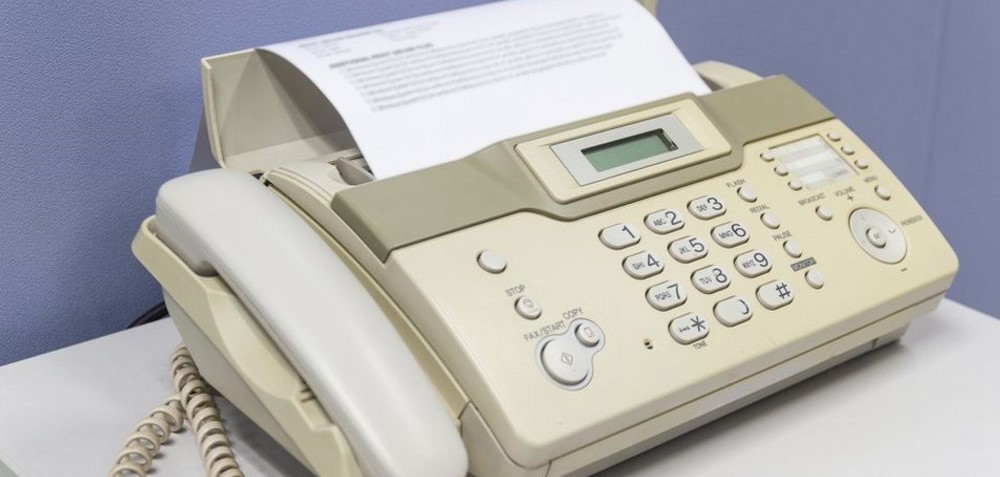
Fax [pictured], short for facsimile, is the telephonic transmission of scanned printed material (both text and images), normally to a telephone number connected to a printer or other output device. The original document is scanned with a fax machine, which processes the contents (text or images) as a single fixed graphic image, converting it into a bitmap, and then transmitting it through the telephone system in the form of audio-frequency tones. The receiving fax machine interprets the tones and reconstructs the image, printing a paper copy. First in use in 1865, before the invention of the telephone (it used telegraph), fax machines were ubiquitous in offices in the 1980s and 1990s, but have gradually been rendered almost obsolete by email and the internet.
This particular winning anecdote is a complete nonsense – Rory wouldn’t need to make multiple copies of the document in order to fax it to multiple people. The fax machine would only need one document, and she just needs to find one of those. They are commonly used in hospitals, even today.
However, in true overly entitled Gilmore style, Rory has no compunction about going into the intensive care unit to demand use of their Xerox machine. At night! The Emily is strong in this one.
EMILY: I don’t need a DVD player. LORELAI: Well, why not? Then you could buy all those musicals you love and watch them whenever you felt like it.
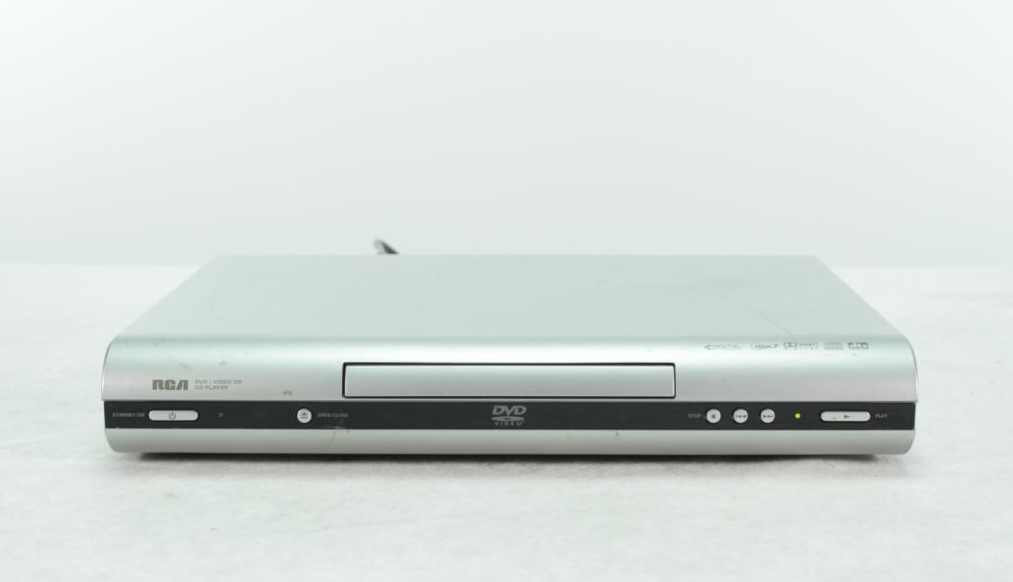
DVD player, a machine for playing DVD (Digital Video Disc or Digital Versatile Disc) digital optical discs. They first became available in the US in 1997, and by the middle of 2003, DVD rentals outsold video rentals for the first time.





 The Annotated Gilmore Girls