EMILY: You have to take your father …Tomorrow, for the whole day, just take him. LORELAI: Take him where? EMILY: I don’t care – the zoo, the mall, Rhode Island, just get him out of my house!
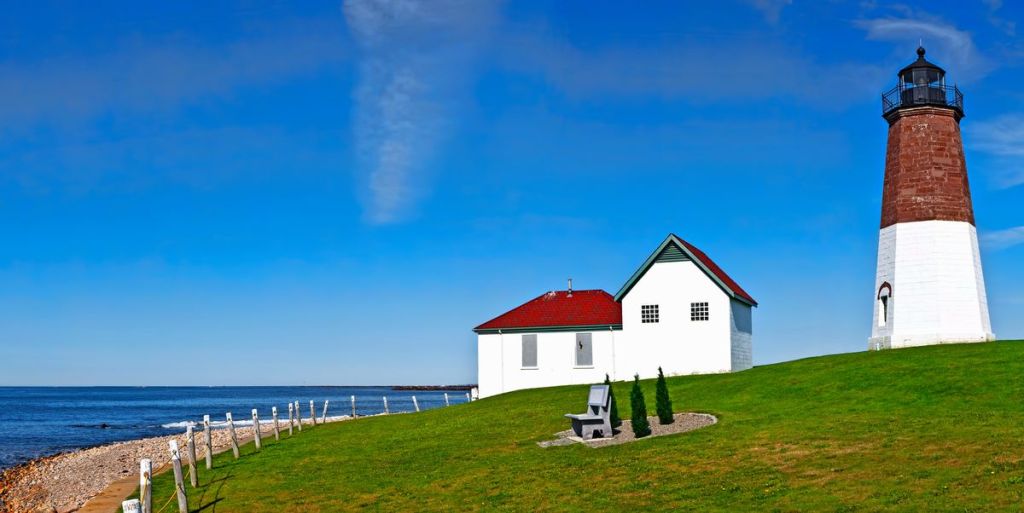
Rhode Island is a state in New England, the smallest state in the US. It takes its name from an island in Narragansett Bay, although most of the state is actually on the mainland. There are many beachside towns here, making it a common place for people to come for vacations, and there is a strong maritime culture. It would take about 90 minutes to drive to Rhode Island from Hartford.
The mention of Rhode Island may be a nod to animated sitcom Family Guy, which is set in Rhode Island, and which Daniel Palladino worked on.
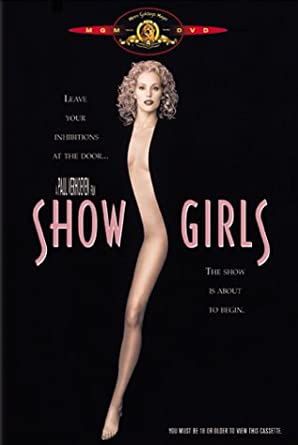
RORY: Hey Kirk, there are a couple of little kids over there and they’re, uh, looking at this tape cover that’s kind of mature. You might wanna put that stuff on a higher shelf or something. KIRK: Mature? How mature? RORY: Uh, it’s a half-naked woman just standing there. KIRK: Is she a blonde?
The video that the boys are looking is Showgirls, a 1995 erotic drama directed by Paul Verhoeven and starring Elizabeth Berkley and Kyle MacLachlan (who played Dale Cooper in the 1990-91 David Lynch television series, Twin Peaks, a secret touchstone for Gilmore Girls). Showgirls is a about a street-smart drifter who goes to Las Vegas and climbs the seedy ladder from stripper to showgirl.
It was the first, and so far, only, NC-17 film given wide release in mainstream cinemas. Critically panned, it was a box office bomb, but a success on the home video market, despite being named as one of the worst films ever made. It’s often cited as a guilty pleasure, a camp classic, or a “so bad it’s good” film. It was made into a stage musical in 2013. (Amy Sherman-Palladino commented on the film Glitter, “It was no Showgirls“.) Some critics now believe it is a brilliant satire.
The video is correctly catalogued under Drama by the video store, and Showgirls was cut to an R rating for video store rentals. R rated videos were not kept in a separate section from other films, so Rory comes across as more of a meddlesome prude than a concerned citizen. The cover doesn’t actually show anything very salacious – just a leg and a tiny bit of side boob.
RORY: Ooh, we could do a Ruth Gordon film festival. Harold and Maude, Rosemary’s Baby, and that really great episode of Taxi.
Ruth Gordon Jones (1896-1985), actress, screenwriter, and playwright. She was known for her nasal voice and distinctive personality, and became most successful in later life, being chosen for major screen roles in her 70s and 80s, and winning several awards. She seems to be a favourite of Rory.
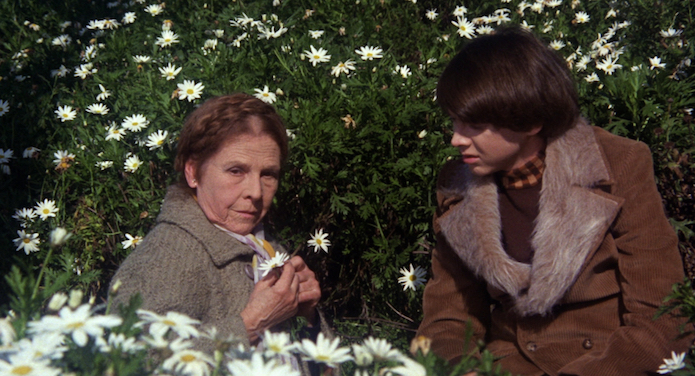
Harold and Maude [pictured], 1971 coming-of-age dark comedy/existentialist drama. Directed by Hal Ashby and written by Colin Higgins, it follows the exploits of Harold (played by Bud Cort), a 19-year-old from a wealthy but emotionally cold family who is obsessed with death. He develops a friendship, later a romance, with 79-year-old Maude (Ruth Gordon), a Holocaust survivor who teaches him about living life to the fullest. It initially received mixed reviews, but became a runaway cult favourite, and is now regarded as one of the best comedies, best romances, and greatest films of all time. Colin Higgins adapted the screenplay into a novel, then a stage play.
Rosemary’s Baby, previously discussed. For this film she won the Academy Award for Best Supporting Actress, as well as a Golden Globe Award and a Kansas City Film Critics Circle Award.
Taxi, award-winning sitcom which aired from 1978 to 1983, focusing on the lives of the employees of the fictional Sunshine Cab Company in Manhattan. Ruth Gordon made a guest appearance in the 1979 episode Sugar Mama, playing a woman who tries to solicit one of the taxi drivers as a male escort. She won an Emmy Award for Outstanding Lead Actress in a Comedy Series.
PARIS: The Oppenheimer Award for Excellence in school journalism is not a contest. It’s a statement. It says you’re the best. The best writers, the best reporters, the best editors. It says that you have crushed all others who have dared to take you on. It says that every other single school in the United States of America is feeling nothing but shame and defeat and pain because of the people who won the Oppenheimer plaque. I wanna be those people, I wanna cause that pain.
The Oppenheimer Award for Excellence seems to have been named in honour of Jess Oppenheimer (1913-1988) [pictured], the creator, producer, and head writer of the sitcomI Love Lucy, starring Lucille Ball. Lucille Ball called him “the brains” behind Lucy, and he was the creative driving force of the show. (Jess may also be named after Oppenheimer!).
In real life, there are the National Pacemaker Awards in student journalism, which has a category for high school newspapers. They are administered by the National Scholastic Press Association. Founded in 1927, they are the student equivalent of the Pulitzer Prizes, and for that category the deadline is in June. There is no plaque handed out as a prize.
We never discover whether The Franklin won the award, but it is never mentioned again, suggesting that it didn’t.
EMILY: You did not see me twitching. LORELAI: Mom, when Dad was talking about the vase, you were pulling a full-on Tabitha.
A reference to the sitcom Bewitched, broadcast 1964-1972, and continuously televised in syndication since then. It stars Elizabeth Montgomery as Samantha, a witch married to a mortal named Darrin, who vows to lead the life of an ordinary suburban housewife. However, her disapproving family often meddle in their lives, forcing Samantha to use her magic to fix the situations they get them into it.
Popular for its snappy dialogue, great cast, and special effects, it offered a critique of women’s roles as well as providing an example of a happy and successful mixed marriage during the era of segregation. Many episodes touch on issues around prejudice against race and religion, and it can also be read as an allegory of closeted homosexuality, or anyone unable to be their real self. Samantha’s meddling mother Endora, played by Agnes Moorehead, is not a million miles away from Emily herself.
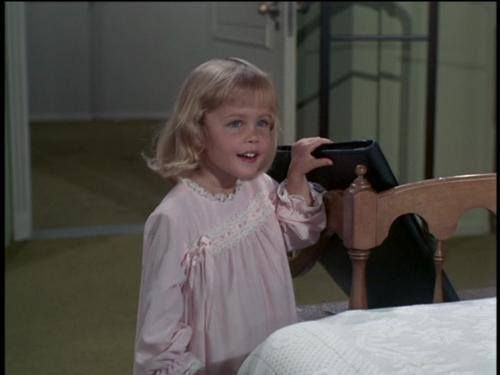
Tabitha is the daughter and eldest child of Samantha and Darrin, who went from a baby to a toddler, then a young child during the series run. She has supernatural powers, and could perform magic by twitching her nose (like her mother). Her parents would tell her, “Mustn’t twitch”, in an effort to teach her to control her magic.
Unlike with other references that Emily doesn’t get, she knows who Tabitha is. Perhaps she and Lorelai even watched it together during Lorelai’s childhood.
LORELAI: I swear, one of these days, Alice. Pow! Right to the moon. EMILY: What on earth are you talking about? Who’s Alice?
Lorelai references the television series The Honeymooners, originally broadcast from 1955 to 1956, and based on comedy sketches from Jackie Gleason’s variety show. The sitcom revolved around the Kramdens, a working-class couple in Brooklyn, and their marital spats (they’d actually been married over a decade, so weren’t literally on their honeymoon).
During their arguments, short-tempered bus driver Ralph Kramden (played by Jackie Gleason) would make empty threats of domestic violence to his more level-headed wife Alice (played by Audrey Meadows), such as “One of these days, POW! Right in the kisser”, or “You’re going to the moon!”. Alice was never fazed by these threats, and would reply, “Ah, shaddap”. A hint that Lorelai’s threats to Emily are equally empty.
The Honeymooners has been shown continuously since its cancellation due to syndication, and has an iconic status as a highly-popular television show which embodies postwar ideals and working-class masculinity. It’s been referenced in other shows numerous times, and been an inspiration for others, most notably The Flintstones. NASA named its infrared imaging instrument on the New Horizons space probe after Ralph Kramden, in parallel to the Alice instrument used on the Rosetta (not named after Alice Kramden, but an acronym).
LORELAI: So, let me get this straight. Uh, you and some guys who actually know what they’re doing are gonna come over and fix my house, and I can pay them back whenever I want? LUKE: That’s right. LORELAI: ‘Cause I’m Tony Soprano?
Tony Soprano (played by James Gandolfini) is the central protagonist of the crime drama television series The Sopranos, shown on HBO from 1999 to 2007 (a similar run to Gilmore Girls, oddly enough). Tony becomes the head of the DiMeo crime family, and is the patriarch of the Soprano household.
The Sopranos was a ratings success, despite being on a premium cable service, and was hailed by many critics as the greatest and most ground-breaking television series of all time, with writing, acting, and directing all singled out for praise. It has won numerous awards, and is regarded as extremely influential on the development of television drama as an art form. A prequel film set in the 1960s and ’70s called The Many Saints of Newark was released this year.
As Lorelai loves the Godfather films, it makes sense she would enjoy The Sopranos as well.
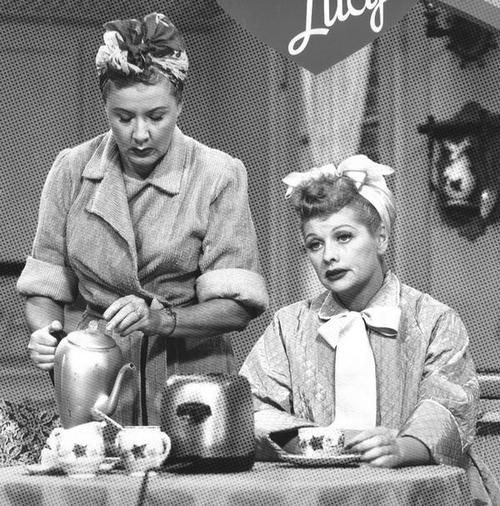
LORELAI: Leave the pot, Ethel. LUKE: I’m just an enabler.
Lorelai is referencing Ethel Mertz, from the television show, I Love Lucy, previously and frequently discussed. In the show, Lucy often had coffee with her best friend Ethel, and here Lorelai implies that Luke is her best friend – as long as he has coffee to enable her caffeine addiction.
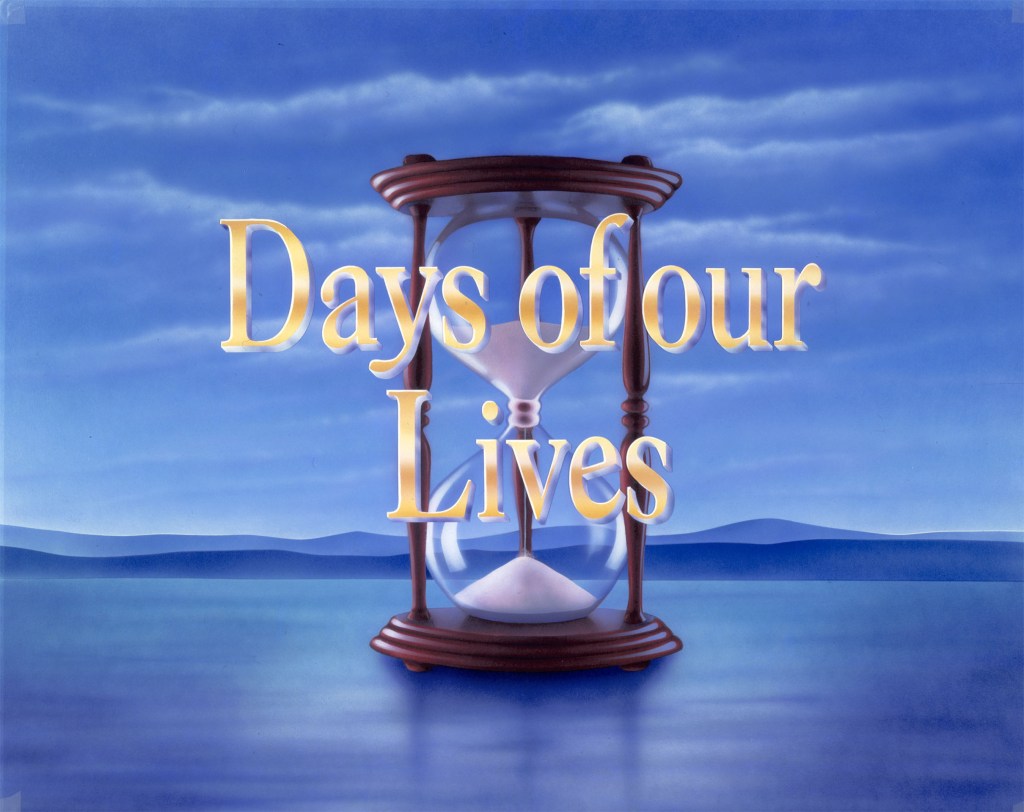
LORELAI: Like sands through the hourglass, so are the Gilmores of our lives.
Lorelai references Days of Our Lives, a very long-running television soap opera which first aired in 1965. The title sequence shows an hourglass with sand trickling through it, while the voiceover says, “Like sands through the hourglass, so are the days of our lives”.
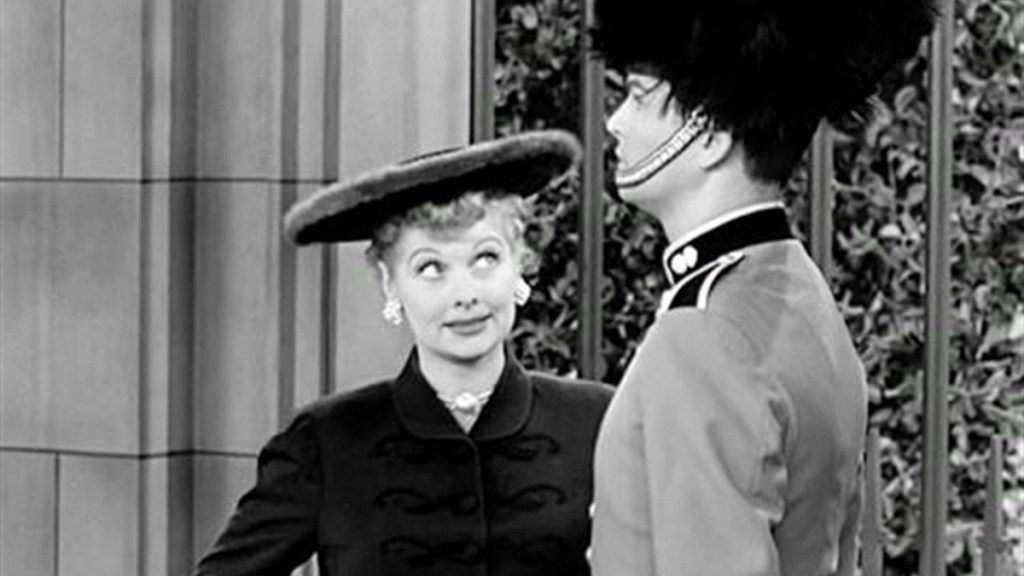
LORELAI: Hey, did you ever see that I Love Lucy where she goes to Buckingham Palace? RORY: Mom. LORELAI: She tries to get the palace guard to break character. That was a funny one.
Buckingham Palace is the official residence of the monarch of the UK, located in the City of Westminster, the centre of London. It was originally a townhouse built for the Duke of Buckingham in 1703, and acquired by King George III in 1761. It was enlarged during the 19th century, and became the monarch’s official home on the accession of Queen Victoria in 1837. Used for state functions and extending hospitality to visiting world leaders, it has been a focal point for the British at times of national rejoicing and mourning.
I Love Lucy, previously discussed and frequently mentioned. The episode Lorelai is talking about is Lucy Meets the Queen (1956), set during the season when Ricky is on his tour of Europe, and Lucy is accompanying him. Lucy visits Buckingham Palace as a tourist, and tries to make one of the Queen’s Guard outside the palace laugh by cracking jokes. The guards at Buckingham Place are famous for remaining stony-faced on duty – they are meant to be fined £200 if they don’t. They will sometimes smile and pose for pictures with polite, respectful tourists, especially children.



 The Annotated Gilmore Girls