Janet Jackson and Celine Dion

LORELAI: Hey, where were you after you broke off from the group?
MICHEL: Oh, I sat at a table with Janet Jackson and Celine Dion. Very nice guys.

Janet Jackson (born 1966) [pictured] is an American singer, songwriter, dancer, and actress who has been a prominent figure in popular culture for thirty years. The youngest of the famous Jackson family, she began her career on The Jacksons variety show in 1976, and appeared on other television shows in the 1970s and ’80s, including Fame, previously mentioned. After signing a record contract in 1982, she became a pop icon in the second half of the 1980s, and a sex symbol in the 1990s; she was one of the biggest recording artists of the 1990s. One of the best-selling musical artists, she holds the record for the most consecutive entries in the US Top Ten singles chart by a female artist, at 18. A long-time supporter of LGBT rights, she received special praise for her 1997 album The Velvet Rope, which spoke out against homophobia and embraced same-sex love. The albums’s second single, Together Again, is a tribute to the loved ones Jackson lost to AIDS, with a portion of sales going to AIDS research. She has received several awards for her charity work on behalf of AIDS education, and suicide prevention among gay youth. She is currently working on a documentary about transgender people.

Celine Dion (born 1968) is a Canadian singer. First becoming a star in the French-speaking world as a teenager, she gained international recognition in the 1980s when she won the 1982 Yamaha World Popular Song Festival, and the 1988 Eurovision Song Contest, where she represented Switzerland. In 1990, she released her first English-language album, Unison, establishing her as a star in North America and the rest of the English-speaking world. She has had several #1 hits, including My Heart Will Go On, and The Power of Love, and has won five Grammy Awards; Dion is the best-selling Canadian musical artist. She is a resident performer in Las Vegas, and is the highest-paid, receiving $500 000 per show. Michel getting along well with a drag queen dressed as Celine Dion seems to be the beginning of his obsession with the singer. Although Celine Dion does have a gay following, her inclusion seems to be in tribute to Yanic Truesdale, who plays Michel, as they are both French-Canadians.
Get Happy

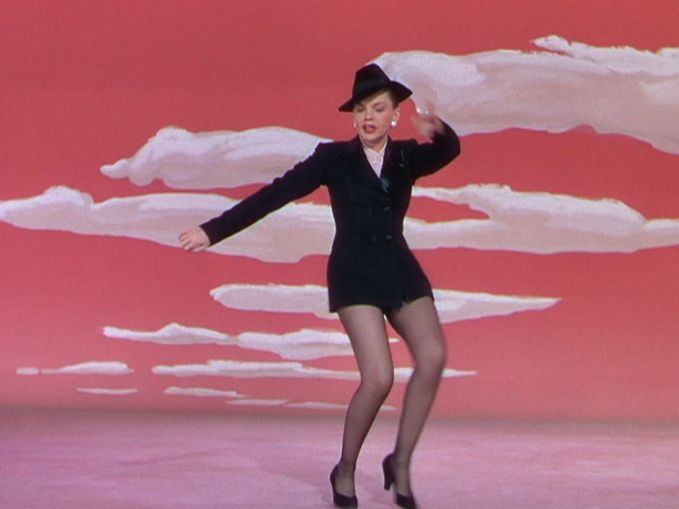
When the company enters the bar for Lorelai’s bachelorette party, a drag queen dressed as Judy Garland is lip-synching on stage to this song.

Get Happy is a song written by Harold Arlen, with lyrics by Ted Koehler; the lyrics mimic gospel and evangelical songs. It was first performed by Ruth Etting in the 1930 Broadway show Nine-Fifteen Revue, and although the musical was a disastrous flop, Get Happy was successful and recorded several times, including by both Benny Goodman and Charlie Parker.

Judy Garland sang the song in the 1950 musical film Summer Stock, her last movie for MGM. In a let’s-put-on-a-show plotline, Garland performs the number wearing a tuxedo jacket, fedora, and stockings and high heels in the movie’s most iconic scene, often copied by other singers and dancers.

Judy Garland had been a gay icon since The Wizard of Oz became popular TV viewing, so having this song playing as they enter is a stereotypical way to signal it’s a gay club.

“Poor Jan”

MAX: We’re coming out of the restaurant and we’re heading toward our next stop when my brother decides to leap frog over a parking meter.
LORELAI: Why did he do that?
MAX: Middle child.
LORELAI: Poor Jan.

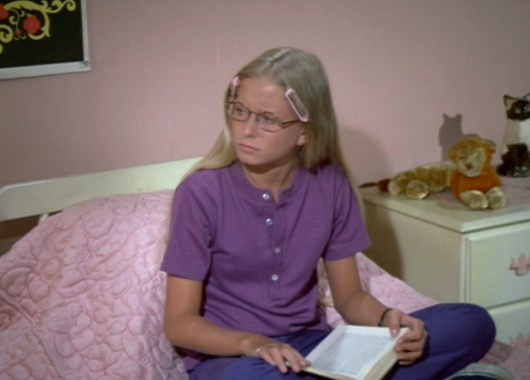
Lorelai is referring to Jan Brady, played by Eve Plumb, a character from the sitcom The Brady Bunch, which showed the daily lives of a large blended family. In the show, Jan was the middle of three girls, and often portrayed as being jealous of her popular older sister Marcia (Maureen McCormick), or otherwise worried about her awkward position as the middle daughter, which sometimes led her into attention-seeking behaviour.

The Brady Bunch originally aired from 1969 to 1974. It was never a big success during its original run, but became a popular staple when it went into syndication, especially among children and teenaged viewers. This success led to several TV reunion movies, and two satirical comedy films in the 1990s. It is now seen as a cultural icon, and is still on American TV in reruns.

ElectraWoman and DynaGirl

LORELAI: We wore him out.
RORY: We tend to do that.
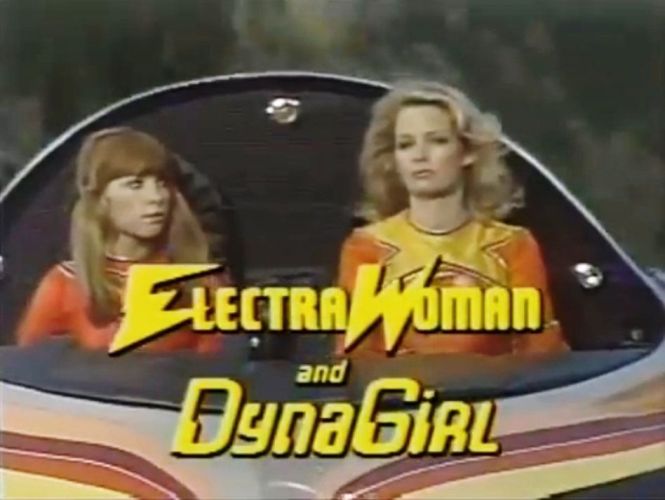
LORELAI: Well, we are ElectraWoman and DynaGirl.

ElectraWoman and DynaGirl is a live action children’s science fiction television show, a female version and parody of Batman and Robin, with Deirdre Hall playing caped crusader ElectraWoman, and Judy Strangis playing her teenaged sidekick DynaGirl. It aired as part of The Krofft Supershow in 1976-77, when Lorelai was aged 8 to 9. ElectraWoman’s real name was Lori, similar to Lorelai (DynaGirl’s was Judy).

Bob Vila

RORY: Funny. I never pictured you as a Bob Vila kind of girl.
PARIS: Rebuilding Together is an extremely prestigious and respected organization. I’ve been volunteering for them for years.

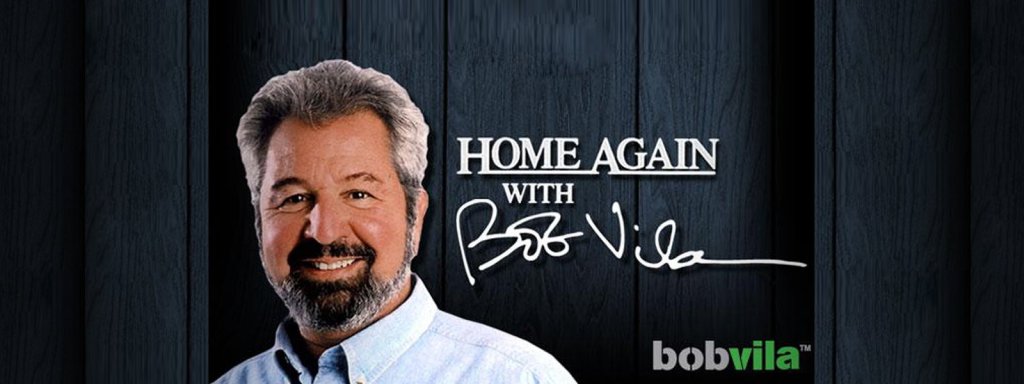
Robert “Bob” Vila (born 1946) is an American home improvement television host. He was the host of This Old House, previously mentioned, from 1979 to 1989, and hosted Home Again With Bob Vila from 1990 to 2005.

Paris seems to have been volunteering for Rebuilding Together since she was at least 14, quite possibly younger.

Who’s on First?

DEAN: You’re going to build a house?
RORY: It’s for charity and I’m late, and why don’t you go on inside and you and my mother can continue the “Rory’s building a house” routine, and when that gets boring you can move on over to “Who’s on First?”

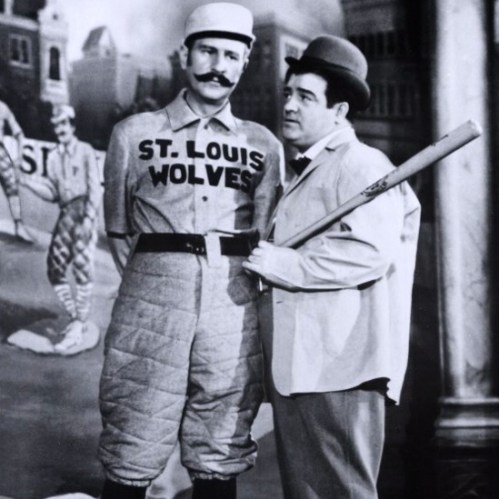
“Who’s on First?” is a famous comedy routine by Abbott and Costello, in which Abbott is identifying players on a baseball team for Costello. The comedy comes from the fact that their names sound as if they are answers to Costello’s questions. For example, the first player is named Who, thus the answer to “Who’s on first?” is “Who’s on first”, leading to utter confusion.

This was a style of routine very popular in the early twentieth century, and Abbott and Costello had a big hit with “Who’s on First?” in a vaudeville revue in 1937. In was performed on radio in 1938, and copyrighted in 1944. Abbott and Costello performed it numerous times in their careers, rarely the exact same way twice, and performed it for President Franklin D. Roosevelt several times.

Abbott and Costello included a shorter version of their routine for their 1940 film debut One Night in the Tropics, and a longer version for their 1945 film The Naughty Nineties, considered their best recorded version of the routine. The “Who’s on First?” bit they did for their 1950s television program The Abbott and Costello Show is considered the definitive version.

“I mean it Timmy, no falling down the well”

LORELAI: Call me when you get home, and please be careful.
RORY: I will.
LORELAI: I mean it Timmy, no falling down the well.

Lorelai is referencing an old joke relating to the television show Lassie, earlier discussed.

In the show, Lassie would bark to give warning of danger, with her human friends apparently understanding exactly what she was saying. Thus it was parodied as, “Woof, woof!”, “What’s that, Lassie? Timmy’s fallen down the well?”. The joke relates to the 1957-1964 period, when the little boy on the show was Timmy Martin, played by Jon Provost (who called his memoirs Timmy’s in the Well: The Jon Provost Story).

In actuality, Timmy never fell down a well, although he suffered a number of similar situations, such as falling in a lake and getting trapped in an old mine, a pipe, and down a badger hole. The list of Timmy’s perils is very long, and includes wandering onto a minefield and being exposed to radiation, not to mention more mundane concerns like tigers and bears. Lassie did once get stuck down a well herself, though.

Speed Racer

RORY: You’re hungry.
LORELAI: No, I’m not.
RORY: Well, you didn’t eat any of your dinner.
LORELAI: Yeah, well, by the time I could get my jaw off the ground, Speed Racer had taken my plate.

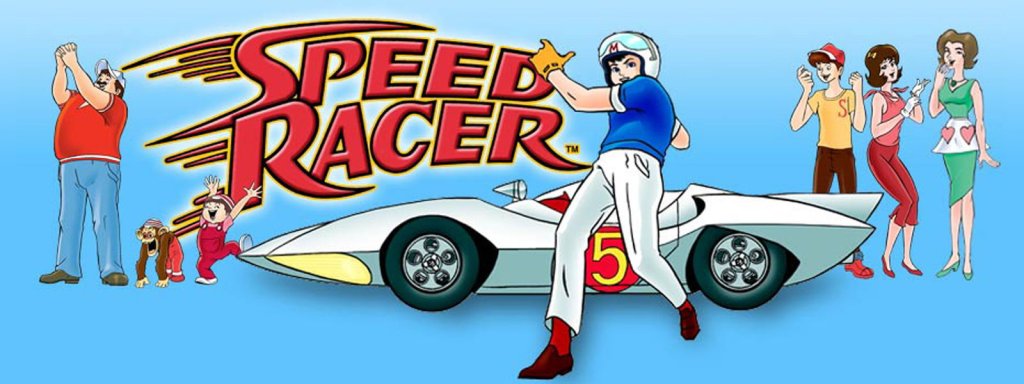
Speed Racer (in Japanese, Mach Go Go Go!) is a Japanese animated media franchise based on a manga about car racing, which began showing on TV in 1967, and was one of the first Japanese cartoons to be localised in English for US television.

The eponymous Speed Racer is a young racing car driver with a deep love of family, and a dizzying array of gadgets to help him defeat the bad guys. It has a goofy over-the-top style and cornball dubbing which almost defined Japanese anime for an entire generation.

The original series was shown in reruns on MTV in 1993, when Rory was nine, and she and Lorelai may have watched it together. There was an American-made The New Adventures of Speed Racer the same year, but it was short-lived, and I feel Rory and Lorelai would have considered it greatly inferior to the 1960s original.

Xuxa

LORELAI: Hey, whatever happened to Xuxa?

Xuxa – pronounced SHOO-sha – is the stage name of Maria da Graça Meneghel (born 1963), a Brazilian television host, singer, dancer, model, and businesswoman. She began modelling as a teenager, and became known in the US during the 1980s as a Playboy model.

Xuxa became a highly successful children’s television entertainer in Brazil in 1986, and by 1991 she was on the Forbes Rich List – the first Brazilian to join the list. Her albums were best-sellers through Latin America, Europe, and North America, and in 1993 she hosted an English-language version of her show called Xuxa on US television. Although the show was sold around the world, the taping was gruelling, and Xuxa withdrew due to stress-related illness.

Because she disappeared from US television in the mid-1990s, Lorelai wonders what happened to her. However, Xuxa has continued her career, and is still very successful; she is the richest t female entertainer in Brazil with a fortune of over one billion, and the second-highest selling female Brazilian singer. Twice winner of the Latin Grammy Award for Best Children’s Album, she is known as “The Queen of Children”.

A.J. Benza

LOUISE: Princess Grace didn’t go to college.
PARIS: Thank you for the history lesson, A.J. Benza.

Alfred Joseph “A.J.” Benza (born 1962) is an American gossip columnist and television host. He began as a gossip columnist on the New York Daily News, and in the mid-1990s began appearing on The Gossip Show on E! Entertainment Television, leading to appearances on several chat shows. From 1998 to 2001 he was the host of Mysteries and Scandals on the E! Network.