“You like piña coladas”

RORY: You like piña coladas.

LORELAI: And getting lost in the rain.

A piña colada is a cocktail made with rum, pineapple juice, and coconut milk or cream, served either blended or shaken with ice. It may be garnished with a pineapple wedge, a maraschino cherry, or both. The cocktail originated in Puerto Rico, is its national drink, and its name means “strained pineapple” in Spanish. One story is that the cocktail was invented by Puerto Rican pirate, Roberto Confresi in the 19th century; the less exciting but more probable version is that it was invented in 1954 at the Caribe Hilton Hotel in Puerto Rico by bartender Ramón “Monchito” Marrero.

Lorelai refers to “Escape (The Piña Colada Song)”, written and recorded by British-American singer Rupert Holmes, released as a single from his 1979 album Partners in Crime. The song is about a man who is bored with his current relationship, and answers a lonely hearts advertisement in the newspaper which begins, “If you like piña coladas …”. When he meets up with the lady, it turns out to be his partner, who was equally bored in their relationship. They realise they had more in common than they realised, and their relationship is now reinvigorated. It was an international hit, and went to #1 in the US and Canada. Ironically, Rupert Holmes has never drunk a piña colada, and the original lyrics were, “If you like Humphrey Bogart”.

Lorelai gets the words slightly wrong. The lyrics are actually:

If you like piña coladas

And getting caught in the rain

not getting lost in the rain.

Merlot

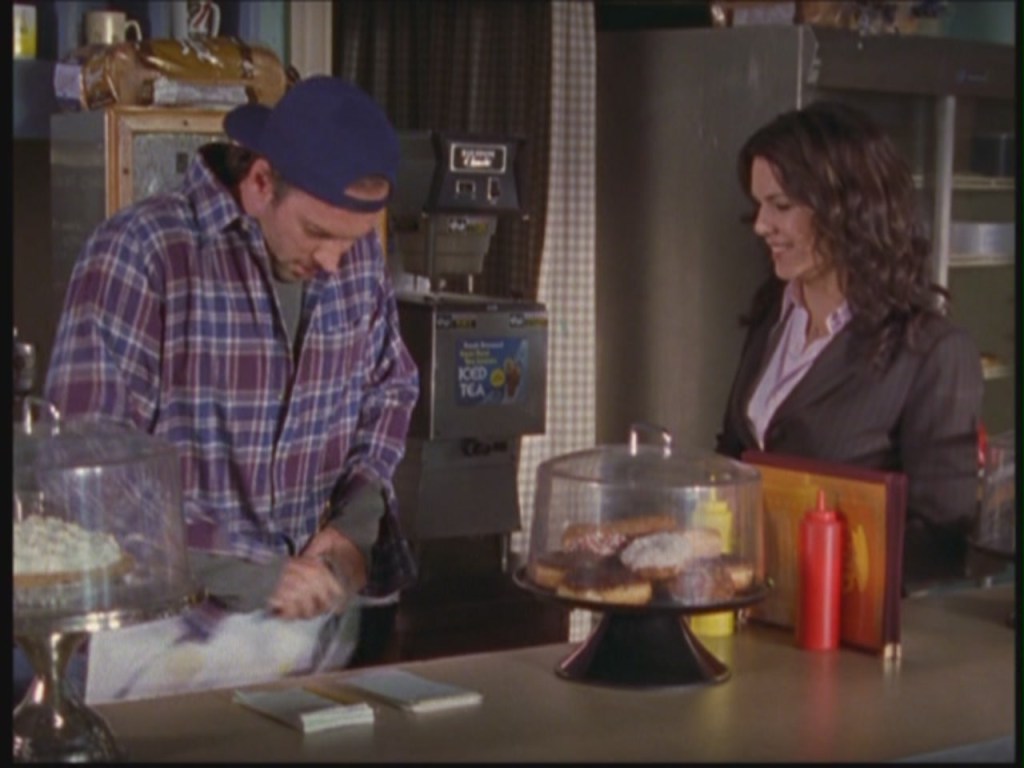
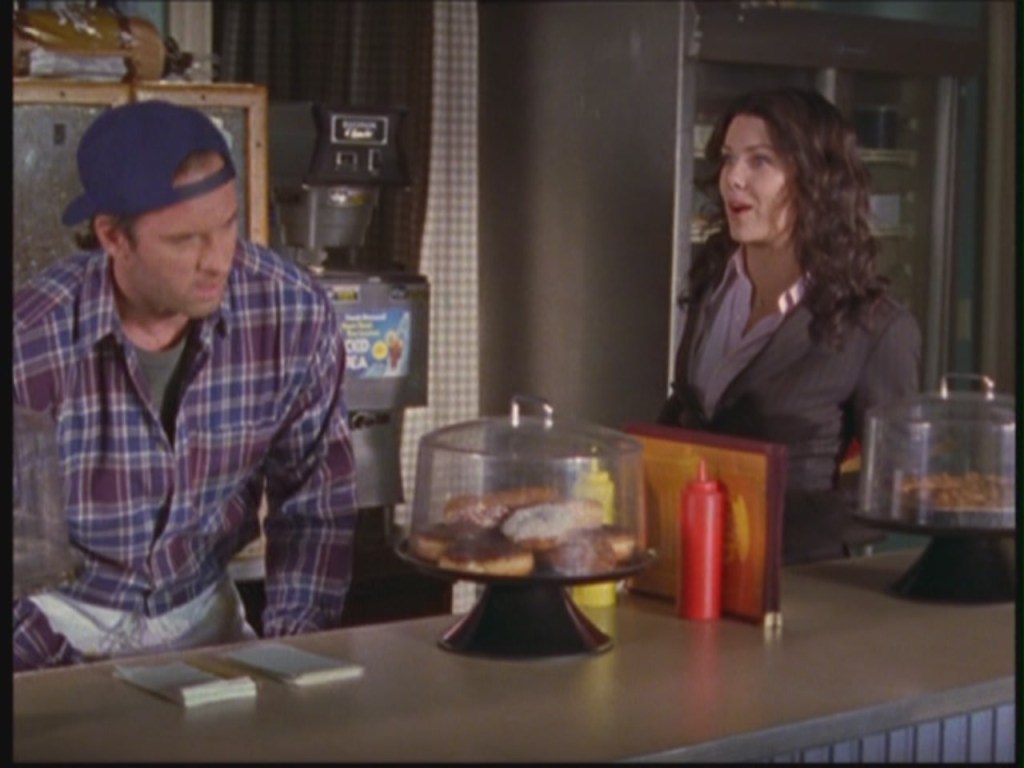
[Lorelai walks up to the bar as a man is ordering a drink]

PEYTON: Can I get a Merlot, please?

Merlot, a deep purple-red wine made from the dark blue Merlot grape variety. The name is thought to be a diminutive of merle, the French word for “blackbird”. Merlot is one of the primary grapes used in Bordeaux wine, and it is the most widely planted grape in the Bordeaux wine regions.

Merlot is also one of the most popular red wine varieties around the world, and is produced internationally – in the US, California produces the most Merlot, after the “Merlot craze” of the 1990s, sparked by a 60 Minutes report on the low incidence of heart disease in France, which drinks a lot of red wine.

Keister

DWIGHT: You know, I just got this beautiful lawn put in, really amazing shade of green, and the guy who put it in for me, he told me that I have to keep each blade of grass very moist for the first few days while the roots take, but I have to go on a business trip for a few days. Huh, last minute, and believe me, I tried to get out of it but my boss said, ‘Dwight, get off your keister and go make us some money’, so I gotta go.

Keister, slang for the anus or the buttocks. Its origin is uncertain. In the 19th century, it was criminal slang for a burglar’s tool box, then later, criminal slang for a strongbox or safe, while “tripe and keister” meant a conman’s display case on a tripod. It probably comes from kiste, a German and Yiddish word for a box or case.

It seems Dwight not only moved in without Lorelai and Rory noticing anything, he also got a new lawn laid down without them noticing!

I am not sure what business Dwight works for that he could commute to it from Stars Hollow. He could work in Hartford and drive in every day, but he’s really presented as more of a big city person, with a New York vibe. By the way, people really take a lot of business trips in the Gilmore Girls universe!

Schnauzer

RORY: Dogs started barking.

LORELAI: Because they heard about the garlic incident, and no one likes getting screwed, Rory, not even a Schnauzer.

A Schnauzer is a breed of dog which originated in medieval Germany – its name means “snouter” in German, as the dog has a distinctive bearded snout. Originally bred as a ratter and guard dog, schnauzers are intelligent, independent, protective, and energetic. They need a lot of training and exercise. Schnauzers come in different sizes, and have a shaggy coat, usually black, grey, or salt and pepper. As happens in this episode, schnauzers tend to bark a lot, especially if they feel threatened – Lorelai must have sounded very loud and angry.

Schnitzel

LORELAI: And the rabbit says, ‘How about that schnitzel!’

A schnitzel is a thin slice of meat that has been pounded into a flat shape using a meat tenderiser. It is usually breaded before being fried. The word is German, and means “slice” or “little slice”. Wiener schnitzel is a popular Viennese dish made of veal, traditionally garnished with a slice of lemon and served with potato salad or boiled potatoes with parsley and butter. It dates to the 19th century, and is one of the national dishes of Austria. There are numerous international versions of the dish.

The punchline to Lorelai’s alleged joke (Rory doesn’t think it is one) appears to be original.

Maxim

LANE: This is the most radical thing a Kim has done since my cousin Nam got caught reading Maxim at summer camp.

Maxim, a men’s magazine launched in the UK by Felix Dennis in 1995, but based in New York City since 1997. It’s known for its photographs of prominent singers, actors, and female models. It has been criticised for its sexual objectification of women, and publishes a Hot 100 List – in 2002, #1 was actress Jennifer Garner, the first time someone had debuted in the top spot.

Nam is a very popular Korean boy’s name, which means “south”.

Amish School in Nicaragua, Piece de resistance

LANE: Oh, and the piece de resistance! She found an Amish school in Nicaragua.

This is completely fictional. There are no Amish colleges or universities, as their education only goes up to eighth grade. There is an Amish community in Nicaragua, but it isn’t as strict as others – they use electricity and drive cars.

Pièce de résistance – French phrase commonly used in English. It means, “the most important or remarkable feature”.

Quantum Physics, Sanskrit

LANE: So I have to figure out a way to rehearse in Hartford two or three nights a week … And maybe at the same time I’ll attempt to master quantum physics, and throw Sanskrit in there, too.

Quantum Physics: quantum mechanics, a fundamental theory in physics that provides a description of the physical properties of nature at the scale of atom and subatomic particles.

Sanskrit: a classical language of South Asia belonging to the Indo-Aryan branch of languages. It is the sacred language of Hinduism, the language of Hindu philosophy, and of historical texts for Buddhism and Jainism. The word literally means “well-made, perfectly formed”, to suggest pure, carefully prepared sacred texts.

[Picture shows a passage from the Bhagavad Gita in Sanskrit]