“A guy with sunglasses and a dog”

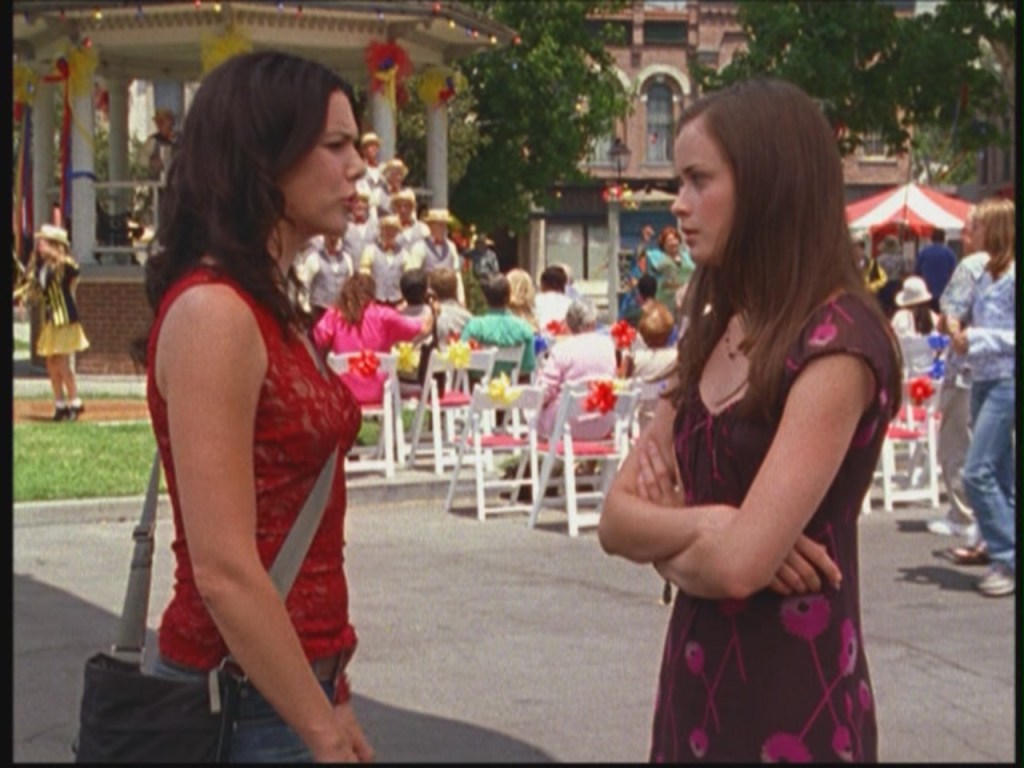
LANE: Is it that obvious?

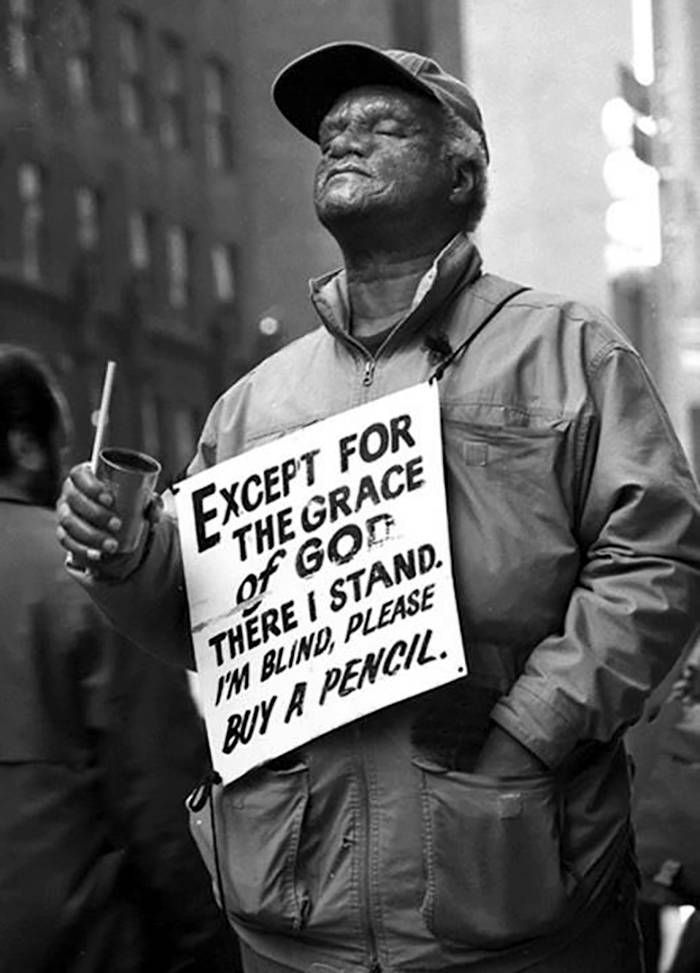
RORY: Only to a guy with sunglasses and a dog selling pencils.

The stereotype of a blind man selling pencils on street corners to survive was an old one even in the 19th century. It seems to be a particularly New York trope, and there is a real life tradition of blind people selling pencils on the city’s streets. There are some iconic photographs of blind men selling pencils in New York, although I haven’t seen one with a guide dog, and most of them don’t wear dark glasses.

Rory is simply saying that a blind person could see that Lane is in love.

If I Only Had a Brain

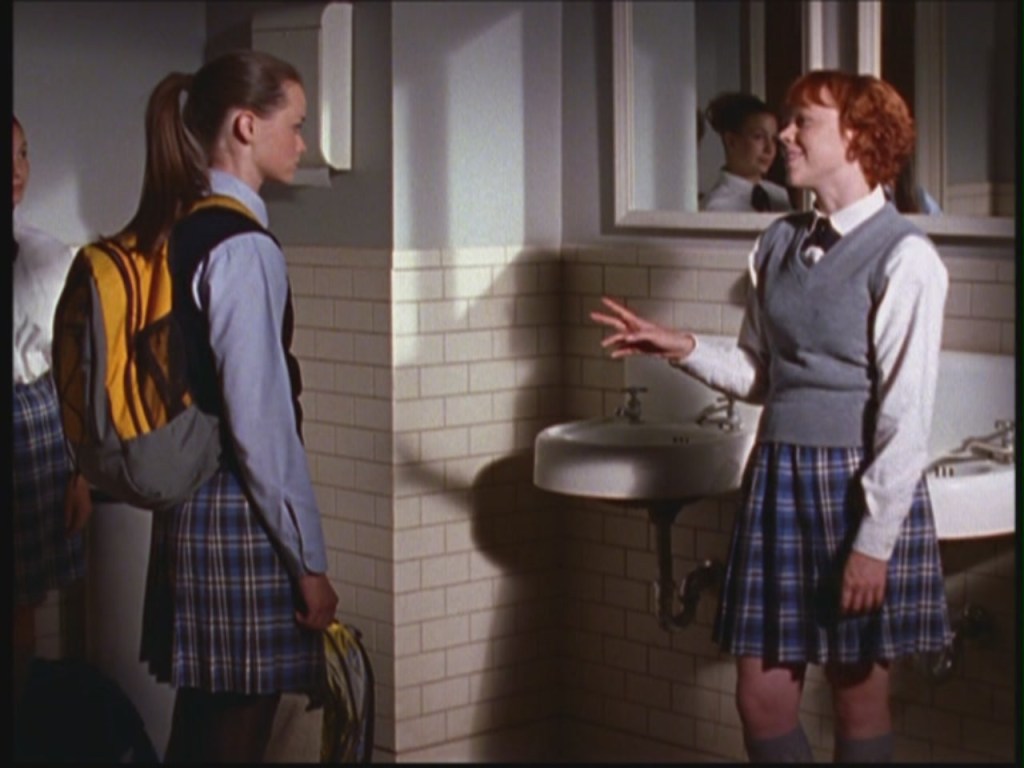
[Rory and Lane are in the bathroom. Lane’s hair is bleached blonde.]

LANE: It’s weird.

RORY: Like straw.

LANE: I feel like I should be singing ‘If I Only Had a Brain.’

“If I Only Had a Brain”, a song composed by Harold Arlen with lyrics by Yip Harburg, for the 1939 film The Wizard of Oz, previously discussed and frequently mentioned. In the film, it is sung by Ray Bolger, who played the Scarecrow, imagining all that he could achieve, if he only had a brain instead of straw stuffing in his head (just as Lane feels that her bleached hair is like straw).

There seems be yet another dig at blondes here, that dyeing your hair blonde automatically makes you brainless.

Sissy

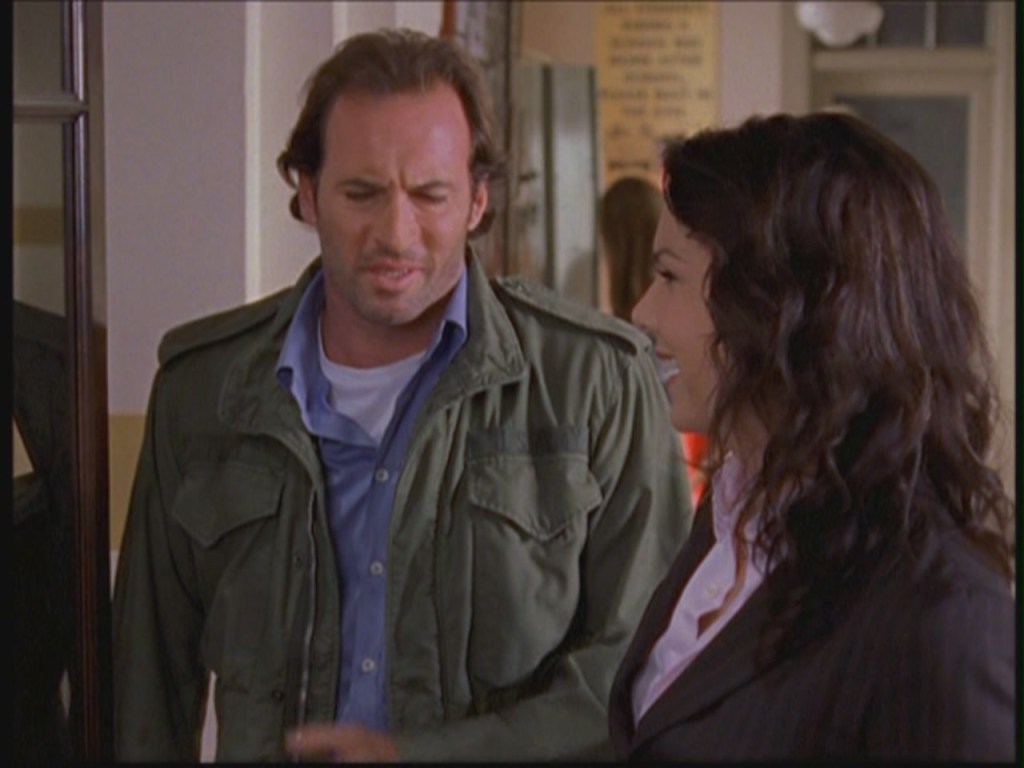
LORELAI: What was your girlfriend’s name, Sissy?

LUKE: As a matter of fact, no.

Lorelai teasingly suggests a girlfriend whose name is the opposite of “butch” – a “sissy”, slang for an effeminate man. There’s probably a bit of homophobic humour to Lorelai’s joke.

Lorelai had a friend in high school of this name – “Crazy Sissy”, who talked to her stuffed animals. Sissy has already been on the show as a high school girlfriend – she’s the girl Tristan took to the winter dance at Chilton, because Rory turned him down.

Note that Luke lets Lorelai know that he did have a girlfriend in high school, but he’s not saying her name. As they both went to Stars Hollow High, there’s a good chance she still lives in town.

“Zip-a-Dee-Doo-Dah”

LORELAI: Oh, we’re happy to be here, right?

LUKE: Yup, zip-a-dee-doo-dah.

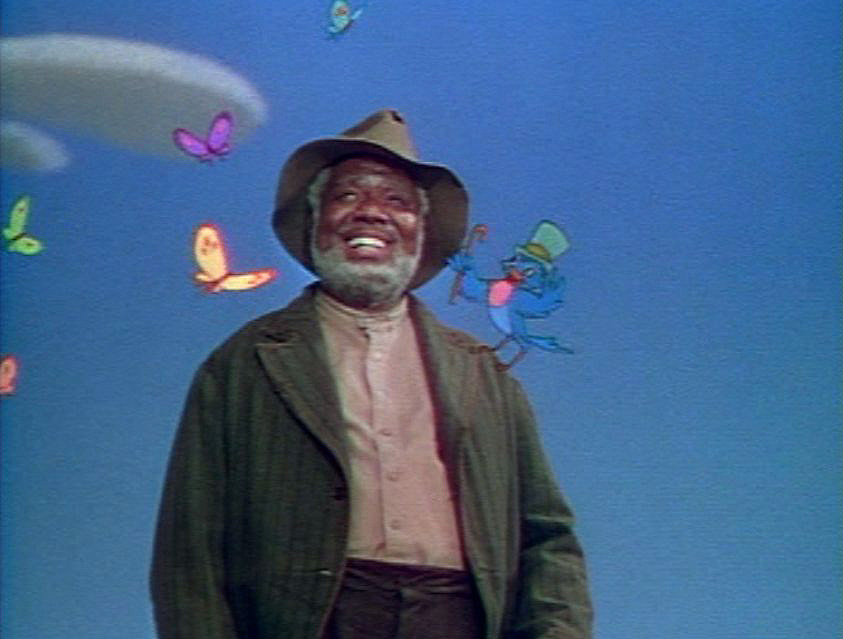
“Zip-a-Dee-Doo-Dah”, a song composed by Allie Grubel with lyrics by Ray Gilbert for the 1946 Disney film, Song of the South. The film combines live action and animation, and is based on the Uncle Remus stories adapted by Joel Chandler Harris, taking place in the Reconstruction era of the South, after the Civil War.

The song is sung by James Baskett in the film, who stars as Uncle Remus, and it won the Oscar for Best Original Song, while Baskett received an Honorary Academy Award, making him the first male black performer to win an Oscar. Song of the South was controversial upon its release for its portrayal of African-Americans, and has remained so.

The song has very upbeat lyrics:

Zip-a-dee-doo-dah, zip-a-dee-ay
My, oh, my, what a wonderful day
Plenty of sunshine headin’ my way
Zip-a-dee-doo-dah, zip-a-dee-ay!

Naturally Luke is being sarcastic.

“Got a package”

RORY: Got a package.

LANE: What’s that?

RORY: Oh, Jim Carrey says that in Ace Ventura.

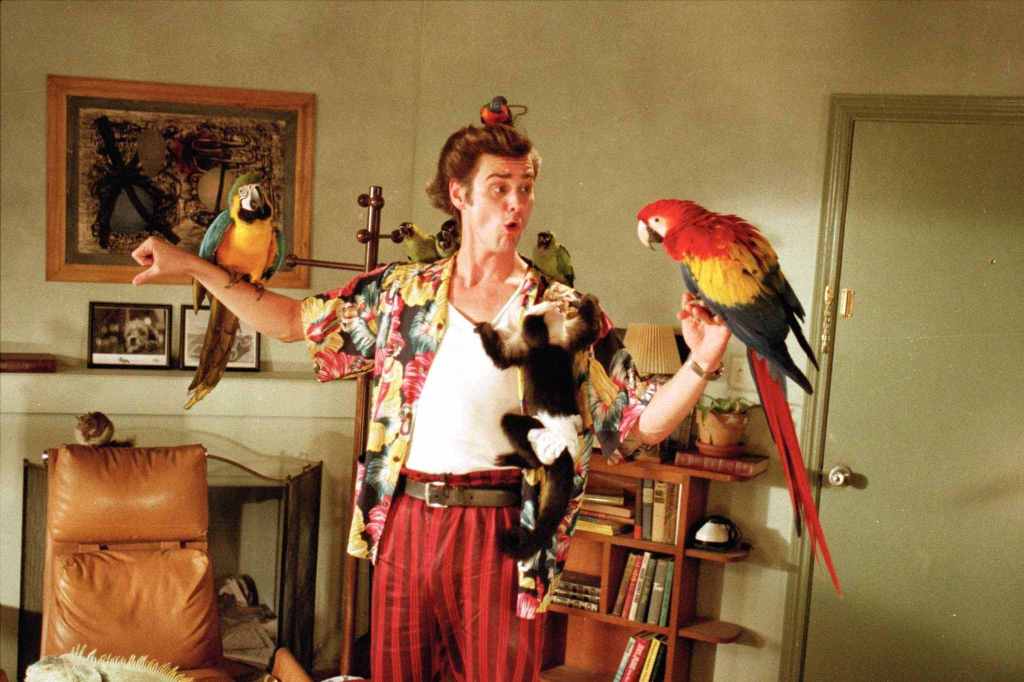
Ace Ventura: Pet Detective, a 1994 comedy directed by Tom Shadyac and starring Jim Carrey in the title role. Ace Ventura is an eccentric animal detective who must find the abducted dolphin mascot of the Miami Dolphins football team.

In the opening scene, Ace Ventura is disguised as a mail delivery man, wearing the brown UPS uniform, but the logo actually says HDS. As the credits roll, he throws and kicks a box marked “FRAGILE” around until it is rattling with what sounds like broken glass. When the man opens his door, Ventura says cheerily, “Got a package for you”.

In fact, the whole set-up has been a ruse to gain access to a dog in the man’s apartment, which comes to the front door, allowing Ventura to nab it while the man is filling out some paperwork Ventura has provided. The man abducted the dog, and Ventura has rescued it on behalf of its owner.

Ace Ventura: Pet Detective was made on a shoestring budget and became an unexpected commercial success, proving a hit with males aged 10 to 20. It received mixed reviews, and has been criticised for being homophobic and transphobic (and that was when it first came out, so I can’t even say it didn’t age well or that times changed). It did well enough to have a 1995 sequel, an animated TV series from 1995 to 2000, and a made-for-TV reboot in 2018.

“That girl’s a freak”

[Shane rushes over to Jess at the counter]

LORELAI: That girl’s a freak.

[Jess and Shane start kissing]

Lorelai says that Shane is a “freak” because she kisses her boyfriend in public – something Rory does all the time, and something Lorelai did when she was a teenager! It’s a pretty terrible thing to say about a teenager who is literally right there.

Even though Lorelai doesn’t want Rory to go out with Jess, for some reason she seems miffed that Jess has chosen somebody else, and snipes about Shane (she should be grateful Shane is making Jess unavailable). She may be trying to send Rory the message that only a “freak” would go out with Jess.

Faulkner and Sylvia Plath

LORELAI: Or one of your authors, Faulkner or . . .

RORY: Or Sylvia Plath.

LORELAI: Hm, might send the wrong message.

RORY: The sticking her head in the oven thing?

LORELAI: Yeah. Although she did make her kids a snack first, shows a certain maternal instinct.

William Faulkner (1897-1962), previously mentioned, writer known for his novels and short stories set in the fictional Yoknapatawpha County of Mississippi, based on the real Lafayette County of that state. William Faulkner spent most of his life in Oxford, Mississippi, which in his works is renamed Jefferson. The winner of the 1949 Nobel Prize for Literature, he is one of the most celebrated American authors, and widely considered the greatest writer of Southern Literature.

Sylvia Plath (1932-1963) [pictured], previously mentioned several times, poet, novelist, and short-story writer, best known for her confessional poetry, as well as her 1963 novel The Bell Jar, previously discussed. Her posthumous 1982 Collected Poems won the Pulitzer Prize. Clinically depressed for most of her life, she killed herself by gassing herself in the oven. Before she did so, she made her sleeping children (two year old Frieda and one year old Nicholas) a snack of bread and butter, opened their bedroom window, and put tape and towels around the door in an effort to protect them from the fumes. Sadly, her suicide seems to have often become a punchline in television comedy, as with this example.

The Short Bus

FRANCIE: Paris is student body president – big fat deal. There are three other class presidents – the junior class president, the sophomore class president, and oh, yes, the senior class president – me.

RORY: I know all this.

FRANCIE: Well, then, it’s off the short bus for you, isn’t it?

The short bus refers to a shorter school bus used for transporting children who are physically disabled or who are being educated in special programs, often for learning disabilities.

It is a derogatory way to refer to the mentally challenged, and to call someone stupid, dumb, or slow. Francie is saying Rory is smart enough not to be considered intellectually disabled.

I would like to think that Francie using this offensive language is the writer’s way of letting us know she’s a bad person, except … what would this incident say about Rory?

“Grab a liver treat and a squeaky toy”

LORELAI: If you want Jess, that’s fine – go get him, there he is. If you think that’s the great love of your life, then great . . . grab a liver treat and a squeaky toy and run to him.

Lorelai and Rory not only get into a fight in public at the festival, Lorelai gets perilously close to calling her seventeen-year-old daughter a “bitch” or a “dog” with her barb about grabbing a liver treat and a squeaky toy. She seems to suggest that Rory is acting like a “bitch in heat” over Jess, or is acting like a “dog” towards Dean.

Ottoman and Napoleon Complex

RORY: Hello living room.

LORELAI: Hello Rory, we missed you. Not the ottoman, of course, but everyone knows he’s a snob. Napoleon complex, he only really likes the magazine rack.

An ottoman is a small padded seat without a back or arms that can be used as a table, stool, or footstool. They are also known as tuffets, hassocks, or pouffes. The name comes from the Ottoman Empire from where it originated, the seat introduced to Europe in the 18th century.

A Napoleon complex is an imaginary syndrome attributed to people of short stature, where the short person (usually a man), overcompensates for their size by being too aggressive or domineering. In psychology, it is regarded as a derogatory social stereotype and a piece of mysandry. It comes from the idea put about by the British in the 19th century that Napoleon Bonaparte’s short temper was caused by him being of short size. In fact, Napoleon was 5 foot 7, average height for his era.

Presumably the ottoman only likes the magazine rack because it’s the one thing smaller than it is!