Jimmy Hoffa

LUKE: So who are you gonna go find now?
LORELAI: Stop.
LUKE: How about Jimmy Hoffa? That’ll keep you busy for a while.

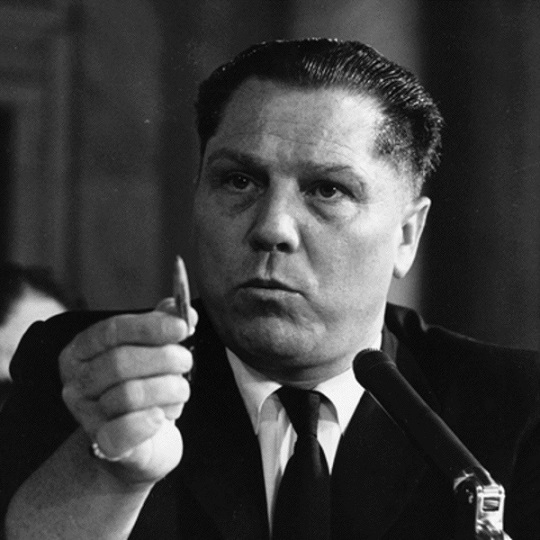
James “Jimmy” Hoffa (1913-1975) was an American union leader who was President of the International Brotherhood of Teamsters from 1958 to 1971. He had links with organised crime, and was accused of jury tampering, attempted bribery, and fraud in 1964. He was imprisoned in 1967, and released in 1971 after being pardoned by President Richard Nixon in exchange for his resignation from the union presidency; he was barred from union activities until 1980.

Jimmy Hoffa vanished in 1975 while on his way to meet two Mafia leaders, and was declared legally dead in 1982. Several people have come forward saying that they know where Hoffa’s body is, or even claiming to have killed him, but their evidence hasn’t been corroborated, or their testimony unable to be proven. The FBI believe that Hoffa was murdered by the Mafia, but the case remains open.

Cosmo Woman

NURSE: Ms. Gilmore, uh, I need you to –
EMILY: It’s not “Ms. Gilmore”, it’s Mrs. Gilmore! Mrs. Gilmore, I’m not a Cosmo Woman!

Emily is referring to Helen Gurley Brown (1922-2012), who became editor of Cosmpolitan magazine in 1965 after the success of her best-selling 1962 advice book Sex and the Single Girl. She championed glamorous, fashionable, and sexually liberated women, who became known as “Cosmo Girls”.

It’s possible that Emily, in her state of distress, has somehow confused Helen Gurley Brown and feminist Gloria Steinem (born 1934) – Steinem became the editor of Ms. magazine in 1972, which featured Wonder Woman on its first cover.

Emily would have been a wife, and then a mother, at the time of the rise of Gurley Brown and Steinem – very proud to be “Mrs. Richard Gilmore”, and the opposite of the independent career woman in Cosmpolitan, and of the woman speaking out against the restrictions of marriage and family in Ms.

I’m not sure whether she says “Cosmo Woman” via mixing up Cosmo Girl and Wonder Woman from Ms. Magazine, or whether she simply can’t bear to refer to herself as a “girl” when she’s a mature-aged woman.

German measles

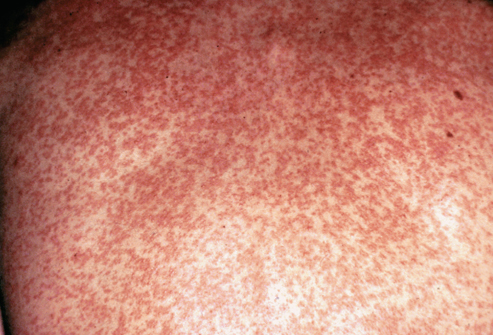
LORELAI: I had the German measles in the fifth grade, I still had to show up to the Christmas party … My polka dot dress matched my face and still I had to sit through twelve courses.

German measles, also known as rubella, is an infection caused by the Rubella virus. It is often mild in children, and symptoms include low-grade fever, sore throat, fatigue, and a rash. The disease can be considerably more severe if an adult catches it, and worst of all for women in the early stages of pregnancy – it increases the chance of miscarriage, and there is a high chance of the baby being born with disabilities such as blindness, deafness, mental retardation, and heart defects.

A vaccine against the virus was developed in 1969 and it was added to the MMR vaccine in 1971, so it was possible for Lorelai to be vaccinated against German measles. In 1977 (when Lorelai was 8-9) the US developed a nationwide childhood immunisation initiative – children are usually 10-11 in fifth grade, so Lorelai should theoretically have been vaccinated by then. This does fit in with Amy Sherman-Palladino’s age though, as she is two years older than Lorelai and would have been in 5th grade around 1977 – maybe just too late to avoid getting the disease.

In any case, Emily was irresponsible and selfish to force Lorelai to attend a party with German measles. The disease is highly infectious, and any female of child-bearing age would be at risk, as you don’t usually know you are pregnant in the early stages.

There is no excuse for ignorance either, as there was a rubella epidemic in the US in 1964-65, not that long before Lorelai’s birth, leading to about 16 000 children being born disabled, as well as 2000 neonatal deaths, and 11 000 abortions and miscarriages due to the disease.

The Metamorphosis

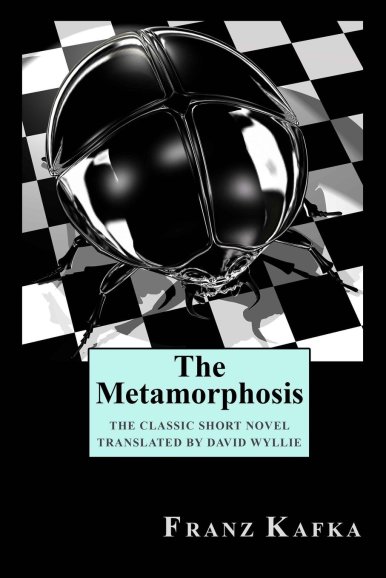
This 1915 absurdist novella by Czech author Frank Kafka is the book that Rory buys Dean for Christmas.

The story is about a travelling salesman named Gregor Samsa who wakes one morning to find that he has been transformed into a large and verminous beetle-like insect, becoming a disgrace to his family and an outsider in his own home. Both harrowing and comical, the book is a meditation on human guilt and isolation. Translated into English in 1933, The Metamorphosis is one of the most influential literary works of the twentieth century.

Rory believes that the book is a “romantic” present. Lane quite rightly tries to talk her out of this, describing the book as a “confusing Czechoslovakian novel”. She urges Rory to consider what Dean will think of the present, and says that she is giving Dean something that she would like, comparing it to Dean giving Rory a football for Christmas.

Lane’s counsel is sound, and she is hinting that once again Rory is using literature to keep others at an emotional distance, since she identifies the potential Christmas gift as saying “let’s be friends”. It’s a genuinely terrible present for Dean, and shows that Rory is still trying to turn her boyfriend into someone he isn’t.

We never discover if Rory took Lane’s advice or gave the book to Dean anyway. At the end of the scene she sounded unconvinced but also unsure, so you could argue it either way.

Rory’s idea of a book by a famous Czech author was probably inspired by her grandfather’s recent trip to Prague. In the last episode Emily told her that Richard was going to bring her back something special, and my bet is that he brought her something from the gift shop at the Kafka Museum, probably a book (possibly even this book). Rory may have thought that since she loved getting a book by Kafka as a present, Dean would as well.

Rory’s attraction to The Metamorphosis is obvious: like Gregor Samsa, she feels that she has become an object of disgust to her family, and is likewise suffering from feelings of intense shame and isolation – she is not speaking to her mother, and has not even spoken to Dean since they overslept at Miss Patty’s.

The Metamorphosis begins with Gregor Samsa oversleeping, and then finding he is trapped in a waking nightmare without reason or explanation. We can be sure that this is exactly how Rory feels, and the ending where Samsa voluntarily dies rather than burden his family any further shows just how deep her feelings of depression are. Quite possibly Rory has wished herself dead.

Rory might be playing her situation for laughs by making jokes about The Miracle Worker and Narcolepsy Boy, but make no mistake, she is suffering horribly. Like The Metamorphosis, there is both comedy and misery in equal measure.

By giving Dean the book, Rory was hoping to show him exactly how she feels; the “romantic” part of the present is her sharing her deepest emotions and fears with Dean, reaching out and laying herself completely bare to him. Unfortunately, Lane is right, and Dean would have no way to interpret it as anything other than a strange, confusing book about a big bug.
“Strict rules about dating”

When Max goes to Lorelai’s house, she tells him that she has always kept her dating life completely separate from her life with Rory, and that although she has dated men, and had a sex life, none of the men have ever been to her house.

From this we know that Lorelai has tried to put Rory’s needs before her own, and that she has to some extent used Rory as an excuse to keep men at a distance and avoid commitment.

The logistics of how she kept the men completely away from her house are something of a puzzle – I’m guessing she never dated men who lived in Stars Hollow, the relationships never progressed very far, and that she must have had reliable babysitters who could care for Rory while she was out on a date (Babette, Sookie, and Miss Patty seem like good candidates).

Hopie

Rory, Richard and Emily look at photos. Among them is one of Emily’s younger sister “Hopie”, presumably a pet name for Hope. She lives in Paris, so Rory has never met her; what she does in Paris remains a mystery. She is described as the family’s “great expatriate”, although we later find Richard mother lives in London.

Hopie is never mentioned again; even though Richard and Emily travel to Europe later, and so does Emily and Rory, nobody ever talks about visiting Hopie. The photo of Hopie shown is Kelly Bishop, who plays Emily.

Florence the Cook

Emily is annoyed to discover that their cook du jour, Florence, won’t be able to come to work because of the storm. At the start of the show Emily seemed to have both a cook and a maid (and couldn’t hang on to either for long), but later episodes show the maid doing the cooking as well as her other duties. For some reason this cook-maid is never referred to as a housekeeper.

Emma

RORY: Aha! You liked it, you liked Jane Austen. I knew you would. Lane, Dean likes Jane Austen.

Emma is a 1815 novel by English author Jane Austen. Unlike other of her books, the heroine Emma Woodhouse, blessed with youth, beauty, and intelligence, is independently wealthy and has no need to marry a rich man. In fact, rather than being under any pressure to marry, her elderly father would much prefer she remain as his companion. This is quite similar to Rory’s situation with Lorelai, who certainly isn’t pressuring her into a relationship, and that she has freely chosen Dean.

Emma, who believes she always knows what’s best, has a habit of meddling in her friends’ love lives, and is much more interested in doing so than thinking about romance for herself. Ironically, Rory can’t be bothered listening to her best friend’s love problems, as she is so wrapped up in her new relationship with Dean.

Rory’s choice of book might also remind us of Emma Bovary from Madame Bovary, which Rory was reading when Dean first noticed her: both Emma Woodhouse and Emma Bovary are great readers. It’s a reminder of the two “Emmas” in Rory’s character – the detached, intelligent Emma Woodhouse, and the romantic Emma Bovary who makes foolish choices.

NB: I have more often seen this book identified as Northanger Abbey, but I cannot locate an edition of that novel which resembles the book Dean hands over to Rory. To me it looks as if it might be the 1996 Signet edition of Emma, with an introduction by British author and critic, Margaret Drabble. However, I welcome input on this question, and will edit this entry if the correct edition of Northanger Abbey is shown to me.

Dean’s Sisters

Dean indicates in this episode that he has more than one sister. We meet his younger sister later this season, but never see another sister or hear her mentioned. However, much later we find out that he has a young nephew, and it seems plausible that the nephew’s mother is Dean’s older sister. This older sister quite possibly remained in the Chicago area with her own family when the Foresters moved to Stars Hollow.

“When do you have time?”

RORY: When do you have time to watch General Hospital?

A question we’d all like answered – General Hospital in on weekdays in the afternoons, when Lorelai is at work. Yet somehow she has managed to keep up with the show for at least the last few years. American soap operas are notoriously slow-paced, so that Lorelai could theoretically keep up with the show by only watching it sometimes. Even so, how did she manage to watch even a few episodes while at work?

Note that this is another example of shortness of time being mentioned.