FRANCIE: Paris is student body president – big fat deal. There are three other class presidents – the junior class president, the sophomore class president, and oh, yes, the senior class president – me.
RORY: I know all this.
FRANCIE: Well, then, it’s off the short bus for you, isn’t it?
The short bus refers to a shorter school bus used for transporting children who are physically disabled or who are being educated in special programs, often for learning disabilities.
It is a derogatory way to refer to the mentally challenged, and to call someone stupid, dumb, or slow. Francie is saying Rory is smart enough not to be considered intellectually disabled.
I would like to think that Francie using this offensive language is the writer’s way of letting us know she’s a bad person, except … what would this incident say about Rory?
FRANCIE: Because talking to Paris is like shopping for a bathing suit in December – frustrating, fruitless, and a complete waste of time. Now, you, you might be the wallflower, but you’re obviously the Meyer Lansky behind this organization.
Meyer Lansky, born Meier Suchowlański (1902-1983), a figure in organised crime instrumental in the development of the National Crime Syndicate, and known as the “Mob’s Accountant”. A member of the Jewish mob, Lansky developed a gambling empire that stretched around the world, had a strong influence with the Italian-American Mafia, and played a large role in the consolidation of the criminal underworld.
Despite nearly 50 years participating in organised crime, Lansky was never found guilty of anything more serious than illegal gambling. He has a legacy of being one of the most financially successful gangsters in American history.
Francie compares Rory to Meyer Lansky, as someone clever and evasive enough to keep her hands clean, and to be the real power behind Paris’ throne. I think the fact that Rory was able to talk her way out of the punishment meted out to the Puffs after the ill-fated initiation ceremony is enough to make Francie think that there is something pretty slippery about her.
Francie Jarvis, portrayed by Emily Bergl, turns up again early in Season 3. We first met Francie in the previous season, as the President of the Puffs, a supposedly powerful secret sorority at Chilton that Rory and Paris almost joined. It was a rather silly story line that went precisely nowhere, but we now discover it was just to set up this silly story line that goes nowhere in Season 3.
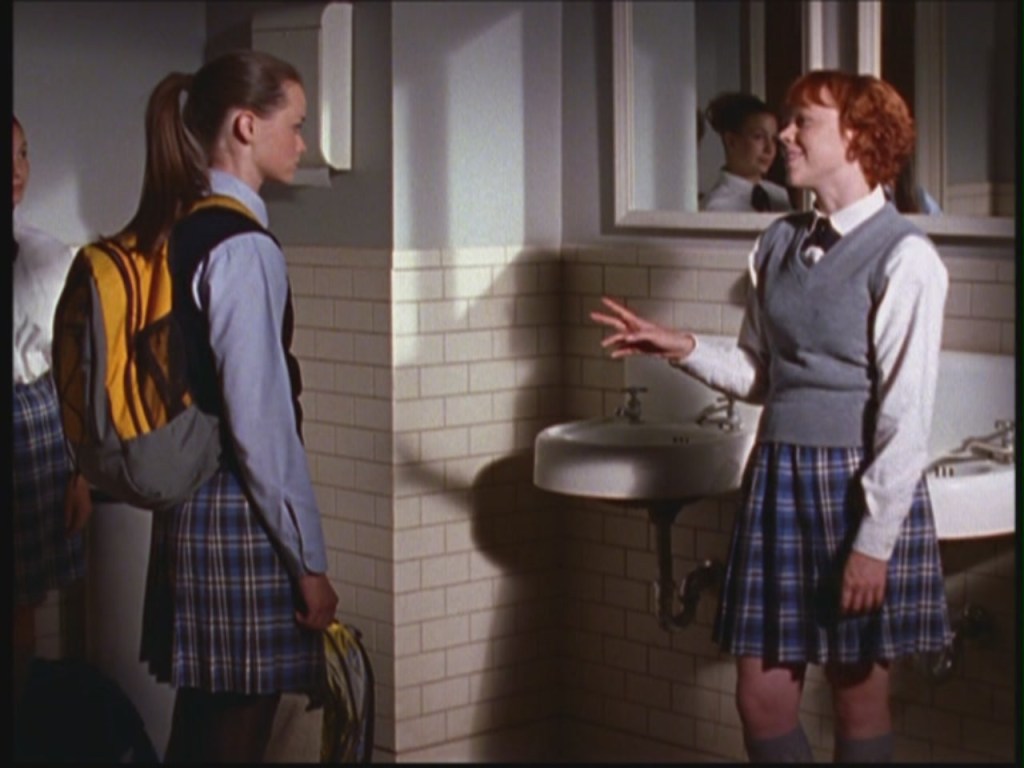
Francie is now the president of the senior class, and is using all her mighty influence … to get skirt hemlines raised an inch and a half. Apparently this requires all sorts of backdoor machinations, such as kidnapping Rory into a girl’s bathroom and making her fulfil Francie’s evil scheme! The evil scheme to get hemlines raised slightly.
Oddly, Francie never acknowledges that she knows Rory and Paris well enough to have begun the process of accepting them into the Puffs – something which went very, very wrong for everyone except Rory. Possibly this helps explain Francie’s antagonistic attitude towards Rory and Paris.
Note that Francie first speaks with Rory while looking in the mirror, to indicate duplicity and double dealings – not to mention that Rory is “through the looking glass”.
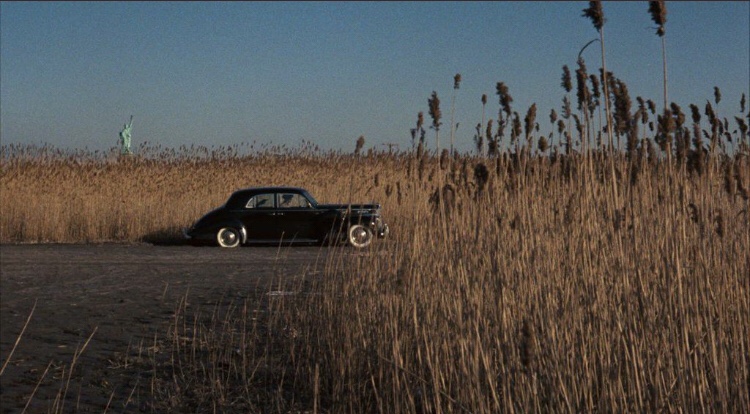
LORELAI: Saying yes to this lunch with my mother is like saying “Sounds fun!” to a ride with Clemenza.
A reference to bodyguard Clemenza, from The Godfather, previously discussed. In the film, Clemenza kills someone in a car on a deserted road while travelling with them.
LORELAI: I know, but this goes against every rule I have in the Gilmore Survival Guide. Number one – no running with scissors. Number two – no pageboy haircuts. Number three – never ever have lunch alone with a mother.
A pageboy haircut has straight hair hanging below the ears before it turns under, usually with a fringe at the front. The name is from the haircut believed to have been given to medieval page boys, or young servant boys.
The pageboy haircut was popularised for women by New York hairdresser M. Lewis in the early 1950s, gaining peak popularity in the mid-1970s and 1980s. Two famous women with pageboy haircuts were Toni Tenille, from Captain & Tenille, and Diana, Princess of Wales – the style was often called the “Lady Di” in the UK.
The pageboy haircut was popular for young boys in the 1900s, popularised by child actors such as Jackie Coogan. It became part of adult male fashion in the 1960s, thanks to British rock bands such as The Beatles and The Rolling Stones, then copied by American punk, garage, and new wave bands such as The Velvet Underground, The Ramones, and Blondie.
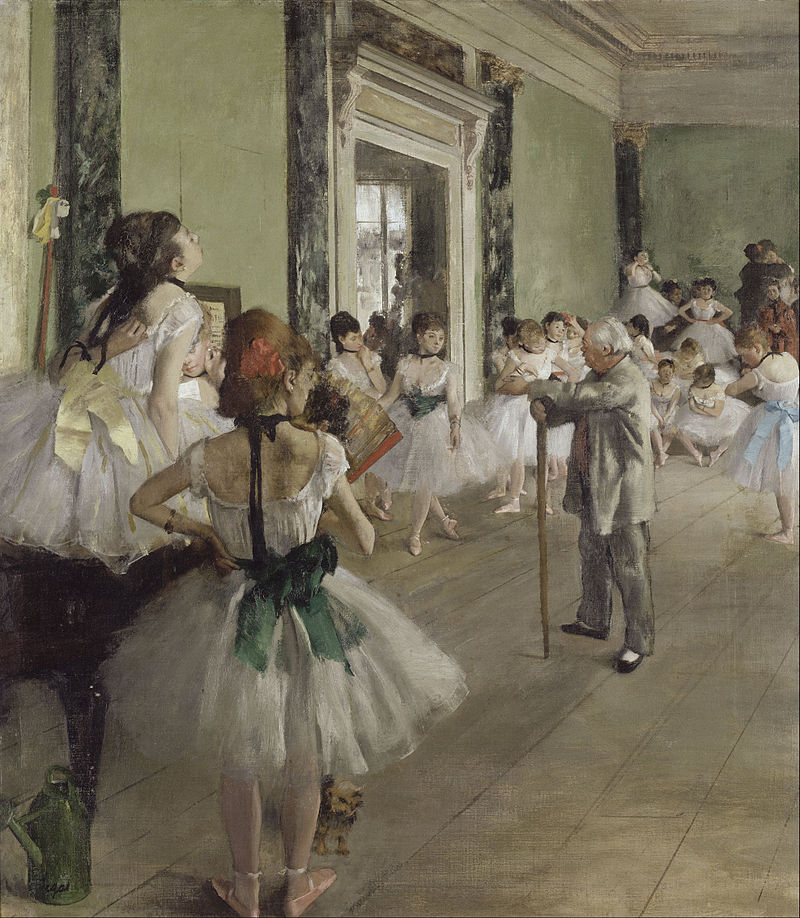
SOOKIE: I’m an artist. You don’t dictate to an artist, you don’t tell him what to do. I mean, no ever walked up to Degas and said, “Hey, pal, easy with the dancers, enough already. Draw a nice fruit bowl once in awhile, will ya?”.
Edgar Degas, born Hilaire-Germain-Edgar De Gas (1834-1917), French Impressionist artist famous for his pastel drawings and oil paintings. He is especially known for his connection with dance – more than half his works depict dancers. One of his most famous works is The Dance Class, 1873-1876 [pictured].
PARIS: Hey, at least I’m not putting her on an iceberg and shoving her off to sea, which considering the fact that you can’t find the Shakespeare section without psychic powers yet the CliffsNotes rack practically smacks you in the face on the way in, is totally justified.
CliffsNotes are a series of student study guides started in Nebraska by Clifton Hillegass in 1958, having gained the US rights to a Canadian series published in Toronto. Hillegass and his wife Catherine started the business in their basement with 16 titles on Shakespeare. By 1964, sales of CliffsNotes had reached one million annually, and there are now CliffsNotes for hundreds of works. IDG Books bought CliffsNotes for $14.2 million in 1998, and it has since been acquired several more times.
RORY: Are you sure the first thing you wanna do in office is to get a ninety-three year old woman sacked?
PARIS: Hey, at least I’m not putting her on an iceberg and shoving her off to sea …
Paris refers to a stereotype of Eskimo culture where the elderly were put on an ice floe to die when they became a burden. Although some Eskimos did practice senilicide (the killing of the elderly), it was rare, usually only practised during famines, and there is no record of anyone being put out on the ice to die – simple abandonment was probably the most common method. In many cases, it may have been what we might refer to as assisted suicide. It is no longer practised in Eskimo culture, and hasn’t been for a very long time.
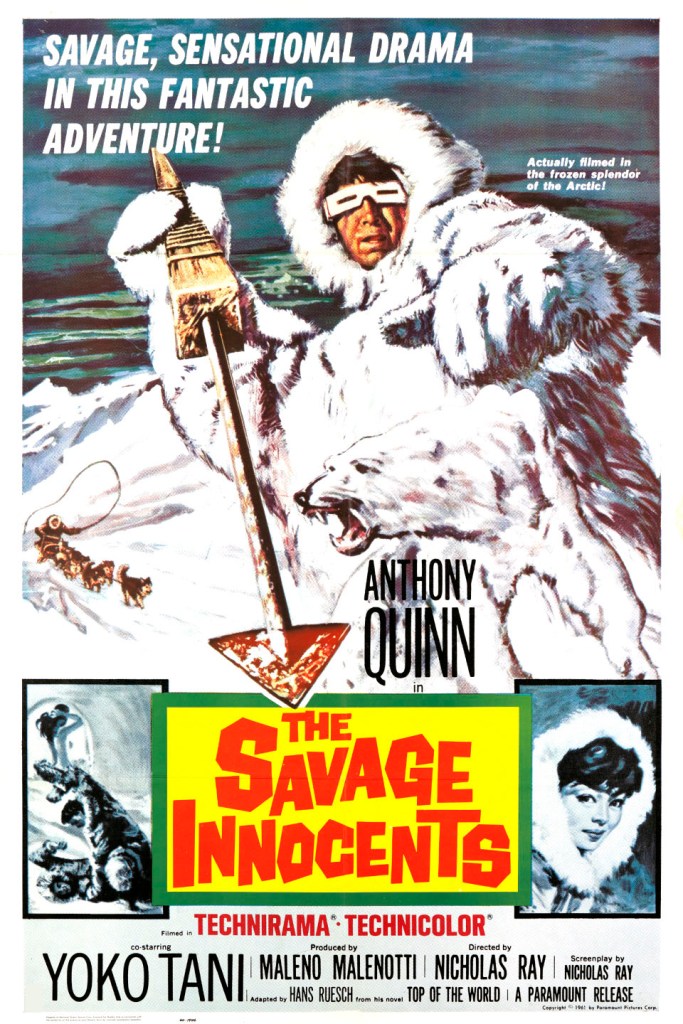
The idea of elderly Eskimos being pushed out to sea on ice floes might have come from the 1960 adventure film, The Savage Innocents, directed and co-written by Nicholas Ray, and based on the 1950 novel Top of the World by Swiss author Hans Ruesch. The film stars Anthony Quinn as an Inuit hunter – which is believed to be the inspiration for Bob Dylan’s 1967 song, “Quinn the Eskimo (The Mighty Quinn)”, successfully recorded by British band Manfred Mann in 1968.
In the film, the hunter’s mother-in-law is put on the ice to die, but is rescued soon after. In another scene, the hunter’s wife walks across the ice to commit suicide; a piece of ice breaks off and she briefly floats on the ice floe before drowning herself. The two scenes together may have suggested the popular idea of the elderly being set adrift on the ice to die.
Although Paris is made to seem a monster by getting rid of the librarian, she is ninety-three years old, and is in intensive care during this episode! Surely it is time for her to retire, on health grounds? I don’t feel as if Paris is being that unreasonable here.






 The Annotated Gilmore Girls