Fred Mertz

LORELAI: My father almost hit someone. My father has probably only hit another man in college wearing boxing gloves and one of those Fred Mertz Golden Gloves pullover sweaters.
CHRISTOPHER: Fred Mertz?
LORELAI: I Love Lucy – Fred Mertz.
CHRISTOPHER: Landlord to Ricky, husband to Ethel, I know. It’s just a weird reference.

Lorelai and Christopher pretty much annotate this one themselves. On the 1950s sitcom I Love Lucy, previously and frequently mentioned, Fred Mertz (William Frawley) was Ethel’s (Vivian Vance’s) husband, and the landlord of Ricky and Lucy Ricardo in New York. After the Ricardos moved to Connecticut to start chicken farming, Fred and Ethel followed them, and the Ricardos ended up being the Mertz’s landlords.

In his heyday, Fred was a boxing champion, and in the episode Changing the Boys’ Wardrobe (December 1953) he can be seen wearing a sweater which says GOLDEN GLOVES 1909. In fact the first Golden Gloves amateur boxing championship took place in 1923 in Chicago, after which the name was applied to any number of amateur boxing contests.
Chernobyl and the Hindenburg

CHRISTOPHER: So …. last night.
LORELAI: Ah, last night was Chernobyl and the Hindenburg combined.
CHRISTOPHER: Right, just checking.

Chernobyl was a city in the Ukraine which is now a ghost town. It is infamous as the site of the Chernobyl Disaster when a reactor exploded at the nuclear power plant; it is the worst nuclear disaster in history. The city was evacuated on April 27 1986, and the area around it is now restricted. (Weirdly enough, some people still choose to live there, and since 2004 it has become something of a tourist site).

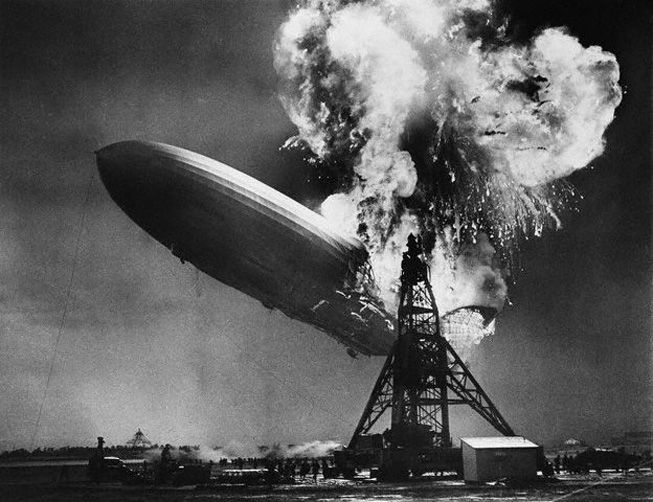
The LZ 129 Hindenburg [pictured] was a German airship operated by the German Zeppelin Airline Company. First launched in March 1936, it was destroyed by fire on May 6 1937 while attempting to land at Lakehurst Naval Air Station in New Jersey at the end of its first transatlantic American flight. Known as the Hindenburg Disaster, it was the last of the great airship disasters, with 36 lives lost, and effectively spelled the end of airships as a form of transportation.

By his manner, Christopher seems to want to know how Lorelai felt about them having sex the previous evening, but her reactions makes it clear she considers the entire night a disaster of epic proportions. He seems subdued and disappointed in his response.

Whoville

CHRISTOPHER: Well, I know you well enough to know that when you say no to coffee, especially in the morning, all is not right in Whoville.

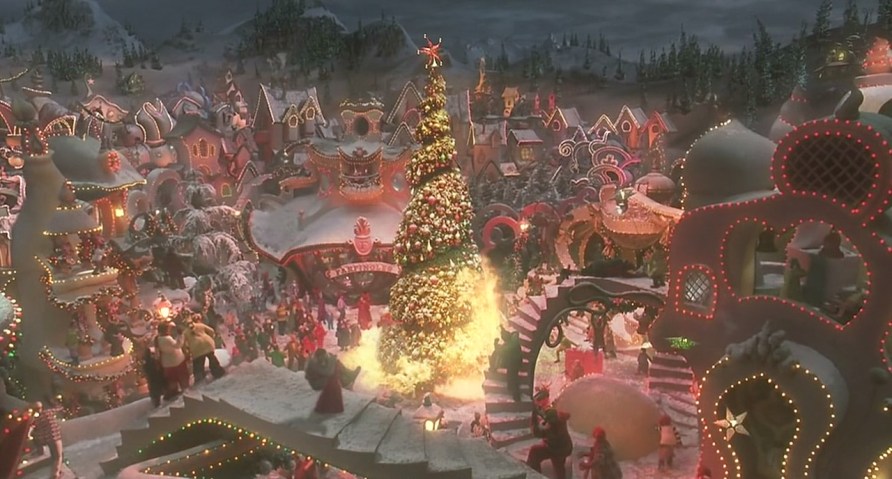
Whoville is the setting for the 2000 Christmas film How the Grinch Stole Christmas, earlier discussed – a charming little place where the denizens all really love Christmas.

It’s interesting that Lorelai referenced it to Rory at the start of Concert Interupptus, and now about a month later, Christopher is referencing it to Lorelai as if it is something they shared together. It suggests the possibility that when Christopher came to Hartford for Christmas in 2000, he and Lorelai took Rory to the movies to see The Grinch. If so, it’s rather touching that they went on a family outing together, and chose a movie to which you’d generally take a younger child than Rory.

(There is a Who-ville in the Dr. Seuss book Horton Hears a Who, but you can see from the books they are two quite different places with different characters, just similar names. The Horton Who-ville exists within a speck of dust on a clover flower, and the Grinch movie pays tribute to that by having their Whoville contained within a single snowflake).

Mazatlán

RORY: Where does Dad have a misspelled tattoo?
LORELAI: Ah, ah, another story for another time, possibly before your first trip to Mazatlán.

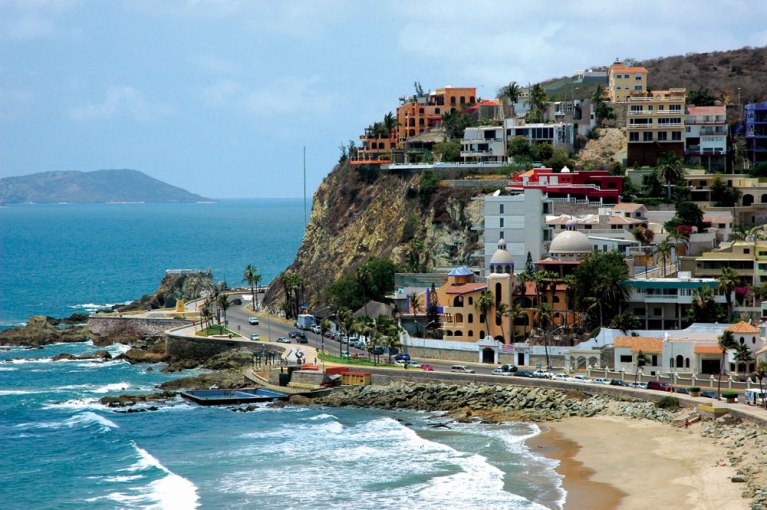
Mazatlán is a city in Mexico, located across from the tip of the Baja California peninsula. It is a popular tourist destination, famous for its beach resorts. It’s a popular destination for American students to go on spring break (less so now than formerly). Lorelai is saying that once Rory is a young adult and preparing to make her own drunken mistakes, she will be ready to hear about her father’s tattoo.

Citizen Kane

LORELAI: You know all those crazy people saying those horrible things were directing them at me, not you.
RORY: They were directing them at you because you had me.
LORELAI: No, they were directing them at me because I screwed up their big Citizen Kane plans.

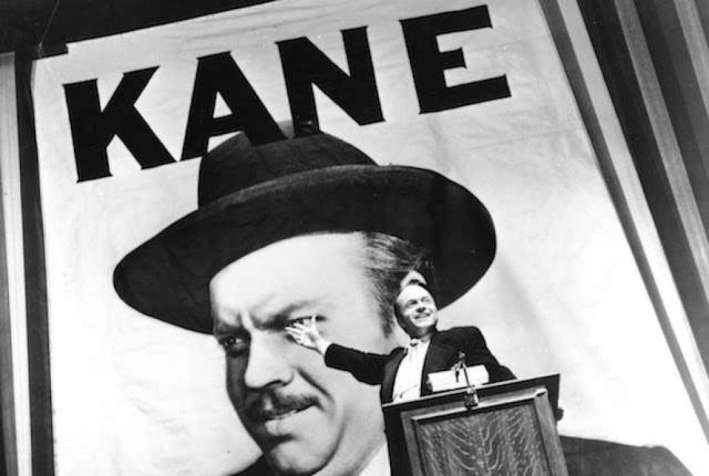
Citizen Kane is a 1941 drama film by Orson Welles, who produced, directed, co-wrote the screenplay, and starred in it; it was his first feature film. The film examines the life of wealthy news publisher Charles Foster Kane (Orson Welles), partly based upon newspaper magnate William Randolph Hearst, and other businessmen, as well as Welles’ own life.

Citizen Kane received an enthusiastic response from critics, but had trouble with publicity because William Randolph Hearst ran an aggressive campaign against it, and it made a loss at the box office. It was nominated for nine Academy Awards, but only won Best Writing (Original Screenplay). Revived on television in the 1950s, the film was re-evaluated, and is now considered one of the greatest films ever made. Its comments on the power of the media have only become more relevant with time.

In the film, Kane’s humble family becomes unexpectedly wealthy, and his mother sends him away to live with a stranger so that he can be properly educated. Lorelai might see this as a parallel with Christopher’s parents wanting him to attend Princeton, on his way to becoming a success.

Armageddon

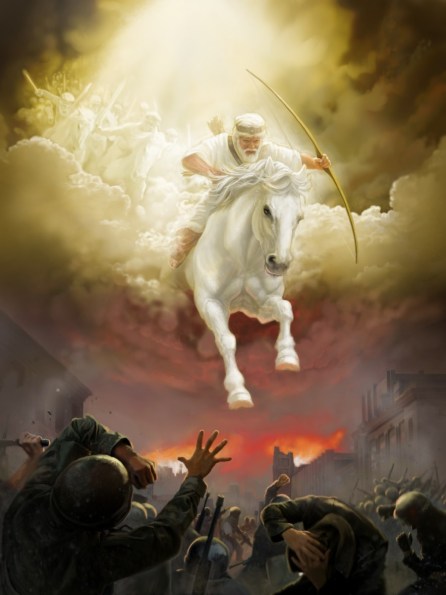
LORELAI: Chris, this [sex] is the next to last thing I thought would ever happen tonight. The last thing being a holy saint guy riding down on a flaming chariot from heaven to announce Armageddon.

In the book of Revelations in the Bible, Armageddon is mentioned as the location of a battle at the end of time. Literally, Armageddon refers to an actual place – Tel Megiddo, an ancient city in northern Israel where several Old Testament battles were fought. It’s now in a national park, and has a gift shop attached.

The Bible verse is usually (not always) interpreted symbolically, so that Armageddon is popularly taken to mean any battle between believers and unbelievers at the end of the world, or even more vaguely, any end of times situation involving a clash between good and evil.

Lorelai’s idea of a holy saint riding down in a flaming chariot would thus be the first sign of God’s army arriving from Heaven to announce the battle. The holy prophet Elijah is said to have been taken up to heaven in a chariot of fire, so that might be who Lorelai is thinking of.

Lorelai and Christopher

We learn in their scene together on the balcony of Lorelai’s childhood bedroom that this is where Rory was conceived. As Rory was born in late October, it means that Lorelai and Christopher had sex outdoors in January, which seems ridiculously cold and uncomfortable. They then recreate it by having sex on the balcony again, this time at night in early March, when it is still very cold in Connecticut. I’m not sure the Californian writer, who had only visited Connecticut in the summer, really thought this one through.

From what we see of Christopher in later episodes, it seems to be one of his less endearing qualities that he is quick to make a move on Lorelai whenever they are together and she is in an emotionally vulnerable state – in this case, crying after a terrible argument with her father, and drinking tequila that he gave her. It makes you wonder if this is how they originally had sex as teenagers. Did Christopher wait until she was at a low point after a fight with her parents, then ply her with alcohol?

In any case, it’s a horrible thing for both of them to do to Rory, as they go off to be alone together just when she most needs their love and reassurance. (It’s done so that Rory can have a touching scene with Emily, but still makes Lorelai and Christopher look bad).  Rory is old enough to wonder where they went, and shrewd enough to make a guess as to what they were doing, as her questions to Lorelai show. For a child who obviously secretly longs to have her father in her life, it’s cruel to give her that kind of hope that her parents might be getting back together.

Underalls

LORELAI: And then when we were older, scanning the neighbors’ houses for naked people [with the telescope].
CHRISTOPHER: [laughing] Found a couple of those.
LORELAI: [laughing] Mrs. Dominski undulating in her big fat Underalls is forever carved into my brain.

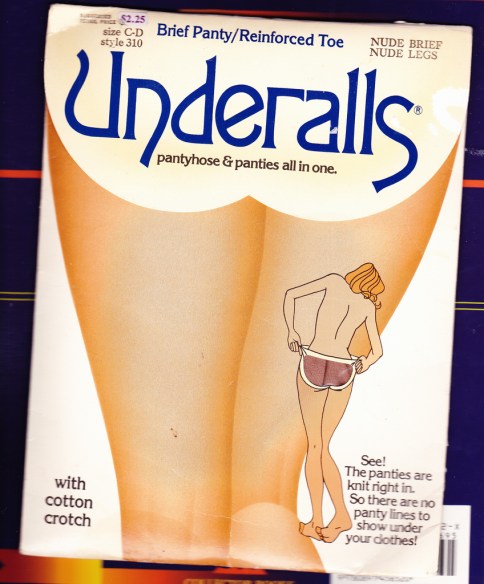
Underalls were a brand of underwear made by Hanes; it was a combination of underpants and pantyhose which was meant to eliminate panty lines, and marketed with slightly risque commercials. They were made from 1976 until the 1990s.

It seems to be a feature of scripts by Daniel Palladino that Lorelai makes nasty comments and jokes aimed at overweight people, especially women. It doesn’t really make any sense, since Lorelai’s best friends in Stars Hollow are all plus-sized women.

Are we meant to assume that Lorelai dislikes overweight women, but seeks them out as friends in order to make herself look better, or because they don’t threaten her fragile sense of self-esteem, while still making fun of them behind their backs? Because that isn’t a fun quirk, or a relatable human flaw – it’s revolting, and a sign of some kind of personality disorder.

Cone of Silence

CHRISTOPHER: Next time we get this group together we’re gonna have to frisk for weapons.
LORELAI: Hand out gags.
CHRISTOPHER: Employ six individual cones of silence.

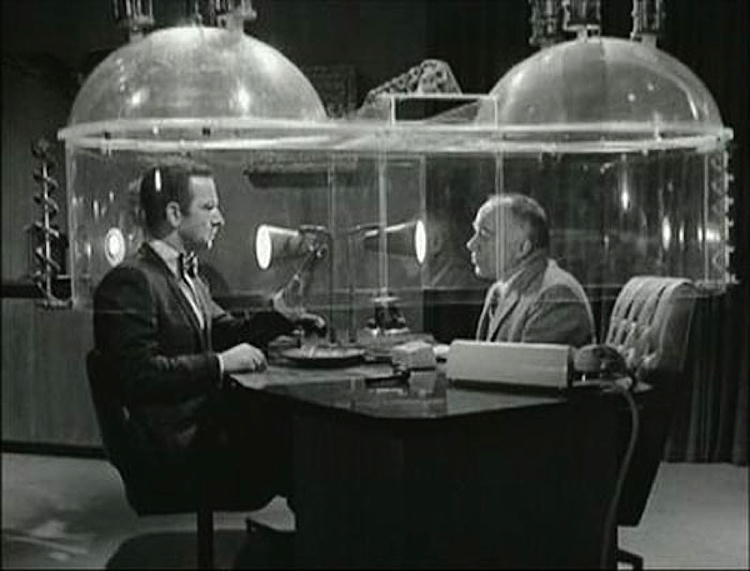
Christopher is referencing the comedy television series Get Smart, which was created by Mel Brooks as a satire on the spy genre. Maxwell Smart (Don Adams) is a bumbling yet successful secret agent, ably assisted by the beautiful Agent 99 (Barbara Feldon); they work for government agency CONTROL headed by The Chief (Edward Platt). The show ran from 1965-1970, but was in re-runs for many years, including on Nick at Nite.

A running gag on the show was the Cone of Silence – two clear plastic hemispheres which were lowered over Max and the Chief’s heads as a security protocol. They were supposed to render their conversations completely silent to onlookers, but constantly malfunctioned so that they usually ended up shouting loudly at each other while outsiders could hear better that they, and not infrequently had to explain to both what the other was saying.

In common parlance, to say a conversation needs a cone of silence means that it has to remain secret (even though the real cone of silence did anything but).

Rory and Emily

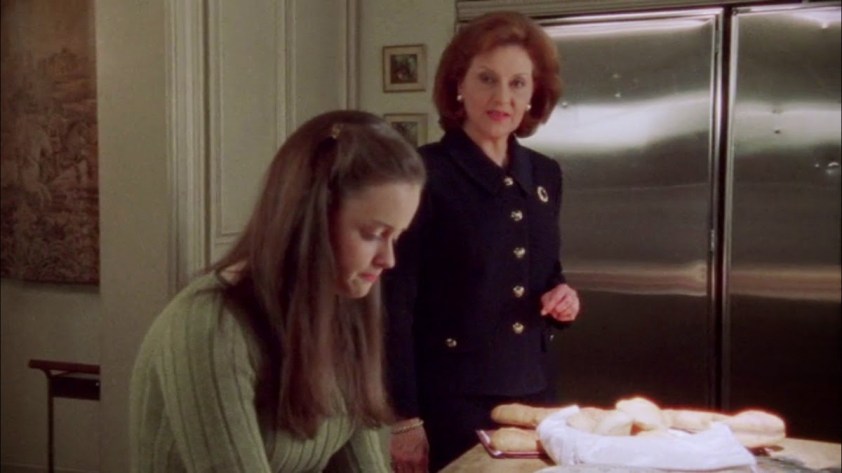
While Lorelai is talking with her father, Emily at first tries to defend Straub as a good man, highly intelligent, who was one of the top lawyers in an obscure field of international law, and a great contributor to the community through his charity work. She then drops the charade, and says he’s always been a big ass. Most importantly, she lets Rory know that never, for even one second, has Rory herself ever been a disappointment to them. It’s something Rory needs to hear.

Emily then gives Rory some cold leftovers, which look like a roast potato and a couple of asparagus spears; it doesn’t seem like an adequate meal. What about the leftover roast meat? At least make her a sandwich, Emily!