Jess the Thief

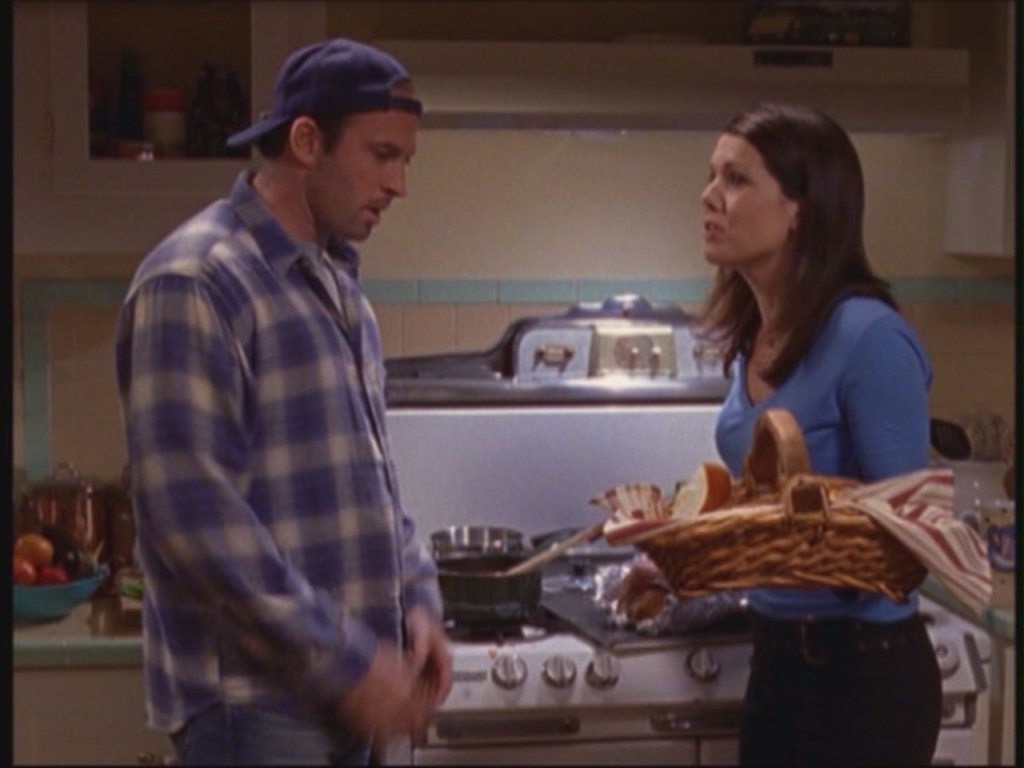
In this episode, Luke is dismayed to learn Jess has been indulging in petty theft. Is this the “trouble” he was headed for in New York, or is this something Jess is doing for attention, in defiance of being sent to Stars Hollow, or out of boredom?

Or is it a sort of one-sided joke or prank, where he fulfils the image the town has of him as a criminal by performing mildly illegal acts that do little harm, just to see how upset the townsfolk will become?

Another possibility: Jess only seems to start stealing after he meets Rory. Is he trying to make himself a notorious figure, spoken of everywhere, so she cannot ignore or forget him? After all, there’s no such thing as bad publicity …

It’s also interesting to see where Jess steals from in this episode. He is first caught stealing beer from Lorelai’s fridge. Next he steals a few coins from the bridge repair fund – the same community project that Lorelai and Rory worked on (in a town as gossipy as Stars Hollow, it wouldn’t be hard for the quiet, watchful Jess to learn of that). Then he steals a garden gnome from Babette, Lorelai and Rory’s next door neighbour. Later it transpires that the first thing he took without asking was one of Rory’s books.

The thefts don’t seem to have random victims – they are all connected with Lorelai and Rory. Are they a bit of payback for Lorelai, for trying to give him advice, or are they are an attempt to keep himself within Rory’s orbit, by fair means or foul?

Pledge of Allegiance in Six Different Languages

JESS: You bring me here to this place, you put me in a school that says the Pledge of Allegiance in six different languages, two of which I’ve never heard of before.

The Pledge of Allegiance expresses loyalty to the United States flag and the nation that it represents. A pledge was first composed in 1887 by Captain George Thatcher Balch, a former Union Army Officer during the Civil War who later taught patriotism in schools. The current pledge was mostly composed by a Christian socialist minister and author Francis Bellamy in 1892, based on the one by Balch. It was formally adopted by Congress in 1942.

The Pledge of Allegiance is recited at the start of Congressional sessions, many local government meetings, and often even in private organisations. Most states, including Connecticut, require the pledge to be recited regularly, usually every day, at public schools. However, a student legally cannot be compelled to recite the pledge, or punished for failing to do so.

The Pledge of Allegiance

I pledge allegiance to the Flag of the United States of America, and to the Republic for which it stands, one Nation under God, indivisible, with liberty and justice for all.

It is recited while standing to attention, facing the flag with the right hand over the heart (non-religious headgear is removed for the pledge by males). Those in uniform remain silent for the pledge, but give a military salute to the flag.

Sometimes schools in the US have recited the pledge in different languages, but it tends to not go down well, and be considered unpatriotic. Stars Hollow High School is apparently not afraid to celebrate its diversity, even though its student population isn’t very diverse. Six languages seems extremely unusual though.

What the six languages were, two of which Jess had never heard of before, is open to speculation. I am going to guess, based on languages spoken in Connecticut, according to the census:

English

Spanish (the most common non-English language in the US)

French (we know this language is taught at Stars Hollow High)

Korean (Mrs Kim can be very persuasive?)

Tagalog (the language of the Philippines, which Jess might not have heard of?)

Urdu (the national language of Pakistan, which Jess might not have heard of?)

Other possibilities I considered: German (Stars Hollow once had an ill-fated German Club), Portuguese (second most common non-English language in Connecticut), Polish (very commonly spoken in the nearby Hartford area), Hebrew or Yiddish (we later learn Stars Hollow has a vibrant Jewish community), Algonquin (the Native American language spoken by Connecticut tribes), Esperanto (a created universal language), American Sign Language for the deaf.

Feel free to add your own thoughts!

Max and Rory

RORY: Do you ever regret the fact that you didn’t become a clown?
MAX: I don’t really believe in regrets. All my experiences, even the ones that didn’t turn out the way I wanted them to, I firmly believe they were all worth it.
[Rory turns off the tape recorder]
RORY: I just want you to know, I really wanted you to be my stepfather.
MAX: I just want you to know, I really wanted to be your stepfather.
[They’re silent for a few seconds, then Rory turns the tape recorder back on]

This scene allows Rory and Max to get the closure they need, because Lorelai’s method of dumping her groom by running away days before the wedding didn’t allow for any. With typical self-centredness, Lorelai never seemed to have considered how awkward she would make that for Max and Rory, who have to continue seeing each other and working together at Chilton. Perhaps Headmaster Charleston isn’t so unreasonable for frowning on teacher-parent relationships.

It’s believable that Max wanted to be Rory’s stepfather – he had a big fight with Lorelai when he thought she was shutting him out of Rory’s life, and was quick to offer Rory comfort and advice when he knew she was going through a breakup with her boyfriend. It’s less convincing that Rory particularly wanted Max as her stepfather though, as she showed little sign of that when he was spending the weekend with she and Lorelai. It was only after Lorelai dumped Max that she was suddenly upset about it. Perhaps she came to realise what she was missing out on.

Max’s statement that he doesn’t regret any life experience, even those which didn’t work out, is a very graceful way to let Rory (and the viewer) know that he bears no ill will towards Lorelai, and that he will essentially be alright.

“I wanted to be a clown”

RORY: Have you ever thought of doing something other than teaching?
MAX: Well, my father wanted me to be a doctor, and my mother wanted me to be President, and I wanted to be . . . a clown.

This backstory for Max Medina is based on actor Scott Cohen studying to be a professional clown at the State University of New York. After graduating, he worked briefly as a clown, but was fired from the circus for not being “happy” enough.

Barbara Walters

MAX: We could sit.
RORY: Sit, sure, that’s good. Barbara Walters sits, or walks sometimes if the person she’s talking to has a horse or a ranch or a big backyard sometimes, but usually she just sits.

Barbara Walters (born 1929) is an American broadcast journalist, author, and television personality, now retired. Known for her interviewing skills and popularity, she was the host of numerous television programs. She began her career on the Today Show in the 1960s, and was co-host by 1974, the first female to take such a role, and continued her pioneering efforts by becoming the first woman to work as a co-anchor on a nightly news broadcast for the ABC.

In 2001, Walters was producer and co-host of 20/20 and The View, and had an annual special on the ABC, Barbara Walters’ 10 Most Fascinating People, as well as other interview specials.

Barbara was inducted into the Television Hall of Fame in 1989, received a star on the Hollywood Walk of Fame in 2007, and received a Lifetime Achievement Award from the National Academy of Television Arts and Sciences in 2000.

The Brothers Karamazov

When Rory is interviewing Max, this book is on the desk between them, in a pile of other books that includes Anna Karenina, previously discussed.

The Brothers Karamazov is a 1880 novel by Russian novelist Fyodor Dostoevsky about the sons of a buffoon named Fyodor Karamazov; he has three sons from two marriages, and it is rumoured that his servant is actually an illegitimate son. Fyodor takes no interest in his sons, who are raised apart from each other and their father. A passionate philosophical novel, it delves deeply into questions of God, free will, morality, faith doubt, and reason, involving a plot about patricide. It is acclaimed as one of the great works of modern literature, and has influenced many great authors and thinkers. It was Einstein’s favourite novel, Freud considered it the greatest work of literature, while Franz Kafka felt indebted to it as a influence on his own work.

We know that Russian literature is the first component of the English Literature course in the sophomore year at Chilton, and this must be on the curriculum. On Rory’s first day at Chilton, the teacher talked about how they had studied Dostoevsky the week before. We can feel pretty confident that Rory would have read this novel in her efforts to catch up with her schoolmates, and it may have helped give her an interest in the works of Kafka.

Danish Day

RORY: But the coffee is in there. And it’s Danish Day. Are you seriously telling me that you’re gonna let a stupid fight get in the way of Danish Day?

A Danish pastry, often just called a “Danish”, is a layered sweet puff pastry which was brought to Denmark by Austrian bakers, and developed into a Danish speciality. They were brought by Danish immigrants to the United States, and became popular after they featured at the 1915 wedding of President Woodrow Wilson. In the US, Danishes are often given a fruit or cream cheese filling.

In this episode, we learn that Lorelai and Rory have a Danish for breakfast every Wednesday morning, which is one of their traditions. Rory orders cherry Danishes, but it’s unclear whether that is their preferred flavour. I’m also not sure whether it’s significant that cherries are so rich in sexual symbolism!

Nick and Nora, Sid and Nancy

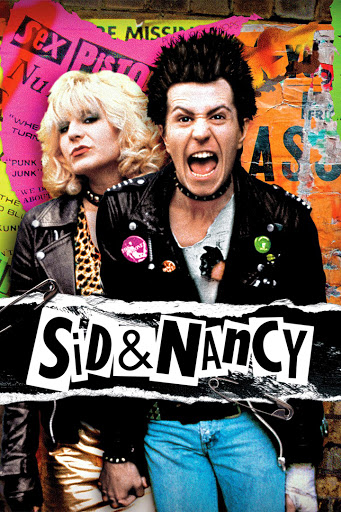
LORELAI: Rory, this was a bad one, okay? This was not Nick and Nora, this was Sid and Nancy, and I’m not going in there.

Nick and Nora Charles (William Powell and Myrna Loy) are the protagonists of the 1934 comedy-mystery film, The Thin Man, based on the 1934 novel of the same name by Dashiell Hammett. They’re a wealthy married couple who enjoy drinking and flirtatious banter, with plenty of free time to solve mysteries. It was the first time in a Hollywood film a married couple were shown still able to enjoy sex, romance, and adventure together. The film was such a success, it spawned five sequels, and in the 1950s was made into a television series starring Peter Lawford and Phyllis Kirk.

Sid and Nancy is a 1986 British biographical film, starring Gary Oldman and Chloe Webb in the title roles. The film examines the destructive drug-fuelled relationship between Sid Vicious, the bassist for British punk band The Sex Pistols, and his American girlfriend, Nancy Spungen, which ended in tragedy when Sid stabbed Nancy, either accidentally or deliberately.

Lorelai is saying that she and Luke weren’t just having their usual comic flirting, but actually went for each other with a genuine intention to hurt each other emotionally. She clearly sees herself as the main victim in their interchange, and this is the origin of this episode’s title.

Luke and Lorelai’s Fight

LUKE: Oh, you have a kid, so you know everything, right?
LORELAI: I have a kid, so yeah, I know a little more than you do.
LUKE: You know, you ever think maybe you just got lucky with Rory? I mean, you did get pregnant at sixteen. That doesn’t show the greatest decision making skills, now does it?

Luke is furious to discover that Lorelai has taken it upon herself to start lecturing Jess without him being present, and thus doesn’t take on board the serious information that Lorelai is giving him – that Jess stole beer from her fridge. Maybe Luke should have listened to her, but on the other hand, Lorelai is too angry and upset to handle it very tactfully.

I think Lorelai is correct that Luke could avail himself of what parenting advice she has to offer – she has raised a fairly well-behaved, academically successful child, after all. She must know something about children and teenagers. (And she got pregnant at fifteen, not sixteen).

However, I think Luke has a point that she has got a bit lucky with Rory, who’s a fairly easygoing, compliant child (she takes after Christopher and his mother in that regard, rather than Lorelai). If Lorelai had had a kid more like herself, rebellious and oppositional, particularly a boy, she might have found being a young single mother rather more challenging.

This is the beginning of Jess putting a strain on the relationship between Luke and Lorelai, and serves as yet another obstacle to them getting together (Jess sharing a one-bedroom apartment with Luke would surely make that a bit problematic, even if there were no other issues).