Tristan references the popular song, Hail, Hail, The Gang’s All Here, written by Theodora Morse under the name D.A. Esrom, to a tune by Arthur Sullivan for the 1879 comic opera, The Pirates of Penzance. Although published in 1917, it had been referenced in American newspapers as a popular song since 1898, often sung at political gatherings and sporting matches.
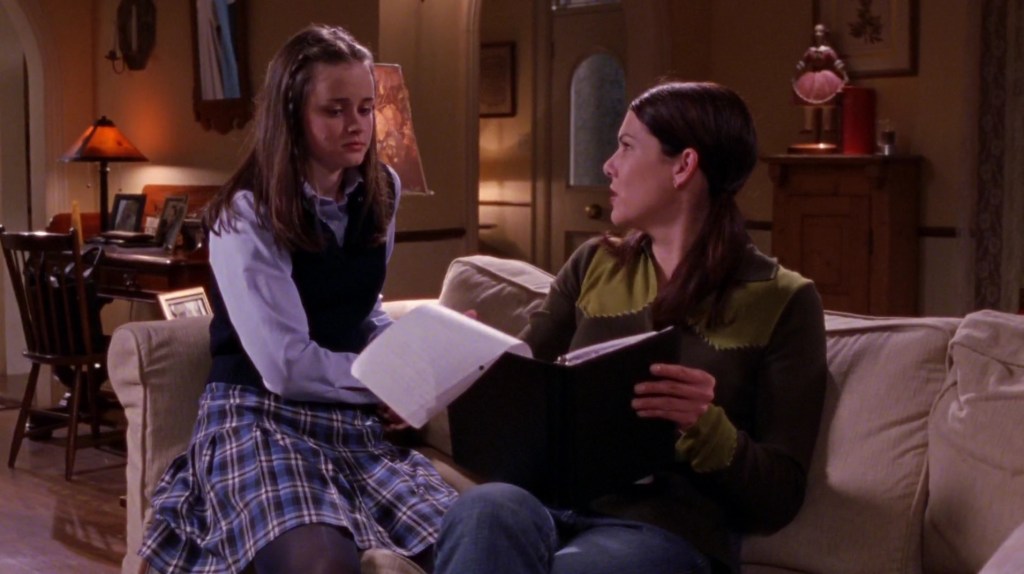
PARIS: I want everyone to read the chapters on acting I photocopied out of Houseman’s memoirs tonight.
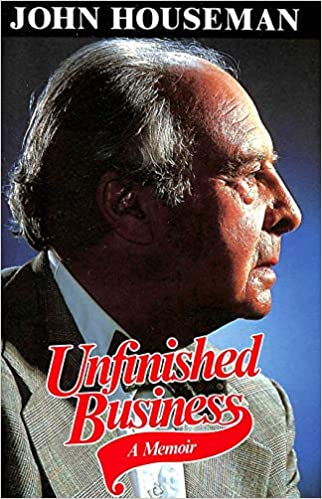
Paris gives the group chapters photocopied from Unfinished Business: Memoirs 1902-88, written by John Houseman, Romanian-born British-American actor and producer of theatre, film, and television. His memoirs were published in 2000.
PARIS: We’re doing traditional Elizabethan. RORY: Elizabethan? But I thought the point of this was to . . . PARIS: The point is to get an A, not to make Romeo and Juliet into a Vegas lounge act. Besides, we have the death scene. It’s classic, it’s famous.
Surely Rory is right, and the point is to provide your own unique interpretation of the scene? I can’t see how they could get any more than a B+ for the project doing it Paris’ way, and a very strict teacher (which Chilton is meant to have) might even give them a D for not following instructions.
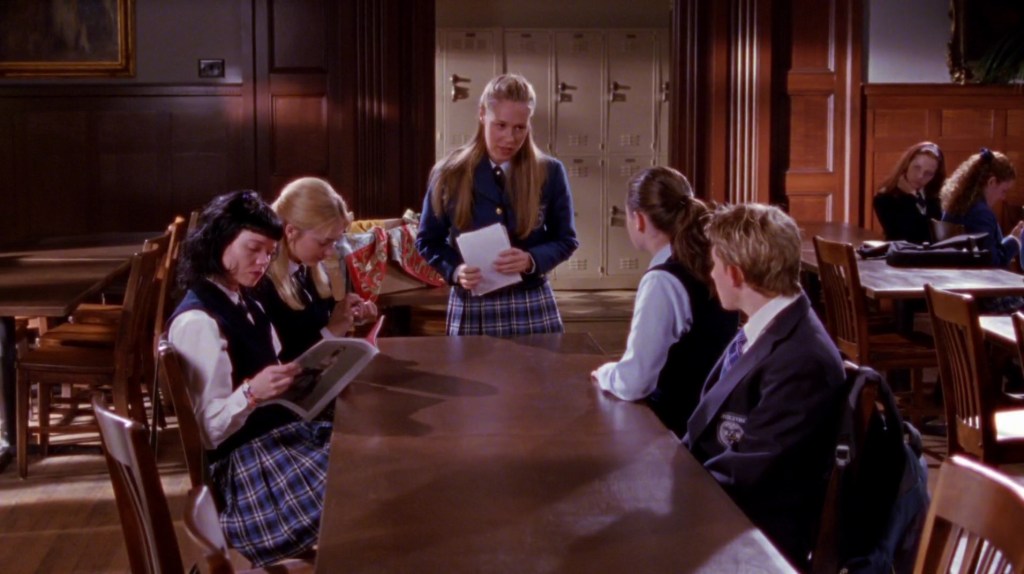
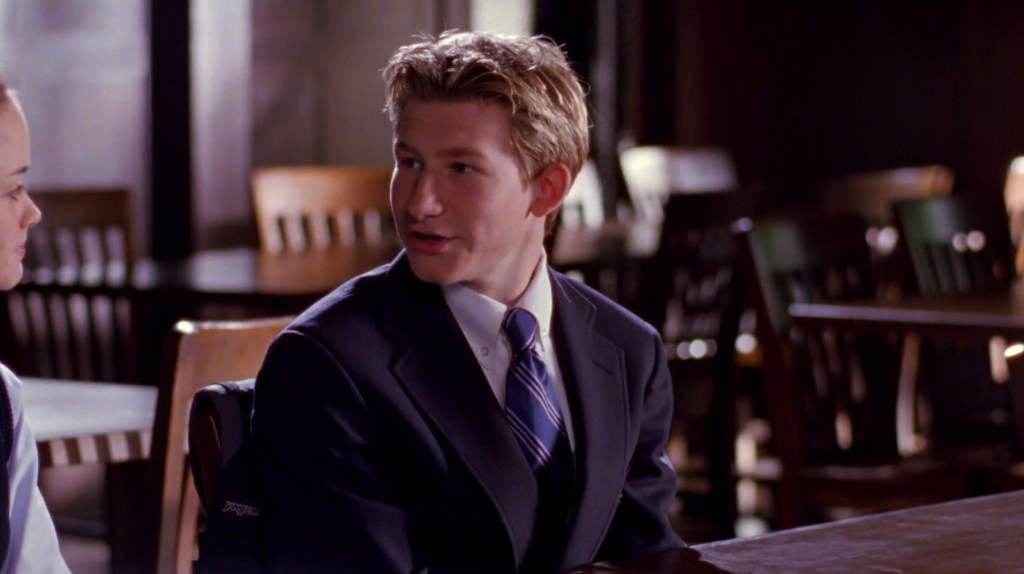
BRAD: I’m Brad. From the third period Shakespeare. LOUISE: He’s the answer to our lack of boys problem. Isn’t that swell?
This is the first time we meet Rory’s schoolmate Brad Langford, played by Adam Wylie. Although uncredited for this episode, Wylie was already an experienced actor with a lengthy CV. Brad was a gentle soul who lived in terror of Paris, and seemed to get along fairly well with Rory.
Brad is roped in to provide a male character for their group project, even though he tends to throw up from nerves when speaking in public. This leaves the role of Romeo open for Tristan.
RORY: Hey. MADELINE: Hey. LOUISE: We’re the Monkees.
The opening words to the theme song of The Monkees television show, a sitcom running from 1966 to 1968, starring the American pop group, The Monkees, as four young men trying to make it as a rock and roll band. The verse says:
Hey hey, we’re The Monkees
And people say we monkey around
But we’re too busy singing
To get anybody down
The show utilised a number of innovative new wave film techniques to the sitcom format, and won two Emmy Awards, including Outstanding Comedy Series. Even after its run ended, it continued its popularity thanks to reruns, in particular a massive resurgence after 1986, when it was shown on MTV.
Note that this is essentially the same joke used in regard to Fat Albert in Like Mother, Like Daughter.
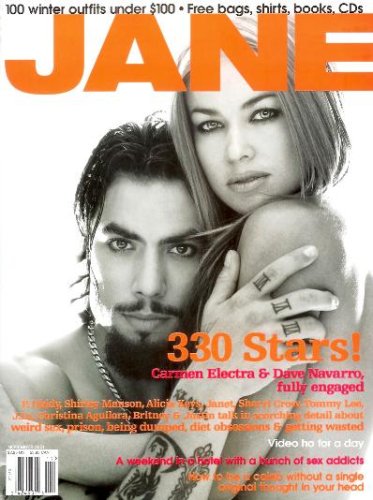
While waiting for the group project meeting to start, Madeline reads Jane magazine (1997-2007). This was a women’s fashion magazine founded by Jane Pratt, aimed at the 18-34 market, and designed for those young women who had grown up with Sassy (1988-1996), a feminist magazine for teenage girls which had Pratt as the first editor. Jane’s reputation was for being witty, quirky, trashy, and occasionally thoughtful, with a readership who saw themselves as “wild and crazy” party girls.
It folded because it’s young readership were now getting more interested in digital platforms, such as Jezebel. Jane Pratt went on to found the infamous xoJane online magazine (2011-2016).
Madeline is reading the November 2001 issue with Carmen Electra and Dave Navarro on the front cover. This issue actually had a double front cover, and you can see Madeline holding up the one with Shirley Manson, P. Diddy, and Alicia Keys on it. The magazine that month had interviews with other music stars, including Jennifer Lopez, Janet Jackson, Sheryl Crow, and Tommy Lee.
PAUL: I think it’s a conspiracy getting us ready for the day we’re all gonna be raised by machines. No human contact whatsoever. LORELAI: You know my mother, don’t you? PAUL: The, uh, Twilight Zone marathon was on all week.
The Twilight Zone, an American media franchise created by Rod Serling. Each episode is in genres such as science-fiction, fantasy, suspense, or horror, often with a macabre or unexpected twist, and usually with a moral attached. The original series ran from 1959 to 1964, and it was revived in 1985, 2002, and 2019, as well as being made into films and a radio show, and inspiring various books, games, and theme park attractions. A popular and critical success, it is considered one of the best television series ever made.
Paul’s theory about being raised by machines with no human contact sounds like something from The Twilight Zone, although I can’t locate an episode with the same plot. It’s a tiny little bit like the 1962 episode I Sing the Body Electric, written by Ray Bradbury, about three children raised by a robot “grandmother”. Far from being a nightmarish scenario, the robot carer is kind and empathetic, and the children love her dearly.
Paul enjoys science-fiction shows, like Lorelai (and like Luke). It must be one of the reasons she feels drawn to him. Although mentioning you have mummy issues before you even get to the first date doesn’t seem like a great idea.
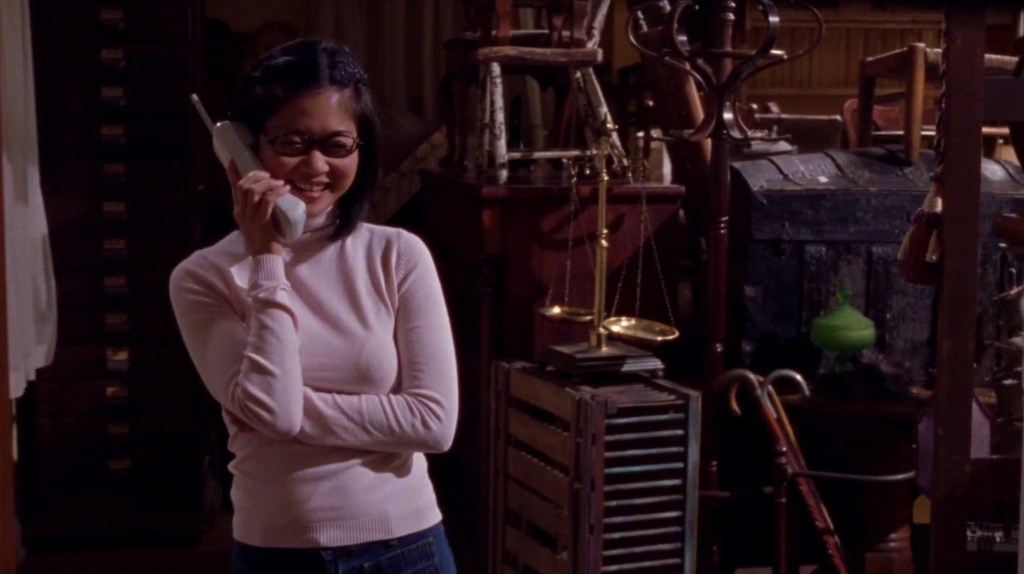
Rory helps Henry organise a three-way or party line conversation so that Lane and Henry can talk, while Mrs Kim believes that Lane is talking to Rory. It was done by calling the first person, then pressing the FLASH button before dialling the next person then pressing FLASH again. It cost extra and showed up on the phone bill. It’s still possible to do on a landline today, as well as a mobile phone.
This is the first thing Rory has done to help Lane and Henry, and it’s pretty minimal. Lorelai seems to be aware of the deception towards Mrs Kim, but doesn’t feel any need to tell her the truth despite her supposed “mom code”. Henry met Lane eight months ago, and must be very keen to be kept interested with occasional five minute phone calls, conducted with some difficulty.
As Lorelai begins calling relatives to find out if they sent her the ice cream maker, we learn a few names from the extended family. They are identified as aunts and uncles, which may be courtesy titles for any elderly distant relatives. Or they could be Richard’s aunts and uncles, the siblings of either Trix, or Richard’s father.
Aunt Bobbie. Aunt Bobbie is a traditional Bible-thumping Christian, by the sounds of it.
Aunt Clarissa. Turns out to have recently died. Aunt Bobbie seems to suggest a belief that Clarissa would have been hell-bound.
Aunt Bunny. Has also died.
Uncle Randolph. The older brother of Bunny. Lorelai doesn’t seem to think he has much longer to live.
The Pennsylvania Gilmores. A branch of the family in this state is next on Lorelai’s list. It sounds as if she is working her way through the Gilmore side of the family first.
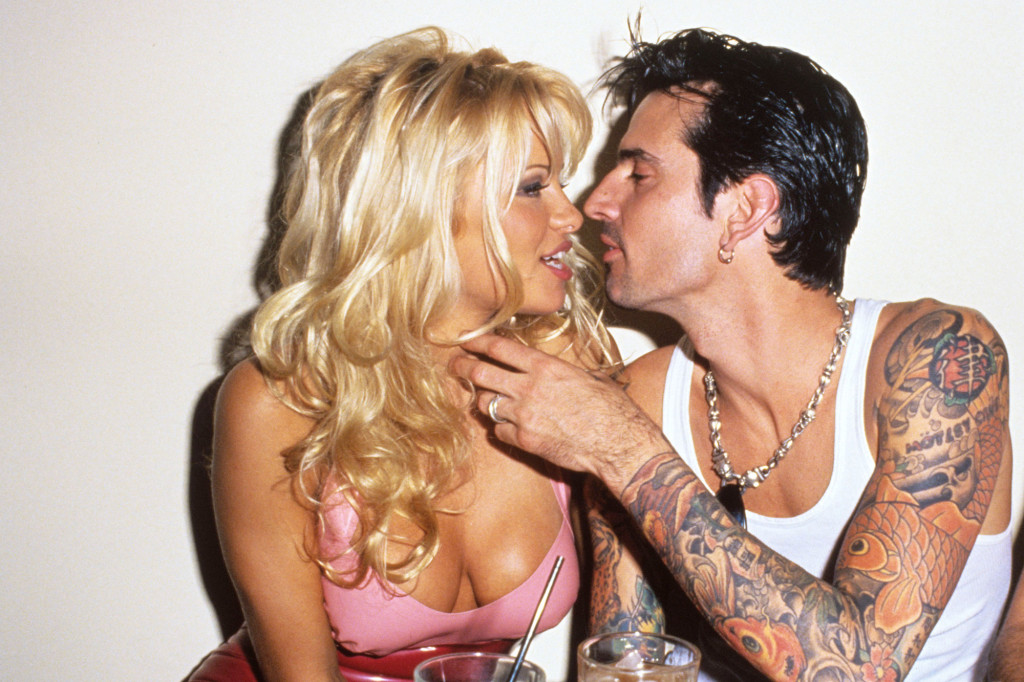
LORELAI: Sell it on the Internet, make a fortune. First we brought you Pamela and Tommy Lee, now prepare yourselves for the crazy antics of Rory and the Bard!
Pamela Anderson (born 1967), Canadian-American actress, model, and author, previously mentioned. In 1995, she married her first husband, Tommy Lee (born Thomas Bass in 1962), drummer for heavy metal band Mötley Crüe.
A sex tape of the couple on their honeymoon was stolen from their home in 1995, and widely discussed on the internet. Anderson sued the video distribution company, but eventually Pamela and Tommy entered into a confidential settlement agreement with the company, so that the sex tape was once again made available to subscribers, resulting in triple the normal traffic to their websites. Sceptics believe that the whole thing was a publicity stunt.



 The Annotated Gilmore Girls