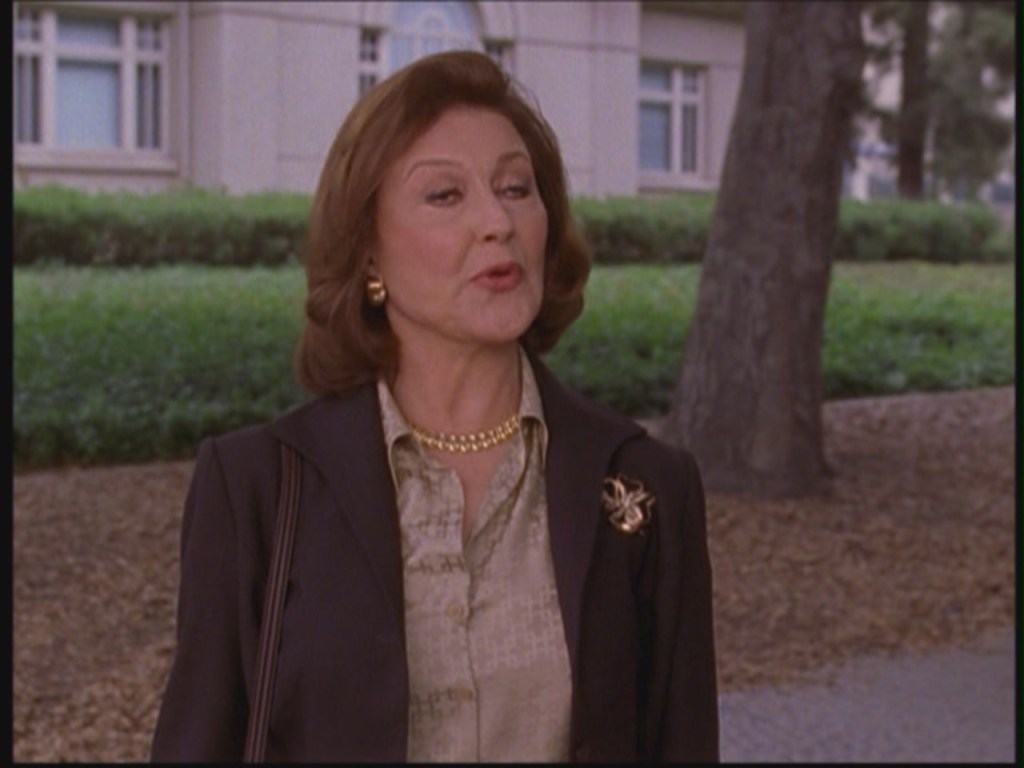
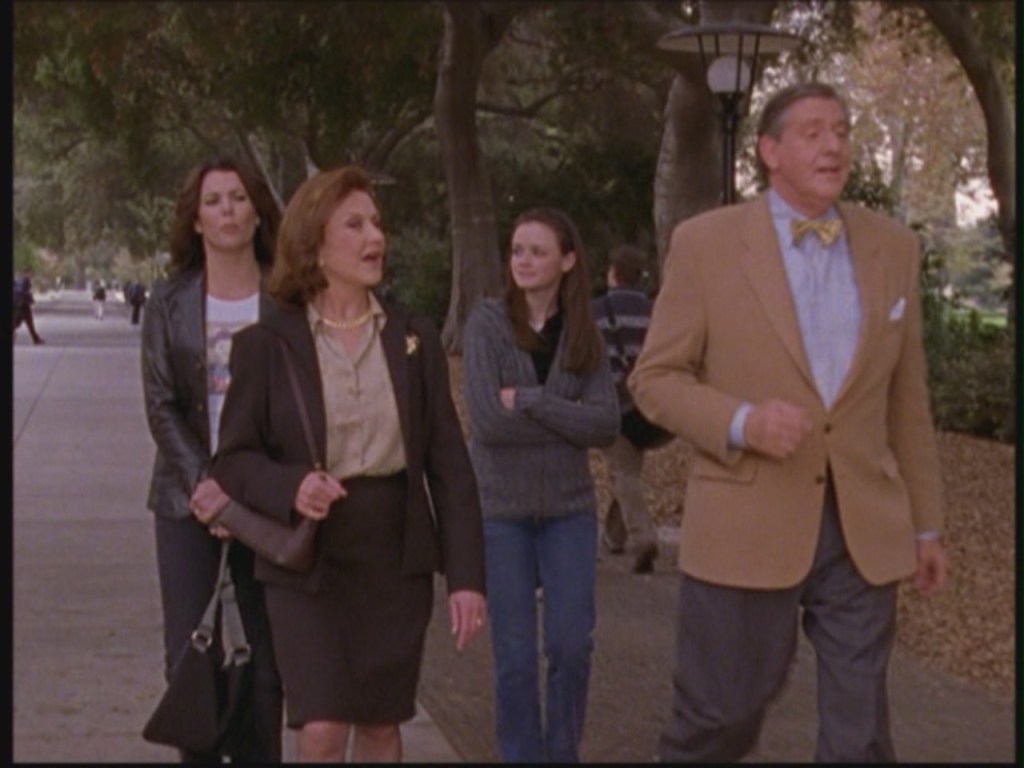
EMILY: Richard Gilmore, you are going to give these girls the wrong impression.
RORY: What impression is that, Grandma?
LORELAI: That you were the Helena Bonham Carter of the society set?
Helena Bonham Carter (born 1966), English actress. She rose to fame in 1985 film A Room With a View, and became a favourite choice for playing a virginal “English rose” in period dramas – something she was uncomfortable with. Bonham Carter gained worldwide recognition in the 2000s, and has had many major roles, including awards for biographical film and TV The King’s Speech, Enid, and The Crown.
Lorelai is referring to the fact that in 1994, Helena Bonham Carter began an affair with fellow actor Kenneth Branagh while they were filming Mary Shelley’s Frankenstein, even though Branagh was married to actress Emma Thompson at the time (they married in 1989).
Branagh and Thompson divorced in 1995, and Bonham Carter and Branagh broke up in 1999. They have all made peace with one another now, and the three of them had major roles in the Harry Potter film series. Helena Bonham Carter married director Tim Burton in 2001, the year before this episode aired. They divorced in 2014.
Amy Sherman-Palladino seems to have modelled her image very heavily on Helena Bonham Carter, who is known for her eccentric fashion and dark aesthetic, and for playing quirky female roles. I’d imagine she would be one of Sherman-Palladino’s favourite actresses, as well as her style icon.
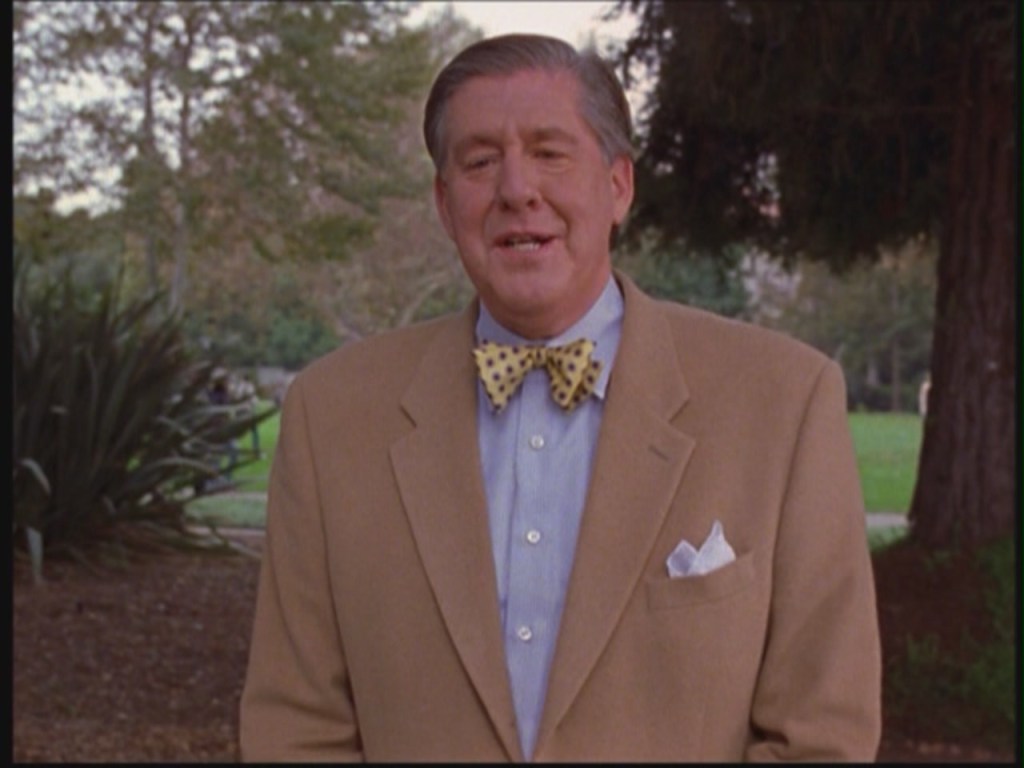
RICHARD: I’d given her my pin, I’d introduced her to my parents … The date was set, invitations mailed out.
Although Emily denies that Richard was ever actually engaged to Linny Lott, he claims that a wedding date had been set and invitations mailed out, which sounds pretty solidly engaged to me.
In a former episode, Richard said he almost married a woman named Lucinda Lester, until Emily set her sights on him, due to his prowess at fencing reminding her of her celebrity crush, Errol Flynn.
Although it’s possible that Richard almost married two women with the initials LL he met in college, this does feel like a retcon, with Lucinda becoming Linny. Emily claimed Lucinda had a moustache, something she never says about Linny or Pennilynn.
Richard’s ex is called “Linny Lott” in this episode. Later she is called Pennilynn Lott. Linny sounds like a reasonable nickname for Pennilynn, but mysteriously, she is never again referred to as “Linny”.
Emily criticises Linny as too meek and mousy, with a rambling, discursive style of speech. Later, Richard’s mother has a quite different assessment of her, and this does not seem like a very good description of the woman we later meet.
EMILY: And then he’d talk about the paintings he had seen in Paris and the colors of Titian, and by the end of the date, you thought he was the most brilliant man in the entire world.
LORELAI: Using Titian to score. Even Titian didn’t do that.
Tiziano Vecelli, known in English as Titian (c.1489-1576), Italian painter of the Renaissance and considered the most important artist of the 16th century Venetian school. Titian was one of the most versatile of Italian painters, equally adept with portraits, landscape backgrounds, and mythological and religious subjects. His painting methods, particularly in the application and use of colour, exercised a profound influence not only on painters of the late Italian Renaissance, but on future generations of Western artists.
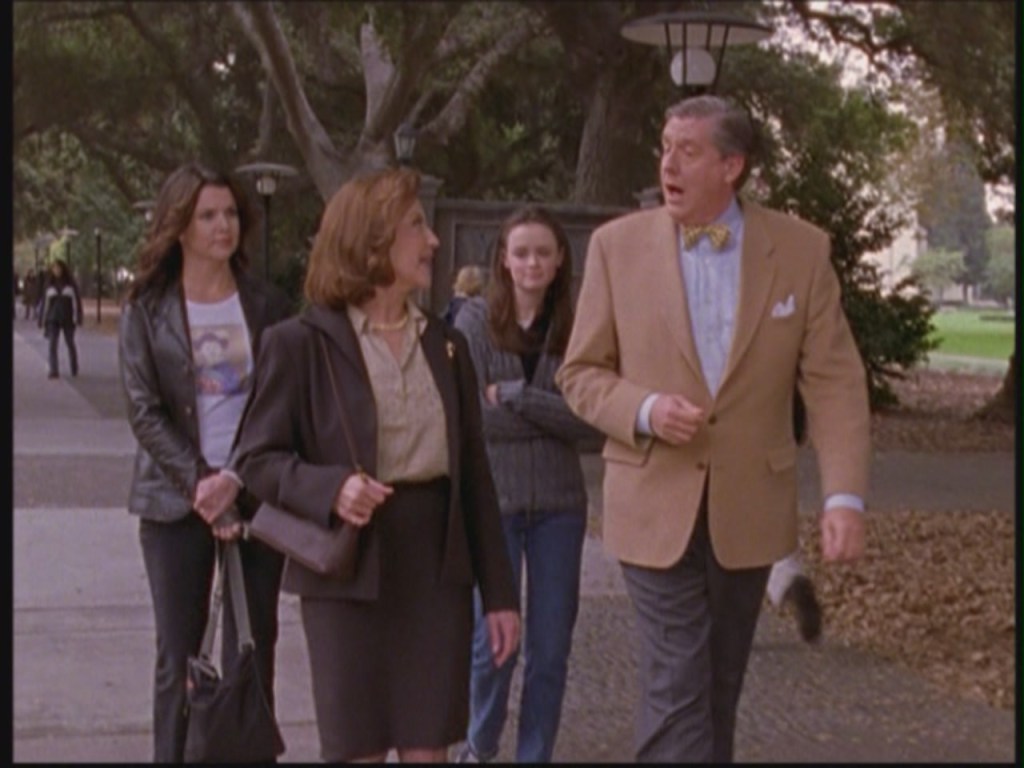
RICHARD: Yale has one of the finest collections of British art in the world.
LORELAI: Louvre, schmouvre.
The Louvre is a historic landmark in Paris, and the world’s most visited museum. It is home to some of the world’s best known art pieces, including the Mona Lisa, and the Venus de Milo. Housed in the Louvre Palace, originally built in the 12th century under Philip II, the museum first opened in 1793, and contains more than 380 000 objects and more than 35 000 artworks.
RORY: Grandpa, that art gallery was amazing. Thank you.
RICHARD: Yale has one of the finest collections of British art in the world.
Richard refers to the Yale Center for British Art, which houses the largest and most comprehensive collection of British art outside the UK. The collection of paintings, sculpture, drawings, prints, rare books, and manuscripts reflects the development of British art and culture from the Elizabethan period onward.
It was established in 1966 by a gift from philanthropist and Yale alumnus Paul Mellon, together with an endowment for operations of the centre, and funds for a building to house the works of art. It is across the street from the Yale University Art Gallery [pictured], and no doubt Richard has taken Rory there as well – this could well be the amazing art gallery she speaks of.
The Yale University Art Gallery is the oldest university art museum in the Western Hemisphere. It houses an encyclopedic collection of art in several interconnected buildings on Yale’s campus. It was founded in 1832, after patriot artist John Trumbull donated more than 100 paintings of the American Revolutionary War.
It turns out that the art gallery at Yale was one of Richard’s favourite places to bring girls on dates, in order to impress them with his knowledge of art.
LORELAI: Wow, does that guy look smart. I mean it, he’s got the smart look down. The glasses, the furrowed brow, the ticky walk.
RORY: The Kierkergaard.
Søren Kierkegaard (1813-1855), Danish theologian and philosopher, widely considered to the first existential philosopher. Much of his philosophical work deals with the issues of how one lives as a “single individual”, giving priority to concrete human reality over abstract thinking and highlighting the importance of personal choice and commitment. By the mid-20th century, his thought had exerted a substantial influence on philosophy, theology, and Western culture in general.



 The Annotated Gilmore Girls