Progressive Rock

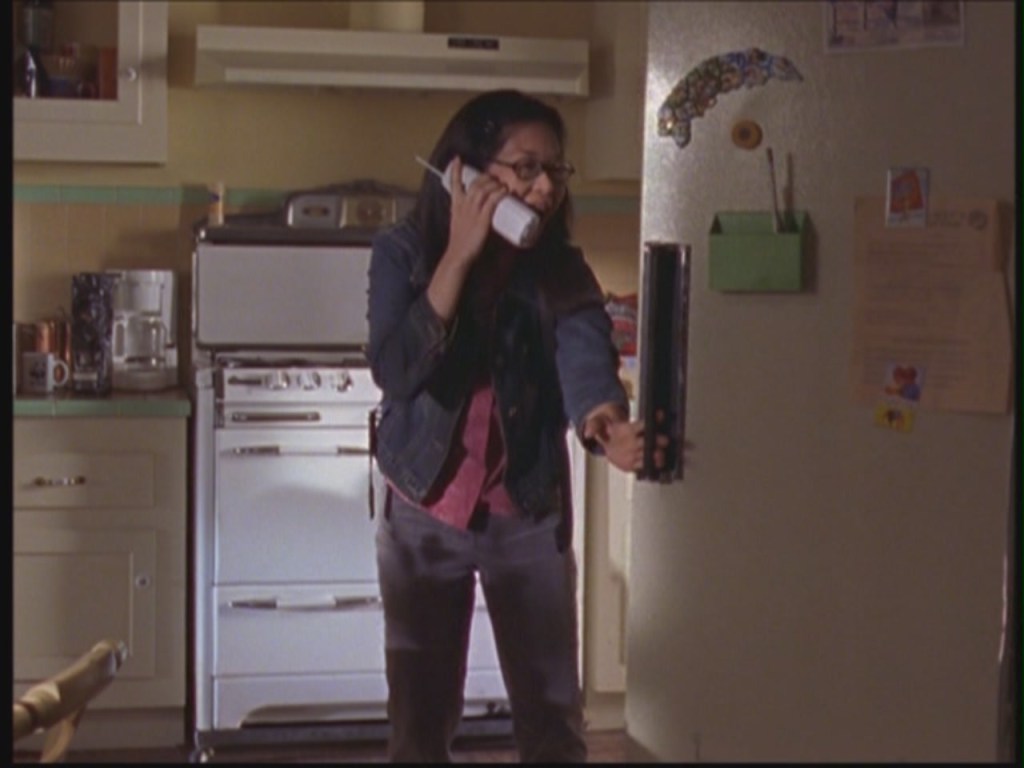
LANE: [on phone] No, wait, wait, wait, progressive rock is a really passé style now but I listed it as an influence because it was a progenitor of great things that came afterwards.

Progressive rock, usually shortened to prog rock or just prog, a broad genre of rock music developed during the mid-to late 1960s, peaking in the early 1970s. Initially termed “progressive pop”, the style grew out of psychedelic bands who abandoned standard pop traditions in favour of instrumentation and composition more often associated with jazz, folk, or classical music.

Additionally, lyrics were more poetic, technology was harnessed for new sounds, music approached the condition of “art”, and the studio, rather than the stage, became the focus of musical activity, which often involved creating music for listening rather than dancing. Examples of prog rock bands include Emerson Lake & Palmer, Genesis, King Crimson, The Moody Blues, and Pink Floyd.

Lane says that progressive rock is passé, in that its heyday was in the 1970s, but in fact there were a wave of bands in the 2000s who revived the genre, such as System of a Down and Thirty Seconds to Mars. Perhaps that’s what she means by it being a progenitor of great things?

Lane is receiving responses to the advertisement she posted looking for a band that needed a drummer. Naturally she is deluged with enquiries, beginning early in the morning! Yes, the local area is filled with bands looking for a drummer, scanning the advertisements for one, and eagerly calling before breakfast to find them! We are in complete fantasy land here. Instead of being stunned that she gets any answers at all, Lane is irritated that they aren’t all on her musical wavelength.

Paris Freaks Out

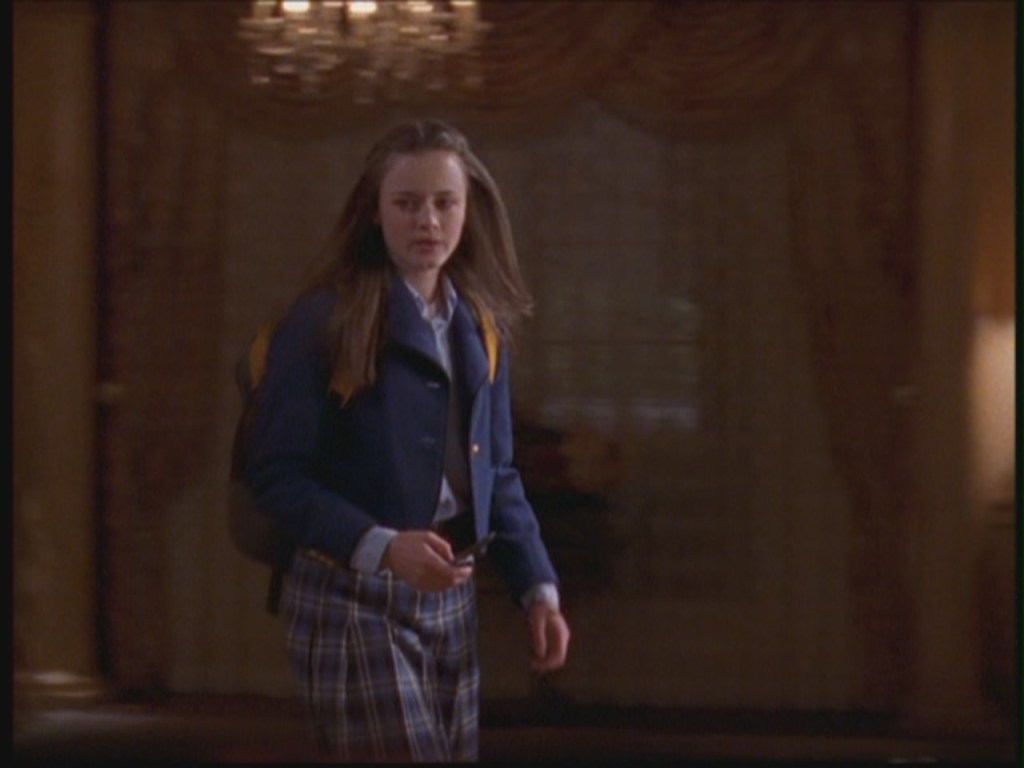
PARIS: What the hell did Romaine mean when he was going on about weeding out the hyper-intense in the interview process? He stopped just short of calling me by name, I’m losing it!

Paris also freaks out over the college panel, even having to run home and throw up out of anxiety. She’s especially upset that Mr Romaine mentioned weeding out “the hyper-intense” during college interviews. In a future episode, Paris will indeed miss out on a place in her first choice of college because of her hyper-intense interview.

Note that Rory has a cell phone for the first time in this scene – previously, she always used a pager. Don’t get attached to the cell phone, she will revert to using a pager in the very next episode. It’s possible that Paris called Lorelai’s phone, and Rory was borrowing it; Lorelai has lent Rory her phone before.

Rory and Lorelai Freak Out

Rory and Lorelai share their application anxiety with each other, as these two finally get a reality check and realise that it’s possible Rory won’t just waltz into Harvard. It’s unbelievable that Chilton wouldn’t have prepared her for the rigours of a college application – they’re a Harvard feeder school! Instead she discovers it for herself, through an after-school panel that she and Paris had to organise.

This sudden realisation is mostly for reasons of plot – it’s much more dramatic for Rory and Lorelai to receive a sudden shock. The result is to make Chilton look utterly useless – why are parents paying huge fees to send their children to Chilton, where they are getting less help to prepare for college than a local public school would give?

The Bus Stop

EMILY: You look flushed.

RORY: I ran from the bus stop, I’m okay.

In the very first episode of Gilmore Girls, Emily said that Chilton was five minutes from their house. That may have been an exaggeration, but the show has always implied that Rory’s grandparents lived within walking distance of her school. Now she seemingly has to catch a bus to reach her grandparents’ house.

Perhaps their house is 5 minutes drive from Chilton, or around 20 minutes walk. It’s possible Rory usually walks the mile or so to get there, but took a bus this time, worrying that she would be late for dinner.

Kate Hudson

EMILY: I was watching TV and that insipid Kate Hudson was talking about going to a university. If she decides to go to Harvard, she’ll get right in over Rory, who we know is more qualified.

Kate Hudson (born 1979), actress, the daughter of actress Goldie Hawn and singer and actor Bill Hudson, although raised by her mother and stepfather, actor Kurt Russell. Her film debut was in Desert Blue (1998), and at this stage, her best known film was Almost Famous (2000) [pictured]. Her most recent movie in 2002 was the war film The Four Feathers, released in September, around the same time as the events of this episode, which was panned by critics. She went on to greater success during the 2000s, and has won several awards.

Kate Hudson was accepted into New York University’s Tisch School of the Arts in 1997, but turned it down to concentrate on her acting career. I don’t know what television program Emily could have been watching – by this stage, Kate Hudson was 23, and not exactly college aged.

The Brat Pack

EMILY: And now it’s the in thing for young Hollywood celebrities to go to universities. What do they call themselves, the Brat Pack?

LORELAI: About a hundred years ago.

The Brat Pack, a nickname given to a group of young actors who frequently appeared together in teen coming-of-age films in the 1980s. It was first mentioned in a 1985 New York magazine article, used to describe Emilio Estevez, Rob Lowe, Judd Nelson, and most of the cast of The Outsiders. Later on, the definition (somehow?) seems to have narrowed to refer to those actors who starred in The Breakfast Club and/or St Elmo’s Fire. But there is no set definition of who was in the Brat Pack and who wasn’t.

The label brought negative attention to the actors, who hated it, and they stopped socialising together. It certainly was not something they called themselves, but an unwanted label foisted upon them. The journalist who coined the expression later admitted he shouldn’t have done it.

The name “Brat Pack” was coined in imitation of the “Rat Pack”, an informal group of A-List show business friends in the 1940s and ’50s, centred on Frank Sinatra, Dean Martin, and Sammy Davis Jr. It is important to note that the Rat Pack is what the group called themselves, the Brat Pack was a name created by the media.

Random College Admissions

EMILY: Every child that applies has the same high grade point average, they’ve taken the same AP classes, and they’re all on the student council … One college admissions officer said that he sometimes puts a random stack of applications in the yes pile and the rest in the no pile because he knows it doesn’t make any difference. He doesn’t even so much as glance at them.

It’s true that it’s very difficult to tell apart applications from high-achieving students who’ve all been to Ivy League feeder schools and all got the same grades in the same classes. And a college admissions officer only has a few minutes to decide whether an application should go on the yes or no pile. It’s a hard decision to make in a very competitive Ivy League college environment.

However, like Lorelai, I find it hard to believe this story – most of all, I find it hard to believe in a college admissions officer who would openly admit to this practice in a print publication. I think Emily must have got over-excited, and what they really said was something like, “Sometimes it seems as if I might as well choose the applications randomly when they are all so similar”. Or else the magazine just made it up.

College admissions officers certainly admit that it’s a tough decision to make, and that they don’t always make the right choice – many of them have stories about rejecting a candidate who didn’t seem quite good enough, and then they went on to become something amazing. (They also remember the times they had to grit their teeth and let in terrible candidates because they were on athletics scholarships or had bought their way in). In any case, the final decision is made by a committee, it isn’t just one person deciding who gets in.

Yo-yo

EMILY: With the dot-com bust and the job market dwindling and the stock market going up and down like a yo-yo …

A yo-yo is a toy which is basically a spool on a long string, which can be wound up and down and spun in different directions. They have been used as a toy, aparently since ancient Greece at least. In the US, the Yo-yo Manufacturing Plant was opened in Santa Barbara in 1928 by Filipino immigrant Pedro Flores – the word yo-yo itself comes from the Phillipines. The company was bought by Donald F. Duncan in 1932.

Yo-yos were popular toys in the 1930s, but sales declined after World War II, leading Duncan to launch a comeback campaign in the 1960s. They grew popular again during the 1970s and 1980s, and hit their peak in the late 1990s.

Dot-Com Bust

EMILY: With the dot-com bust and the job market dwindling and the stock market going up and down like a yo-yo, everyone and his brother knows the best chance for success and financial security is not just to go to college, but to go to a top college.

The dot-com burst, or bust, was the ending of the dot-com bubble of 1997-2001, previously mentioned, involving excessive speculation in internet-based services and businesses. Higher interest rates are generally thought of as a major contributor to the dot-com burst. The stock market had a significant downturn in September 2002, the time of the events of this episode, which is why Emily is probably more alarmed about the economy than usual.