“Would you like to go out to dinner some time – with me?”

Sookie and Jackson have been shown doing nothing but bicker over the quality of his produce since the start of the show. In the conventions of romantic comedy, when two people keep arguing “like an old married couple”, the audience knows they are destined to be together some day.

Sookie is genre-savvy enough to know that the person she has been bickering with must be her romantic destiny: Jackson even acted like a jealous lover when Sookie checked out somebody else’s fruit. She takes immediate action, showing that she really is quite the relationship expert.

Her choice of Jackson is a practical one for another reason: she said she didn’t have time to meet people as she was so busy at the inn, so it makes sense for her to ask out someone she knows through work.

It is notable that while Sookie is always interested in Lorelai’s potential relationships, and gently pushes her toward Luke (her obvious romantic destiny in the show), Lorelai doesn’t reciprocate. She’s never said anything to Sookie except to grumpily tell her that as a long-term single, her opinion on relationships is worthless, and has never given her the tiniest nudge towards Jackson, who they both see nearly every day.

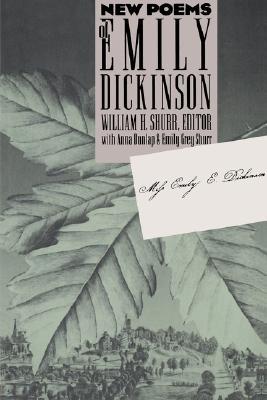
New Poems of Emily Dickinson

This is the book that Rory is reading in the school cafeteria just before she confront Paris about the the gossip she has been spreading about Lorelai and Max.

New Poems of Emily Dickinson, edited by William H. Shurr and others, presents 500 new poems that were found embedded in Emily Dickinson’s correspondence. The book was first published in 1993, and republished in 1999.

This isn’t the textbook that the English Literature class used to study Emily Dickinson, and that assignment is over anyway. It shows that Rory continues to follow up and expand on things she learns at school for her own interest and satisfaction – one sign of an excellent student.

“Call it Al”

EMILY: A mistake? A mistake? Is that what you call it – a mistake?
LORELAI: Well I tried to call it “Al” but it would only answer to “mistake”.

Lorelai is referencing the 1986 pop song You Can Call Me Al by Paul Simon. The song was the lead single from his hit album Graceland, which won the Grammy Award for Best Album the following year.

The song’s lines about the narrator calling the woman Betty while she can call him Al was inspired by a party he attended with his then-wife, Peggy Harper. A French guest misheard Paul’s name as “Al”, and his wife’s as “Betty”. However the song is about a midlife crisis which becomes a cultural crisis and spiritual redemption when he goes to Africa, as Paul Simon did for the Graceland album.

The song was Paul Simon’s biggest solo hit single around the world, but struggled at first in his home country, eventually reaching #23 in the US.

“The reason you’re even in this school”

RORY: You made up these stupid rules years ago about the way the Gilmore women would run their lives and now you’re sticking to them even though they’re crazy!
LORELAI: Oh hey, my crazy, stupid rules are the reason we’re doing so good in our lives. They’re the reason you grew up the way you did, the reason you’re even in this school, and the reason you’re going to go to Harvard, so don’t you dismiss my rules.

The reason Rory is at Chilton is because her grandparents are paying for it, not because of Lorelai. In fact Lorelai broke her usual rules by asking her parents for money, so it’s by not sticking to the “crazy, stupid rules” that Rory is at Chilton.

“We could hurt Rory”

LORELAI: Look it is what I’ve been trying to tell you all along. This is a family. Rory and I, you walked into a family, but you weren’t listening and now she’s getting attached and I’m afraid she’s gonna get hurt.
MAX: So you solution to all of this is not to return my calls
LORELAI: It just took me a while to figure things out and it all came clear when I realized how much we could hurt Rory.
MAX: Don’t you mean how much we could hurt Lorelai?

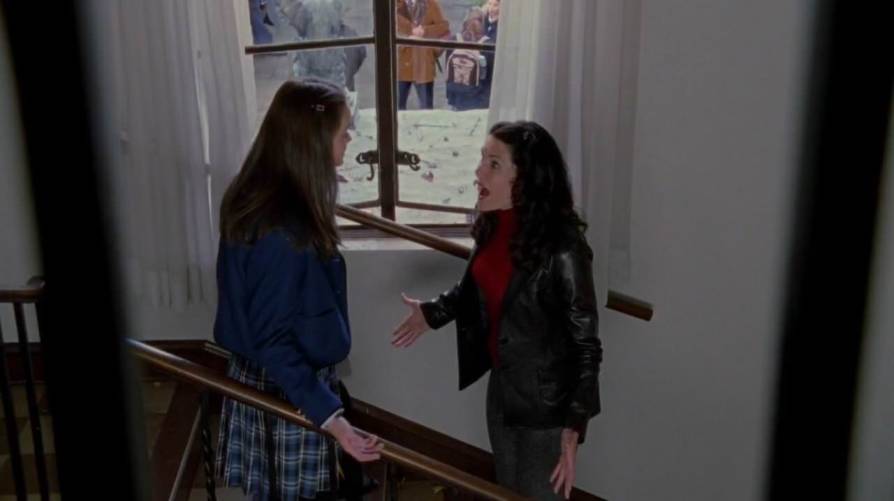
After deciding that Rory is old enough for Lorelai to openly date men with her full knowledge, Lorelai suddenly panics when she worries how a break up with Max might affect Rory. It’s a little bit unbelievable, as Rory has hardly “got attached” to Max – apart from seeing him at school, they had one very brief conversation together when he came to pick Lorelai up for a date.

Max immediately calls her out on it, seeing that what Lorelai really fears is getting hurt herself. It’s Lorelai who is “getting attached” to Max, and fears the consequences to herself if they ever broke up. Once again, she is using Rory as an excuse to avoid a long-term committed relationship.

Rory later says she can’t believe Lorelai is “blaming her” for her relationship difficulties with Max, showing that she doesn’t appreciate being used an excuse.

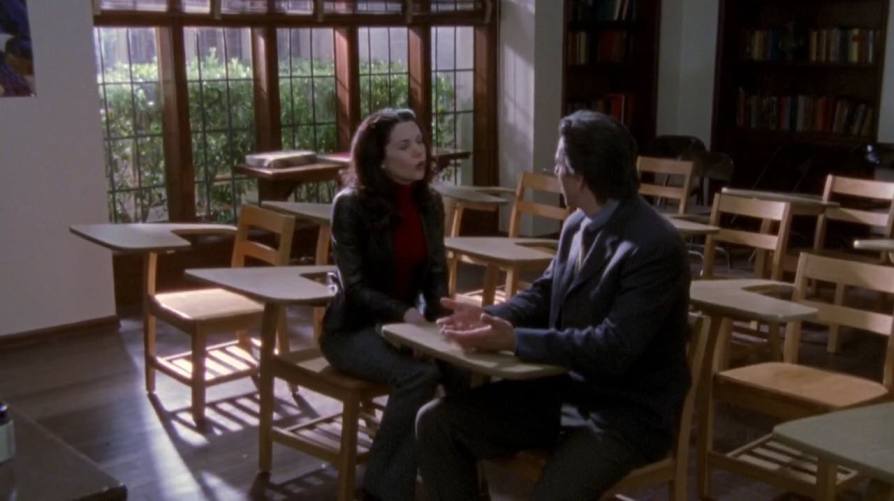
When Lorelai meets Max at the cafe, she admits that worrying about Rory very soon jumped to worrying about herself.

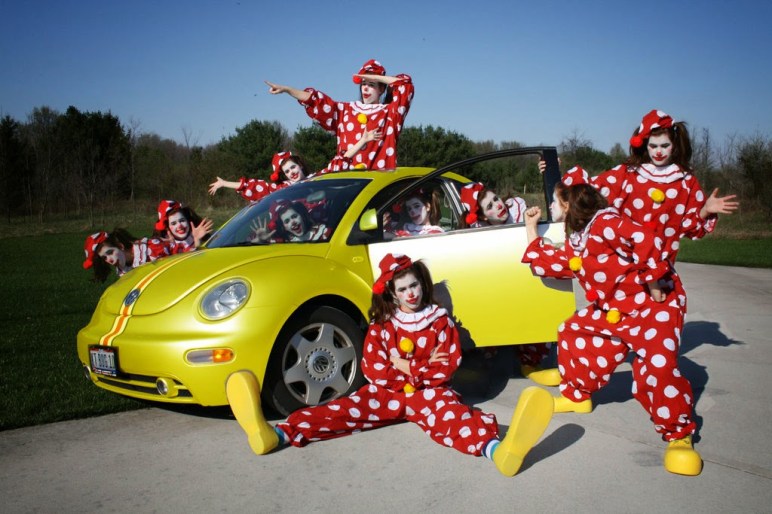
“A hundred clowns crammed into a Volkswagen”

LORELAI: I just need space.
MAX: Well I don’t. In fact I want as little space as possible. A hundred clowns crammed into a Volkswagen. That’s the kind of non-space I’m talking about.

An popular clown sight gag is for a number of clowns to be crammed into a small car, and then come out, making it seem as if the car is much bigger than it appears. The trick requires the car to be modified so that there is nothing inside it (no seats etc), and for the clowns to be very flexible and pretty uncomfortable. It was first used in the Coles Brothers Circus in the 1950s.

The number of clowns involved is usually around 14-21, but the record number of people jammed into a small car is 28 gymnasts into a Mini. Obviously gymnasts are extremely limber and aren’t wearing baggy costumes and holding props, so this number wouldn’t be feasible for clowns. A Volkswagen Beetle would be a classic vehicle to use as the car, as they are small, and sort of cute and comical looking anyway.

This comment from Max is something of an in-joke. Scott Cohen, who plays Max Medina, first began his career in the entertainment industry through taking a course in clowning at university – his teacher encouraged him to audition for a theatre company. One of Cohen’s early screen roles was a flirtatious driver in a 1999 Volkswagen Passat television commercial.

English Literature Class

While talking to his class and their parents on Parents’ Day, Max explains that they will be spending the next two weeks on a creative writing assignment. However, that doesn’t mean they will stop reading, as writers find inspiration reading other writers that they admire. He mentions several writers during his short speech.

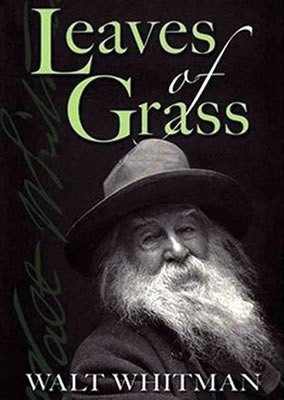
Walt Whitman (1819-1892) was an American poet, essayist, and journalist. Highly influential, he is often called “the father of free verse”. His major work is his poetry collection Leaves of Grass (1855), originally self-published and very controversial at the time. The class must have just finished studying Walt Whitman, as their assignment on him is due the next day.

Homer is the name the ancient Greeks gave to the traditional author of The Iliad and The Odyssey, two epic poems which are the central works of ancient Greek literature. Walt Whitman first read Homer as a teenager, read his works frequently, and regarded Homer as the ideal to which all poets should aspire.

Dante, born Durante Alighieri (c1265-1321) was a major medieval Italian poet. His epic poem The Divine Comedy is considered the most important poem of the Middle Ages and the greatest literary work in the Italian language. Walt Whitman greatly admired Dane’s economy of language, and re-read The Inferno (the section of The Divine Comedy devoted to Hell) as part of his preparation for becoming a nurse during the American Civil War.

William Shakespeare was another of Walt Whitman’s literary idols. He believed that Homer, Shakespeare, and the Bible were the pinnacle of poetic vision.

Edna O’Brien (born 1930) is an award-winning Irish author, regarded as changing the nature of Irish literature, and one of the finest writers in the English language. Her first novel was The Country Girls (1960), credited with breaking silence on sexuality and social issues in post-war Ireland. It was banned and even burned in Ireland. In 2000 her most recent novel was Wild Decembers (1999), set in Ireland during the 1970s.

I have not been able to locate the source of O’Brien’s quote about Marcel Proust, but he is one of her favourite authors.

Ditch Day

LORELAI: Mr. Medina’s class, huh?
RORY: The fancy book owner himself.
LORELAI: How does first annual mother/daughter ditch day sound?

Ditch day (also called skip day) is a tradition in some American schools where the majority of the senior class “ditch” or skip school on one particular day. It’s usually in the spring, at the end of the school semester.