The Miracle Worker

LANE: Let me guess. You and Lorelai haven’t made up yet?
RORY: Nope. Things are still very Miracle Worker at my house.

Most likely a reference to the 1962 biographical film The Miracle Worker, directed by Arthur Penn and based on the 1959 play of the same name by William Gibson (originally part of the 1957 television drama anthology Playhouse 90); Gibson wrote the screenplay for the movie.

The film is the story of Anne Sullivan (1866-1936), the sight-impaired teacher of Helen Keller (1880-1968), who had become both blind and deaf at a very early age. Anne was able to break through Helen’s almost total isolation from lack of language, allowing her to communicate with the world by spelling words into her hand and teaching her to read Braille.

Helen made remarkable progress at a school for the blind with Anne’s support, and went on to become the first blind person to earn a bachelor of arts degree, forging an inspirational career as an author, political activist, and lecturer.

William’s Gibson’s source for The Miracle Worker was Helen Keller’s 1902 autobiography, The Story of My Life, and the title comes from Mark Twain‘s description of Anne Sullivan as “a miracle worker”.

The Miracle Worker received rave reviews, and is still considered one of the most inspirational films ever made. Anne Bancroft, who played Anne Sullivan, won the Academy Award for Best Actress, while Patty Duke, who played Helen Keller, won the Academy Award for Best Supporting Actress (in the 1979 television remake, Patty Duke played Anne Sullivan).

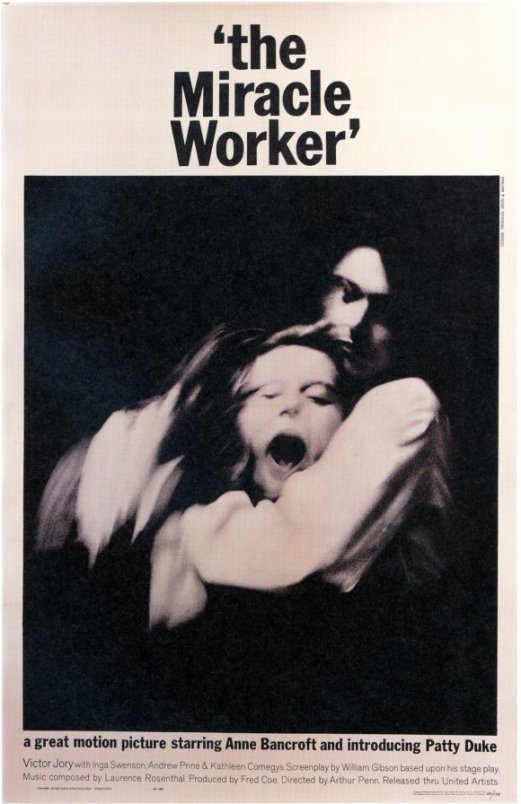
Rory possibly means that she and her mother are still not talking, just as Helen Keller was not able to communicate until she was taught to by Anne Sullivan. She could also be referring to the famous fight scene in the movie, shown on the poster, where Anne Sullivan struggles physically with Helen Keller in an effort to make her eat politely at the breakfast table, to mean that she and Lorelai still fighting.

It’s Beginning to Look A Lot Like Christmas

LORELAI: Find the arm?
RORY: Nope.
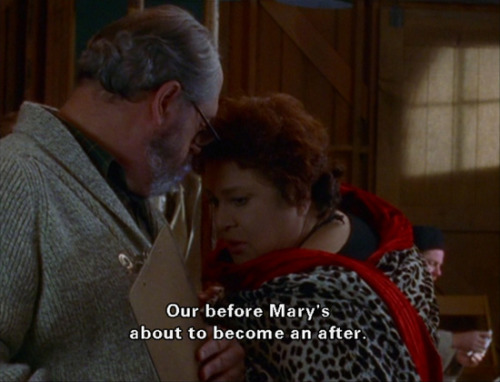
LORELAI (sourly): It’s beginning to look a lot like Christmas. [pan to dog with doll arm in mouth]

It’s Beginning to Look a Lot Like Christmas (originally titled It’s Beginning to Look like Christmas) is a Christmas song written by Meredith Wilson in 1951. It was a hit in 1951 for Perry Como & The Fontane Sisters, and has been recorded numerous times.

The Fallout From Falling Asleep

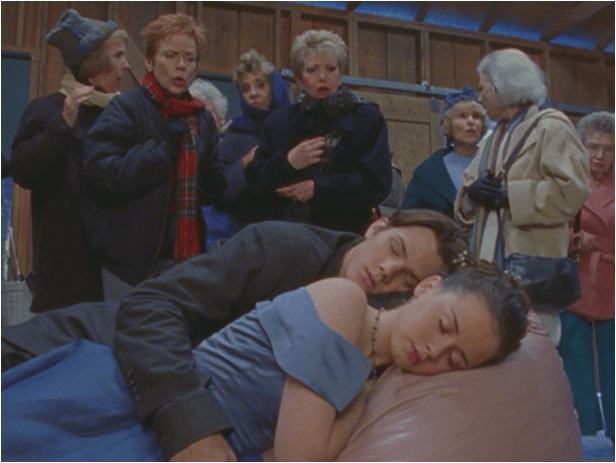
After Rory and Dean accidentally spend the night at Miss Patty’s dance studio together (another mention of the problem of time), all hell breaks loose.

For all that Lorelai and Emily are proud of Rory – so mature, so smart, so cautious – we discover that deep down both of them are terrified that at some point something will switch on inside her and she will become another teenage Lorelai who sleeps with boys and gets pregnant. It takes very little to bring all those fears to the surface, showing that they really don’t trust her at all.

Lorelai, who always touts herself as the cool mom who treats Rory as her best friend, finds that at crisis point she shrieks at and shames Rory in the same way her mother did to her. And the mother and daughter who “never fight” are now not speaking to one another.

The Portable Dorothy Parker

DEAN: So, uh, what are you reading?
RORY: The Portable Dorothy Parker.

Dorothy Parker (1893-1967) was an American poet, short story writer, newspaper critic, and satirist, famous for her acerbic wit and her membership of the Algonquin Round Table, a group of writers known for their hard-drinking, wisecracking ways.

The Portable Dorothy Parker, a collection of her poems, stories, and journalism pieces, was first published in 1944. It was first revised in 1973, with an introduction by Brendan Gill, a critic for The New Yorker born in Hartford, and educated at Yale. I believe Rory is reading the 1976 Penguin edition.

Rory greatly admires Parker’s wit, and we know Amy Sherman-Palladino does too, because her production company is named Dorothy Parker Drank Here – the logo can be seen at the end of every Gilmore Girls episode.

The fact that Rory takes a book everywhere, even to a dance with her boyfriend, may indicate that although her love of reading is perfectly genuine, she is using books as a coping mechanism in social situations, possibly using them to keep others at a distance.

Thirteen

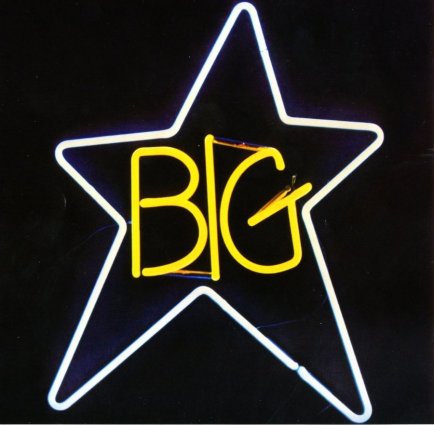
This 1972 pop ballad by American rock band Big Star is the song that plays while Rory and Dean walk through Stars Hollow drinking coffee.

It is from their debut album #1 Record, and although never released as a single, is recognised as one of the greatest songs of all time. Thirteen is about adolescent love, and even mentions getting tickets for a school dance, just as Rory and Dean did.

The lead singer of Big Star was Alex Chilton (1950-2010), who was a cult rock hero in the 1980s and 1990s, due to Big Star being named as a major influence by bands such as R.E.M. and The Replacements, and championed by Rolling Stone. Is is possible that Rory’s school was at least partly named in his honour?

Buggies and Barns

TRISTAN: No, I think you two make a very cute couple. Is your horse and buggy parked outside? Got to get home for the barn raising?

Yet another reference to the Amish, who drive horse and buggies as their traditional form of transport.

A barn raising is a community activity whereby all the members get together to build (“raise”) a barn for one person or one family. Generally the men do the physical labour, while women provide food and drink; it’s a major social occasion. Barn raising was common in North America in the 18th and 19th centuries, while the Amish and Mennonite communities continue the practice today.

Tristan is implying that life in Stars Hollow must be both agrarian and hopelessly antiquated.

Dristan

DEAN: Get out of my way Dristan.
TRISTAN: Oh, aren’t you clever.

Dristan is a brand of cold and allergy over the counter medications made by Pfizer intended to unblock a stuffy nose.

You see what Dean did there, besides invent his and Tristan’s couple name?

Sometimes Always

This 1994 song by Scottish alternative rock band The Jesus & Mary Chain plays while Paris confronts Rory about the Jacob situation, lasting through Tristan’s fight with Dean.

The song is from the band’s album Stoned & Dethroned, and it is a duet between lead singer Jim Reid, and Hope Sandoval, who is the lead singer of American band Mazzy Star, which also featured in this episode. Sometimes Always peaked at #22 in the UK, but didn’t chart in the US.