Briefs

PARIS: And in regards to the student council meeting –

RORY: Oh, you mean the one where you tried to impeach me because you haven’t been properly diagnosed yet?
PARIS: If you’ll just allow me access to my briefs

Paris refers to legal briefs, a written legal document used in various legal adversarial systems that is presented to a court arguing why one party to a particular case should prevail. (In the UK and Commonwealth, the word refers to papers given to a barrister when they are instructed).

Rory tells Paris that she is insane for trying to impeach her; comically, Paris responds by acting as if she is preparing to defend herself in a legal trial.

Judas

PARIS: Daughter of Judas.

Judas Iscariot, disciple of Jesus Christ and originally one of the Twelve Apostles. According to the gospels, Judas betrayed Jesus Christ, by kissing him on the cheek and calling him “master”. This led to Jesus being easily identified in a crows, leading to his arrest and being handed over to the authorities. His name is often used synonymously with betrayal or treason.

Paris obviously sees herself as the “master” and Rory the “disciple” in their relationship as president and vice-president. Paris (wrongly) thinks that Rory has contacted the headmaster, and getting her into trouble with the “authorities”, as Judas did to Jesus Christ.

Bad Seed

RORY: Nixon’s bad seed.

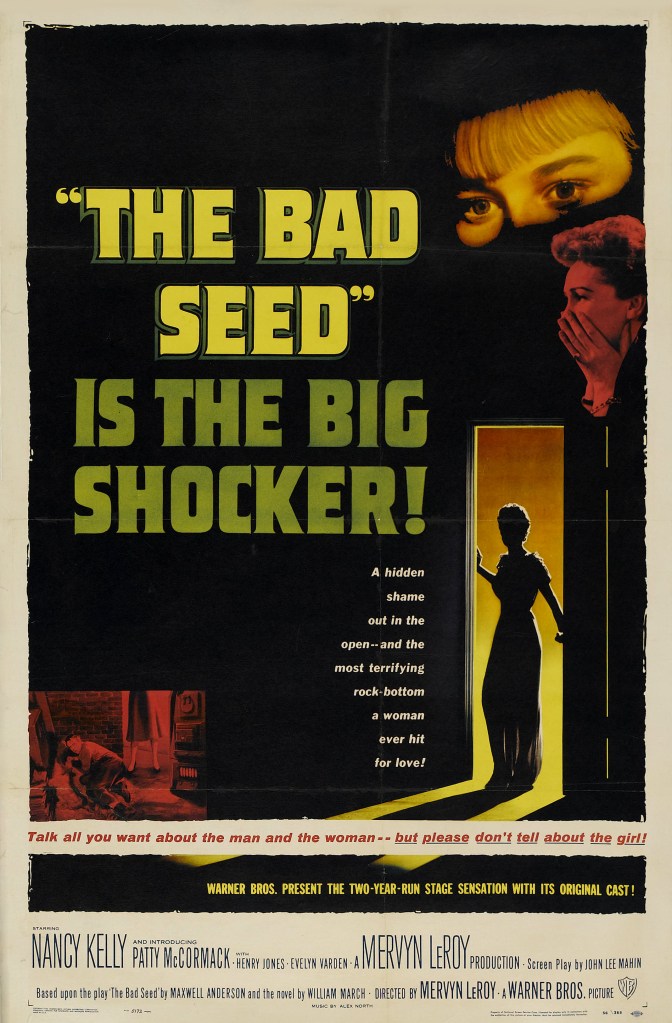
Bad seed, an American expression referring to someone who is evil or unprincipled by their nature, “born bad”.

The expression gained widespread notoriety through the 1956 psychological thriller The Bad Seed, directed by Mervyn LeRoy and starring Patty McCormack in the title role. It is based on the 1954 play of the same name by Maxwell Anderson, which in turn was based on the 1954 novel by William March. The film is about a sociopathic little girl, and was a hit at the box office, receiving positive reviews from critics.

Rory suggests that Paris was born from the “bad seed” of disgraced president Richard Nixon, to explain why she is such a bad president herself.

Snitch, Turncoat

RORY: I didn’t snitch.
PARIS: Said the weak-kneed turncoat.

Snitch, informal language for an informer. The word dates to the 17th century, and is of uncertain origin.

Turncoat, one who changes allegiance or loyalties from one group to another. The word can be found as early as the 16th century, and may come from literally changing a coat or uniform from one group to another’s.

Sundance

RORY: I certainly didn’t call this meeting.
PARIS: Save the act for Sundance, you little snitch.

The Sundance Film Festival, first founded in Salt Lake City in 1978 by Sterling Van Wagenen, head of Robert Redford’s company Wildwood, and John Earle, from the Utah Film Commission. Originally called the Utah/US Film Festival, the name changed to Sundance in 1984, after the Sundance Institute, the non-profit organisation founded by Robert Redford to support independent artists – Sundance took over management of the film festival at this point. Many notable filmmakers received their big break at Sundance.

Waders

RORY: Oh yeah, we’ve seen those boot thingies outside drying off.
LUKE: Those would be called waders.

Waders, waterproof boots or overalls extending from the foot to the thigh, the chest or the neck. They are traditionally made from vulcanised rubber, but available in more modern PVC, neoprene and Gore-Tex variants. The first waders were made in 1838 by a company called Hodgman, in Framingham, Massachusetts.

Mozart

LORELAI: And what if I am a really great fisher? … And all this time I’ve been sitting here with the gift to fish and I am squandering it. It’s like if Mozart walked right by the piano store and never played a note.

The composer Mozart, previously discussed.

As a child, Mozart learned to play several instruments, began composing music at the age of five, and went on an international concert when only six. He could play the piano blindfolded and with crossed hands, but is is said that his favourite instrument was the viola.

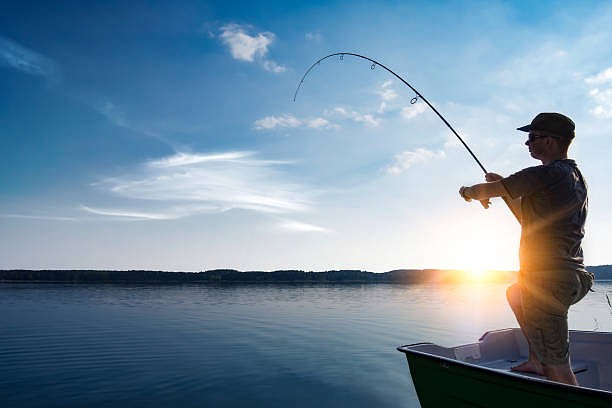
Fishing Terminology

Angler – person who fishes using a rod and line.

Wire line – any fishing line made from flexible metal. Wire line is only intended for freshwater fishing.

Lure – a broad type of artificial angling bait designed to mimic real prey animals and attract the attention of predatory fish.

Downrigger – a device used in fishing which places the lure at the desired depth.

Vertical jig, or speed jig – a long, slender piece of lead or metal that cuts through the water, mimicking an injured baitfish.

Trolling – a method of fishing where one or more fishing lines, baited with lures or bait fish, are drawn through the water.

Bottom feeders – a marine animal which lives on or near the bottom of a body of water, and may feed principally by scavenging. Examples include flatfish, cod, haddock, carp, and bream.

Forage fish, also called prey fish or bait fish – small fish preyed upon by others for food. Examples include herring, sardines, and anchovies.

Cisco – a salmon-like fish, in the US, often refers specifically to the lake herring (Coregonus artedi).