Lillian Hellman, The Children’s Hour, and Julia

RORY: You said you wanted to read The Children’s Hour.
LORELAI: I did?
RORY: The other night when we were watching Julia, and Jane Fonda was playing Lillian Hellman.

The Children’s Hour, 1934 play by Lillian Hellman. It is set in a girl’s boarding school run by two women, and when an angry student runs away, she tells her grandmother the women are having a lesbian affair to avoid being sent back. This false accusation destroys the women’s careers, relationships, and lives.

The play is based on an incident which occurred in Scotland in the 19th century, which Hellman read about in a 1930 true crime anthology called Bad Companions by William Roughead. The Children’s Hour was a financial and critical success, and was adapted into a film called These Three in 1936, then again under its original title in 1961; both versions were directed by William Wyler.

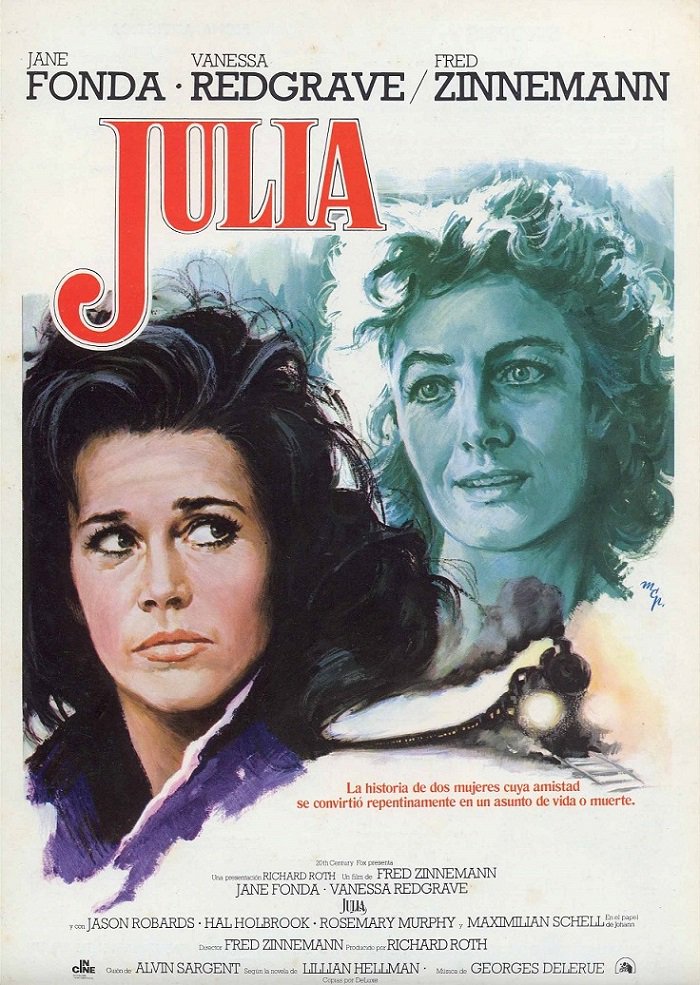
Julia, 1977 period drama film [pictured] directed by Fred Zinnemann, based on a chapter in 1973 Lillian Hellman’s controversial book Pentimento: A Book of Portraits. It is about Hellman’s alleged friendship with a woman named Julia, who fought against the Nazis prior to World War II. Jane Fonda plays Lillian Hellman, and Vanessa Redgrave is in the role of Julia. An image of the real Lillian Hellman is shown at the end.

Julia performed well at the box office and received generally positive reviews. However, it was felt, with good reason, that the supposedly true story must have been, at best, heavily fictionalised. At the time of her death, Lillian Hellman was still in the process of suing the writer Mary McCarthy for libel after she cast strong doubt on the story’s veracity.

In 1983, New York psychiatrist Muriel Gardiner claimed that she was the person the “Julia” character was based on. Lillian Hellman had never met Gardiner, but had heard about her through a mutual friend, so they couldn’t possibly have had the relationship or adventures together that Hellman had written about. This does seem the most likely explanation, however.

Muriel Gardiner wrote about her anti-Fascist activities in Vienna of the 1930s in a 1983 book, Code Name Mary: Memoirs of an American Woman in the Austrian Underground.


Patricia Krenwinkel

LORELAI: Rory’s my kid and I make the rules, so if she comes home one day and says, ‘Hey, uh, I’m gonna spend the weekend with Patricia Krenwinkle’ and I say, ‘Okay, grab a sweater’, you just have to deal.

Patricia Krenwinkel (born 1947), murderer and member of the Manson Family. She is now the longest-incarcerated female inmate in the Californian penal system. Krenwinkel was on death row in 1971, but in 1972 her sentence was commuted to life imprisonment after all death sentences were invalidated prior to that date. She has expressed remorse for her crimes, and is a model prisoner, having received a Bachelor degree in Human Services from the University of La Verne.

The Coreys

LORELAI: Aw honey, it’s not the amount of places that turns you down that matters, it’s the quality of the place that turns you down that matters. And when you’ve got Jacko’s Loans and Stuff not wanting your business, you know it’s time to hang out with the Coreys.

The Two Coreys, or The Coreys, are actors Corey Feldman (born 1971) and Corey Haim (1971-2010). In the picture, Feldman is on the left, and Haim on the right.

The Coreys were child actors during the 1980s, and close friends, who appeared in nine films together, including The Lost Boys (1987). They became teen idols, but experienced career downturns in their late teens due to drug use. This is why Lorelai equates “hanging with the Coreys” to being an unsuccessful loser.

After Corey Haim’s death, Corey Feldman became increasingly vocal about the sexual abuse he and Corey Haim were allegedly subjected to as child stars by Hollywood paedophile rings, with Feldman saying he was repeatedly molested and assaulted, but Haim actually raped numerous times. They were each allegedly given drugs before the assaults, the origin of their drug addictions. In 2020, he brought out a documentary called (My) Truth: The Rape of the Two Coreys, identifying the people openly he had earlier only alluded to.

This put their fall from grace in a much darker context, and now unfortunately makes it seem as if Lorelai is calling child sex abuse victims “losers”.

Tammy Faye Bakker

RORY (looking at photo of Sherry): Nice looking lady.
LORELAI: Mm hmm. Like a young Tammy Faye Bakker.
RORY: But prettier than that.

Tammy Faye Bakker, born Tamara LaValley (1942-2007) was the ex-wife of television evangelist Jim Bakker (born 1940). She and her husband ran a televangelist program called the PTL Club, founded in 1974; it was dissolved in 1989 when Jim Bakker was convicted and imprisoned on indicted on numerous counts of fraud and conspiracy. Tammy Faye divorced Jim in 1992, and married Roe Messner, a church building contractor (so by this stage she was actually Tammy Faye Messner).

Tammy Faye was known for her eccentric and glamorous image, and her views which often diverged from mainstream evangelical Christianity. For example, she supported the LGBT community, and reached out to HIV positive patients at the height of the AIDS epidemic. She was diagnosed with colon cancer in 1996, so was already terminally ill when this episode aired.

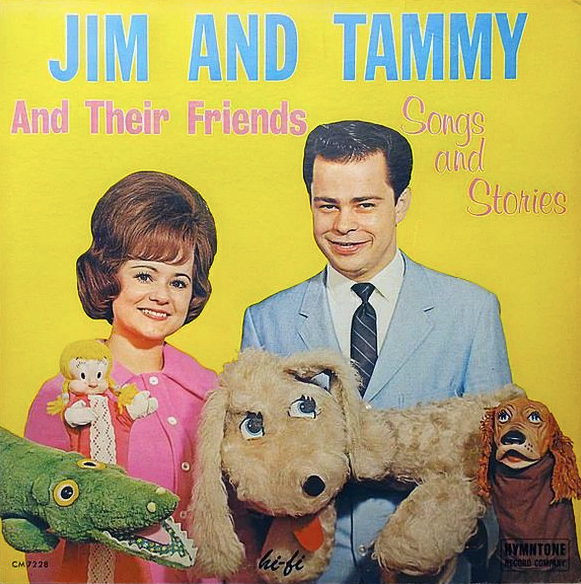
It is unclear what age “young” Tammy Faye Bakker was that Lorelai believes Sherry resembles. Knowing what Sherry actually looks like, perhaps when Tammy Faye’s hair was brown, before she dyed it blonde. That would have been in the 1960s, when Tammy Faye and her husband Jim had a puppet show on a Christian TV network.

The viewer may decide for themselves whether Sherry looks like Tammy Faye Bakker at any age, but I personally cannot see any strong resemblance (I can barely see a weak resemblance). I’m surprised that Rory doesn’t disagree any more strenuously than by saying Sherry is “prettier than that”, and can only think that she walks on eggshells when it comes to her mother’s jealousy over Sherry.

I’m not sure how Lorelai’s frame of reference for picturing a young Tammy Faye Bakker is in the 1960s, before Lorelai was born. I find this whole reference quite confusing.

Tar and Feathers

TAYLOR: The bottom line here is that there is a consensus among townspeople who are in agreement that Stars Hollow was a better place before Jess got here.
LUKE: So this half of the room gets the tar, and the other half gets the feathers?
TAYLOR: Well, there hasn’t been any talk of tar and feathers. Although …

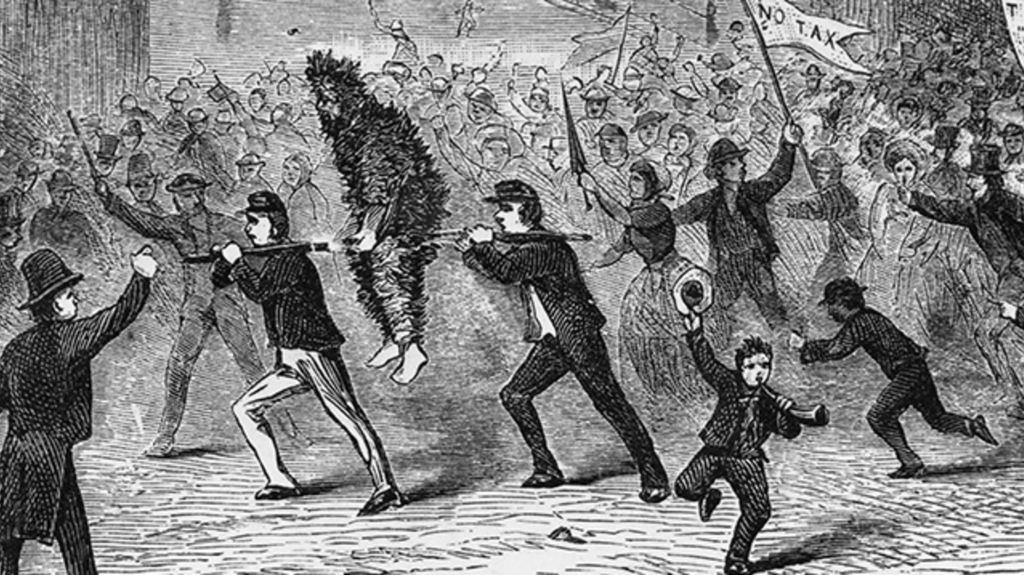
Tarring and feathering is a form of public torture and punishment handed out as unofficial justice, used in feudal England and colonial America, as well as the early American frontier, as a form of mob or vigilante vengeance. The last known example was in 2007 in Northern Ireland, against someone accused of drug-dealing.

The victim would be stripped naked or stripped to the waist, painted with hot tar, and then rolled in feathers (there were usually other punishments thrown in, such as whipping or scalping). The skin would be burned by the tar, and scraping it off later led to the skin being torn off, so it was extremely painful as well as humiliating. “Tarring and feathering” is now used as a term to denote severe public criticism.

Luke is saying the town meeting is on a par with the brutal mob justice associated with the Wild West, in agreement with Lorelai’s earlier comment. It is actually quite horrifying, because they seem to be saying Jess should be run out of town, even though he’s a high school kid who’s only guilty of petty theft and a few mild pranks.

It’s also baffling, because Jess isn’t exactly a stranger – he’s Luke’s nephew, Liz’s son, and the grandson of the respected William Danes. The town should be prepared to take him in as one of their own, and the fact that they won’t is a deeply troubling sign. Maybe there’s a good reason why Liz took off.

Famous Debutantes

CHRISTOPHER: Well, did you tell her about Barbara Hutton, Doris Duke, Gloria Vanderbilt?
LORELAI: Yes, and she’s perfectly willing to marry Cary Grant, get offed by her crazy butler, and start designing blue jeans as soon as the ball ends.

Barbara Hutton, previously discussed. She was first dubbed the “Poor Little Rich Girl” at her lavish debutante ball in 1930. She married seven times. Her third marriage was to Hollywood actor Cary Grant in 1942; although he genuinely seemed to care for Hutton, they divorced in 1945. Grant did not seek or receive money from her in the divorce settlement. He was probably her best husband.

Doris Duke (1912-1993), billionaire tobacco heiress and socialite, dubbed the “Richest Girl in the World”. She was presented as a debutante in 1930, at a ball at the family home in Newport, Rhode Island. She was widely travelled, with an interest in the arts and horticulture. She was the first non-Hawaiian woman to take up the sport of surfing. A keen philanthropist, she donated money to AIDS research, medicine, and child welfare, including supporting the education of black students in the South. Duke died from a stroke, but rumours persist that she was murdered by her Irish butler, Bernard Lafferty (1945-1996). No charges were ever laid, and Lafferty died in his sleep only three years later. He wasn’t “crazy” so much as an alcoholic.

Gloria Vanderbilt (1924-2019), heiress, socialite, artist, actress, and fashion designer. During the 1930s she was the focus of a scandalous child custody case between her mother and her paternal aunt, Gertrude Whitney, which Gertrude won after Gloria’s mother was declared an unfit parent. Gloria made her debut in 1940. Vanderbilt studied both acting and art, managing to have successful careers in both, as well as becoming an author. A model at 15, she ventured into the fashion industry in the 1970s, and in 1976 launched a line of blue jeans which were an immediate success.

(The picture is Gloria Vanderbilt as a sixteen-year-old debutante).

Boston

CHRISTOPHER: Yeah, Boston. Baked beans, cream pie, tea party, strangler.

Boston is the capital of, and largest city in, the state of Massachusetts. It was founded by Puritan colonists in 1630. It has a population of more than 600 000 people, is one of the economically most dominant cities in the world, and is known for its diversity of neighbourhoods. It’s about two and a half hours drive from where Stars Hollow would be, so Christopher is significantly closer to them now. It’s also 15 minutes drive from Harvard University ….

Note that Christopher has moved to Boston without letting Lorelai and Rory know, or even giving them the landline number for his new apartment. It seems he hasn’t spoken to them since Lorelai’s bachelorette party, with the excuse that he was giving Lorelai space after she broke her engagement. Which might be reasonable, except he has a daughter, and there’s no excuse for not phoning her. Once again, Rory is an afterthought in Christopher’s relationship with Lorelai, rather than the focal point she should be.

Christopher quickly rattles off a few associations for Boston:

Boston baked beans

Baked beans sweetened with molasses and flavoured with salt pork or bacon. It’s been a speciality of Boston since colonial times, and baked beans with frankfurters is a favourite dish. Boston is sometimes known as Beantown.

Boston cream pie

A sponge cake with custard or cream filling, glazed with chocolate. It’s said to have been created in 1881 at the Parker House Hotel in Boston by a French chef. It’s the official dessert of Massachusetts.

Boston Tea Party

A political protest by the an organisation called the Sons of Liberty in Boston on December 16 1773. It was in protest of the Tea Act, which allowed the British East India Company to sell tea from China in American colonies without paying taxes apart from those imposed by British parliament. The Sons of Liberty strongly opposed the taxes as a violation of their rights, with the slogan “no taxation without representation”. Protesters destroyed an entire shipment of tea sent by the East India Company, boarding the ships and throwing chests of tea into Boston Harbor. The British government responded harshly, and the episode escalated into the American Revolution. The Tea Party became an iconic event of American history.

Boston Strangler

The name given to the murderer of thirteen women in Boston in the early 1960s; most were sexually assaulted and strangled in their apartments with no signs of forced entry. In 1967 a man named Albert DeSalvo confessed to being the Boston Strangler while serving life imprisonment for a series of rapes; he was found stabbed to death in prison in 1973. Although his confession revealed some details of the crimes unknown to the public, and DNA evidence has linked him with the Strangler’s final victim, doubts remain as to whether he committed all the Boston murders. George Nassar, the prison inmate DeSalvo reportedly confessed to, is the major suspect; he is currently serving life in prison for murder. Several films have been made about the case, most notably The Boston Strangler (1968), starring Tony Curtis.

Christopher’s glib associations for the city bring to mind the way Rory summed up Chicago to Dean as “Windy. Oprah”.

Wilding

LORELAI: You know, you should meet my daughter. She’s about your age. She can show you where all the good wilding goes on . . .

“Wilding” is an American term which gained media use in the 1980s and ’90s to describe gangs of teenage gangs committing violent acts. It is no longer often used.

The word has an ugly history, coined during the Central Park jogger case of 1989, after a white female jogger was assaulted and raped in Manhattan’s Central Park. Five black and Latino juveniles were convicted of the crime, police contending that the boys said they were “wilding” in the park, the police taking this to mean committing violence.

This has been disputed as a (wilful?) misunderstanding by the police. Other theories are that the boys were repeating the lyrics to the Tone Loc song, “The Wild Thing”, or that they said they were “wiling”, meaning “hanging out, whiling away the time”.

The boys served sentences of between six to twelve years, and all later had their charges vacated after a serial rapist and murderer confessed to the crime while in prison. This was in 2002, so after this episode aired (Lorelai doesn’t know she is referencing falsely imprisoned schoolboys).

So far, Lorelai has linked Jess with prisoners and the Mafia, and joked that he may be going out to hold up a liquor store. Once she actually meets him, she connects him with violent gang rape. At this point, her “jokes” about Jess have become openly hostile, and quite nasty.

As Lorelai has joked about a violent gang rape, and used a word with a racist history to Jess, I wonder if this is when he decided he didn’t like Lorelai very much?

Adolf Eichmann

KIRK: That’s right. There’s exactly a thousand of them. The order states that there is to be exactly 1000. Not 1001, not 999, but 1000. You ask for 1000, I bring 1000. I don’t question the orders. I merely fill them.
MICHEL: Job well done, Mr. Adolf Eichmann.

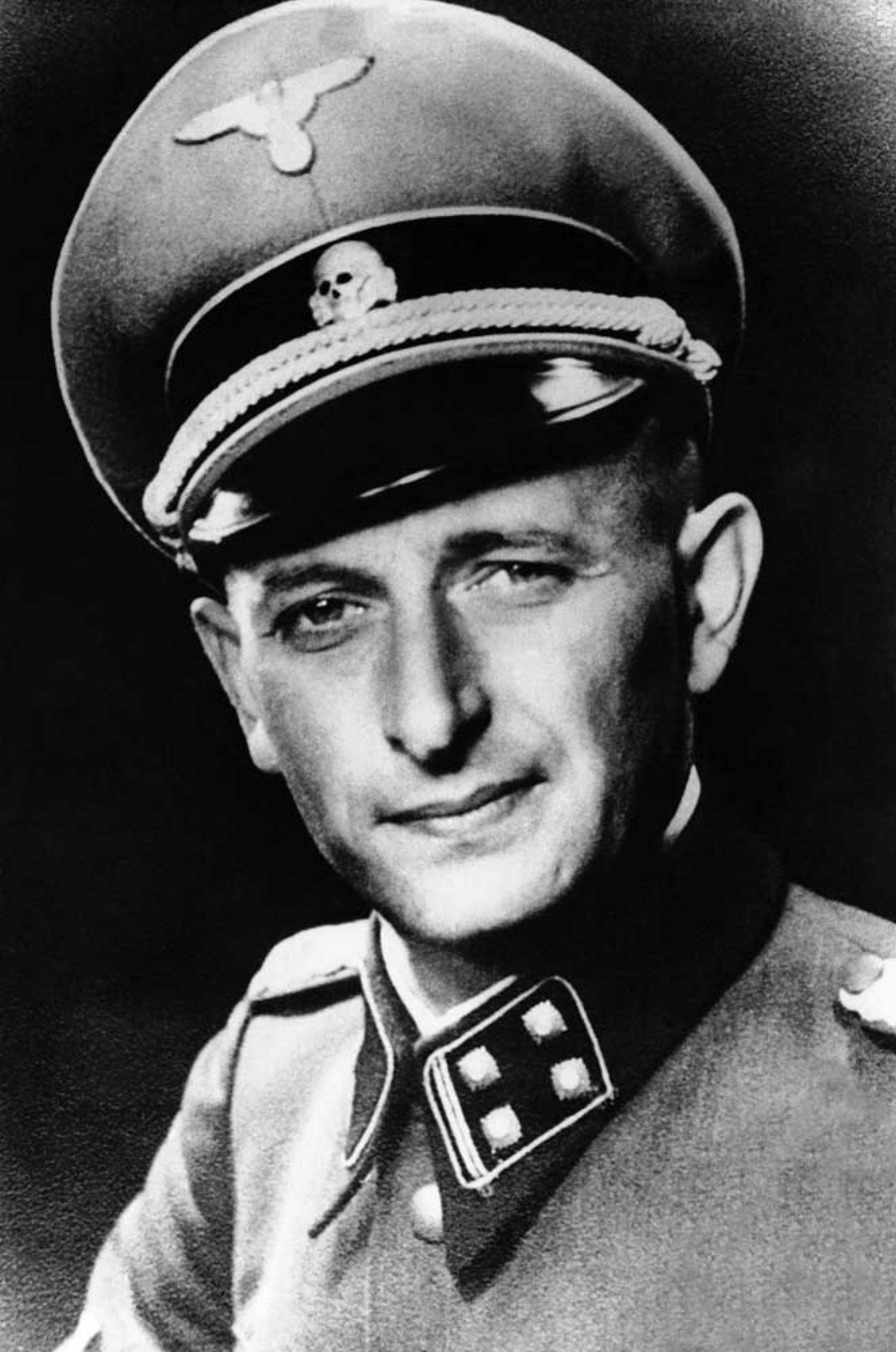
(Otto) Adolf Eichmann (1906-1962) was a German Nazi lieutenant colonel, and one of the major organisers of the Holocaust. After the outbreak of World War II, Eichmann and his staff were responsible for the deportation of Jews to concentration camps. After the war, Eichmann escaped Germany, and in 1950 managed to get to Argentina with false papers.

In 1960, Israeli intelligence agents captured Eichmann and brought him to Israel to stand trial for his war crimes. He did not deny his involvement, but argued that he had simply been following orders in a totalitarian system. He was found guilty, and hanged in 1962.

This is the first time we have seen Kirk (the character named Kirk, not Mick or an anonymous swan guy) in a change of job. He began as the assistant manager of Doose’s Market, and now he is doing deliveries for the flower shop. As the flower shop is right near the market, it doesn’t seem too hard to believe that Kirk could do both jobs, but as the show progresses, the number of jobs he holds blows out to comical proportions.