PARIS: I’d really like to get an ‘A’ on this assignment, and in order to do that I’m afraid you’re gonna have to discuss your sock hops and your clambakes some other time, okay?
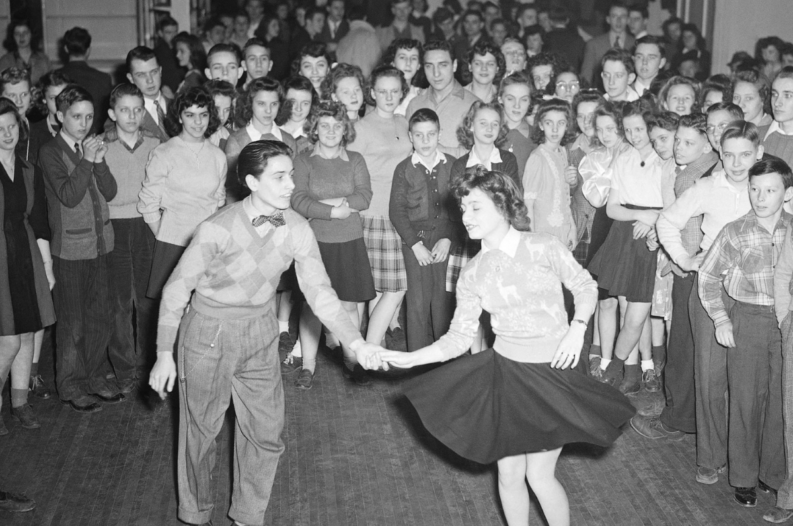
A sock hop [pictured] was an informal sponsored dance event for teenagers in the 1940s and ’50s, commonly held at high school gyms and cafeterias, and often as a fundraiser. The name comes from the fact that dancers were asked to remove their shoes so as not to damage the varnished floor of gymnasiums. The name was dropped once sneakers became common, so shoes could be worn. What we’d call a “school dance” today.
A clambake is a traditional method of cooking shellfish, such as lobsters, clams, and mussels, by steaming them over seaweed in a pit oven. Vegetables such as potatoes, onion, carrot and corn can be added. Usually held as festive occasions along the New England coast.
LORELAI: Talk to some kids, I’ll hang out with their moms, and we’ll get into Harvard, take over the world, then buy Chilton and turn it into a rave club.
A rave club is one which hosts dance parties (“raves”), typically featuring Djs and electronic dance music. Most often associated with the early 90s.
Note that Lorelai says, “We’ll get into Harvard”, rather than “You’ll get into Harvard”, as if Rory has to succeed for both of them.
DEAN: So, how do you know how to do this? [tie a bow-tie] CHRISTOPHER: Seventeen cotillions, a dozen debutante balls, and a brief but scarring experiment with the Children of the American Revolution.
In the US, cotillions are the classes given in dancing and etiquette to prepare girls and boys for society. A cotillion ball is given at the end, which is not only a celebration, but also a preparation for the debutante ball which will come later. This ball itself is often known as a cotillion. I’m not sure, but I think Christopher means that he attended seventeen of such balls while he was growing up, as well as twelve debutante balls.
The National Society Children of the American Revolution, founded in 1895, is a youth organisation for those under the age of 22 who are descended from someone who served in the American Revolution, or gave material aid to its cause. The Daughters of the American Revolution is thus one of its parent organisations.
CHRISTOPHER: Imagine what we could do if we freed up the brain space that holds onto the Viennese Waltz. LORELAI: Yeah, it’s right up there in between old Brady Bunch reruns and the lyrics to Rapture.
Christopher and Lorelai mention things they learned and experienced during their teenage years they can never forget. It’s a none-too-subtle reference to the fact that they can never really forget each other or let each other go.
Viennese Waltz
A type of ballroom dance, the original form of the waltz. It emerged in the second half of the 18th century from a German baroque dance and an Austrian folk dance. The American style of the waltz allows for much greater freedom of movement.
The Brady Bunch
An American sitcom about a large blended family which aired from 1969 to 1974, but is still popular today as re-runs. There are also numerous specials, spin-offs, and television movies based on the show. It later turns out that Lorelai and Rory often watched them.
Rapture
A 1981 Blondie song which combines new wave, disco, and rap. From the album Autoamerican, it went to #1 in the US, and was successful around the world. It was the first song with rapping in it to get to #1, and the first rap song to original music.
The lyrics are:
Toe to toe Dancing very close Barely breathing Almost comatose Wall to wall People hypnotised And they’re stepping lightly Hang each night in Rapture
Back to back Sacroiliac Spineless movement And a wild attack
Face to face Sadly solitude And it’s finger popping Twenty-four hour shopping in Rapture
Fab Five Freddy told me everybody’s fly Dj spinnin’ I said, “My, my” Flash is fast, Flash is cool François c’est pas, Flash ain’t no dude And you don’t stop, sure shot Go out to the parking lot And you get in your car and drive real far And you drive all night and then you see a light And it comes right down and it lands on the ground And out comes a man from Mars And you try to run but he’s got a gun And he shoots you dead and he eats your head And then you’re in the man from Mars You go out at night eatin’ cars You eat Cadillacs, Lincolns too Mercurys and Subaru And you don’t stop, you keep on eatin’ cars Then, when there’s no more cars you go out at night And eat up bars where the people meet Face to face, dance cheek to cheek One to one, man to man Dance toe to toe, don’t move too slow ‘Cause the man from Mars is through with cars He’s eatin’ bars, yeah wall to wall Door to door, hall to hall He’s gonna eat ’em all Rapture, be pure Take a tour through the sewer Don’t strain your brain, paint a train You’ll be singin’ in the rain Said don’t stop to punk rock
Well now you see what you wanna be Just have your party on TV ‘Cause the man from Mars won’t eat up bars when the TV’s on And now he’s gone back up to space Where he won’t have a hassle with the human race And you hip-hop, and you don’t stop Just blast off, sure shot ‘Cause the man from Mars stopped eatin’ cars and eatin’ bars And now he only eats guitars, get up
Lorelai must have sung along to this a lot to have learned all the lyrics off by heart! Maybe this is the song Lorelai was thinking of when she told Max she is into rap music?
RORY: At one point Miss Patty thought Dean was gonna get hurt, she made me sit in the corner and watch. LORELAI: Hey! Nobody puts Baby in the corner.
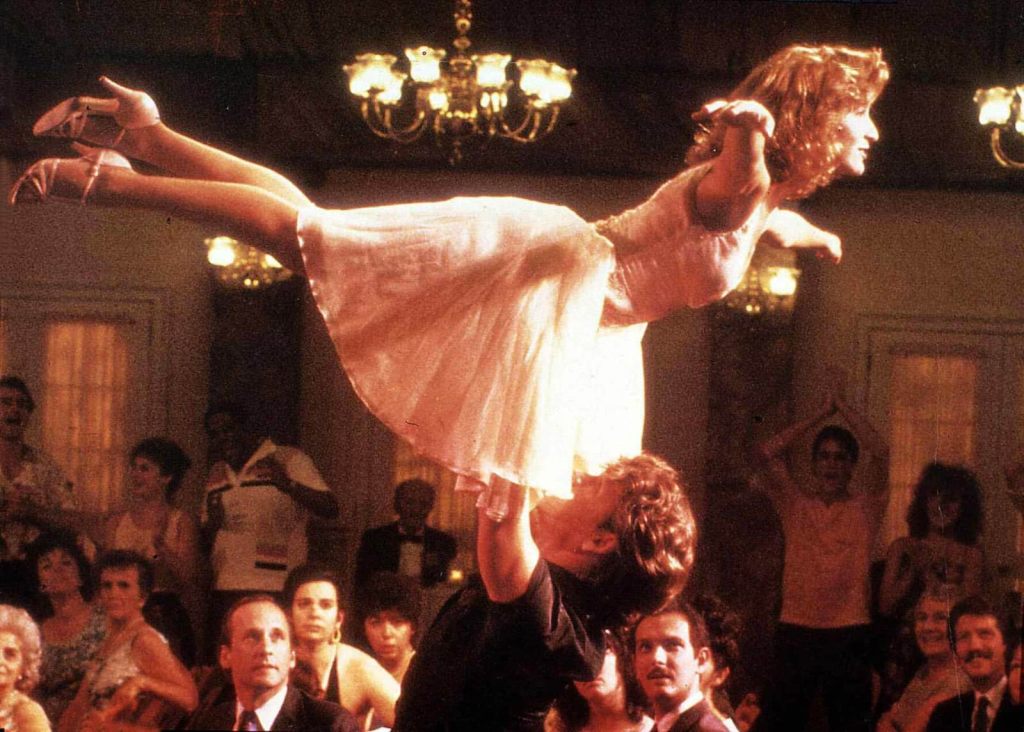
A reference to the 1987 dance film, Dirty Dancing, starring Jennifer Grey as Frances “Baby” Houseman, a girl who falls in love with her dance instructor Johnny Castle, played by Patrick Swayze, while on vacation with her parents at a resort. (Faithful reader lujza0317 has reminded me that Baby’s mother is played by none other than Kelly Bishop, aka Emily Gilmore!).
At one point, Johnny stands up for Frances when her parents stop her from dancing by forcing her to sit at a table in a corner, saying, “Nobody puts Baby in a corner”. He then pulls out her out of the corner so they can perform together on the dance floor. He lets Frances know that she doesn’t deserve to be hidden away, but should be in the spotlight so that her talents can shine. It’s commonly misquoted as “Nobody puts Baby in the corner”, as Lorelai does.
Although reviews were mixed and the studio had serious doubts about releasing the film, it became one of the highest-grossing of 1987, and the #1 film in the US, with many audience members going back to see it again and again. That re-watch value made it a hit on home video and DVD, and it still sells over a million DVDs a year. It is the #1 on the list of films watched by women, earning it the title, “Star Wars for girls”.
LORELAI: So how’s it going? RORY: Actually, I’m not very good [at dancing]. DEAN: Yeah, which is really holding me back, because I’m a natural. LORELAI: Well, maybe you just need a glittery glove and a really freaky face.
A reference to pop singer Michael Jackson (1958-2009), known for being an extraordinary dancer.
He famously wore a “glitter glove” on one hand for the first time he did the “Moonwalk” while performing Billie Jean in 1983. This leather glove studded with diamantes became an iconic look for him.
Jackson was also known for the amount of cosmetic surgery he had on his face – perhaps as many as ten operations by the early 1990s on his nose, cheekbones, chin, forehead, and lips. Over time, his face became more and more unrecognisable.
EMILY: There’s the presentation, the circle, the curtsy, the fan dance.
Presentation
Debutantes are presented to a guest of honour during their debut, as a sign that they are being welcomed into good society. Originally, debutantes were presented to a reigning monarch at the English court. These days, it’s usually to someone prominent in the community.
Circle
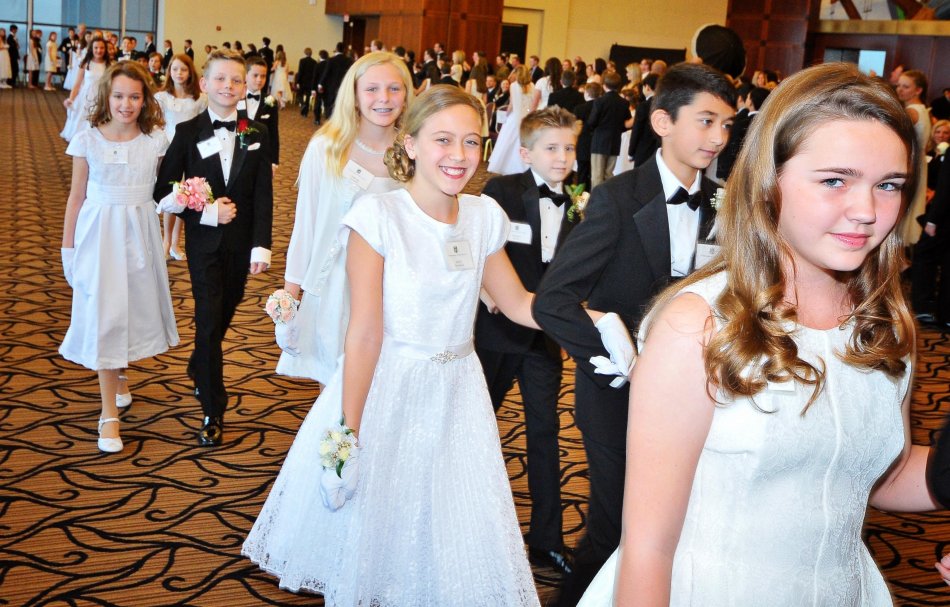
All the debutantes and their escorts form a large circle, and take a slow, leisurely walk around it together. It’s designed to show off the girls, much like models on a catwalk, and is probably the part Lorelai was thinking of when she said it was like a “county fair”. Once upon a time, the idea was to let eligible bachelors get a good long look at some marital prospects, but these days it’s mostly so parents can see their little girl all dressed up and take pictures for Facebook etc.
Curtsy
The debutantes receive many lessons on how to perform the perfect deep curtsy at the ball. Sometimes the curtsy is during the presentation, while at other balls, the curtsy will be part of a complicated dance or performance. Rory seems to be missing out on all those weeks of curtsy practice, but presumably is getting intensive training from her parents and grandmother that we don’t see onscreen.
Fan Dance
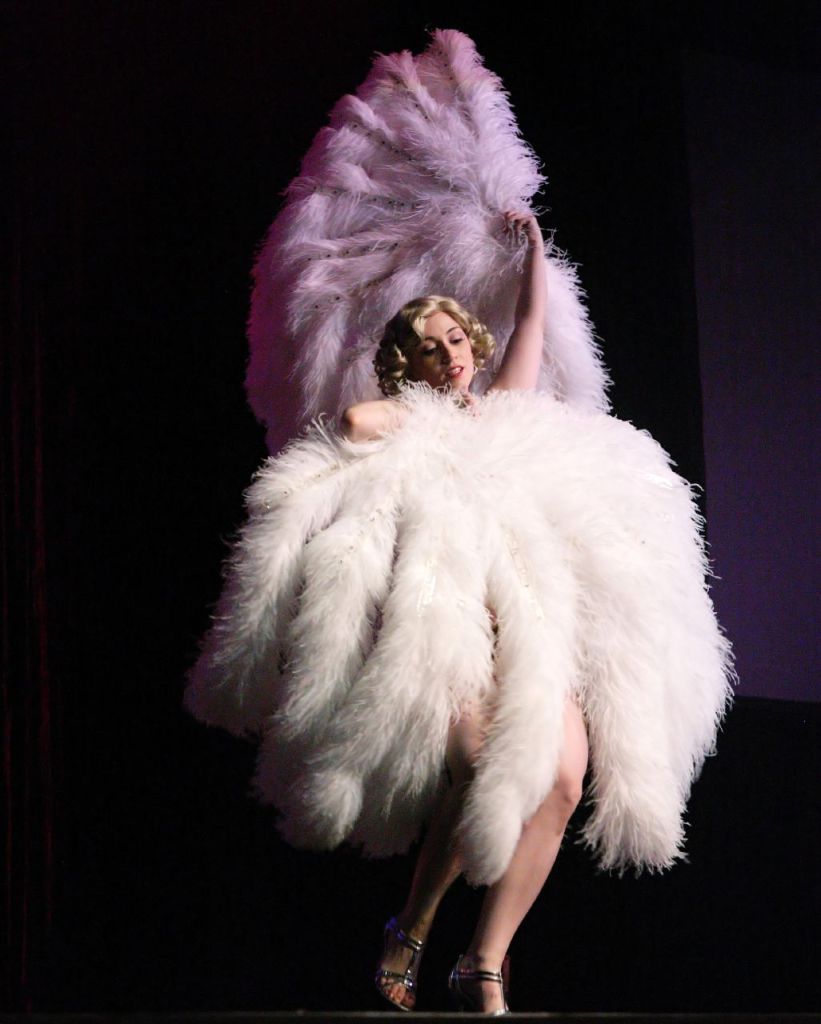
Often at debutante balls, the debutantes perform some kind of highly choreographed dance routine. Amusingly, at Rory’s ball, the debutantes are preparing a “fan dance”, which is literally an erotic dance, usually performed in the nude or a skimpy costume as part of a burlesque show. Of course this would never happen at a real debutante ball, and the girls will all be wearing formal dresses anyway. (Picture shows burlesque dancer Michelle L’Amour performing).
A debut is the formal introduction of a young upper-class girl or woman to society. In the US, girls usually make their debut between the ages of sixteen and eighteen. The first debutante ball in the US was held in 1817, in Savannah, Georgia.
RORY: Why don’t you go to a wedding dress place and try a real veil on? LORELAI: No way. RORY: Why? LORELAI: Too much taffeta, it gives me cotillion flashbacks.
Taffeta is a smooth plain-woven fabric made from silk. It is considered a luxurious fabric suitable for ball gowns and wedding dresses.
In American usage, a cotillion is a formal ball, often for presenting debutantes to society. However, Lorelai is most likely talking about cotillions as a class for younger girls, perhaps aged 10 to 13, to prepare them for their future debut in society. Such classes teach social etiquette, followed by a formal party where they put what they’ve learned into practice. We later learn that Emily teaches these classes, and probably taught Lorelai when she was younger.
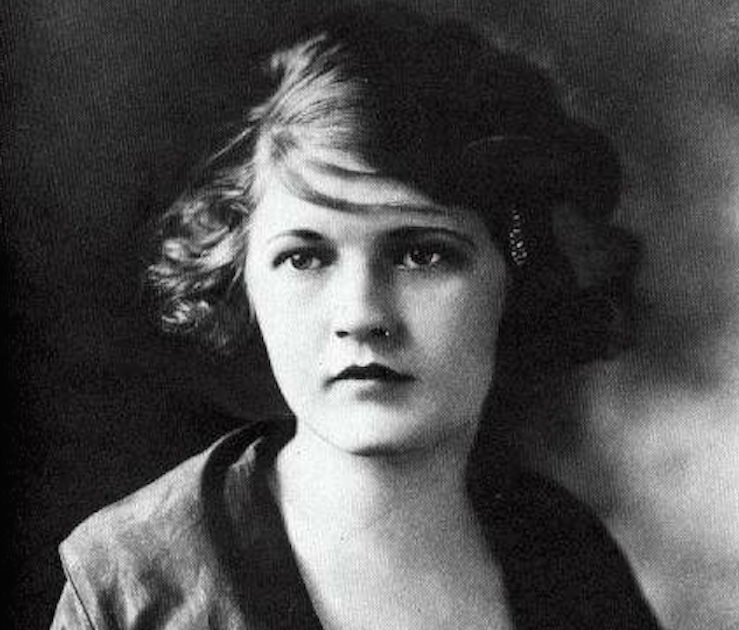
RORY: Did you pick out your ring? LORELAI: Yup, he’s gonna surprise me with it tomorrow. RORY: Twenties Deco? LORELAI: Supposedly ripped right off of Zelda Fitzgerald’s cold dead hand.
Zelda Fitzgerald, born Zelda Sayre (1900-1948) was an American socialite, writer, artist, and the wife of author F. Scott Fitzgerald. The couple became icons of the Jazz Age, and her husband dubbed Zelda “the first American flapper”.
The Fitzgeralds’ marriage deteriorated, and Zelda was admitted to psychiatric care, diagnosed as schizophrenic. She spent the rest of her life in and out of sanatoriums. Like Amy Sherman-Palladino, Zelda studied ballet as a child, and as an adult, became obsessed with it again to the detriment of her health.
Lorelai is joking about her engagement ring being Zelda Fitzgerald’s, just that it is from the 1920s. It is telling that she links her engagement ring with a woman who had a famously disastrous marriage.





 The Annotated Gilmore Girls