Max and Rory’s Code Names

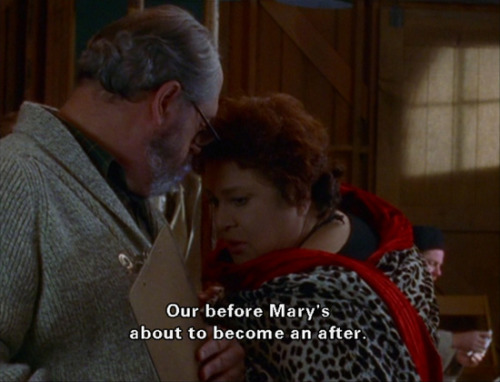
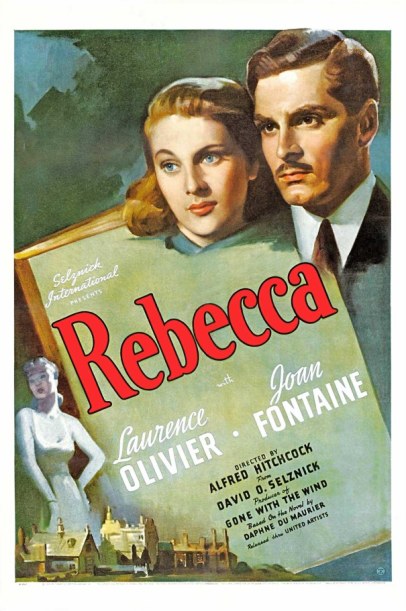
When Rory says she is uncomfortable calling her teacher by his first name outside school, even though he is also her mother’s boyfriend, Max suggests they use code names for each other. He offers to call her “Rebecca” – probably just because it starts with the same letter as Rory, and was then a common name for girls of Rory’s age (it also has the same number of syllables as her full name, Lorelai).

From their ensuing conversation, we can tell that Rory immediately links the name with the 1940 romantic mystery film Rebecca, directed by Alfred Hitchcock and based on the 1938 best-selling novel of the same name by Daphne Du Maurier. Rebecca was the #1 film of 1940, and won two Academy Awards, including Best Picture; it is still regarded as a classic of Gothic romance and psychological drama.

The character of Rebecca never appears in the film, as she is already dead, the first wife of Max De Winter (Laurence Olivier) whose memory continues to haunt him and his new wife (Joan Fontaine). Rory feels that, like Rebecca, she should never have been seen – her role was to disappear before Max arrived for his date, as per the “Gilmore Dating Rules”.

Disturbingly, Max De Winter in the film secretly hated Rebecca, who led a scandalous life, and was glad when a struggle between them ended with her death. You can’t help but feel that Rory subconsciously believes that Max would prefer it if she didn’t exist, and perhaps even that she is a “scandal” as Lorelai’s illegitimate child to another man – the cause of Rebecca and Max’s final fight was because she (falsely) claimed she was bearing another man’s child, who would inherit his estate.

Because Rory already has her mind on Hitchcock films, she offers to call Max “Norman”, saying that Psycho was on (television?) earlier that evening. (Note that she cannot call him by the film name from Rebecca, as he is already named Max).

Psycho is a 1960 thriller directed by Alfred Hitchcock, based on the 1959 novel of the same name by Robert Bloch. Filmed on a low budget, the film received mixed reviews on release, but was a massive box office success, and the #2 film of 1960. Now Hitchcock’s best known film, it is regarded as one of the most influential films of all time, and one of the greatest in its genre.

Rory calls Max after Norman Bates (Anthony Perkins), the murderer in the film. Norman Bates first appears to be a pleasant-looking, rather shy young man, but is subsequently exposed as a deranged killer who had a perverted relationship with his mother – one of his first victims. Rory could not make it clearer that she secretly fears Max wants her out of the way, and feels threatened by him dating her mother. Possibly Max’s pleasant manner to her is, in the depths of her mind, hiding something much more sinister.

Struggling to come up with another name, she can only think of “Alfred” after Alfred Hitchcock, the director of Rebecca and Psycho. Known for his voyeuristic camera style, his films often involve characters with a problematic relationship with their mothers, and beautiful yet icy women. Maybe Rory has already subconsciously picked up that there are problems between Lorelai and Max.
 

“Narcolepsy!”

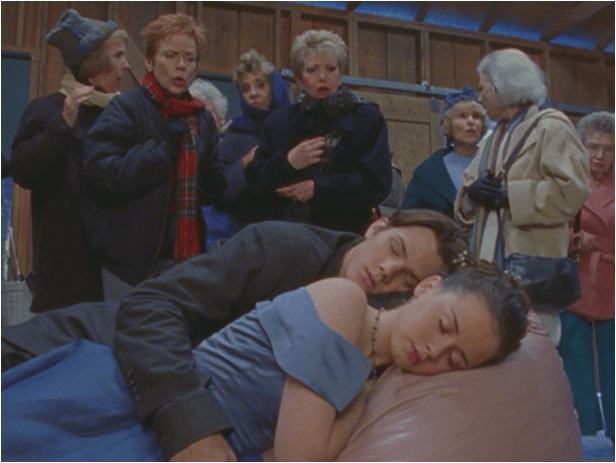
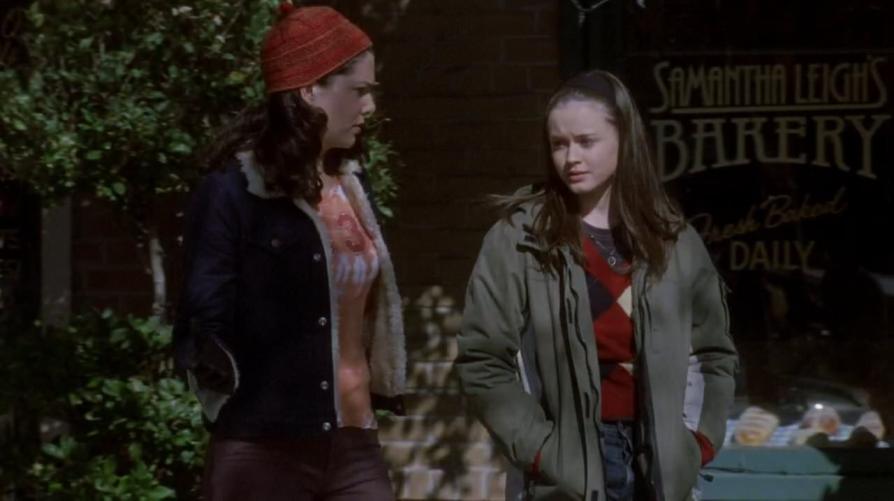
The episode opens with Lorelai and Rory playing a word game to determine which of them has to clean out the refrigerator. Each having to pick in turn a disease to match a letter of the alphabet, Lorelai picks “narcolepsy” for the letter N – a callback to the previous episode, when Dean was re-named “Narcolepsy Boy” after falling asleep with Rory at Miss Patty’s. Even though she made peace with Dean and Rory, Lorelai is still not letting this one go.

Later in the episode we see Lorelai cleaning out the refrigerator, so presumably she lost the contest. She may have had to forfeit as a result of rushing over to the pet fair and saying, “Puppies!” on the letter P, instead of a disease.

Paris is Burning

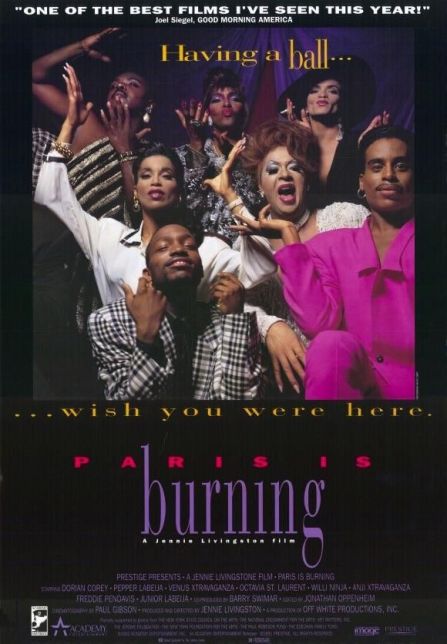
The episode title may be a reference to the 1990 documentary film Paris is Burning, directed by Jennie Livingston. The documentary is about the drag ball culture in New York City, and the drag competitions which take place at the balls. The documentary film received rave reviews and several awards at film festivals; it remains relevant in discussions on LGBT, youth, class, and racial issues.

The film’s title comes from drag performer Paris Dupree (1950-2011), who gave a drag ball with the name. It may have been partially inspired by Adolf Hitler’s reported question during World War II, “Is Paris burning?”, when he wished the city to be completely destroyed rather than re-taken by the Allies.

This episode centres on Paris Geller, who we learn more about in this episode, and who does indeed “burn down” or destroy the relationship between Lorelai and Max. She does so to deflect public attention from her own problems, thus playing a role like the drag performers in the film.

The Metamorphosis

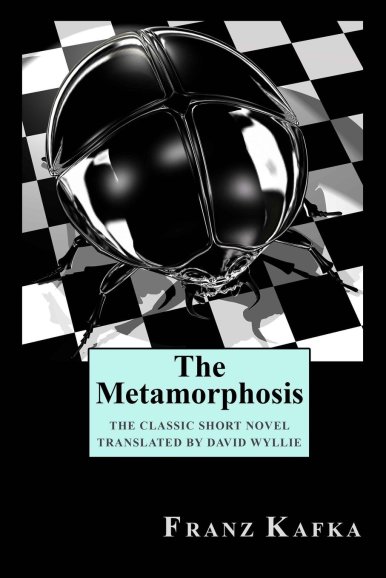
This 1915 absurdist novella by Czech author Frank Kafka is the book that Rory buys Dean for Christmas.

The story is about a travelling salesman named Gregor Samsa who wakes one morning to find that he has been transformed into a large and verminous beetle-like insect, becoming a disgrace to his family and an outsider in his own home. Both harrowing and comical, the book is a meditation on human guilt and isolation. Translated into English in 1933, The Metamorphosis is one of the most influential literary works of the twentieth century.

Rory believes that the book is a “romantic” present. Lane quite rightly tries to talk her out of this, describing the book as a “confusing Czechoslovakian novel”. She urges Rory to consider what Dean will think of the present, and says that she is giving Dean something that she would like, comparing it to Dean giving Rory a football for Christmas.

Lane’s counsel is sound, and she is hinting that once again Rory is using literature to keep others at an emotional distance, since she identifies the potential Christmas gift as saying “let’s be friends”. It’s a genuinely terrible present for Dean, and shows that Rory is still trying to turn her boyfriend into someone he isn’t.

We never discover if Rory took Lane’s advice or gave the book to Dean anyway. At the end of the scene she sounded unconvinced but also unsure, so you could argue it either way.

Rory’s idea of a book by a famous Czech author was probably inspired by her grandfather’s recent trip to Prague. In the last episode Emily told her that Richard was going to bring her back something special, and my bet is that he brought her something from the gift shop at the Kafka Museum, probably a book (possibly even this book). Rory may have thought that since she loved getting a book by Kafka as a present, Dean would as well.

Rory’s attraction to The Metamorphosis is obvious: like Gregor Samsa, she feels that she has become an object of disgust to her family, and is likewise suffering from feelings of intense shame and isolation – she is not speaking to her mother, and has not even spoken to Dean since they overslept at Miss Patty’s.

The Metamorphosis begins with Gregor Samsa oversleeping, and then finding he is trapped in a waking nightmare without reason or explanation. We can be sure that this is exactly how Rory feels, and the ending where Samsa voluntarily dies rather than burden his family any further shows just how deep her feelings of depression are. Quite possibly Rory has wished herself dead.

Rory might be playing her situation for laughs by making jokes about The Miracle Worker and Narcolepsy Boy, but make no mistake, she is suffering horribly. Like The Metamorphosis, there is both comedy and misery in equal measure.

By giving Dean the book, Rory was hoping to show him exactly how she feels; the “romantic” part of the present is her sharing her deepest emotions and fears with Dean, reaching out and laying herself completely bare to him. Unfortunately, Lane is right, and Dean would have no way to interpret it as anything other than a strange, confusing book about a big bug.

The Fallout From Falling Asleep

After Rory and Dean accidentally spend the night at Miss Patty’s dance studio together (another mention of the problem of time), all hell breaks loose.

For all that Lorelai and Emily are proud of Rory – so mature, so smart, so cautious – we discover that deep down both of them are terrified that at some point something will switch on inside her and she will become another teenage Lorelai who sleeps with boys and gets pregnant. It takes very little to bring all those fears to the surface, showing that they really don’t trust her at all.

Lorelai, who always touts herself as the cool mom who treats Rory as her best friend, finds that at crisis point she shrieks at and shames Rory in the same way her mother did to her. And the mother and daughter who “never fight” are now not speaking to one another.

Love means redefining relationships

Both Rory and Lorelai have now found a romantic partner – in fact, it seems as if Rory getting a boyfriend is partly what convinces Lorelai that the timing is now right for her to date Max.

But their new romances mean they have to reconsider other relationships. Lorelai must rewrite the rules she made up to protect Rory when she was young. As Rory already knows Lorelai’s boyfriend Max and sees him every weekday, there is no point in keeping him away from her.

Meanwhile, Rory realises that her happiness in having a boyfriend has made her selfish and dismissive toward her best friend Lane. This has brought on the first fight we see Lane and Rory have. Rory knows she shouldn’t take Lane for granted, and vows to make more effort to include her in her life.

Fairy godmother


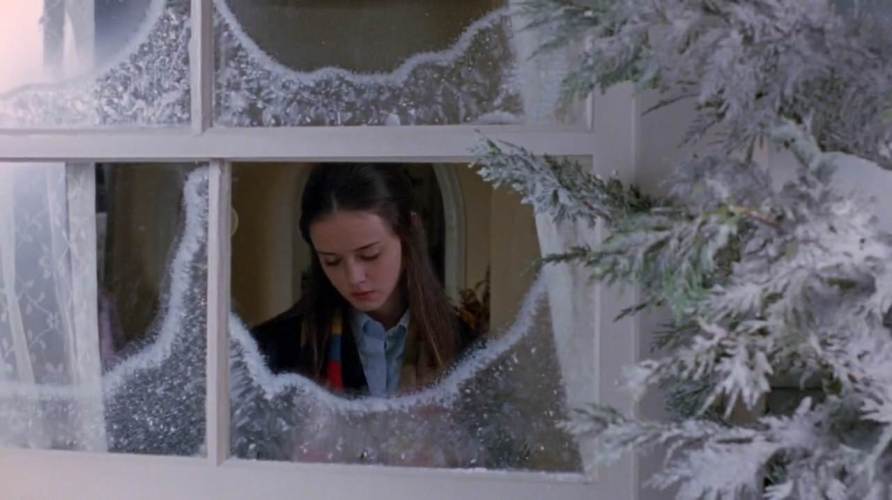
LORELAI: When I was five, I had a really bad ear infection and I had been home in bed for a week and I was very sad. So I wished really hard that something wonderful would happen to me, and I woke up the next morning and it had snowed. And I was sure that some fairy godmother had done it just for me. It was my little present.

Little Lorelai was thinking of the fairy godmother in fairy tales such as Cinderella and Sleeping Beauty. This story explains Lorelai’s love of snow. It also lets us know that when she unexpectedly sees Max in her town, she is thinking that this is another miraculous gift from her “fairy snowmother”.