LORELAI: Saying yes to this lunch with my mother is like saying “Sounds fun!” to a ride with Clemenza.
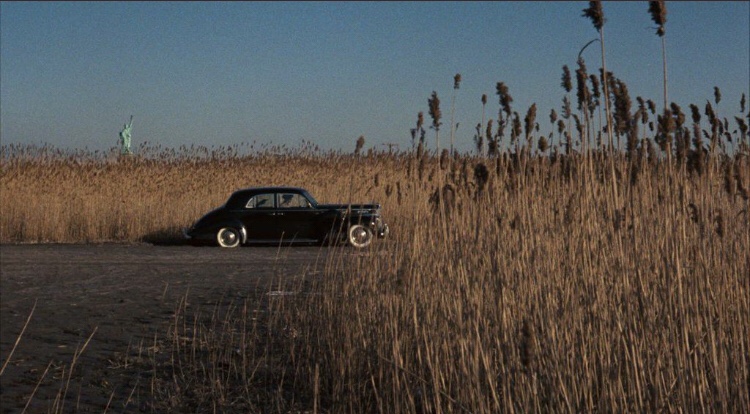
A reference to bodyguard Clemenza, from The Godfather, previously discussed. In the film, Clemenza kills someone in a car on a deserted road while travelling with them.
RORY: Are you sure the first thing you wanna do in office is to get a ninety-three year old woman sacked?
PARIS: Hey, at least I’m not putting her on an iceberg and shoving her off to sea …
Paris refers to a stereotype of Eskimo culture where the elderly were put on an ice floe to die when they became a burden. Although some Eskimos did practice senilicide (the killing of the elderly), it was rare, usually only practised during famines, and there is no record of anyone being put out on the ice to die – simple abandonment was probably the most common method. In many cases, it may have been what we might refer to as assisted suicide. It is no longer practised in Eskimo culture, and hasn’t been for a very long time.
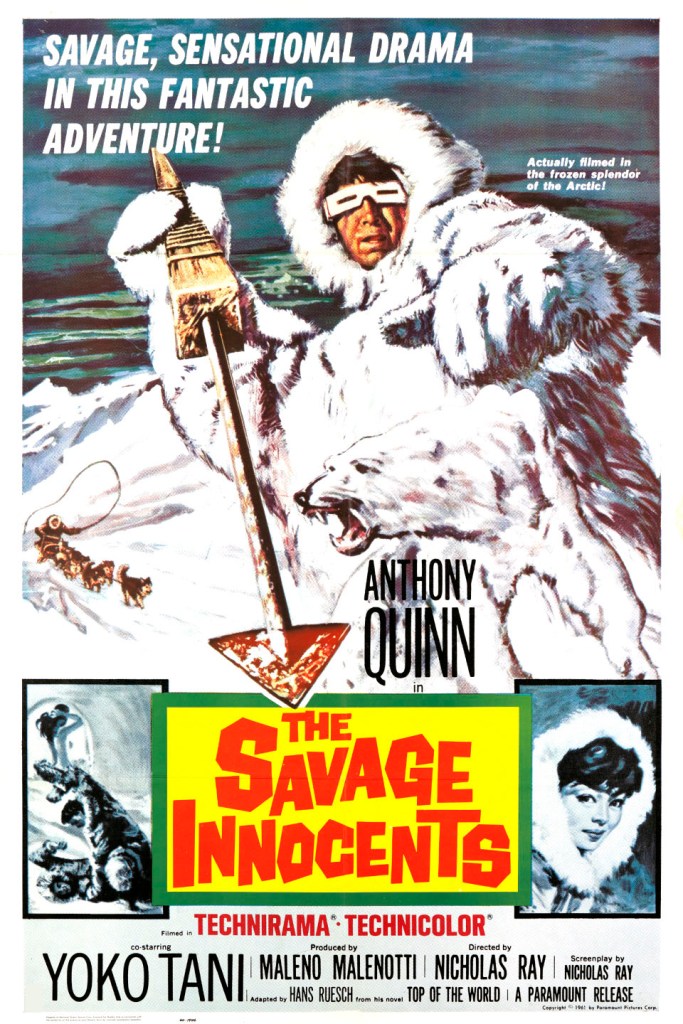
The idea of elderly Eskimos being pushed out to sea on ice floes might have come from the 1960 adventure film, The Savage Innocents, directed and co-written by Nicholas Ray, and based on the 1950 novel Top of the World by Swiss author Hans Ruesch. The film stars Anthony Quinn as an Inuit hunter – which is believed to be the inspiration for Bob Dylan’s 1967 song, “Quinn the Eskimo (The Mighty Quinn)”, successfully recorded by British band Manfred Mann in 1968.
In the film, the hunter’s mother-in-law is put on the ice to die, but is rescued soon after. In another scene, the hunter’s wife walks across the ice to commit suicide; a piece of ice breaks off and she briefly floats on the ice floe before drowning herself. The two scenes together may have suggested the popular idea of the elderly being set adrift on the ice to die.
Although Paris is made to seem a monster by getting rid of the librarian, she is ninety-three years old, and is in intensive care during this episode! Surely it is time for her to retire, on health grounds? I don’t feel as if Paris is being that unreasonable here.
PARIS: Look, let’s face it, the last administration might have just as well been running around yelling ‘Toga!’ for all the brilliant things they accomplished.”
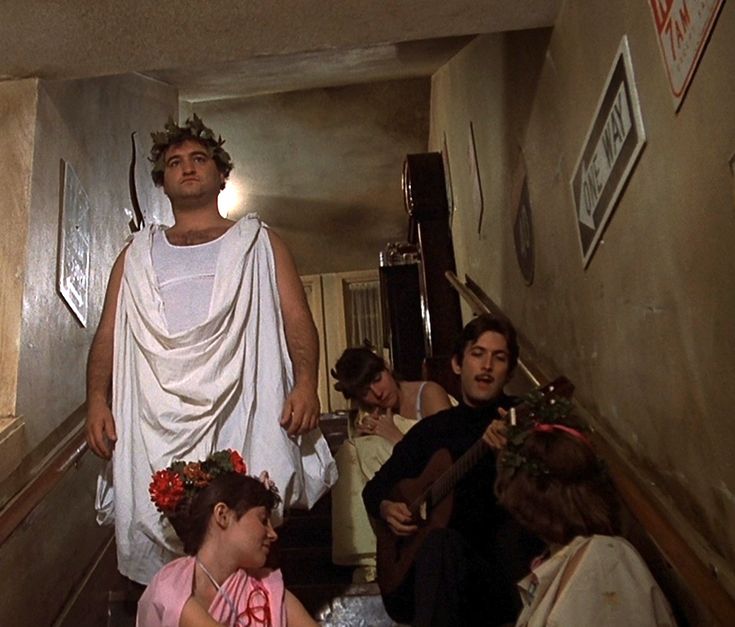
Paris references the 1978 comedy film National Lampoon’s Animal House, directed by John Landis, produced by Ivan Reitman, and written by Harold Ramis, Douglas Kenney, and Chris Miller. It was inspired by stories written by Miller and published in humour magazine National Lampoon. The stories were based on Ramis’s experience in the Zeta Beta Tau fraternity at Washington University in St. Louis, Miller’s Alpha Delta Phi experiences at Dartmouth College in New Hampshire, and producer Reitman’s at McMaster University in Hamilton, Ontario.
The film, starring John Belushi in his first screen role, is about a trouble-making under-performing fraternity called Delta Tau Chi whose members challenge the authority of the dean of the fictional Faber College. The film received mixed reviews upon its release, but was a huge commercial hit, becoming the #3 film of 1978 at the box office, and the highest grossing comedy of its time. The film almost single-handedly launched the gross-out comedy genre which became a Hollywood staple, and it is regarded as one of the greatest comedies (or even the greatest comedy), and one of the best films of all time.
The toga party, a staple of college life, is immortalised in Animal House. Whenever the guys at Delta House decide to have a toga party, they start mindlessly chanting, “Toga! Toga! Toga!”. Paris is saying that the previous student government were a bunch of idiots who were only interested in partying.
RORY: I got home at ten and you were already asleep.
LORELAI: Well, I was trying to watch The Legend of Bagger Vance again.
The Legend of Bagger Vance, 2000 sports film directed by Robert Redford, based on the 1995 novel of the same name by Steven Pressfield. The plot is loosely based on an episode in the Bhagavad Gita, where the god Krishna helps a warrior find his path as the hero he was meant to be.
Set in 1931 Georgia, it is a film about golf starring Matt Damon as Rannulph Junuh, a noted golfer from a wealthy family who was a decorated captain in World War I, but became a broken-down alcoholic due to the trauma of seeing his entire company wiped out. Will Smith plays Bagger Vance, a mysterious traveller who becomes Junuh’s caddie in an important tournament, giving him advice that helps him during the game. He disappears as mysteriously as he arrived, then makes an even more mysterious appearance at the end of the film.
The Legend of Bagger Vance was a box office bomb, making back only half its budget, and received mixed to poor reviews. One of the main criticisms was how slow and boring the film is, explaining Lorelai’s inability to stay awake watching it. It was also heavily criticised for employing the “Magical Negro” trope, where a black person with vaguely mystical powers comes to the aid of white protagonists for no clear reason (the god Krishna is often depicted with black skin, so this part is taken straight from the source material). The racism of the American South in the 1930s is completely glossed over in the film.
MICHEL: I am doing nothing. Ben, however, has dropped dead from laughter.
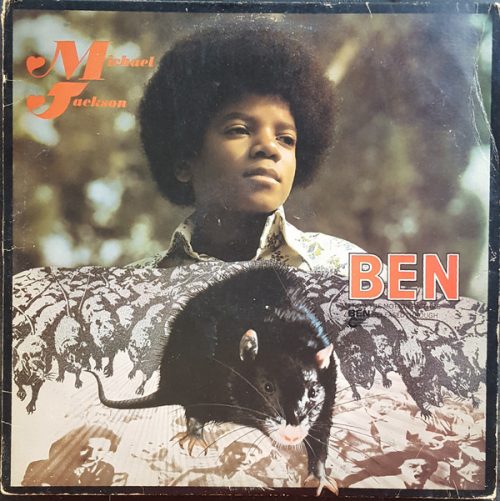
Michel refers to the 1972 drama-thriller film Ben, and its theme song. The film, directed by Phil Karlson, is about a lonely boy, played by Lee Harcourt Montgomery, who befriends Ben, the leader of a colony of rats. Ben becomes the boy’s best friend, protecting him from bullies and keeping his spirits up. However, Ben’s colony turns violent, resulting in several deaths. The rat colony is destroyed by the police, but Ben survives. The film is a sequel to the 1971 horror film Willard, based on the novel Ratman’s Notebooks by Gilbert Ralston.
The theme song, written by Don Black and Walter Scharf, is also called “Ben”. It was performed by Lee Harcourt Montgomery in the film, and by Michael Jackson over the closing credits. Although the film received mixed reviews, and was considered pretty oddball, listeners loved the tender theme. Jackson’s single reached #1 in the charts, making it his first #1 solo hit.
One of Jackson’s most re-released songs, often included on compilation albums, many people don’t realise the sweet song is addressed to a killer rat. It’s a little bit surprising that Michel knows – he didn’t live in the US when the film and song came out – but he seems to have quite an extensive knowledge of American pop culture.
MICHEL: Why, no, what a wonderful idea. I was actually going to fasten a large wedge of cheese to my head and lay on the ground until Mickey gets hungry and decides to crawl out and snack on my face.
Mickey Mouse, animated cartoon character co-created in 1928 by Walt Disney and Ub Iwerks, and first voiced by Disney himself. The name “Mickey” was suggested by Walt Disney’s wife Lillian, to replace the character’s original name of Mortimer Mouse.
Mickey first appeared in the 1928 short film Plane Crazy, and made his feature film debut in Steamboat Willie, one of the first cartoons with sound. He has appeared in over 130 films, including The Band Concert (1935), The Brave Little Tailor (1938), and Fantasia (1940). In 1978, he became the first cartoon character to get a star on the Hollywood Walk of Fame.
Mickey has featured extensively in comic strips and comic books, in television series, and in other media, such as video games and merchandising, and appears as a character you can meet at Disney parks. He is one of the most recognisable fictional characters of all time.
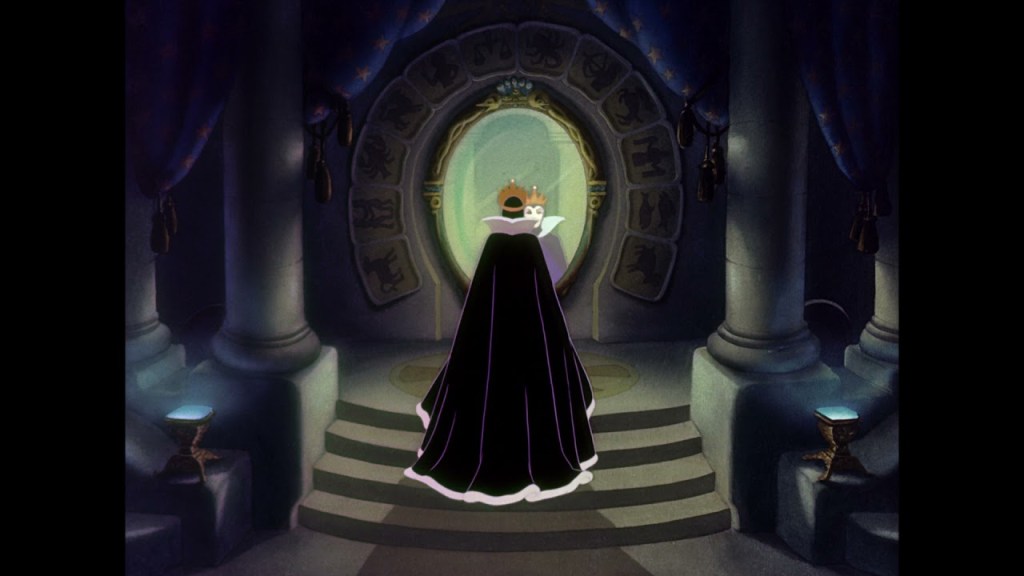
In the story, Snow White’s wicked stepmother, a queen, has a magic mirror which she questions, “Magic mirror on the wall, who is the fairest of them all?”. The mirror always tells the queen that she is the loveliest lady in the land … until one day the mirror informs her that Snow White is the fairest of all. And that’s when the trouble begins.
RORY: Eventually, maybe, but for now – solidarity, sister.
LORELAI: Ya ya!
RORY: You’ve been waiting for six weeks to do that, haven’t you?
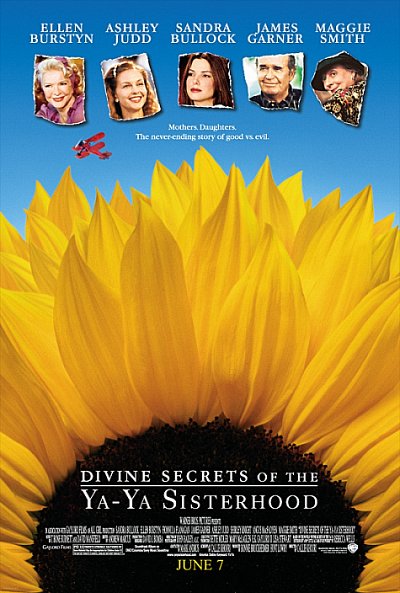
A reference to Divine Secrets of the Ya-Ya Sisterhood. The 1996 novel by Rebecca Wells has already been discussed as one that Rory (probably) read, but the comedy-drama film came out in June 2002, and it is undoubtedly this version which Lorelai has recently seen and refers to.
Divine Secrets of the Ya-Ya Sisterhood is directed by Callie Khouri, and stars Sandra Bullock and Ellen Burstyn as the daughter and mother in conflict. The film was a commercial success, but received mixed reviews, with critics feeling it was overly melodramatic and unoriginal.
SOOKIE: So how are you planning on telling [your parents about Christopher]?
LORELAI: I thought I’d do it like Nell. You know, chicka chicka chickabee.
Lorelai refers to the 1994 drama film Nell, directed by British director Michael Apted, and starring Jodie Foster as Nell Kellty, a young woman who has to face people for the first time after being raised by her mother in an isolated cabin. It is based on the play Idioglossia by Mark Handler, inspired by his experiences living in the Cascade Mountains in the Pacific Northwest, and by identical twins Grace and Virginia Kennedy (born 1970), who invented their own language. Their story is told in the 1980 documentary Poto and Cabengo (the twins’ own names for themselves).
In the film, Nell likewise speaks her own language in a strange and unique accent. She says “Chicka chicka chickabee”, which is her way of saying “dear one, beloved” (a variation on chickadee and chickabiddy, both used as endearments in some regions of the US).
Nell was a commercial success and received mixed reviews, with Foster’s performance being warmly praised.
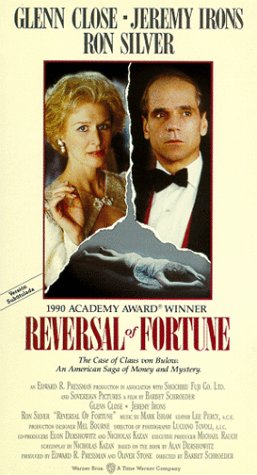
PARIS: I mean, women fall for men who are wrong for them all of the time, and then they get sidetracked from their goals. They give up careers and become alcoholics and, if you’re Sunny von Bülow, wind up in a coma completely incapable of stopping Glenn Close from playing you in a movie.
Martha “Sunny” von Bülow (born Martha Crawford, 1932-2008), heiress and socialite. Her second husband, Claus von Bülow (1926−2019), was convicted in 1982 of attempting to murder her by insulin overdose, but the conviction was overturned on appeal. A second trial found him not guilty, after experts testified that there was no insulin injection and that her symptoms were attributable to overuse of prescription drugs, combined with alcohol and diabetes. Sunny von Bülow lived almost 28 years in a persistent vegetative state from 1980 until her death.
The story was dramatised in the 1990 film Reversal of Fortune, directed by Barbet Schroeder, and based on the 1985 book of the same name by Claus’ lawyer, Alan Dershowitz. The role of Sunny is played by Glenn Close in the film. Reversal of Fortune received mostly positive reviews, and still has a very good reputation as a tantalising mystery and satire on the rich.



 The Annotated Gilmore Girls