The Final Days of Dick Nixon

RORY: Taylor’s wigging.

LORELAI: I know. He’s been sitting there like the final days of Dick Nixon for almost an hour.

Richard Nixon (1913-1994), 37th President of the US from 1969 to 1974. The Watergate Affair, the name used to describe the secret and illegal activities undertaken by members of the Nixon administration, was brought to light by reporters Carl Bernstein and Bob Woodward in The Washington Post in 1972.

Nixon had hoped to weather the storm by refusing to leave, but impeachment hearings against him opened in May 1974. With loss of political support, and the near-certainty he would be impeached and removed from office, Nixon resigned on August 9 1974.

Lorelai may be specifically referring to the 1976 non-fiction book, The Final Days, by Carl Bernstein and Bob Woodward, describing the last months of Richard Nixon’s presidency. It was a major commercial success, and was made into a television movie of the same name in 1989, with Lane Smith as Richard Nixon.

The Wedding Company’s Former Clients

SOOKIE: Oh, it’s this company’s sample place setting. Emily set me up with them. They did Celine Dion’s wedding, and Steven Spielberg’s daughter’s Jack Russell Terrier’s Bark Mitzvah.

Celine Dion, previously discussed. She married her manager, Canadian music producer René Angélil, in 1994 [pictured]; they first met in 1980, when Dion was 12 and Angélil was 38. They remained married until Angélil’s death in 2016.

Steven Spielberg (born 1946), film director, previously mentioned. He is one of the most commercially successful directors of all time. He has four daughters (Jessica, Sasha, Destry, and Mikaela), but I can find no reference to any of them having a Bark Mitzvah for a Jack Russell – although the Spielberg family does seem very attached to their pet dogs, so it’s not wildly unbelievable.

A Bark Mitzvah is a fun coming-of-age celebration for pet dogs with Jewish owners, held as a joke counterpart to the Bar Mitzvah, previously discussed. The first one was held in 1958, and although some rabbis find the idea offensive, they continue to be popular.

David and Lisa

TAYLOR: Let go of me!

TROUBADOUR #2: Don’t like to be touched, that’s cool. Got a little David and Lisa thing happening?

David and Lisa, 1962 drama film directed by Frank Perry. It is based on the second story in the 1961 novella Lisa and David by a psychiatrist named Theodore Isaac Rubin; the screenplay is written by Rubin’s wife, Eleanor Katz. The story is about a bright young man named David (played by Keir Dullea) who cannot bear to be touched; while in a mental health treatment facility, he befriends a girl named Lisa (played by Janet Margolin) who has a split personality.

David and Lisa received positive reviews from critics. It was made into a stage play in 1967, and into a television film in 1998, produced by Oprah Winfrey.

David and Lisa is one of the DVDs we can see at Stars Hollow Video in “Richard in Stars Hollow”.

Note the implication from the Second Town Troubadour/Second Market Guy that Taylor must have serious mental health problems if he doesn’t want to be hugged. It’s just the start of the trolling that Taylor is about to be subjected to!

Jerry Lewis in “The Diner Guy”

LUKE: Yeah, I can’t serve and be on the phone.

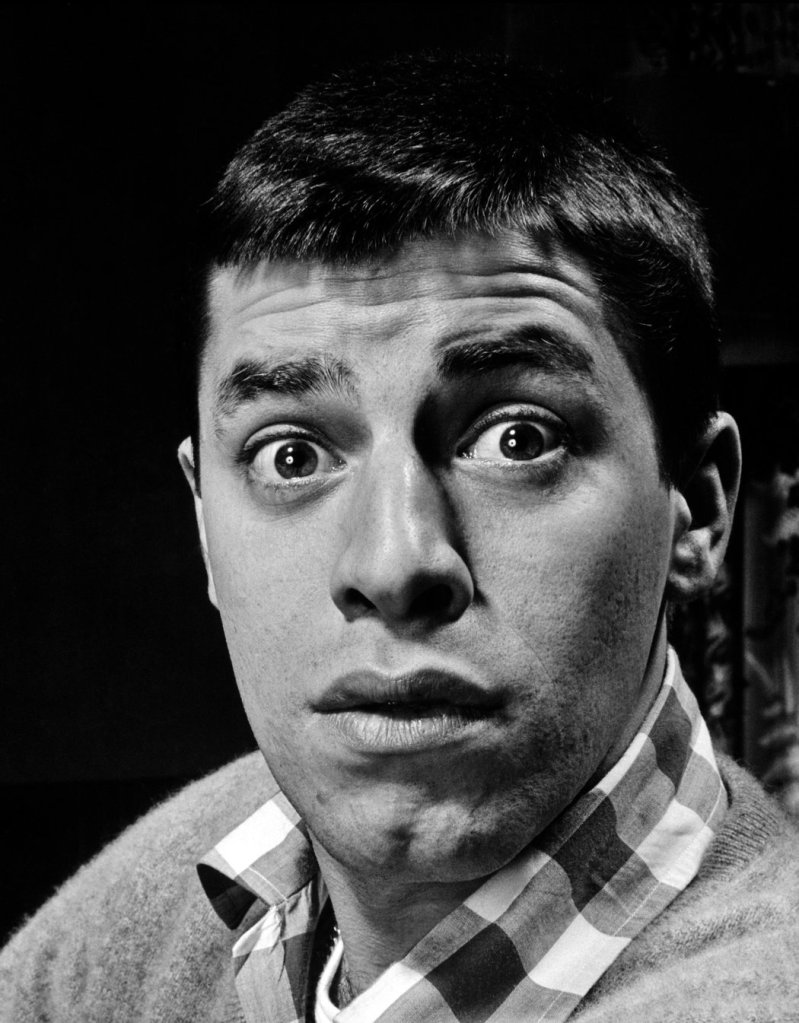
LORELAI: But your reenactment of Jerry Lewis in The Diner Guy is gonna wow the critics.

Jerry Lewis, born Joseph Levitch (1926-2017), comedian, director, actor, screenwriter, singer, humanitarian and producer. Nicknamed “The King of Comedy”, Lewis is regarded as one of the most significant American cultural figures of the 20th century, was widely known for his “kid” and “idiot” persona and his contributions to comedy and charity, making him a global figure in popular culture over an eight-decade career. He debuted professionally in 1946 working with Dean Martin as Martin and Lewis, and they performed together until 1956.

Although Jerry Lewis never did a film called The Diner Guy, several of his films had titles such as The Geisha Boy, The Ladies Man, and The Errand Boy, so The Diner Guy would actually fit right in.

Songs at the Bar

I Can’t Give You Anything But Love, Baby

This is the song playing at the bar when Emily and Lorelai first walk in together. It’s a jazz standard with music by Jimmy McHugh and lyrics by Dorothy Fields, introduced by Adelaide Hall at the Blackbird Revue in New York, 1928, which later opened on Broadway.

Come Fly With Me

This is the song which is announced as a “salute to the Chairman of the Board”. It’s a 1958 song with music by Jimmy Heusen and lyrics by Sammy Cahn. It was written for Frank Sinatra, the title track of his 1958 album, and became part of his concert repertoire.

Fly Me to the Moon

This is the song which plays when Chad, the “silver fox”, asks Emily to dance. It’s a 1954 song by Bart Howard, originally recorded by Kaye Ballard the same year. Frank Sinatra’s 1964 version is the best known, and became associated with NASA’s Apollo missions to the Moon. “Fly Me to the Moon” was inducted into the Songwriter’s Hall of Fame in 1999.

Someone To Watch Over Me

Previously discussed. This is the song which Emily and Chad dance to. It’s a sign that Emily desperately needs Lorelai to watch out for her – which she fails to do.

Stayin’ Alive

The song which plays while Emily and Lorelai argue about whose fault everything has been. It’s a 1977 song written and performed by The Bee Gees for the soundtrack to the film, Saturday Night Fever. The song was a smash hit around the world, going to #1 in the US and multiple other countries, and #4 in the UK. Considered one of the best songs of all time, it was one of the Bee Gees’ signature songs.

The songs at the bar are performed by Marty and Elayne (Roberts), a famous husband-wife lounge act who performed at The Dresden Room, a Hollywood landmark, for 38 years. They also make an appearance in the 1996 film Swingers. Marty passed away in January of this year, aged 89.

West Side Story

JESS: Okay, I’m going. Look, man, I really was just dropping off some food, so don’t get all West Side Story on me, okay? [leaves]

West Side Story, previously discussed.

Jess refers to the gang rivalry between two Upper West Side gangs of New York, the Jets (white Americans) and the Sharks (Puerto Ricans). Maria, played by Natalie Wood, is a Puerto Rican girl who has come to New York for an arranged marriage with a man named Chino she does not love. She is drawn to Tony, played by Richard Beymer, a former member of the Jets.

Jess is taunting Dean by hinting that Rory no longer loves him, and like Maria, has fallen for a boy who is off-limits to her. In the film, Chino comes after Tony with a gun during a rumble, and shoots him dead. This is another suggestion that Jess is expecting Dean to become violent with him in order to keep him away from Rory.

Frankenstein

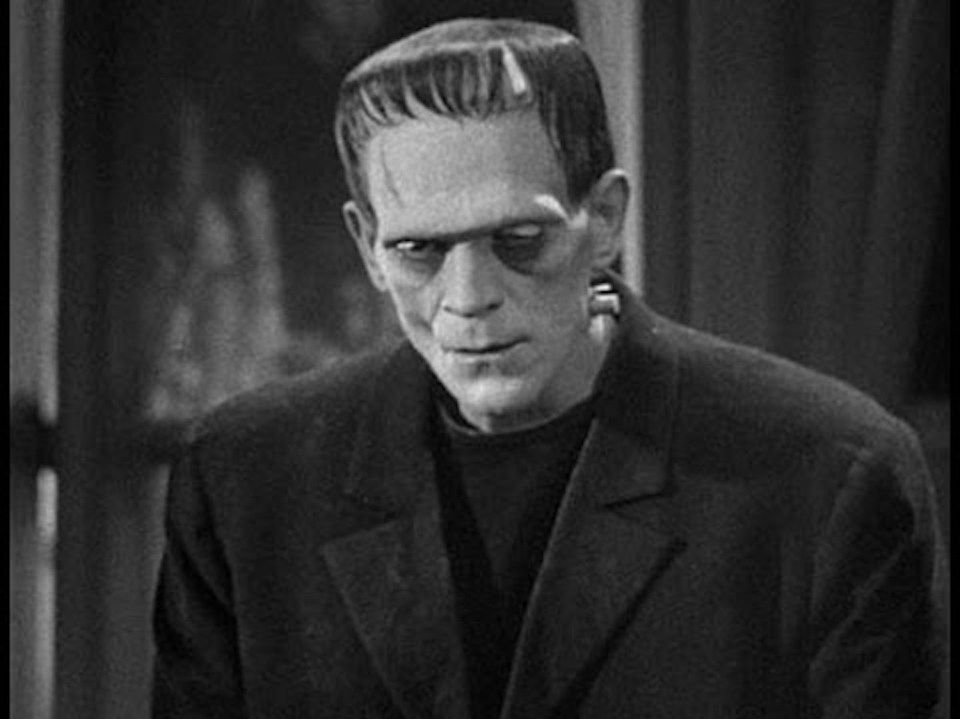
JESS: You’re doing that towering over me thing. Huh. I tell you, you’ve really got that down. It helps that you’re twelve feet tall, but this Frankenstein scowl really adds to the whole …

Frankenstein, previously discussed.

Jess makes a common error by speaking as if the monster in the film is named Frankenstein – Dr. Victor Frankenstein is the name of the scientist who creates the monster; the monster himself has no name, and is referred to as “Frankenstein’s monster”. In the 1931 film, he is played by Boris Karloff.

Casino

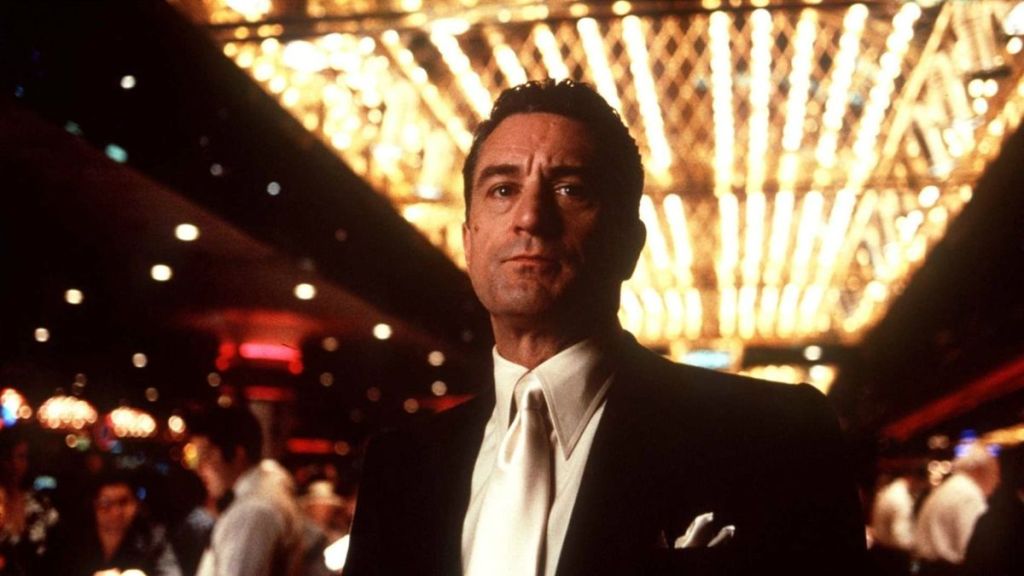
LORELAI: Ah, I just love the idea of shrimp cocktail with a steak dinner, you know? It’s so Casino – ‘Big Joe, steak and shrimp’.

Casino is a 1995 epic crime film, directed by Martin Scorsese, and based on the 1995 non-fiction book, Casino: Love and Honor in Las Vegas by Nicholas Pileggi, who also wrote the screenplay. It stars Robert De Niro as Sam “Ace” Rothstein, a gambling expert handicapper who is asked to oversee the casino and hotel operations at the fictional Tangiers Casino in Las Vegas. It is the eighth film collaboration between Scorsese and De Niro.

The main characters are based on real people: Sam “Ace” Rothstein is inspired by Frank “Lefty” Rosenthal who ran several casinos in Las Vegas for the crime syndicate the Chicago Outfit from the early 1970s until 1981. Casino was a worldwide box office success, and received mostly positive reviews.

Miss Daisy

EMILY: So, are we all ready to go?

LORELAI: I guess so, Miss Daisy.

Lorelai refers to Driving Miss Daisy, a 1989 comedy-drama film by Australian director Bruce Beresford, based on the 1987 play of the same name by Alfred Uhry, who wrote the screenplay. The film stars Jessica Tandy as a wealthy Jewish widow named Daisy Werthan in Atlanta, Georgia, and Morgan Freeman as her chauffeur, Hoke Colburn.

Set in the 1960s and 1970s, the film explores themes of racism against black people, and prejudice against Jewish people, as well as the radical changes occurring in American society. The friendship between “Miss Daisy” and Hoke grows as she becomes more dependent on him, and both characters develop frailties as they age together.

Driving Miss Daisy was well received by critics and audiences alike as a heartwarming film, and a commercial success. It won four Oscars, including Best Picture and a Best Actress award for Jessica Tandy, who at 81 also became the oldest Academy Award winner. As of 2021, it was the last PG-rated film to win Best Picture.