“Patience, grasshopper”

RORY: What are we waiting for?
LORELAI: Patience, grasshopper.

Lorelai references the action-adventure Western martial arts television show Kung Fu, broadcast from 1972 to 1975. It follows the adventures of Shaolin monk named Kwai Chang Caine, played by David Carradine, as he travels through the American Old West, searching for his half-brother, Danny. Caine had an American father and a Chinese mother.

The show would often flashback to Caine’s training, where he was called “Grasshopper” by his master, a man named Po, in recall of this early scene:

Master Po: Close your eyes. What do you hear?
Caine: I hear the water, I hear the birds.
Po: Do you hear your own heartbeat?
Caine: No.
Po: Do you hear the grasshopper which is at your feet?
Caine: Old man, how is it that you hear these things?
Po: Young man, how is it that you do not?

This is where the name Grasshopper came from, and further flashbacks would see master Po giving the young Caine advice, such as “Patience, young Grasshopper”. Many of the aphorisms in the show are taken from the Tao Te Ching.

Kung Fu was very influential, and at the time highly acclaimed by critics, winning several major awards. These days it tends to be discussed for its representation of Asian character, and having a protagonist playing by an actor with no Chinese heritage. It has been adapted into film three times, and in 2021 was rebooted as a crime show television series with a female lead, played by Olivia Liang.

Some people incorrectly think “Patience, grasshopper” is a quote from the 1984 martial arts film, The Karate Kid.

Mel Brooks

LORELAI: What do you mean, why? The 2000 Year Old Man, Young Frankenstein, Silent Movie – you don’t think Mel has earned the right to have his face on my butt?

Mel Brooks (born Melvin Kaminsky in 1926), actor, comedian, and film-maker, with a career spanning over seven decades. He is known as the creator of broad farces and parodies, considered some of the greatest comedy films ever made, and was one of the most successful film directors of the 1970s. As well as winning an Emmy, a Grammy, and an Oscar, in 2001 he won a Tony Award for The Producers, previously discussed. He has been awarded a Kennedy Center Honor, a Hollywood Walk of Fame star, an AFI Lifetime Achievement Award, a British Film Institute Fellowship, a National Medal of Arts, and a BAFTA Fellowship.

The 2000 Year Old Man is a comedy sketch created by Carl Reiner and Mel Brooks in the 1950s and first publicly performed in the 1960s. Brooks plays a 2000-year-old man, interviewed by Reiner in a series of comedy routines that were turned into a collection of records and also performed on television.

Young Frankenstein, 1974 comedy horror film directed by Mel Brooks, and co-written by he and Gene Wilder, who stars in the title role. It’s a parody of the various classic horror film adaptations of Mary Shelley’s 1818 novel, Frankenstein, in particular, the 1931 film version. Young Frankenstein was the #3 film of 1974 and received critical acclaim. It is considered one of the funniest comedies ever made, and was later made into a stage musical. Mel Brooks considers it his best, but not his funniest, movie.

Silent Movie, 1976 satirical comedy film co-written, directed, and starring Mel Brooks as a Hollywood director down on his luck. He and his sidekicks, played by Dom DeLuise and Marty Feldman, come up with a plan to make the first silent movie in forty years. The film itself is silent, with intertitles instead of spoken dialogue. The film received positive reviews, and remains highly-regarded.

Vertigo

LORELAI: I think I have gangrene.
RORY: You do not.
LORELAI: And vertigo.

Vertigo is a condition where the person affected has the sensation of movement even when standing still, feeling like a spinning or swaying movement. It may cause nausea, vomiting, sweating, or difficulty walking, and is the most common type of dizziness. It is usually caused by a problem with the inner ear.

It is often confused with acrophobia, or a fear of heights, which is what Lorelai is probably referring to – being on the roof has made her scared to get up there again. Also, she went up on the roof before breakfast, so any dizziness she experienced could have been due to low blood sugar. Or a caffeine rush …

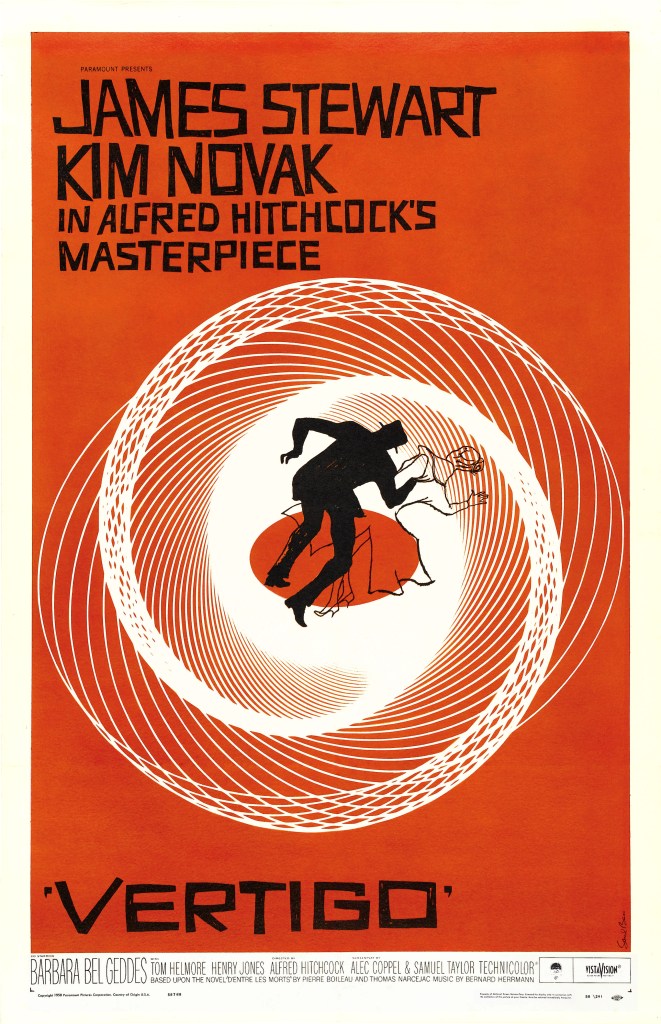
This is possibly a nod to the 1958 psychological thriller Vertigo, directed by Alfred Hitchcock, and based on the 1954 mystery novel The Living and the Dead, by French writing team Boileau-Narcejac. James Stewart plays a police detective forced into early retirement by acrophobia and vertigo caused by an incident in the line of duty. He is hired by an acquaintance to follow his wife, played by Kim Novak, who is behaving strangely.

Vertigo received mixed reviews upon release, but is now seen as a classic Hitchcock film and one of his defining works. Attracting significant scholarly discussion, it is regarded as among the greatest films of all time, and by some as the greatest film of all time.

The Barrymores

CHRISTOPHER: So, quaint evening of theater last night.
LORELAI: Ah yes, the Gilmore family players rival the Barrymores for their sophisticated dramatic productions.

The Barrymores are a famous family in the acting profession. The patriarch of the family was Herbert Blythe, known professionally as Maurice Barrymore (1849-1905), a British stage actor. His children were Lionel (1878-1954), Ethel (1879-1959), and John Barrymore (1882-1942), who all became famous American actors of stage, screen, and radio. All three were inducted into the American Theater Hall of Fame, and Ethel’s six decades on stage earned her the title “The First Lady of American Theatre”.

John Barrymore is the grandfather of actress Drew Barrymore (born 1975). The Drew family after whom she is named are related to Maurice’s wife Georgiana Drew, and they also have strong acting traditions.

[Picture shows Lionel, Ethel, and John Barrymore circa 1930s]

Matthew Broderick, Ferris Bueller, Producers

RORY: Yeah. Oh, and later I pictured you marrying Matthew Broderick, and we lived in New York in this great apartment in the village and we would talk about his Ferris Bueller days.
LORELAI: Just think how easy Producers tickets would be to get.

Matthew Broderick (born 1962), actor who began his career in theatre in the 1980s, winning a Tony Award for his role in Neil Simon’s Brighton Beach Memoirs. His first starring role in a hit film came in the 1983 WarGames, where he had the lead role as a teenage hacker.

Broderick had the lead role as the charming school truant in the 1986 teen comedy, Ferris Bueller’s Day Off [pictured]. Directed by John Hughes, the film is a joyful love letter to the city of Chicago, and about three teenagers seeking the best “day off” from school ever devised. It was the #10 film of 1986, and praised by critics. It is considered one of the greatest teen movies of all time.

The Producers is a musical with music and lyrics by Mel Brooks, adapted from Brooks’ 1967 film of the same name. It is about two theatrical producers who plan to get rich by fraudulently overselling interests in a Broadway flop. Their scheme becomes complicated when their play is an unexpected success. The Producers opened on Broadway in 2001 and closed in 2007. Lorelai is apparently having trouble getting tickets for the musical. It went on tour in the US in September 2002, arriving at the Bushnell Theatre in Hartford in August 2004, but Matthew Broderick was not in the touring version.

Rory imagines living in New York in the village with her mother and Matthew Broderick. In 1997, Broderick married actress Sarah Jessica Parker. They live in the West Village in New York City, suggesting that it was after this date that Rory fantasised about Matthew Broderick as her stepfather, so around the age of 14-15. (Broderick and Parker actually spend more time at their second home in Ireland).

Rory’s imaginary stepfathers include a man-child who lives in a fantasy world, and an actor famous for playing both a slacker and a scammer. Not very different from her real father, then …

“Rabbit boiling on the stove”

LORELAI: Oh, well, fine. Just took Mom a whole five minutes before she self-combusted and left the room in tears … She freaked out that you were with Sherry …
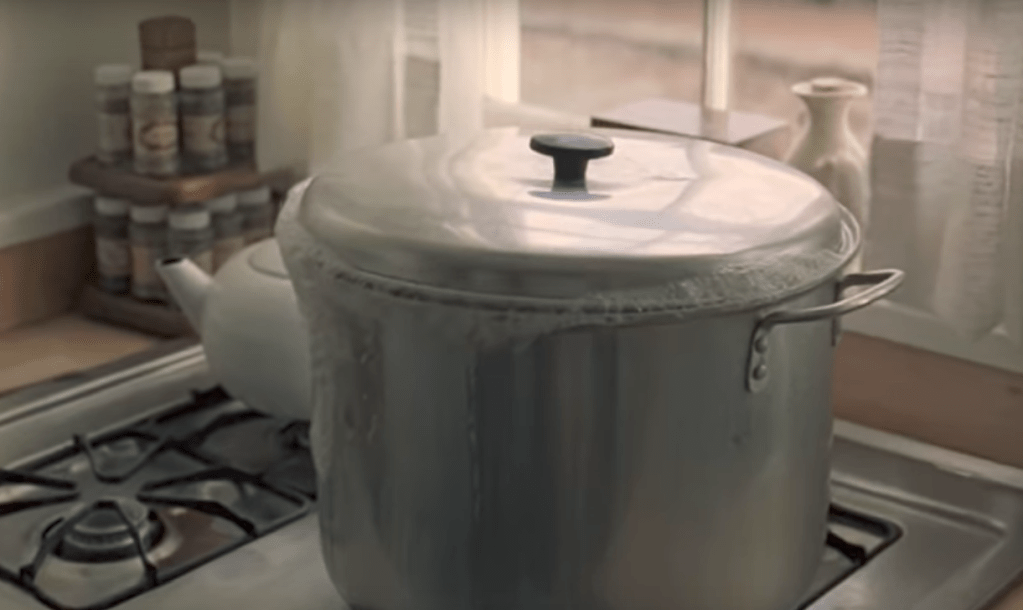
RORY: Well, what did she think, that you were gonna come home and find a rabbit boiling on the stove?

A reference to the film Fatal Attraction, previously discussed.

In the film, the stalker, Alex, takes revenge on the married man she had an affair with, and who is now ignoring her. After several threats and following him around, Alex breaks into his house, takes his young daughter’s pet rabbit from its hutch, and boils it on the stove in the kitchen, to be found by Dan’s traumatised wife. From this film comes the phrase “bunny boiler”, to mean a dangerously obsessed spurned woman.

[The picture is a still from the film, but from just before the bunny reveal, as it’s really quite gruesome].

Martin Sheen

LORELAI: I think we probably would’ve met eventually.
SHERRY: Perhaps, at some function or other.
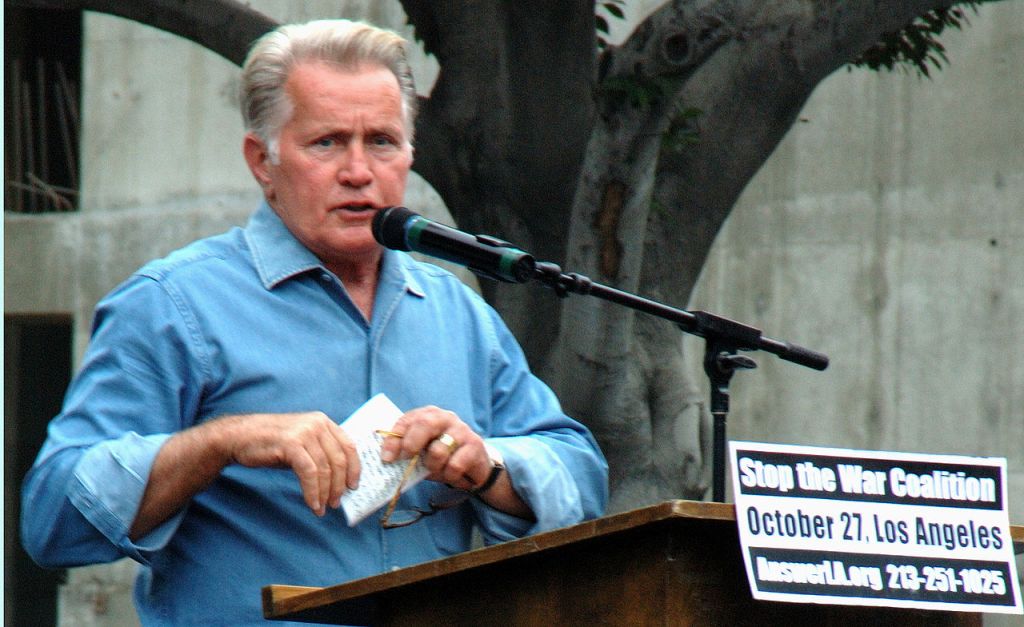
LORELAI: Yeah – you, me, Martin Sheen, all chained to the same tree.

Ramón Estévez (born 1940), award-winning actor known professionally as Martin Sheen. He first became known for his work in The Subject Was Roses (1968), and later achieved recognition for his leading role in Apocalypse Now (1979). He played President Josiah Bartlett in the television series The West Wing (1999-2006). He has a star on the Hollywood Walk of Fame.

Martin Sheen has been active in countless non-violent acts of civil disobedience, and been arrested for protesting 66 times. He has rallied for peace, gun control, and in support of immigration, and protested against nuclear power, nuclear weapons testing, dangerous arms buildup, abuse of farmworkers, Canadian sealclubbing, the invasion of Iraq, and numerous other environmental, political, and social causes.

Lorelai jokes that the function she and Sherry might have met at could have been at an environmental protest against logging with Martin Sheen. Of course, Sherry is thinking of functions at Chilton.

“Duck, Harvey”

[Rory walks over to the window, stretching the phone cord across the diner]

LUKE: Hey, watch it.
LORELAI: Yeah, duck Harvey.

A reference to the 1950 comedy-drama film Harvey, directed by Henry Koster, and based on the 1944 play of the same name by Mary Chase. James Stewart stars as an eccentric man who has a six foot three and a half invisible white rabbit as a best friend, named Harvey. He explains during the film that Harvey is a pooka, a mischievous but benign creature from Celtic mythology.

Harvey was financially successful, and received warm praise from critics for its charm, whimsy, and Stewart’s excellent performance. It was first released on video in 1990.

When Luke calls out in alarm about Rory stretching the phone cord across the diner, Lorelai quips, “Duck, Harvey”, because the diner is empty, and the only person who could be endangered by it must be the invisible Harvey.

Lane in Punishment Lockdown

RORY: Lane. How did you know I was here?
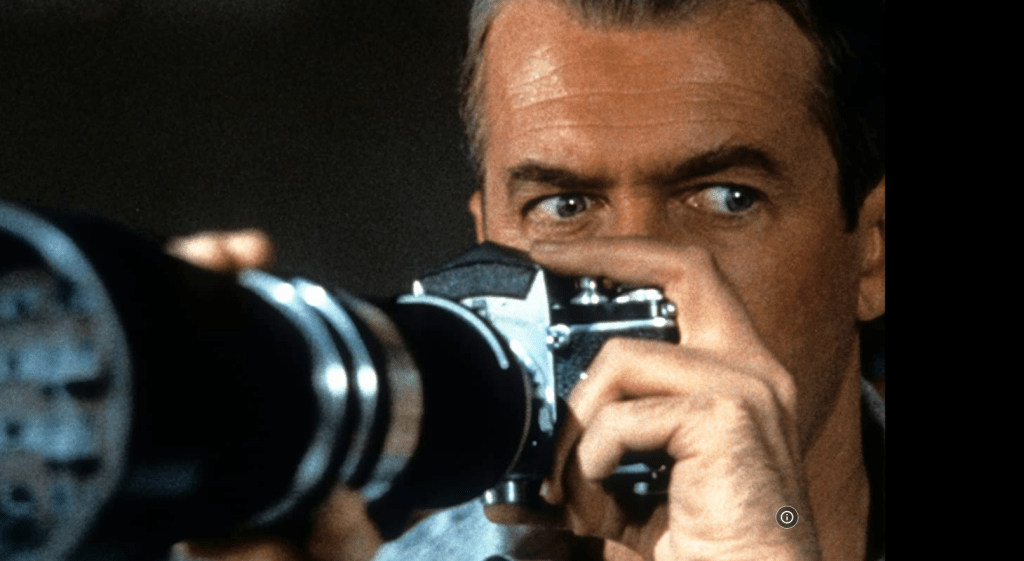
LANE: Telescope. I got a clean shot at Luke’s. I saw you and your mom go in.

Lane is now having “the mother of all groundings” since Mrs Kim found out that she had secretly been talking to Henry, and had attempted to have a date with him. She is confined to the house, not even being permitted to attend school (Mrs Kim has told Stars Hollow High that Lane has a highly contagious illness, and gained permission to home school her daughter for two weeks).

Lane using a telescope to spy on Rory so she can feel connected to the outside world may be an allusion to the 1954 mystery thriller film Rear Window. Directed by Alfred Hitchcock, it stars James Stewart as a photographer recuperating from a broken leg. Confined to a wheelchair in his Greenwich Village apartment, he uses binoculars, and the telescopic lens of his camera, to spy on his neighbours, solving a murder mystery in the process.

Rear Window was the #8 film of 1954 at the box office. It received critical acclaim, and is considered one of the greatest films of all time.

“Leave the gun, take the cannoli”

RORY: Whack you with a cannoli? Oh, because he left the gun and took the cannoli.

In another scene of The Godfather, a Corleone bodyguard named Clemenza (Richard S. Castellano) is asked to kill Paulie (John Martino), a perceived weak link in the crime family. As Clemenza leaves after performing his task, he tells his accomplice, “Leave the gun. Take the cannoli”. This scene takes place in a car on a deserted road, the cannoli was food packed for the trip.