“I will not be ignored”

RORY: Time is ticking.
LORELAI (imitating Dean): “Rory, I love you, Rory. Rory, I will not be ignored, Rory…”
RORY: Leave.

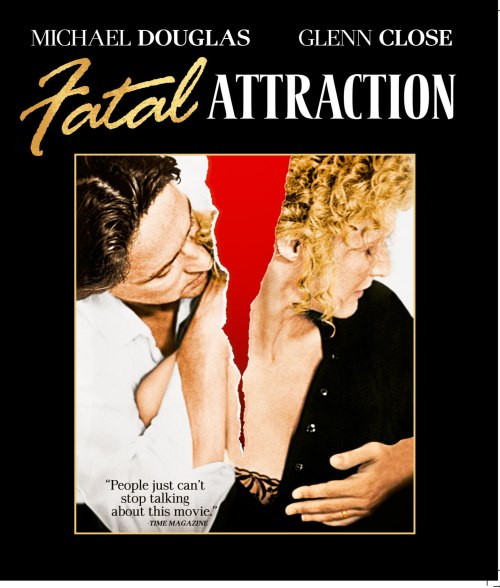
Lorelai is slightly misquoting from the 1987 thriller film Fatal Attraction, directed by Adrian Lyne, and written by James Dearden, based on his short film Diversion. The film is about a married man named Dan (Michael Douglas) who has a brief affair with a woman named Alex (Glenn Close). Alex becomes obsessed, and stalks Dan and his family.

At one point, Dan confronts Alex at her apartment, and they end up in a physical altercation. Alex says to him, “Well, what am I supposed to do? You won’t answer my calls, you change your number. I mean, I’m not gonna be ignored, Dan!”

Fatal Attraction was a massive box-office hit, the #2 film of 1987 in the US, and the #1 film world-wide, leading to more psychological thrillers being made in the 1980s and ’90s. It received fairly good reviews, and much discussion around feminist and mental health issues.

It is notable that Alex’s surname is Forrest – very similar to Dean’s surname of Forester, as yet another hint of Dean’s obsessive stalker tendencies.
Fireflies

RORY: I called the Fireflies. Do they need troop leaders? Yes. Good, I’ll be a troop leader. Great. The only catch is, it’s summer. Camping season. I need wilderness skills. Why did you never take me camping?
LORELAI: Camping? Are you kidding? I couldn’t get you to step on wet grass until you were three.

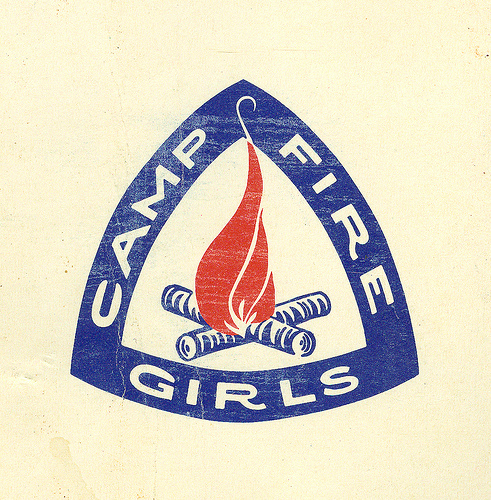
The Fireflies are a fictional organisation, perhaps based on the Camp Fire Girls, founded in 1910 as a sister organisation to the Boy Scouts of America. In 1975 it became for both boys and girls, and is now just called Camp Fire. It teaches camping and wilderness skills, just like the Fireflies, and Lauren Graham was a member when she was young. In real life, there are no Camp Fire groups in Connecticut.

The 1997 black comedy film Wag the Dog , with screenplay by Amy Sherman-Palladino’s favourite playwright, David Mamet, uses The Firefly Girls as a replacement for the Camp Fire Girls. This could be an homage (and a slightly naughty one, as in the film the young Firefly Girl receives inappropriate advances from the President in the Oval Office).

If Rory would not step on wet grass until she was three, no doubt that’s from Lorelai’s example – she notoriously hates nature and the great outdoors..

Barbarella

RORY: Long day. Long long day.
DEAN: The day is over. Let’s talk about the night. Uh, there’s a 7:30 showing of Barbarella, and I thought you can bring your mom’s purse, you know the one with that monkey face and we’ll sneak in some burgers and …

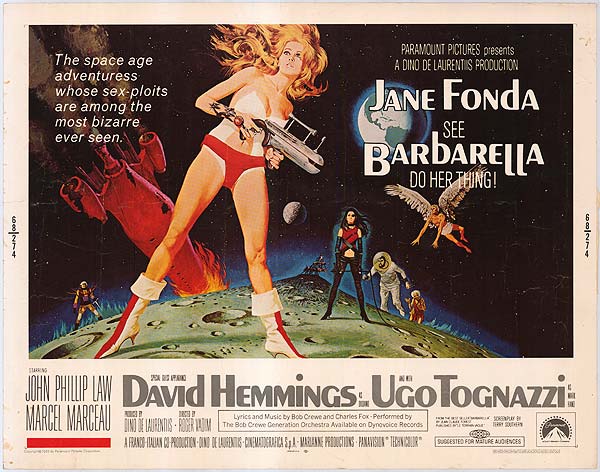
Barbarella is a 1968 science-fiction film directed by Roger Vadim, based on the comic series of the same name by Jean-Claude Forest, and starring Jane Fonda in the title role. The story is about a space adventurer named Barbarella finding a scientist named Durand Durand, who has created a weapon that could destroy humankind.

Barbarella was especially popular in the UK, and received mixed reviews from critics because of its lush cinematography and weak story. The film has become a cult classic, and Barbarella herself  an iconic sex goddess.

Who’s on First?

DEAN: You’re going to build a house?
RORY: It’s for charity and I’m late, and why don’t you go on inside and you and my mother can continue the “Rory’s building a house” routine, and when that gets boring you can move on over to “Who’s on First?”

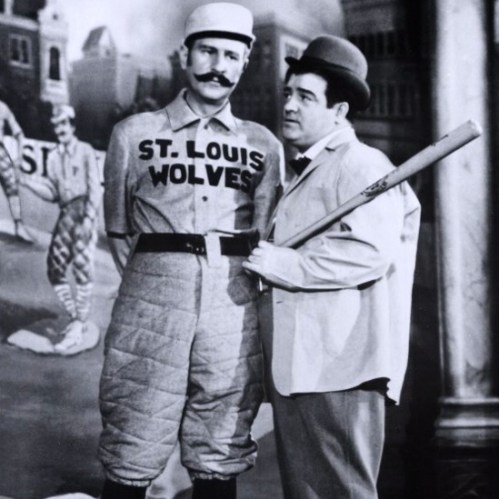
“Who’s on First?” is a famous comedy routine by Abbott and Costello, in which Abbott is identifying players on a baseball team for Costello. The comedy comes from the fact that their names sound as if they are answers to Costello’s questions. For example, the first player is named Who, thus the answer to “Who’s on first?” is “Who’s on first”, leading to utter confusion.

This was a style of routine very popular in the early twentieth century, and Abbott and Costello had a big hit with “Who’s on First?” in a vaudeville revue in 1937. In was performed on radio in 1938, and copyrighted in 1944. Abbott and Costello performed it numerous times in their careers, rarely the exact same way twice, and performed it for President Franklin D. Roosevelt several times.

Abbott and Costello included a shorter version of their routine for their 1940 film debut One Night in the Tropics, and a longer version for their 1945 film The Naughty Nineties, considered their best recorded version of the routine. The “Who’s on First?” bit they did for their 1950s television program The Abbott and Costello Show is considered the definitive version.

Bette Midler and Chicken Kiev

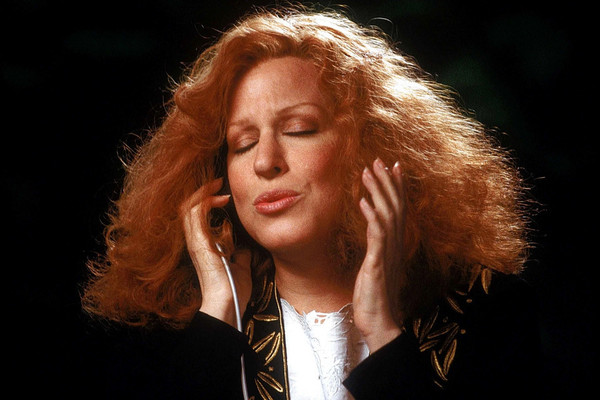
LUKE: And then after all that planning, the [wedding] reception will still be a disaster because no matter what you do or how carefully you plan, halfway through one of those nauseating Bette Midler ballads, someone’s getting drunk, someone’s sleeping with someone else’s wife, and someone’s Chicken Kiev is landing on the cake.

Bette Midler (born 1945) is an American singer, songwriter, actress, and film producer. She began her career on the stage, and was in Broadway shows such as Fiddler on the Roof in the late 1960s. In 1970 she began singing in a gay bath house, and built up a core following as a solo artist; she has released 14 albums and many of her songs have become hits, including ballads such as The Rose, and Wind Beneath My Wings (possibly the sort of songs Luke is thinking of). She made her film debut in 1979 in The Rose, and has starred in a number of films, such as Ruthless People (1986), Beaches (1988), and The First Wives Club (1996). In her career spanning more than half a century she has won three Grammy Awards, four Golden Globes, three Emmy Awards, and two Tony Awards, as well as selling over 30 million records worldwide.

Chicken Kiev is a Russian dish of chicken fillet stuffed with butter, coated in egg and breadcrumbs, and either fried or baked. It may date to the early 19th century, and is claimed to have been the invention of French chef Marie-Antoine Carême, who spent several months at the court of Tsar Alexander I. However, it only became commonly known in the mid-twentieth century. It is popular in the US, and often included on wedding menus.

Thelma and Louise

RORY: Are you seriously going to be mad about the fact that you thought I was going out with Tristan, even though I wasn’t, for the rest of your life?
PARIS: I have great commitment.
RORY: And you don’t see how stupid that is?
PARIS: I’m sorry if you thought we had some kind of deep Thelma and Louise thing going here, but we didn’t.

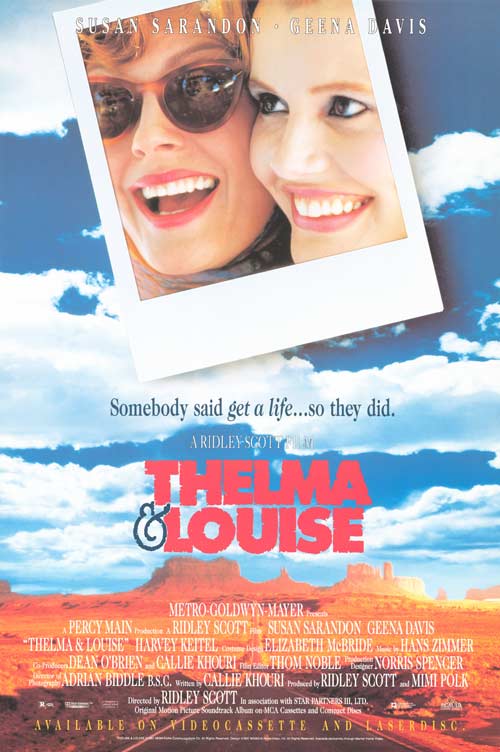
Thelma and Louise is a 1991 road film directed by Ridley Scott, written by Callie Khouri, and starring Geena Davis and Susan Sarandon in the title roles. The story is about two best friends who embark on a road trip and end up running from the law, with every disaster they face bringing them closer together until the bitter end.

Thelma and Louise was a commercial success and gained overwhelming praise from critics; Callie Khouri won the Academy Award for Screenplay Written Directly for the Screen. Influential on other films and artistic works, the film is now regarded as a classic and a high point of woman-centred films.

Princess Grace

PARIS: You have to go to college.
LOUISE: Princess Grace didn’t go to college.

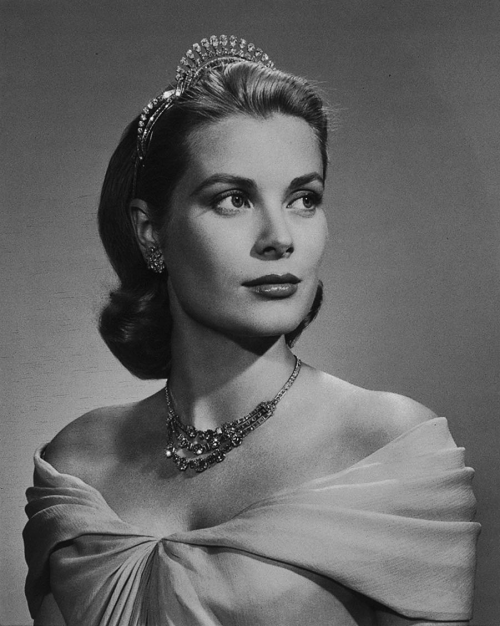
Princess Grace, born Grace Kelly (1929-1982) was an American actress who began her career on television and starred in several Alfred Hitchcock films, such as Dial M for Murder (1953), Rear Window (1953), and To Catch a Thief (1955). She also starred in the classic western High Noon (1952) and the musical High Society (1956), winning a Best Actress at the Academy Awards for The Country Girl (1954).

She retired from acting to marry Prince Rainier III of Monaco in 1956, becoming Princess Grace of Monaco, and having three children. As a princess, she founded children’s charity AMADE, formed the Princess Grace Foundation for artisans in Monaco, and became known as a fashion icon, being inducted into the Best Dressed Hall of Fame in 1960.

Louise is correct – Princess Grace, who came from a wealthy family and attended prestigious private schools, was rejected by Bennington College in 1947, due to her low scores in Mathematics. However, she graduated from the American Academy of Dramatic Arts in New York, the oldest acting school in the English-speaking world, so she did have a distinguished tertiary education.

The Great White Hope

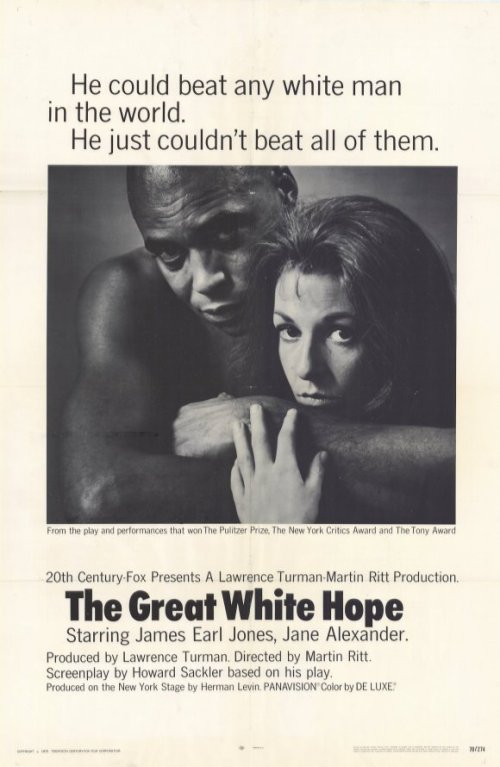
LORELAI: You are the great white hope of the Gilmore clan. You are their angel sent from up above. You are the daughter they didn’t have.

The Great White Hope is a 1970 biographical drama film, directed by Martin Ritt and based on the 1967 stage play by Howard Sackler, which won the Pulitzer Prize for Drama and the Tony Award for Best Play.

Set between 1910 and 1915, the story is about a boxer named Jack Jefferson (James Earl Jones), based on the real life boxer Jack Johnson. Because of his string of victories in the ring, the press announces the search for “the great white hope” – a white boxer who can defeat him. To complicate matters, Jack falls in love with a beautiful white woman named Eleanor (Jane Alexander), and their relationship, illegal at the time, leads to disaster.

The Great White Hope was well received by both audiences and critics at the time, who praised the lead actors, but its reputation has declined over the years.

Lorelai believes her parents, as she does, sees Rory as a new, improved Lorelai, and as the “great white hope” who will do better than Lorelai has done. She actually tries to see her father’s point of view, by telling Rory that Richard’s appalling behaviour at dinner was brought on by his memories of Lorelai as a teenager, and terrible fear that Rory will also get pregnant and throw her life away.

Rory Invites Dean to Dinner at Her Grandparents’ House

While Dean is changing the water bottle for Lorelai on the back porch, Rory comes out to talk to him. (Apparently the Gilmores always drink bottled water – I don’t know if the Stars Hollow water supply is undrinkable, or if Lorelai and Rory prefer the taste of bottled water, or drink it for health reasons, or some other reason. Much of the Connecticut water supply has chromium-6 in it, the cancer-causing agent that featured in the 2000 biographical film Erin Brockovich, but the official statement is that it is at levels too low to be dangerous. The Gilmores may be playing it safe, especially as eleven other cancer-causing agents have been detected in the Connecticut water supply at levels above the legal limits).

Rory invites Dean to come with her to the special dinner her grandparents are giving in her honour. Emily told Rory she could “invite her friends” to the dinner, probably meaning her “friends” from Chilton (Emily doesn’t know that Rory is currently at outs with the few friends she has made at school). She almost certainly did not mean Rory to invite Dean, who she last saw taking Rory to a school dance, which ended in disaster when the pair of them fell asleep and didn’t get home until dawn.

Dean has the good sense to point out that Rory’s grandparents probably aren’t madly keen to see him again, but eventually accepts Rory’s invitation to please her (their relationship has only just re-kindled, and he probably doesn’t want to start off by saying no to her).

The scene is shot almost like a proposal – Dean is kneeling at Rory’s feet with the water bottle, while she holds out her hands in supplication, as if ready to receive a ring. It’s a reminder that Lorelai never got this traditional down-on-your-knees proposal from Max. If you look at how happy and excited Rory appears at the thought of taking Dean to her dinner, it’s in stark contrast to the sad, anxious face Lorelai has when we see her and Max getting engaged over the phone.

The show seems to be saying, “This is what you deserve, Lorelai: this is how happy you should be”.

Tears and Laughter: The Joan and Melissa Rivers Story

This 1994 television movie directed by Oz Scott is the movie Lorelai and Rory watch with Dean. It has been previously mentioned as a biographical drama film in which Joan and Melissa Rivers played themselves, recreating key moments in their lives together.

Lorelai mentions some of these, such as the suicide of Melissa’s father, Edgar Rosenberg in 1987; Joan getting banned from The Tonight Show, where she first became famous, in 1986 (she didn’t return until 2014); and Joan forcing Melissa to get a nose job at eighteen which matched her mother’s nose job around 1986.

The film was panned as critics as strange, embarassing and self-indulgent, so Lorelai and Rory are not alone in mocking it. I would imagine they are watching a video of the movie which Lorelai taped off TV.

Rory has just got back with Dean, and he is immediately returned to the status quo of watching movies chosen by his girlfriend and her mother, and doing chores for Lorelai. I guess we’re meant to assume that just being permitted to love a Gilmore girl is so wonderful that you will allow yourself to be treated like a nonentity in sheer gratitude.