Evil Fembots and an Intergalactic Court

LORELAI: So if Rachel turns out to be an evil fembot and murders Luke in his sleep, I’m not responsible am I?
RORY: Only in an intergalactic court.

Lorelai is probably referring to the 1997 comedy film Austin Powers: International Man of Mystery, directed by Jay Roach and starring Mike Myers in the title role. In the film, a parody of spy movies, a mad scientist named Dr. Evil has a gang of sexy female robots (fembots) who wear silver outfits and have weapons in their breasts that can kill: they are just one of the many traps that Austin Powers and his assistant must get through.

The fembots are taken directly from the 1965 comedy film Dr. Goldfoot and the Bikini Machine, directed by Norman Taurog and starring Vincent Price in the title role. However, in this case the female robots are programmed to seduce and rob wealthy men, rather than murder anyone. In the 1966 sequel Dr. Goldfoot and the Girl Bombs, they are rather more explosive.

Austin Powers: International Man of Mystery was a commercial success and received good reviews. Susanna Hoffs from The Bangles (married to the director) performed on two songs from the film’s soundtrack, which seems like one reason why Lorelai would have wanted to see the film.

Galactic (and intergalactic) law courts are a common trope in science fiction film and television. Some of the earliest examples can be found in the original series of Star Trek, previously and freqently mentioned.

Lorelai and Rory’s exchange seems inspired by the sci-fi film they are watching.

Queen of Outer Space

This is the film that Lorelai and Rory go to see together, and which Luke and Rachel also attend on a date (another clue that Lorelai and Luke share an interest in vintage science fiction cinema). In the first shot showing the audience filing into the Black-White-Read Bookstore, you can see Todd is one of them; maybe he got a taste for vintage sci-fi at the film he went to with Lane (or is stalking Rory’s hot mother).

Queen of Outer Space is a 1958 science fiction film directed by Edward Bernds. It is about a group of astronauts who crash land on the planet Venus, and find it is run by a cruel Queen Yllana (Laurie Mitchell), who has banished men from the planet in disgust at their wars and violence. Zsa Zsa Gabor plays her courtier Talleah, a scientist who helps the astronauts, as the beautiful women of Venus wish the queen to be overthrown so they can enjoy the love of men as they did before.

Queen of Outer Space received very poor reviews, but is enjoyed as a campy, so-bad-that-it’s-good, fun B-Grade film.

“Her nose didn’t grow”

LORELAI: But she [Rachel] seems sincere.
LUKE: How do you know?
LORELAI: Her nose didn’t grow.

Lorelai is referring to the 1940 animated film Pinocchio, produced by Walt Disney and based on the 1883 children’s book The Adventures of Pinocchio, by Italian author Carlo Collodi.

In the story, Pinocchio is a wooden puppet who is magically brought to life, and promised that he can become a real boy if he is brave, truthful, and unselfish. At one point, Pinocchio’s nose grows longer and longer every time he lies, until he promises to do better and has his nose restored. Ever since, it is common for people to talk about your nose getting longer if you lie.

Pinocchio received good reviews, and won the Academy Awards for Best Original Song (When You Wish Upon a Star) and Best Score – the first Disney film, and the first animated film, to win a non-honorary Oscar. It was a box office failure at first, but made a profit on its 1945 re-issue; it is now considered one of the greatest animated films of all time.

“All this is yours”

LORELAI (to Luke): Yeah. Wow, it [the diner’s store room] really looks, um, different from back here, ya know? All this is yours, as far as the eye can see.

Possibly a reference to the 1975 British comedy film Monty Python and the Holy Grail, written, performed, and directed by the Monty Python comedy team. The film is a parody of the legend of King Arthur and the search for the Holy Grail.

In one scene, a medieval king with a thick northern accent is speaking to his milksop son Prince Herbert, and says, “One day lad, all this will be yours … all that you can see, stretched out over the hills and valleys … as far as the eye can see and beyond … that’ll be your kingdom, lad”.

It is highly reminiscent of Genesis 13:14-15 in the Bible, where God gives Abraham the land of Canaan. God says,“Lift up your eyes and look from the place where you are, northward and southward and eastward and westward, for all the land that you see I will give to you and to your descendants forever.” (Which doesn’t actually seem like that much land, as you can only see a few miles to the horizon in each direction).

This is another possibility for what Lorelai is thinking of, and in both cases, it is a father (or our Father in Heaven) passing an inheritance on to his son, just as Luke’s father left him the hardware store. She is being humorous, but seems genuinely impressed by Luke’s little “kingdom”.

We later learn that The Holy Grail is one of Lorelai and Rory’s favourite films.

Working Girl

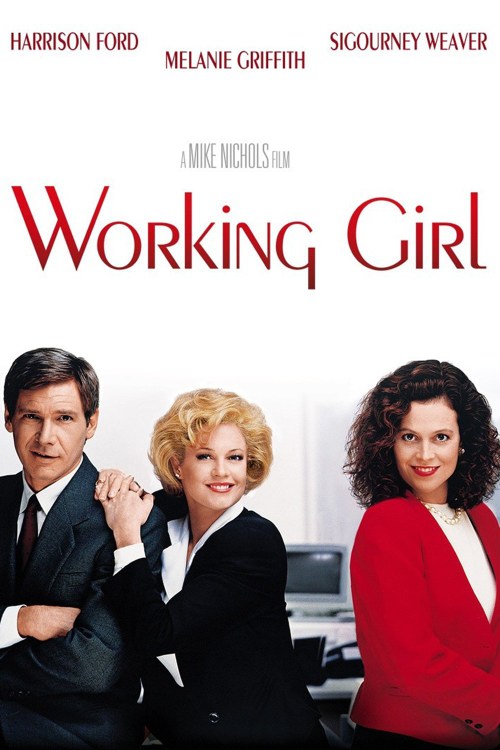
LORELAI (to Emily): I can’t picture you at Teriyaki Joe’s . . . or in jogging shoes. What’s up, working girl?

A possible reference to the 1988 romantic comedy-drama film Working Girl, directed by Mike Nichols and starring Melanie Griffiths in the lead role. The film is about a secretary who aspires be a Wall Street executive, and steps into her female boss’ role after having her ideas stolen. The film received excellent reviews, and won the Academy Award for Best Song (Let the River Run, sung by Carly Simon).

Maybe Lorelai is referring to Emily (literally) stepping into Lorelai’s shoes in order to bond with Rory. As usual, Lorelai dislikes the idea of her parents getting close to Rory – it must have annoyed her that this outing was all Rory’s idea, with Rory inviting her grandmother to spend the afternoon in Stars Hollow with her.

Charlie’s Angels

(Emily pulls a plate out the cabinet.)
EMILY: There are women in bikinis on them.
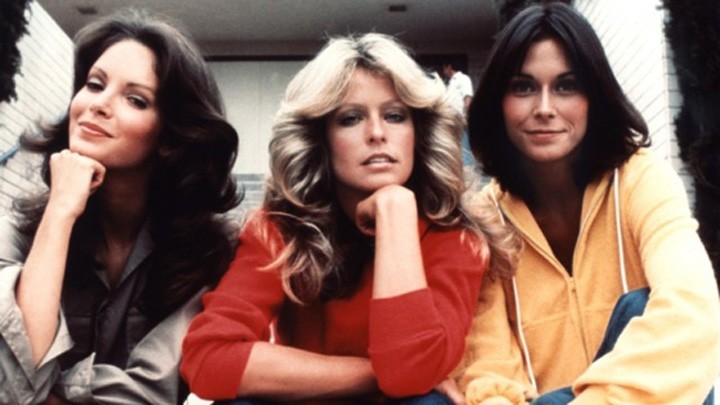
RORY: The original Charlie’s Angels. It took us years to get a complete set. You can find the Kate Jacksons and the Shelly Hacks pretty easily. Even the Cheryl Ladds. But the Farrah Fawcetts and the Jacklyn Smiths are a little harder to come by, but still accessible. The real trick however is to find the Tanya Roberts. We have three.

Charlie’s Angels is a crime drama television series which was originally broadcast from 1976 to 1981. It follows three women who are private investigators working for a never-seen boss named Charlie Townsend, who communicates with them via speakerphone.

The original stars of the show were Kate Jackson (Sabrina Duncan), Jaclyn Smith (Kelly Garrett), and Farrah Fawcett (Jill Munroe), earlier discussed. With casting changes came Cheryl Ladd (Kris Munroe), Shelley Hack (Tiffany Welles), and Tanya Roberts (Julie Rogers).

Despite mixed reviews, Charlie’s Angels was hugely popular for its first two seasons. It still has a cult following through reruns, DVD, and film and television remakes.

The Grapes of Wrath

RORY: I know, it’s [the fridge] a little sparse.
EMILY: It’s The Grapes of Wrath.

The Grapes of a Wrath is a 1939 novel by American author John Steinbeck. Set during the Great Depression, the book follows the failing fortunes of an Oklahoma family of tenant farmers driven from their land by drought. Seeking a better life in California, they instead find themselves exploited as cheap labour to the point of starvation.

The Grapes of Wrath was the best-selling book of 1939, and was relentlessly reviewed, criticised, debated, banned, and even burned. It won both the National Book Award and the Pulitzer Prize, and was a major factor in Steinbeck winning the Nobel Prize for Literature in 1962. It is regarded as one of the best books ever written, and a classic example of The Great American Novel.

The Grapes of Wrath was made into a celebrated film in 1940, directed by John Ford, and starring Henry Fonda. It is considered to be one of the greatest films ever made.

Boo Radley

LORELAI: You want him [Rune] to live here?
SOOKIE: No! Well, what about the old potting shed?
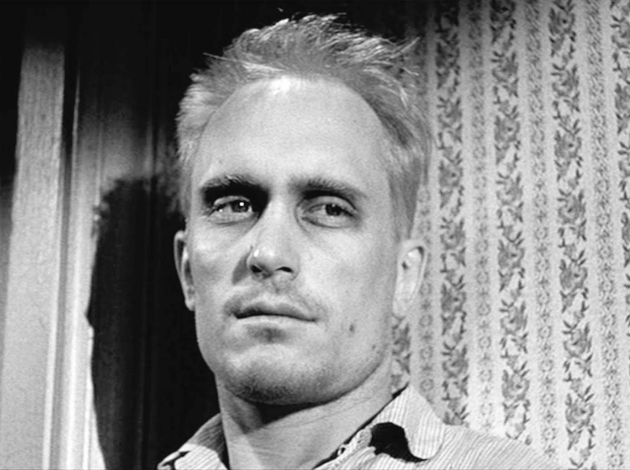
LORELAI: The old potting shed? That’s where Rory and I lived when she was a baby. It has memories and little rosebud wallpaper. I don’t want Boo Radley touching my rosebud wallpaper.

Arthur “Boo” Radley is a character in To Kill a Mockingbird, the 1960 novel by American author Harper Lee. He is a recluse who has been isolated from the townspeople since he was a teenager, and many rumours surround him. Boo Radley was apparently based on a real life neighbour of Harper Lee when she was a child. In the 1962 film version, he is portrayed by Robert Duvall [pictured].

Lorelai is saying that Rune is the town weirdo, like Boo Radley. The fact that she sees him this way shows that on some level, she is starting to accept him as a resident of Stars Hollow. (She can’t help it – she loves Stars Hollow, and on some level, everyone who lives there, even Rune).

It’s notable that after this Lorelai appears kind and friendly to Rune, a man she dislikes, who has been nothing but insulting to her, and is spreading rumours that imply she is his ex-girlfriend. Is she just being loyal to Sookie, or is there some fellow feeling with Rune, the black sheep of his family who has come to Stars Hollow with almost nothing? She gives Rune the same start she was given – an entry-level job at the inn, and some very basic free accommodation.

This is also the first we hear of Lorelai and Rory living in the potting shed at the Independence Inn, which will be important later in the episode.

The Lost Weekend

LORELAI: I thought he [Rune] was only here for a weekend.
SOOKIE: Yes, the lost weekend.

The Lost Weekend is a 1945 drama film directed by Billy Wilder, and based on the best-selling 1944 novel of the same name by Charles R. Jackson. It stars Ray Milland as an alcoholic writer, and Jane Wyman as his long-suffering girlfriend, and the “lost weekend” is a weekend vacation the writer planned to take, which turned into him losing himself in drink, and even being committed to Bellevue.

The Lost Weekend was the #11 film of 1945 and won four Academy Awards, including Best Picture, Best Director, and a Best Actor for Ray Milland. It also won the Grand Prix at the 1946 Cannes Film Festival, with Milland picking up another Best Actor Award; it is one of only two films to win the highest award at both the Academy Awards and the Cannes Film Festival.

Sookie doesn’t mean that Rune is an alcoholic; just that he was meant to stay with Jackson for a single weekend, but that weekend is long “lost” as he still hasn’t left some three months later.

Gaslight

LORELAI: Hey – [looks at Sookie’s watch] Aw! No! I’ve got to go home.
SOOKIE: Why? What are you doing?
LORELAI: I have to change, and go to tea with Gran and the cast of Gaslight.

Gaslight is a 1944 mystery thriller film directed by George Cukor, and adapted from the successful 1938 play Gas Light by British dramatist Patrick Hamilton.

Set mostly in Edwardian London, the film is about a woman named Paula (Ingrid Bergman) whose husband Gregory (Charles Boyer) tries to convince her that she is going insane as part of a fiendish criminal scheme: one of his methods is to contintually turn down the gas lighting in the house and tell her that only she can see it flickering.

Because of the film, the term gaslighting now refers to a form of psychological abuse where the abuser gradually manipulates the victim into doubting their own sanity, thus making them more dependent on the abuser. Lorelai is saying that’s exactly what her mother is doing to her.

Gaslight was the #13 film of 1944 and well-received by critics. It won two Academy Awards, including a Best Actress for Ingrid Bergman.

According to the town clock they walk past, it is around 11.35 am when Lorelai and Sookie leave the flower shop. Lorelai seems to need an inordinate amount of time to get changed so she can be in Hartford for afternoon tea, which is usually somewhere between 4 and 6 pm.