Buttock eating

MICHEL: The thrilling sensation of getting lost in a blizzard, of freezing to death in the woods, and having to eat your friend’s buttocks to stay alive, that is lost on many people.

Michel is no doubt referring to the 1993 drama film Alive directed by Frank Marshall. Based on the 1974 book Alive: The Story of the Andes Survivors by Piers Paul Read, it depicts the true story of the Uruguayan rugby team and their family and friends whose plane went down in the Andes Mountains in October 1972. Trapped for more than two months in below-freezing temperatures, once the rations ran out the survivors had to eat their dead companions in order to stay alive.

The film’s subject was so well known in the 1990s that it was not necessary to have seen it to immediately understand any reference to eating people as relating to the movie. Unlike Michel’s comment, the film actually handled the cannibalism with great sensitivity.

Magnolia

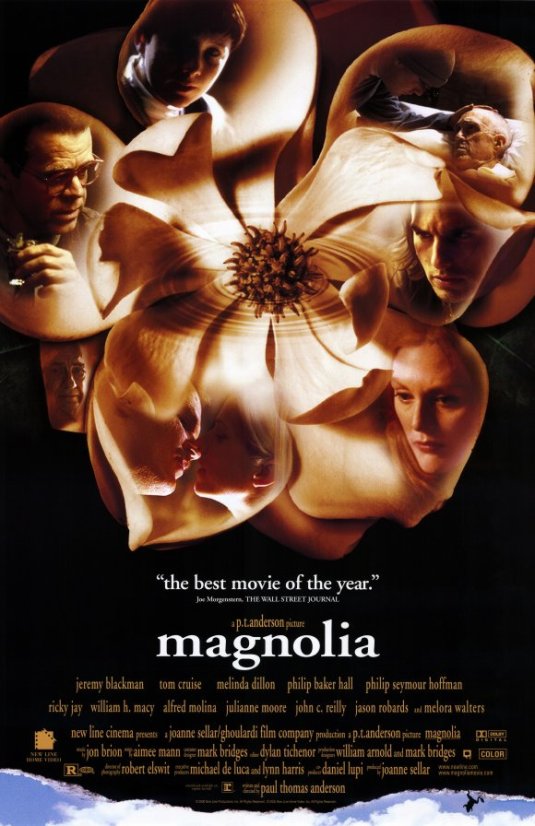
RORY: She [Lorelai] had a bad reaction to Magnolia. She sat there screaming for three hours, “I want my life back!” and then we got kicked out of the theatre. It was actually a pretty entertaining day.

Magnolia is a 1999 drama film written, co-produced and directed by Paul Thomas Anderson. It depicts a cast of interrelated characters in search of happiness and meaning, their stories interlinked through incredible coincidences that suggest there are forces stronger than fate in the world. Magnolia didn’t do that well at the box office, but was generally praised by critics.

Some critics agreed with Lorelai that the film was too long and convoluted, and even Anderson himself eventually decided it was overlong. This film seems to have put Lorelai off anything by Paul Thomas Anderson forever.

Boogie Nights

DEAN: So, uh, at what point does the outsider get to suggest a movie for movie night?
RORY: That depends. What movie are you thinking of?
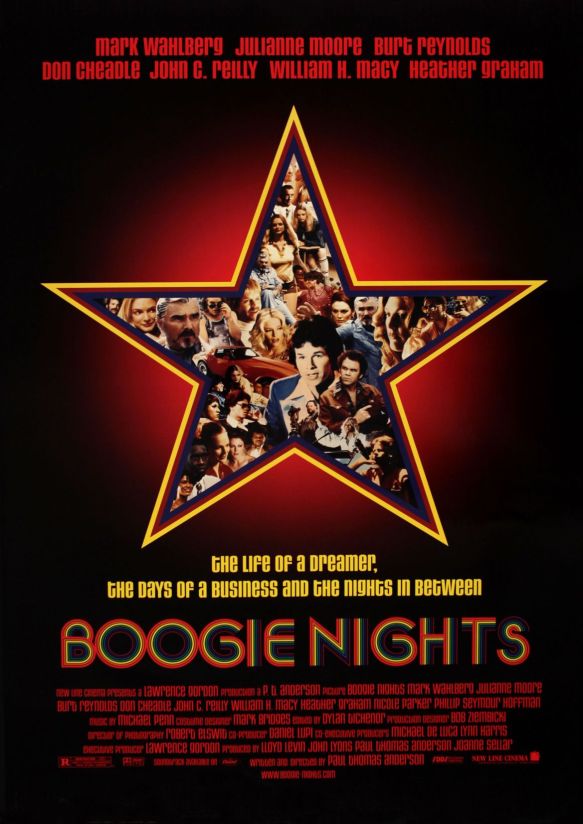
DEAN: I don’t know … Boogie Nights, maybe.

Boogie Nights is a 1997 drama film written, produced, and directed by Paul Thomas Anderson. It is about a young dishwasher in a nightclub, played by Mark Wahlberg, who becomes a popular porn star. His career rises through the Golden Age of Pornography in the late 1970s, and then falls during the excesses of the 1980s. It was released to critical acclaim, the soundtrack also gaining praise.

That Dean would suggest watching a R-rated film about a porn star that has several sex scenes with his new school-age girlfriend, and her mother that he just met that evening, is frankly staggering.

“Embarrassing secrets” films

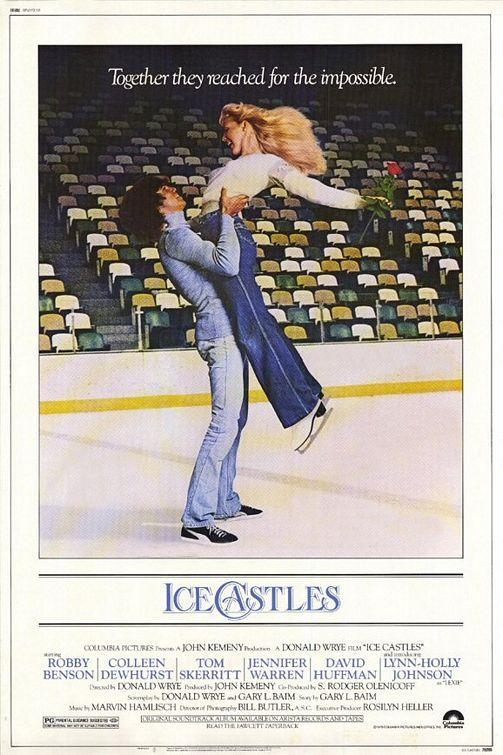
Rory teases Dean that one of his embarrassing secrets must be that the theme music to Ice Castles makes him cry. In turn, Lorelai counters that at the end of The Way We Were, he wanted Robert Redford to dump his wife and kid for Barbra Streisand.

Ice Castles is a 1978 romantic drama film directed by Donald Wrye, and with Lynne-Holly Johnson and Robby Benson in the lead roles. Highly sentimental, it’s about a young figure skater named Lexie who rises to stardom before a tragic accident robs her of her eyesight. With the help of her former boyfriend Nick, she learns to skate competitively even without normal eyesight, as they re-kindle their relationship. The theme song is Through the Eyes of Love, performed by Melissa Manchester.

The Way We Were is a 1973 romantic drama film directed by Sydney Pollack, and with Barbra Streisand and Robert Redford in the lead roles. The story takes place from the 1930s to the 1950s, and is about the relationship between two very different people: Katie is a Marxist Jew with strong anti-war convictions, while Hubbell is a handsome WASP with writing talent, but no strong work ethic or political opinions. Katie and Hubbell fall in love, marry, and have a daughter together, but they are too different for their relationship to last.

At the end of the movie they meet by chance some years after their divorce; Katie has remarried to a Jewish man, and Hubbell has a beautiful girlfriend (despite Lorelai’s recollection, it is Katie who is married with a child, not Hubbell). They share a tender moment together, but too much time has passed, and it is is apparent that love alone is not enough to make their relationship ever work. The Way We Were was the #5 movie of 1973 and won Academy Awards for its musical score and theme song. It is considered to be one of the greatest romantic films of all time.

I think it is not going too far to say that Rory and Lorelai have actually named their own favourite romantic tearjerkers. The films they have chosen reveal quite a bit about their attitude to romance and relationships.

Ice Castles is about a talented sixteen-year-old girl from a small town who is determined to make it to the top of her field, and works hard to get there. Even when fate hands Lexie a cruel blow, she is able to rise above it and overcome her problems. Her boyfriend Nick basically exists in the plot just to encourage her, and to push her to succeed in reaching her goals. Lexie is unfaithful to Nick with an older man, but he is able to forgive her and begin their relationship anew.

I suspect Rory sees Lexie as something to aspire to, and that she understands her sense of driving ambition (Rory starts late at Chilton, just as Lexie comes into the world of competitive skating at a later age than usual). Both are working hard to catch up, and determined to succeed. Not having any relationship experience, her romantic fantasy is one where she can sexually experiment and be forgiven for it, and have a partner who is her support system and makes her dreams his own. The film’s setting in the snow and ice of winter suggests Rory’s virgin status.

The Way We Were has major parallels with Lorelai’s own life. Like Katie, she is a quirky and opinionated character, and Katie’s attraction to the handsome, privileged Hubbell reminds us of Lorelai’s relationship with Christopher – like Katie and Hubbell, Lorelai and Christopher were friends before they were lovers.

Katie and Hubbell separated when their daughter Rachel was born, as a parallel to Lorelai and Christopher breaking up after the birth of Rory. Like Hubbell, Christopher has gone to live in California and is not part of his daughter’s life. Just like Katie with Hubbell, Lorelai still has feelings for Christopher, but recognises that he is weak and lazy, and that their relationship could not work long term. She will not compromise herself to be with a man, even one she cares for.

That this movie has such a deep fascination for Lorelai is a reminder that her teenage relationship with Christopher is not just the great romance of her life, but her only real romance. Unlike Katie, she has not been able to move on and find someone else, so that she is emotionally stuck.

Lorelai is stunned to discover that Dean has never seen The Way We Were (because most teenage boys love Barbra Streisand movies), and decides that they will watch it for their next pizza-and-movie night. Dean is obviously completely smitten with Rory, because he agrees to this.

Prince Charming

LORELAI: Don’t even get me started on your Prince Charming crush, OK? At least my obsessions are alive. You have a thing for a cartoon.
DEAN: Ooh, Prince Charming, huh?
RORY: It was a long time ago. And not the Cinderella one, the Sleeping Beauty one.

Prince Charming is the generic name for the royal male love interest in a fairy tale. Rory tells Dean that her crush was on the prince in the 1959 animated Walt Disney film Sleeping Beauty, whose name is Prince Phillip (it’s the one in Cinderella whose name actually is Prince Charming). Sleeping Beauty was the #2 movie of 1959 and is today considered one of the best animated films ever made, although it was so expensive to make that the Disney studio posted a financial loss that year.

Sleeping Beauty has had several re-releases. It was re-released in theatres in March 1986, when Rory was 17 months old. Although Rory could have been taken to the cinema to see it, it was also released on video that year, and Lorelai (or the grandparents) could have bought it for her. Her crush on the prince could go right back to babyhood, and if they owned the video she might have watched it for years as a toddler and little girl.

Sleeping Beauty was next re-released in 1995, when Rory was aged ten or eleven. It is also possible that this was when she developed her crush on the prince. To me this makes more sense, as she was on the cusp of puberty and more likely to be thinking about boys in a romantic way.

Prince Phillip does very vaguely resemble Dean – or at least a cartoon version of Dean wouldn’t look completely unlike Prince Phillip. The fact that Rory liked the prince because he could dance is a foreshadowing of what is soon to come between her and Dean.

Oompa-Loompas

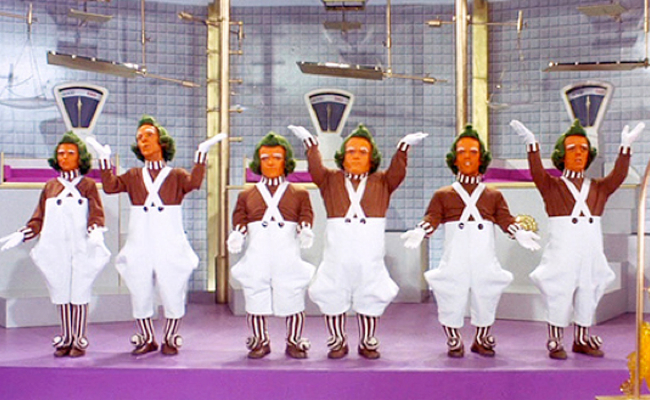
LORELAI: Oooh – Oompa-Loompas!
RORY: My mom has a thing for the Oompa-Loompas.
LORELAI: I don’t think finding them amusing constitutes a thing.
RORY: No, but having a recurring dream about marrying one does.

In Willy Wonka & The Chocolate Factory, the Oompa-Loompas are small humans who work in Willy Wonka’s factory. Played by actors with dwarfism, they have orange skin and green hair, and wear baggy white overall shorts.

Lorelai’s rich dream life was an ongoing feature throughout the run of Gilmore Girls. Perhaps in this case the dreams were brought on by the feeling that she was “married” to Rory, by choosing her over a man (as the Oompa-Loompas are child-sized).

Chuck Heston

BABETTE (referring to Dean): Oh, he’s so cute … And that Chuck Heston chin of his.

Charlton Heston, sometimes known by the nickname Chuck, (1923-2008) was an American Hollywood star who appeared in one hundred films in a career spanning sixty years. He is famous for playing Moses in The Ten Commandments (1956), for starring in Ben-Hur (1959), and for the central role in Planet of the Apes (1968). During the 1980s he became an activist in conservative politics. Like Dean, Charlton Heston was from the Chicago area.

Gene Wilder


Dean correctly identifies actor Gene Wilder (1933-2016) as playing the title role in Willy Wonka & The Chocolate Factory, which is one of his best known films. Other notable performances are for the films he did with Mel Brooks, and those with Richard Pryor.

Like Gene Hackman, Gene Wilder became an author later in life, producing three novels, a book of short stories, and two memoirs. Wilder and Hackman both appeared in Bonnie and Clyde (1967), and Young Frankenstein (1974).

Gene Hackman

LORELAI: It’s Willy Wonka and the Chocolate Factory.
CASHIER: Oh, that’s nice. Isn’t that the one with Gene Hackman?

Gene Hackman (born Eugene Hackman in 1930) is a retired actor. His career in Hollywood spanned five decades, and he won Best Actor for The French Connection (1971), and Best Supporting Actor for Unforgiven (1992). Hackman became a writer in 1999, and has written five novels.

He tended to do tough guy roles in action and crime films, so that the idea of him playing the whimsically flamboyant Willy Wonka is slightly ludicrous.

James Dean

Rory warns her mother she doesn’t want her to make any jokes about James Dean when she meets Rory’s boyfriend Dean.

James Dean (1931-1955) was an American actor, an icon of teenage disillusonment and 1950s cool, best known for his 1955 film Rebel Without a Cause. His early death in a car accident meant that his youth and beauty remained intact forever, and he is regarded as one the great stars of the Golden Age of Hollywood.

James Dean may have been one of the influences on the choice of Dean’s name in Gilmore Girls, especially since James Dean was from the Midwest and loved cars and motorcycles, just like Dean Forester. Along with Dean Moriarty from Jack Kerouac’s On the Road, the name suggests coolness and rebellion – nothing at all like Dean Forester really, but more what Lorelai feared Dean could be, as her comments about tattoos and motorcycles in the Pilot demonstrated.