John Williams

PARIS: Now Louise, poke John Williams over there and tell her she can cut the score, we’re moving on.

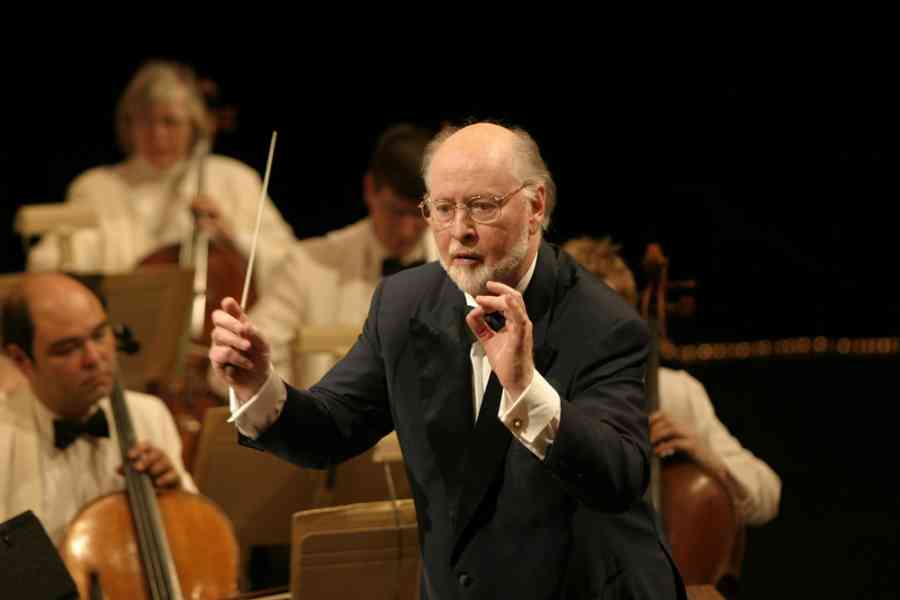
John Williams (born 1932), composer, conductor and pianist. In a career spanning seven decades, he has composed some of the most popular, recognisable and critically acclaimed film scores in cinematic history, including that of Star Wars. Williams has won 25 Grammy Awards, seven BAFTAs, five Oscars and four Golden Globe Awards. With 52 Academy Award nominations, he is the second most-nominated individual, after Walt Disney. His compositions are considered the epitome of film music and he is considered among the greatest composers in the history of cinema.

Paris says this because Madeline is humming so that she doesn’t hear the word “blood”, which frightens her.

Xanadu

FRANCIE: This is Xanadu-levels of insane.

Xanadu, 1980 musical fantasy film directed by Robert Greenwald, and based on the 1947 film Down to Earth. Olivia Newton-John stars as Kira, a mysterious woman who is actually one of the Nine Muses from Greek mythology, while Michael Beck is a struggling artist who falls in love with her, and opens a nightclub called Xanadu with a former big band orchestra leader, played by Gene Kelly in his final role.

The film was savaged by critics and was a box-office bomb, helping to inspire the creation of the Golden Raspberry Awards (The Razzies) – Robert Greenwald won the inaugural Worst Director at the Razzies that year. However, the movie’s soundtrack album, featuring music mainly by Olivia Newton-John and Electric Light Orchestra, was a huge commercial success, with the songs “Xanadu” and “Magic” both going to #1. The film has since become a cult classic, and it was adapted into a successful Broadway musical in 2007.

Mr Christian

PARIS: Any questions, Mr. Christian? I mean, Mr. Hunter.

Paris refers to Fletcher Christian (1764-1793), master’s mate on board HMS Bounty during Lieutenant William Bligh’s voyage to Tahiti during 1787–1789. In the mutiny on the Bounty, Christian seized command of the ship from Bligh on 28 April 1789. Some of the mutineers were left on Tahiti, while Christian, eight other mutineers, six Tahitian men and eleven Tahitian women settled on isolated Pitcairn Island, and Bounty was burned.

Fletcher Christian was portrayed by Clark Gable [pictured] in the 1935 film version and Marlon Brando in the 1962 film version, both adpated from the 1932 novel, Mutiny on the Bounty, by Charles Nordhoff and James Norman Hall.

Paris is saying that Mr Hunter was mutinous in his support of Francine.

Eloise at the Plaza

PARIS: I knew that suggestion box was a bad idea. Watch Choate get Joan Didion while we’re being read “Eloise at the Plaza”.

Paris refers to Eloise: A Book for Precocious Grown-Ups, a 1955 book by Kay Thompson, illustrated by Hilary Knight. Originally marketed to adults, in 1969 it was released as a children’s book as Eloise, with no changes to the text or illustrations.

Eloise is a mischievous six-year-old girl who lives in the penthouse of the Plaza Hotel in New York City with her nanny, pet pug dog and pet turtle. Thompson based Eloise on an imaginary friend she had in childhood, although it has been speculated that her goddaughter Liza Minelli may have been a possible model. There are several books in the Eloise series, but Eloise never ages. In April 2003, a Disney television film was broadcast called Eloise at the Plaza, with Sofia Vassilieva in the title role.

A fan theory, which you may take with as many grains of salt as you wish, is that Louise was named after the character Eloise. I cannot think of any way that could be confirmed or denied, but it doesn’t seem that implausible. Louise and Eloise both have blonde hair, are rich and spoiled, rather bratty, and have unavailable, neglectful parents.

Kay Thompson died in 1998, so could not have been the commencement speaker, and famously hated her fans, so would be unlikely to agree to it anyway. Hilary Knight is still alive, but it doesn’t seem likely that he would have done it either.

Cheech & Chong

LORELAI: How’d it finally end with Cheech & Chong?

Cheech & Chong, comedy duo consisting of Richard “Cheech” Marin (born 1946) and Thomas “Tommy” Chong (born 1938). They found commercial and cultural success in the 1970s and 1980s with their stand-up routines, studio recordings, and low-budget feature films, which were based on the hippie and free love era, and especially drug and counterculture movements, most notably their love for cannabis.

Their 1978 buddy stoner comedy film Up in Smoke was poorly reviewed but a huge commercial success, becoming a cult classic and kicking off the entire genre of stoner movies. Their characters are a pair of drug-addled idiots who get into one ridiculous slapstick situation after another, so Lorelai seems to be saying that Jess and Dean are likewise a pair of comedic idiots.

The real Cheech & Chong broke up in the 1980s after an acrimonious falling out and didn’t reunite until 2008 – Lorelai may also be referring to that (not that she knows Cheech & Chong will get back together at this point).

“That’ll do, pig”

[Emily begins to slowly eat the rest of her meal]

LORELAI: That’ll do, pig. That’ll do. [takes a sip of wine]

A reference to the movie Babe, previously discussed.

In the film, a grateful misty-eyed Farmer Hoggett says this line to the pig Babe after he has, against all odds, won a sheepdog trial, despite not being a dog. One of the most understated last lines in film history, it’s a dignified, restrained way for Lorelai to say Emily is doing very well indeed.

Stuart Little

CLARA: You missed every time.

JESS: I can’t concentrate with your annoying midget voice. It’s like having Stuart Little shoved in my ear.

Stuart Little, 1999 live action/computer animation family comedy film directed by Rob Minkoff in his directorial debut with screenplay by M. Night Shyamalan and Greg Brooker, loosely based on the 1945 children’s novel of the same name by E.B. White. The story is about a young anthropomorphic mouse named Stuart Little who is adopted by a couple in New York. The character of Stuart Little is voiced by Michael J. Fox. The film was commercially successful and received positive reviews.

Marlo Thomas and Tina Louise

FRANCIE: You do not wanna be my enemy, Marlo Thomas.

RORY: I think I do, Tina Louise.

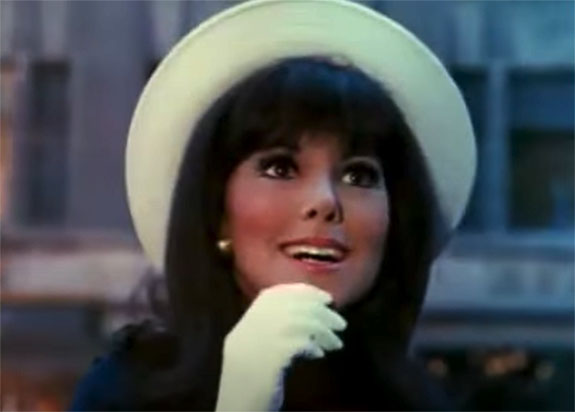
Margaret “Marlo” Thomas (born 1937) [pictured], actress, producer, author, and social activist. She is best known for starring on the sitcom That Girl (1966-1971). She has received three Primetime Emmy Awards, a Daytime Emmy, a Golden Globe, a Peabody Award, a Grammy Award for a children’s album, and has been inducted into the Broadcasting and Cable Hall of Fame. She was awarded the Presidential Medal of Freedom in 2014.

Tina Louise (born Tina Blacker in 1934), actress best known for her role playing Hollywood movie star Ginger Grant on the sitcom Gilligan’s Island (1964-67). She won a Golden Globe in 1958 as New Star of the Year for her role in the film God’s Little Acre.

Rory and Francie both identify each other with actresses based on their hair colour.

Gidget and Moondoggie

FRANCIE: Hey, no one is denying Gidget a chance to snag Moondoggie for the clambake, but the rest of us have things to accomplish.

A reference to the film Gidget, previously discussed. In the film, Moondoggie (played by James Darren) was Gidget’s love interest and eventual boyfriend. They didn’t really attend a clambake, but a luau. Presumably Francie thinks a clambake is the closest thing to a luau in New England.