PARIS: Aha, you admit it. RORY: Yes, but it wasn’t what you think. PARIS: Brutus!
Marcus Junius Brutus (c 85BC-42BC), often referred to simply as Brutus, was a Roman politician, orator, and the most famous of the assassins of Julius Caesar. Brutus had been a close friend of Julius Caesar before opposing him, and eventually taking a leading role in his assassination, in 44 BC. Brutus eventually committed suicide rather than face trial for murder.
His name has been condemned for betrayal of his friend and benefactor Caesar. He also has been praised in various narratives, both ancient and modern, as a virtuous and committed republican who fought – however futilely – for freedom and against tyranny.
LOUISE: You’d think the brain trust behind P.E. could come up with some sport that didn’t give you helmet hair all afternoon.
A brain trust is a group of experts appointed to advise a government, leader, or organisation. The concept comes from President F.D.R. Roosevelt. In the UK, the term brains trust is more common. It is often used sarcastically, to imply the people in charge aren’t very intelligent at all.
Louise makes it sound as if they have no choice about doing fencing for Physical Education, yet in Season 1, Rory said that there were numerous sports to choose from at Chilton. She signed up for golf, but is doing fencing now. A lot of fans find that confusing, yet it doesn’t seem that strange that a different sport might be chosen for each year, or each semester.
PARIS: Any questions, Mr. Christian? I mean, Mr. Hunter.
Paris refers to Fletcher Christian (1764-1793), master’s mate on board HMS Bounty during Lieutenant William Bligh’s voyage to Tahiti during 1787–1789. In the mutiny on the Bounty, Christian seized command of the ship from Bligh on 28 April 1789. Some of the mutineers were left on Tahiti, while Christian, eight other mutineers, six Tahitian men and eleven Tahitian women settled on isolated Pitcairn Island, and Bounty was burned.
Fletcher Christian was portrayed by Clark Gable [pictured] in the 1935 film version and Marlon Brando in the 1962 film version, both adpated from the 1932 novel, Mutiny on the Bounty, by Charles Nordhoff and James Norman Hall.
Paris is saying that Mr Hunter was mutinous in his support of Francine.
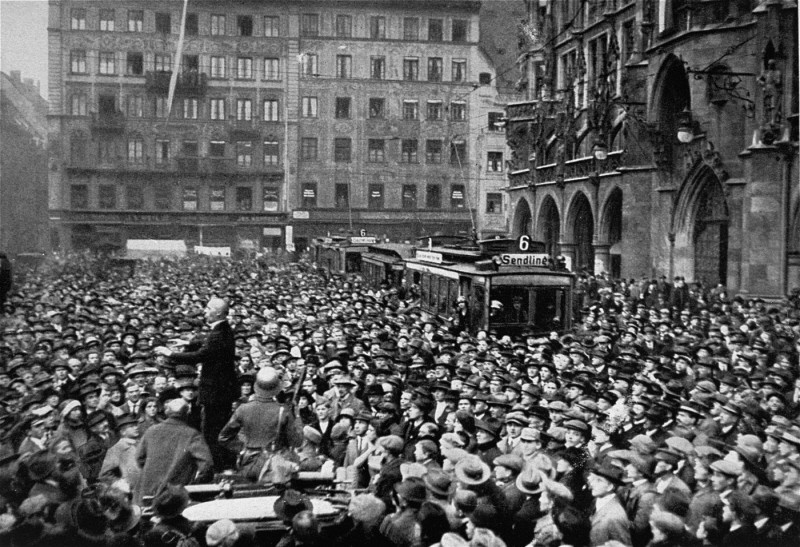
EMILY: She was the clomper … She’d be upstairs making the beds and it’d sound like a Munich beer hall rally.
Emily refers to the Beer Hall Putsch, or Munich Putsch, a failed coup d’état by Nazi Party leader Adolf Hitler, and other leaders in the city of Munich in 1923, during the Weimar Republic. Approximately two thousand Nazis marched on the Feldherrnhalle (a monument to honour the Bavarian army), but were confronted by police which resulted in the deaths of 16 Nazi Party members and four police officers.
Hitler was eventually arrested and charged with treason. The putsch (coup) brought Hitler to the attention of the German nation for the first time and generated international headlines. His arrest was followed by a widely publicised trial, which gave him a platform to express his nationalist sentiments to the nation.
Hitler was found guilty of treason and served 9 months in prison, where he wrote Mein Kampf. Once released, Hitler redirected his focus towards obtaining power through legal means rather than by revolution or force, and accordingly changed his tactics, further developing Nazi propaganda.
Emily has combined or conflated this with the Nuremburg rallies, celebratory events coordinated by the Nazi Party. They played a seminal role in propaganda events, conveying a unified Germany under Nazi control.
EMILY: Of course I said it. Well, I can’t imagine who would take jackbooted as a compliment.
Jackboot, military and combat boot associated popularly with totalitarianism, as they were worn by German military and paramilitary forces during World War II. However, they have been used officially by other nations as well, including the UK, and had some civilian uses as well.
JESS: Like you’re standing with an ax next to a cherry tree.
Jess refers to a popular legend about George Washington – that when he was six years old, he received a hatchet as a gift (mm, great present for a small kid!). He used it to chop down one of his father’s cherry trees, and when his father confronted him angrily, George said something to the effect of, “Father, I cannot tell a lie. I did it with my little hatchet”. Instead of being angry about it, his father warmly praised him for his honesty. He should have been happy the tot didn’t cut his own leg off or something.
The story was published in the 1806 fifth edition of The Life of George Washington by Mason Locke Weems, popularly known as Parson Weems. He claimed to have been told the story by an anonymous elderly woman who was a friend of the family, but there isn’t a shred of evidence that it’s true, and official sources all say it isn’t.
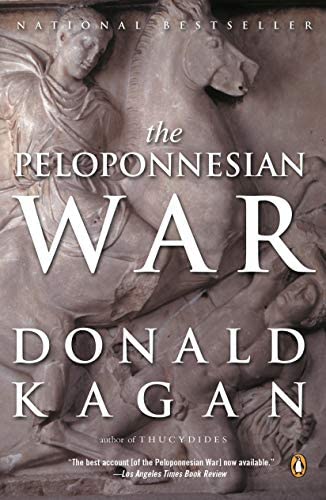
RICHARD: Oh, I must say, I am a very spoiled man. Chuck Berry, and the complete History of the Peloponnesian War.
LORELAI: Well, sure, ’cause a partial history would skip all the dirty stuff.
RICHARD: I especially like the way you wrapped the books in a bow tie. It’s very, very clever.
The Outbreakof the Peloponnesian War, a historical account of the Peloponnesian War (431–404 BC), which was fought between the Peloponnesian League (led by Sparta) and the Delian League (led by Athens). Written by historian and classical scholar Donald Kagan, a professor at Yale University, the book comes in four volumes. Lorelai has bought Richard all four volumes, hence it is the “complete” version. Lorelai has wrapped the books in the bow tie which was her original present for her father – Rory almost certainly suggested the books.
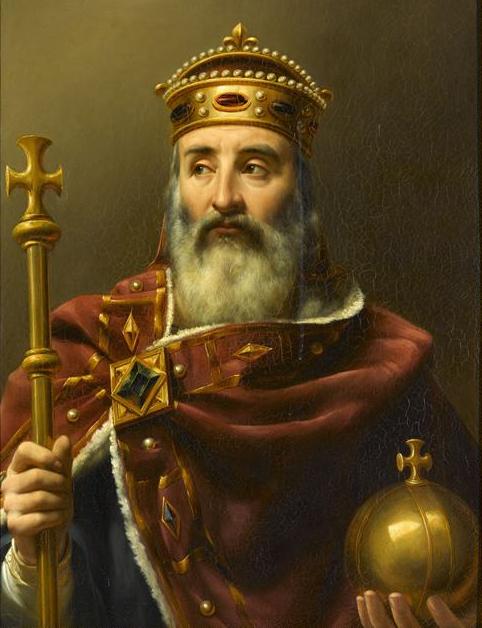
Charlemagne, or Charles the Great (747-814) [pictured], King of the Franks, King of the Lombards, and the first Holy Roman Emperor. Charlemagne has been called the “Father of Europe” as he united most of Western Europe for the first time since the classical era of the Roman Empire, as well as uniting parts of Europe that had never been under Frankish or Roman rule. His reign spurred the Carolingian Renaissance, a period of energetic cultural and intellectual activity within the Western Church.
Rory hasn’t been a student at Stars Hollow High since she was a freshman in 2000, but apparently Mr McKellan is still using the same material on his senior students. And it’s taken Dean two years to also have him as a History teacher. How many History teachers does little old Stars Hollow High actually have?
RICHARD: And this is our international contingent, Claude and Monique Clemenceau. They’re just in from France.
The Clemenceaus have been given the same surname as Georges Clemenceau (1841-1929), Prime Minister of France from 1906-1909, and again from 1917-1920, leading France through the end of World War I.
It is surely not a coincidence that Georges Clemenceau has a Connecticut connection. He fled France in 1865 due to involvement in radical politics during the regime of Napoleon III. He ended up teaching at a girl’s school in Stamford, Connecticut, where he fell in love with one of his students, Mary Plummer (1849-1922). They married in 1869 and moved to France a year later. They separated in 1876 and divorced in 1891, after which Clemenceau had Mary sent back to the US. From his time in the US, Clemenceau developed a strong faith in American democratic ideals.
Georges Clemenceau was a friend, biographer, and supporter of the famous French artist Claude Monet. Given Claude’s first name, this also does not seem like a coincidence. Notice that the name Monique sounds similar to Monet, as if both French guests have been named after the painter.
Claude is played by Michael des Barres, an English marquis, actor and rock singer. He played Murdoc in the original Macgyver and had a lead role in the show’s reboot, and replaced Robert Palmer in the band The Power Station, fronting the band at the 1985 Live Aid concert. He has had roles in numerous TV series and some films, including To Sir With Love, Pink Cadillac, and Mulholland Drive. A long-term campaigner against drug abuse, he is currently a radio host for Sirius XM.
Monique is played by Lydie Denier, a French-American model, singer, and actress. She has appeared in a few films and a number of TV programs, including General Hospital, Melrose Place, and Spin City.





 The Annotated Gilmore Girls