Goldilocks

FRANCIE: Wise up, Goldilocks.

RORY: My hair’s brown.

Francie refers to the 19th century English fairy tale, Goldilocks and the Three Bears. It was first recorded by the English poet and writer Robert Southey and published anonymously as “The Story of the Three Bears”, in a volume of his writings called The Doctor.

The original story was about an ugly, rude old woman who enters a house and helps herself to the bear’s porridge and their beds, with tragic results for the interloper. Published twelve years later by English writer Joseph Cundall in his Treasury of Pleasure Books for Young Children, the nosy person was changed to a pretty little girl.

Many names were suggested for her over the years as the story was republished, from Silver Hair to Little Golden-Locks, before the name Goldilocks was hit on in 1904, in Nursery Rhymes and Tales (English author Flora Annie Steel is credited for choosing the ultimately successful name). The little girl’s fate has differed in various retellings, but she never ends up as badly as the old woman, usually learning her lesson and vowing never to wander off into the forest again.

Rory reacts with irritation at being compared to a silly little blonde-haired character (she’s extra sensitive about blondes, because of Jess’ girlfriend). However, Francie is most likely comparing Rory to Goldilocks as if she is a naïve little girl, poking her nose into things she doesn’t understand, meddling where she doesn’t belong, and unaware of the dangers she is in. You know, the dangers of all the … hemlines? While Rory has been compared to fairy tale and children’s characters before, this is the first time it’s done to insult her.

CliffsNotes

PARIS: Hey, at least I’m not putting her on an iceberg and shoving her off to sea, which considering the fact that you can’t find the Shakespeare section without psychic powers yet the CliffsNotes rack practically smacks you in the face on the way in, is totally justified.

CliffsNotes are a series of student study guides started in Nebraska by Clifton Hillegass in 1958, having gained the US rights to a Canadian series published in Toronto. Hillegass and his wife Catherine started the business in their basement with 16 titles on Shakespeare. By 1964, sales of CliffsNotes had reached one million annually, and there are now CliffsNotes for hundreds of works. IDG Books bought CliffsNotes for $14.2 million in 1998, and it has since been acquired several more times.

“Putting her on an iceberg”

RORY: Are you sure the first thing you wanna do in office is to get a ninety-three year old woman sacked?

PARIS: Hey, at least I’m not putting her on an iceberg and shoving her off to sea …

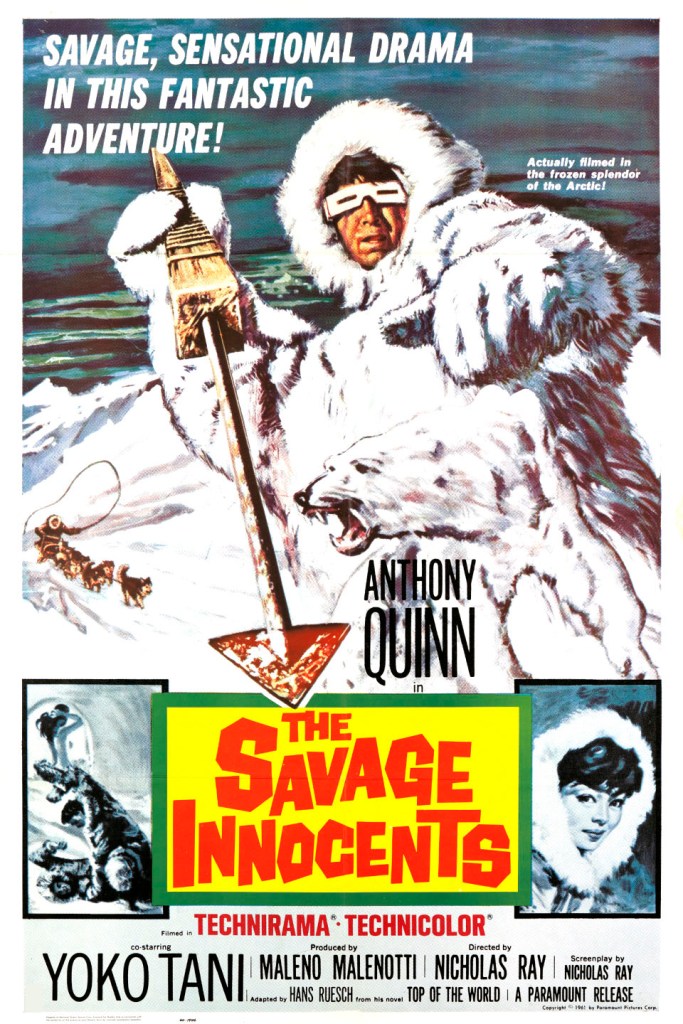
Paris refers to a stereotype of Eskimo culture where the elderly were put on an ice floe to die when they became a burden. Although some Eskimos did practice senilicide (the killing of the elderly), it was rare, usually only practised during famines, and there is no record of anyone being put out on the ice to die – simple abandonment was probably the most common method. In many cases, it may have been what we might refer to as assisted suicide. It is no longer practised in Eskimo culture, and hasn’t been for a very long time.

The idea of elderly Eskimos being pushed out to sea on ice floes might have come from the 1960 adventure film, The Savage Innocents, directed and co-written by Nicholas Ray, and based on the 1950 novel Top of the World by Swiss author Hans Ruesch. The film stars Anthony Quinn as an Inuit hunter – which is believed to be the inspiration for Bob Dylan’s 1967 song, “Quinn the Eskimo (The Mighty Quinn)”, successfully recorded by British band Manfred Mann in 1968.

In the film, the hunter’s mother-in-law is put on the ice to die, but is rescued soon after. In another scene, the hunter’s wife walks across the ice to commit suicide; a piece of ice breaks off and she briefly floats on the ice floe before drowning herself. The two scenes together may have suggested the popular idea of the elderly being set adrift on the ice to die.

Although Paris is made to seem a monster by getting rid of the librarian, she is ninety-three years old, and is in intensive care during this episode! Surely it is time for her to retire, on health grounds? I don’t feel as if Paris is being that unreasonable here.

Reader’s Digest Version

FRANCIE: Actually, I have something I’d like to put on the table to be discussed.

PARIS: Oh, okay. Well, we only have a couple of minutes, so give us the Reader’s Digest version.

Reader’s Digest, a general interest family magazine founded in 1922 by DeWitt Wallace and his wife Lila Bell Wallace. Formerly based in Chappaqua, New York, and now headquartered in Manhattan, Reader’s Digest was for many years the best-selling magazine in the US. The periodical has a global circulation of 10.5 million, making it the largest paid-circulation magazine in the world.

DeWitt’s idea was to gather of sampling of his favourite articles on various subjects from monthly magazines, often rewriting and condensing them – this might be what Paris means by the Reader’s Digest version. She may also refer to Reader’s Digest Condensed Books – hardcover anthologies of classic and bestselling novels in abridged (“condensed”) form. These were published from 1950 to 1997, after which it became softcover and called Reader’s Digest Select Editions.

To condense, the Reader’s Digest version is the short version of something.

Ben

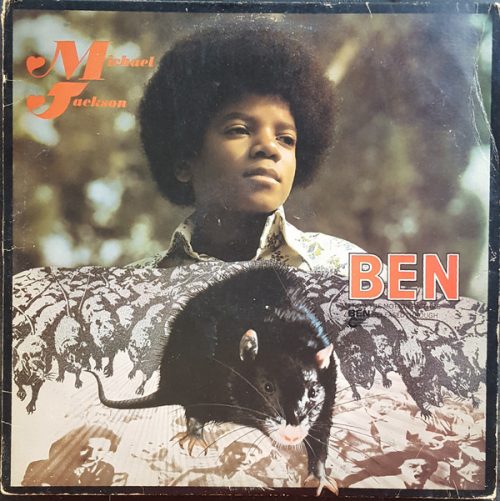
MICHEL: I am doing nothing. Ben, however, has dropped dead from laughter.

Michel refers to the 1972 drama-thriller film Ben, and its theme song. The film, directed by Phil Karlson, is about a lonely boy, played by Lee Harcourt Montgomery, who befriends Ben, the leader of a colony of rats. Ben becomes the boy’s best friend, protecting him from bullies and keeping his spirits up. However, Ben’s colony turns violent, resulting in several deaths. The rat colony is destroyed by the police, but Ben survives. The film is a sequel to the 1971 horror film Willard, based on the novel Ratman’s Notebooks by Gilbert Ralston.

The theme song, written by Don Black and Walter Scharf, is also called “Ben”. It was performed by Lee Harcourt Montgomery in the film, and by Michael Jackson over the closing credits. Although the film received mixed reviews, and was considered pretty oddball, listeners loved the tender theme. Jackson’s single reached #1 in the charts, making it his first #1 solo hit.

One of Jackson’s most re-released songs, often included on compilation albums, many people don’t realise the sweet song is addressed to a killer rat. It’s a little bit surprising that Michel knows – he didn’t live in the US when the film and song came out – but he seems to have quite an extensive knowledge of American pop culture.

A Confederacy of Dunces

This is the book Jess is reading when his girlfriend arrives to meet him.

A Confederacy of Dunces is a picaresque novel by John Kennedy Toole, written in 1963 but published in 1980, eleven years after Toole’s death by suicide. It became a cult classic, then a mainstream success, winning the Pulitzer Prize for Fiction in 1981. The title refers to an epigram from Jonathan Swift’s essay, Thoughts on Various Subjects, Moral and Diverting: “When a true genius appears in the world, you may know him by this sign, that the dunces are all in confederacy against him.”

The protagonist of the novel is Ignatius J. Reilly, an educated but lazy thirty-year-old man living with his mother in the Uptown district of New Orleans in the early 1960s. He has been called a modern Don Quixote, an eccentric and idealistic slob who disdains pop culture, and believes that his numerous failings are the working of a higher power. Due to a car accident his mother gets in, Ignatius must work for the first time in many years to pay off her damages bill, moving from one low-paid job to another and having various adventures with colourful characters in the French Quarter of the city.

The novel is famous for its rich depiction of New Orleans and its dialects, many locals seeing it as the best and most accurate fictional depiction of the city. A bronze statue of Ignatius J. Reilly is on Canal Street in New Orleans. It has been adapted for the stage, including as a musical comedy, and has often been planned as a film. These various attempts to adapt it for the screen have come to nothing (often with the slated lead actor dying, and once with a studio head being murdered, not to mention Hurricane Katrina devastating New Orleans in 2005), leading to the belief there is a “curse” on it as a film project.

The novel’s title is a comment on how Rory and Lorelai see Jess and his girlfriend in this scene, as a pair of “dunces” who can barely hold a conversation together. However, it is also believable as a modern American classic that Jess might read, complete with a male protagonist who is an intelligent failure railing against the world, his fate, and modern life. This seems to be the sort of hero that Jess can relate to. Note that it’s also set in the American South – a literary setting which Rory is also drawn to, underlining how much they have in common.

A Bolt from the Blue and Other Essays

Rory is holding this book when Lorelai comes home and they discuss Rory’s relationship with Dean.

A Bolt from the Blue and Other Essays is by Mary McCarthy, who Rory seems to be a fan of. It is a selection of her essays spanning her career from the late 1930s to the late 1970s, and includes her theatre reviews and political writings, so it is another of Rory’s books on journalism. It was edited by A.O. Scott, and published in 2002. Mary McCarthy, like Dorothy Parker – another of Rory’s favourites – was known for her bitingly witty and malicious reviews. Later, Rory will emulate these literary heroines with her own cruel review.

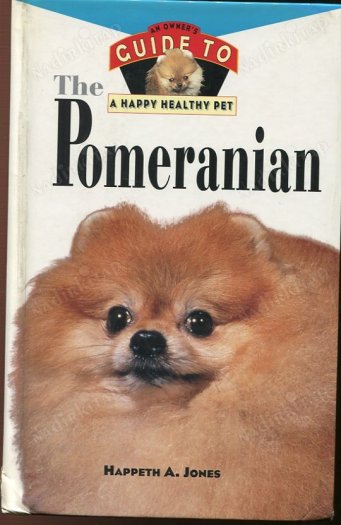
The Pomeranian: An Owner’s Guide to a Happy Healthy Pet

This 1996 book by Happeth A. Jones is on the coffee table when Lorelai and Rory are talking. It is part of a series, and as its title suggests, is all about raising a happy, healthy Pomeranian dog.

The question is, why is Lorelai apparently reading it? Is she preparing to do some dog sitting for someone with a Pomeranian, or is she thinking of buying one, as she has been shown to be keen on getting a dog?

“Norman Rockwell family Christmases dancing in your head”

RICHARD: And I am shocked by your naïveté … Did you really have pictures of Norman Rockwell family Christmases dancing in your head? Lorelai had her chance for a family, she walked away from it. That was her choice.

Norman Rockwell (1894-1978), painter and illustrator, most famous for the cover illustrations of idealised or sentimental American life he created for The Saturday Evening Post for five decades. His Christmas illustrations [pictured] are well known as iconic images of the Yuletide season, and still popular.

Richard also references the poem, “A Visit from St. Nicholas”, attributed to Clement Clarke Moore, and previously mentioned as a classic work which has shaped the American view of Christmas. In the poem it says,

The children were nestled all snug in their beds,
While visions of sugar-plums danced in their heads.

Richard mocks Emily’s hopes for Lorelai and Christopher to be together as idealistic and sugary-sweet as Christmas paintings and rhymes. He has never wavered from his position that Lorelai had one chance to have a husband and family, when she was sixteen, with Christopher, and that walking away from it was irresponsible. The idea that not marrying Christopher might have been the responsible thing to do, not to mention that stepping back from Christopher and Sherry now is the more moral choice, is something he cannot fathom.

Snow White

RORY: Not fair!

LORELAI: Yes, fair, the fairest, the Snow White of fair.

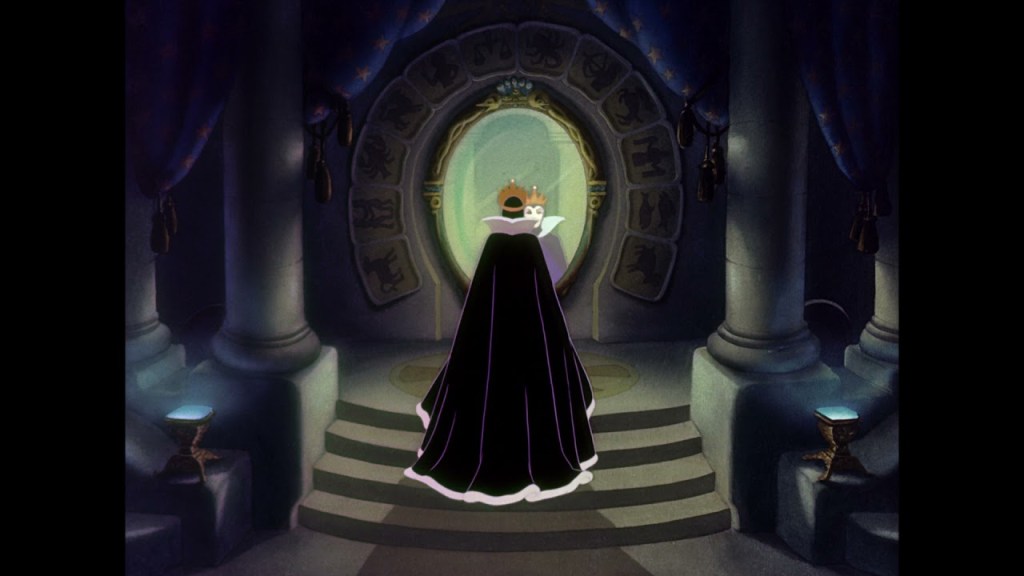
Disney film Snow White, based on the fairy tale and previously discussed.

In the story, Snow White’s wicked stepmother, a queen, has a magic mirror which she questions, “Magic mirror on the wall, who is the fairest of them all?”. The mirror always tells the queen that she is the loveliest lady in the land … until one day the mirror informs her that Snow White is the fairest of all. And that’s when the trouble begins.