LORELAI: Did you get lost? JESS: No, I was looking at Rory’s books … I wanted to see if she had Franny and Zooey. She does.
Franny and Zooey by J.D. Salinger, comprising his 1955 short story, “Franny”, and his 1957 novella, Zooey, both originally published in The New Yorker. The collection was published in 1961.
The book focuses on Frances (“Franny”) and her brother Zachary (“Zooey”), the youngest members of the Glass family, who frequently appeared in Salinger’s short stories. They were a large family of highly precocious children , the offspring of two vaudeville performers in New York City, the father an Australian Jew, the mother Irish. The Glass children all get college educations by winning a radio quiz show.
Both stories reflect Salinger’s interest in Eastern mysticism, particularly Zen Buddhism and Hindu Advaita Vedanta, as well as Eastern Orthodox Christian spirituality. Franny and Zooey was very popular, spending 26 weeks at the top of the New York Times Fiction Best-Seller’s List, but received mixed reviews from critics.
The book was a strong influence on the 2001 film, The Royal Tenebaums, which had only been out a few months before this episode aired.
Jess seems to have been careful to choose a non-romantic book, as Franny and Zooey are siblings who talk about philosophy together. Perhaps he is trying to tell Lorelai that he and Rory have an intellectual brother-sister relationship. (Later on, they do end up related to each other).
Franny does have a boyfriend in the book, but they don’t have much in common, and he doesn’t seem capable of understanding her (the boyfriend is named Lane!). When Franny is at a particularly low point, Zooey is able to get through to her by secretly talking to her on the telephone, and giving her some words of wisdom. When the phone call ends, Franny lies on the bed and smiles.
This might be a hint of what Rory and Jess’ nascent relationship is like. Unsatisfied with her boyfriend, Rory is enjoying her secret phone calls with Jess, which are on a different level to the conversations she has with Dean, and leave her smiling at the end. Although all this is offscreen and never directly referred to, we can see that their friendship has progressed and grown closer, and chances are they have continued talking on the phone in secret.
LORELAI: So, are you a healthy eater like Luke? JESS: No. No one’s a healthy eater like Luke. Euell Gibbons wasn’t a healthy eater like Luke … Many parts of a pine tree are edible.
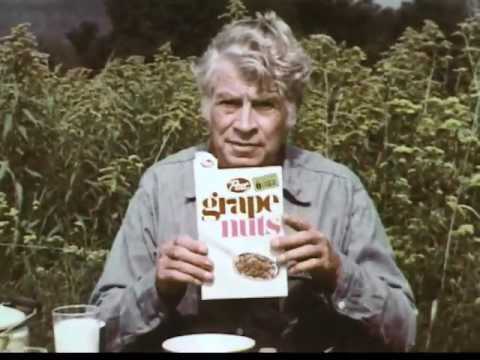
Euell Gibbons (1911-1975), outdoorsman and early health food advocate. He promoted eating wild food during the 1960s, having begun foraging for food as a teenager to supplement the family diet. His books on wild food were instant successes, and he became a celebrity, appearing on TV shows such as The Sonny & Cher Comedy Hour, and The Carol Burnett Show, often good-naturedly sending himself up by pretending to eat wooden plaques and so on.
A 1974 television commercial for Grape-Nuts cereal featured Gibbons asking viewers “Ever eat a pine tree? Many parts are edible.” While he recommended eating Grape Nuts over eating pine trees (Grape Nuts’ taste “reminds me of wild hickory nuts”), the quote caught the public’s imagination and fuelled his celebrity status.
How Jess knows about Euell Gibbons and the advertisement, which was broadcast ten years before Jess was born, is a mystery. Teenagers seem to have an amazing knowledge of 1960s and 1970s pop culture in the Gilmore Girls world.
After the book fundraiser, which was something Rory was interested in, Dean suggests they go and watch The Lord of the Rings at the cinema, which is something he wants to do. They have already seen the film three times together in the past three months, and even though Rory enjoyed it, she isn’t enthusiastic about seeing it again.
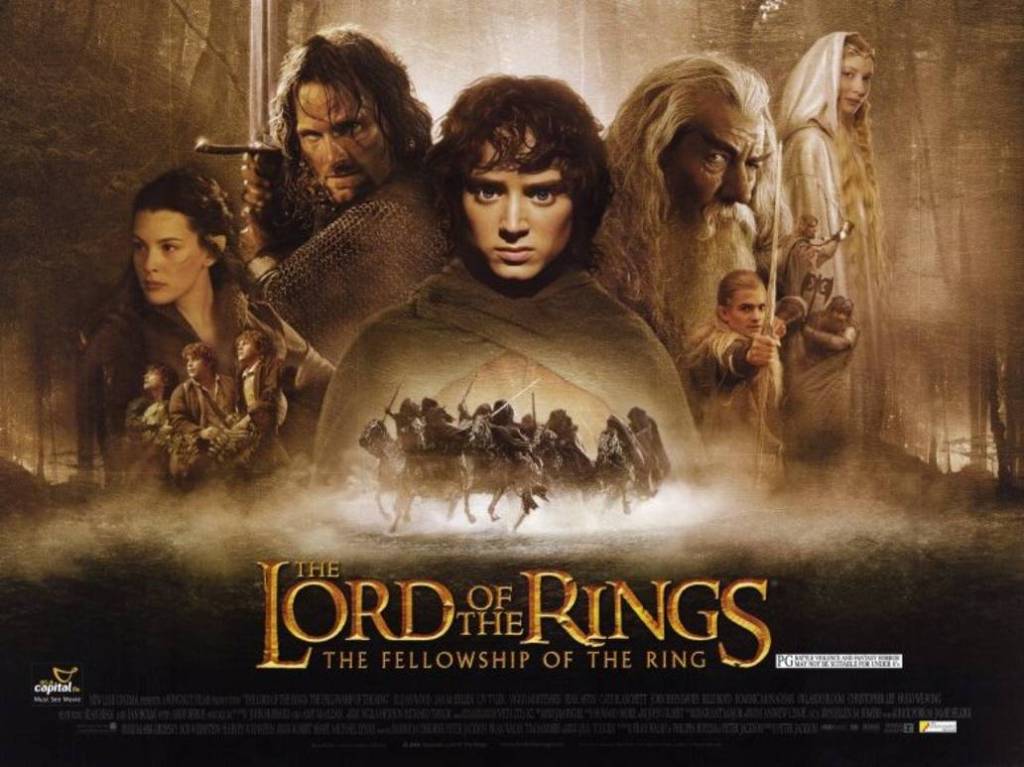
They can only be talking about the first film in the trilogy, The Lord of the Rings: The Fellowship of the Ring, which was released in December 2001. Directed by New Zealander Peter Jackson, it’s based on the novel, The Fellowship of the Ring by British author J.R.R. Tolkien, the first volume in The Lord of the Rings.
An epic fantasy adventure film featuring an ensemble cast, filmed and edited entirely in New Zealand, the story is set in Middle-Earth and tells of the Dark Lord Sauron who seeks the One Ring, which contains part of his soul, in order to return to power. The fate of Middle-Earth hangs in the balance as a young hobbit named Frodo Baggins (played by Elijah Wood) must take the Ring to be destroyed in the land of Mordor, accompanied by a fellowship of eight other companions.
The film was acclaimed by critics and fans alike, considering it a landmark in filmmaking, and the fantasy genre in particular, and was praised for its fidelity to the source material. It was the #2 film of 2001, and the fifth-highest grossing film of all time upon its release. It won numerous awards, including four Oscars and three BAFTAs, which included Best Film and Best Direction.
This is the book Kirk is trying to buy at the fundraiser, while haggling over the price with Gypsy.
Like Water for Chocolate (in Spanish, Como agua para chocolate) is a novel by Mexican author and screenwriter Laura Esquivel, published in 1989. It is about a young girl named Tita who is forbidden to be with her love, Pedro, and can only express her emotions through cooking. Each chapter of the book contains a recipe for a Mexican dish.
The novel is a magical realist romantic tragedy which has sold more than a million copies in Spain and Latin America, and was also successful in the US. Despite winning the 1994 American Booksellers Book of the Year Award, it received only lukewarm reviews.
The novel was adapted into a highly successful Mexican film in 1992; the screenplay was written by Esquivel. The phrase “like water for chocolate” is a Spanish phrase, referring to emotions that are hot and bubbling over, like water being boiled for making hot chocolate.
Kirk may have enjoyed the film so decided to read the book as well. It’s yet another reference to forbidden love (and food!) in the Gilmore Girls series.
Rory buys several books at the fundraiser, but only a couple of the titles are visible. Gypsy the mechanic is volunteering her time to work at the fundraiser, and she points Rory to the astronomy section, as if Rory has an interest in this area, and Gypsy somehow knows about it. Both quite surprising things to learn! The Buy a Book Fundraiser is held outside the library, and may be raising funds for new books.
Inherit the Wind
A 1955 play by Jerome Lawrence and Robert E. Lee, fictionalising the events of the Scopes “Monkey” Trial. This was a legal trial in July 1925 where schoolteacher John Scopes was taken to court by the state of Tennessee for teaching human evolution. There was intense media scrutiny of the case, with publicity given to the high-profile lawyers who had taken the case. The prosecution had former Secretary of State, William Jennings Bryan, while Clarence Darrow defended Scopes – the same lawyer who had defended child murders Leopold and Loeb, previously discussed. Scopes was fined $100, but the case was overturned on a technicality. The case was seen as both a theological contest, and a test as to whether teachers could teach modern science in schools.
The play gives everyone involved in the Scopes Trial different names, and substantially alters numerous events. It is not meant to be a historical account, and is a means to discuss the McCarthy trials of the 1950s, where left-wing individuals were persecuted as Communist sympathisers, under a regime of political repression and a fear-mongering campaign.
Rory might be particularly interested in the play because of the focus it places on the media, with reporter E.K. Hornbeck covering the case for a fictional Baltimore newspaper. He is based on journalist and author H.L. Mencken, previously discussed as one of Rory’s heroes, who gained attention for his satirical reporting on the Scopes Trial for the Baltimore Morning Herald.
Inherit the Wind premiered in Dallas in 1955 to rave reviews, and opened on Broadway a few months later with Paul Muni, Ed Begley, and Tony Randall in the cast. It’s been revived on Broadway in 1996 and in 2007, as well as in Philadelphia, London, Italy, and India.
It was adapted into film in 1960, directed by Stanley Kramer, and with Spencer Tracey starring as the defence lawyer, Dick York as the schoolteacher, and Gene Kelly as the Baltimore journalist. It received excellent reviews and won awards at the Berlin Film Festival. It’s also been made for television in 1966, 1988, and in 1999 (starring George C. Scott, Jack Lemmon, and Beau Bridges). It seems likely that Rory watched the most recent version on television.
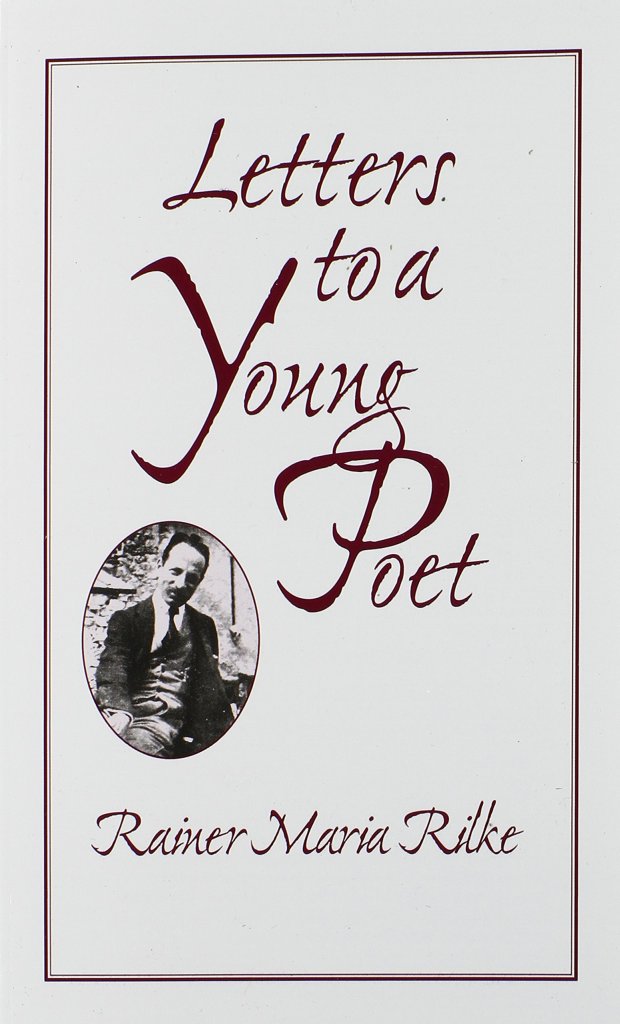
Letters to a Young Poet
A 1929 collection of ten letters written by the Bohemian-Austrian poet Rainer Maria Rilke, to a young officer cadet named Franz Xaver Kappus at the Theresian Military Academy in Wiener Neustadt, Austria between 1902 and 1908.
Kappus had written to Rilke, seeking advice on the quality of his poetry, to help him choose between a literary career, or one as an officer in the Austro-Hungarian Army. Kappus had been reading Rilke’s poetry when he discovered that Rilke had earlier studied at the academy’s lower school in St. Pölten, and decided to write to him for advice.
Rilke gave Kappus very little criticism or suggestions on improving his writing, and said that nobody could advise him or make life decisions for him. Over the course of ten letters, he instead provided essays on how a poet should feel and seek truth in experiencing the world around him. They offer insights into Rilke’s poetic ideas and themes, and his work processes.
Kappus did meet Rilke at least once, and despite his concerns about pursuing a military career, he continued his studies and served for 15 years as an army officer. During the course of his life, he worked as a journalist and reporter, and wrote poems, stories, novels, and screenplays. However, he never achieved lasting fame.
This is a book which features a future journalist – but one who yearns to become a poet. Is it a sign that Rory secretly wishes she could become a creative writer instead? Is she hoping that being successful in journalism will help her become a published author (it’s definitely a help in getting novels published, or at least considered). Is it even a hint that she will become a writer in the future, as she does in A Year in the Life, but is not destined to become famous from her writing? (Most published writers, even quite successful ones, don’t get famous, after all).
And is this correspondence between a poet and a student at a military academy meant to suggest that Rory is still thinking of Tristan, who went away to military school? Are she and Tristan actually writing to each other, or is the show leaving the door open for Tristan to possibly return in a future season, since they didn’t know how long One Tree Hill was going to last?
RORY: What are we waiting for? LORELAI: Patience, grasshopper.
Lorelai references the action-adventure Western martial arts television show Kung Fu, broadcast from 1972 to 1975. It follows the adventures of Shaolin monk named Kwai Chang Caine, played by David Carradine, as he travels through the American Old West, searching for his half-brother, Danny. Caine had an American father and a Chinese mother.
The show would often flashback to Caine’s training, where he was called “Grasshopper” by his master, a man named Po, in recall of this early scene:
Master Po: Close your eyes. What do you hear? Caine: I hear the water, I hear the birds. Po: Do you hear your own heartbeat? Caine: No. Po: Do you hear the grasshopper which is at your feet? Caine: Old man, how is it that you hear these things? Po: Young man, how is it that you do not?
This is where the name Grasshopper came from, and further flashbacks would see master Po giving the young Caine advice, such as “Patience, young Grasshopper”. Many of the aphorisms in the show are taken from the Tao Te Ching.
Kung Fu was very influential, and at the time highly acclaimed by critics, winning several major awards. These days it tends to be discussed for its representation of Asian character, and having a protagonist playing by an actor with no Chinese heritage. It has been adapted into film three times, and in 2021 was rebooted as a crime show television series with a female lead, played by Olivia Liang.
Some people incorrectly think “Patience, grasshopper” is a quote from the 1984 martial arts film, The Karate Kid.
LORELAI: What do you mean, why? The 2000 Year Old Man, Young Frankenstein, Silent Movie – you don’t think Mel has earned the right to have his face on my butt?
Mel Brooks (born Melvin Kaminsky in 1926), actor, comedian, and film-maker, with a career spanning over seven decades. He is known as the creator of broad farces and parodies, considered some of the greatest comedy films ever made, and was one of the most successful film directors of the 1970s. As well as winning an Emmy, a Grammy, and an Oscar, in 2001 he won a Tony Award for The Producers, previously discussed. He has been awarded a Kennedy Center Honor, a Hollywood Walk of Fame star, an AFI Lifetime Achievement Award, a British Film Institute Fellowship, a National Medal of Arts, and a BAFTA Fellowship.
The 2000 Year Old Man is a comedy sketch created by Carl Reiner and Mel Brooks in the 1950s and first publicly performed in the 1960s. Brooks plays a 2000-year-old man, interviewed by Reiner in a series of comedy routines that were turned into a collection of records and also performed on television.
Young Frankenstein, 1974 comedy horror film directed by Mel Brooks, and co-written by he and Gene Wilder, who stars in the title role. It’s a parody of the various classic horror film adaptations of Mary Shelley’s 1818 novel, Frankenstein, in particular, the 1931 film version. Young Frankenstein was the #3 film of 1974 and received critical acclaim. It is considered one of the funniest comedies ever made, and was later made into a stage musical. Mel Brooks considers it his best, but not his funniest, movie.
Silent Movie, 1976 satirical comedy film co-written, directed, and starring Mel Brooks as a Hollywood director down on his luck. He and his sidekicks, played by Dom DeLuise and Marty Feldman, come up with a plan to make the first silent movie in forty years. The film itself is silent, with intertitles instead of spoken dialogue. The film received positive reviews, and remains highly-regarded.
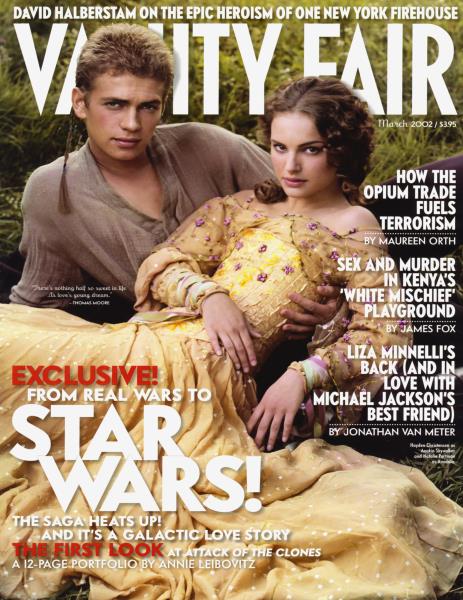
LORELAI: And one leg suddenly feels shorter than the other. RORY: This is gonna be the Vanity Fair paper cut incident all over again, isn’t it?
Vanity Fair is a monthly magazine of fashion, popular culture, and current affairs, published by Condé Nast. It was first a society magazine published from 1913 to 1936, after which it merged with Vogue. The title was revived in 1983.
The magazine’s title ultimately comes a location in John Bunyan’s 1678 allegorical religious novel, The Pilgrim’s Progress. In the story, Vanity Fair is a decadent city built by Beelzebub where every worldly pleasure that a person could want, delight in, and lust after is sold daily. It appears attractive, but in reality is a dreadful place. It was used as a title of a satirical novel by William Makepeace Thackeray in 1848.
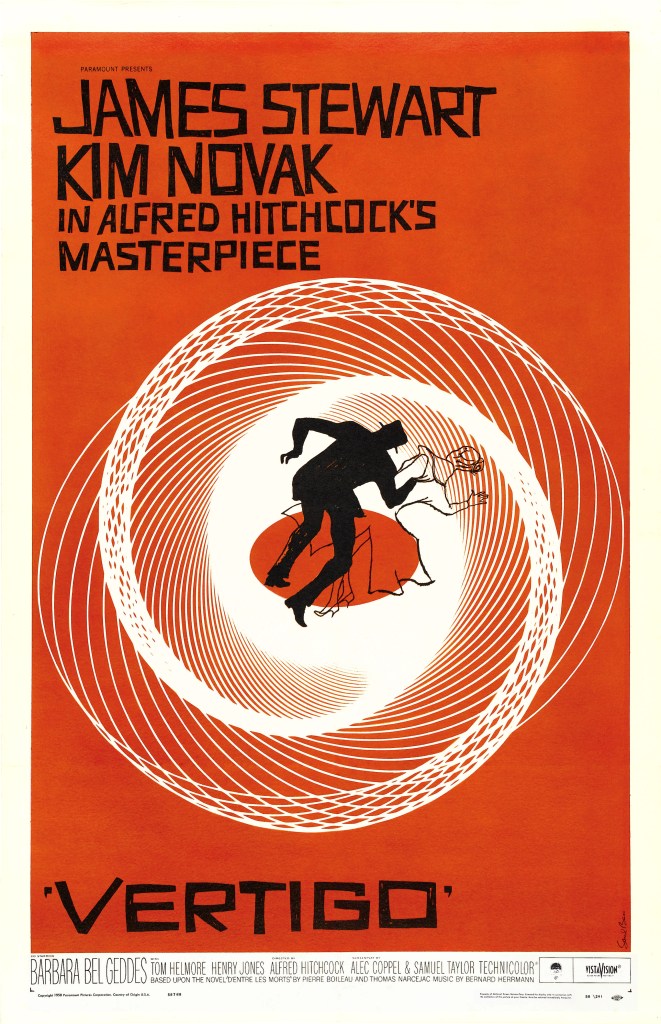
LORELAI: I think I have gangrene. RORY: You do not. LORELAI: And vertigo.
Vertigo is a condition where the person affected has the sensation of movement even when standing still, feeling like a spinning or swaying movement. It may cause nausea, vomiting, sweating, or difficulty walking, and is the most common type of dizziness. It is usually caused by a problem with the inner ear.
It is often confused with acrophobia, or a fear of heights, which is what Lorelai is probably referring to – being on the roof has made her scared to get up there again. Also, she went up on the roof before breakfast, so any dizziness she experienced could have been due to low blood sugar. Or a caffeine rush …
This is possibly a nod to the 1958 psychological thriller Vertigo, directed by Alfred Hitchcock, and based on the 1954 mystery novel The Living and the Dead, by French writing team Boileau-Narcejac. James Stewart plays a police detective forced into early retirement by acrophobia and vertigo caused by an incident in the line of duty. He is hired by an acquaintance to follow his wife, played by Kim Novak, who is behaving strangely.
Vertigo received mixed reviews upon release, but is now seen as a classic Hitchcock film and one of his defining works. Attracting significant scholarly discussion, it is regarded as among the greatest films of all time, and by some as the greatest film of all time.
LORELAI: So should it have been me? RORY: Huh? Oops, sorry! Zero hour – I have to go. I’ll be right back. [leaves]
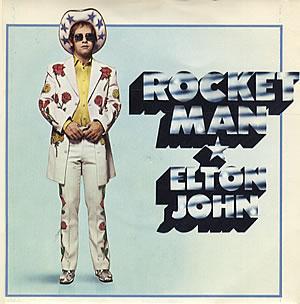
A possible allusion to Elton John’s 1972 song, “Rocket Man (I Think It’s Gonna Be a Long, Long Time)”, composed by Elton John and Bernie Taupin.
It might seem a bit of a stretch, but the song begins:
She packed my bags last night pre-flight Zero hour 9 am
Rory packed Lane’s CD ready for the drop-off the night before, and it was originally timed for 9 am, before being changed to 10 am to accommodate the reverend’s handball. The song was inspired by the 1951 Ray Bradbury story, “Rocket Man” from The Illustrated Man, which seems on-brand for Rory, and science-fiction is constantly alluded to on the show. It was also one of the songs recorded by William Shatner on his spoken-word album, previously discussed. Rory planned to buy the album for Lorelai’s birthday.
“Rocket Man” was the lead single from Elton John’s album Honky Château. The song went to #2 in the UK, and #6 in the US, becoming one of Elton John’s biggest hits, and a staple at his concerts. John played the song at the 1998 launch of the Space Shuttle Discovery. Rolling Stone has it listed as one of the greatest songs of all time.
Note that Lorelai never receives an answer from Rory as to whether Lorelai and Christopher should be together.




 The Annotated Gilmore Girls