Anne Sexton

FRANCIE: The historical bell of Chilton, 120 years old. Every member of the Puffs has stood here under the cover of night to pledge her lifelong devotion to us. ‘I pledge myself to the Puffs, loyal I’ll always be, a P to start, 2 F’s at the end, and a U sitting in between.’
RORY: Anne Sexton, right?

Anne Sexton (born Anne Harvey, 1928-1974) was an American poet known for her highly personal, confessional verse, on themes such as her depression and suicidal feelings. She is often compared with Sylvia Plath, and the two were friends (they were both poets around the same age from the Boston area). She won the Pulitzer Prize for Poetry in 1968, and took her own life by carbon monoxide poisoning.

Rory satirically compares the sub-literary Puffs rhyme with Sexton’s verse. The gloom-loving, suicide-romanticising Rory would surely have checked out Sexton’s poetry, and the Puffs seem to make her mind automatically swing towards thoughts of self-oblivion.
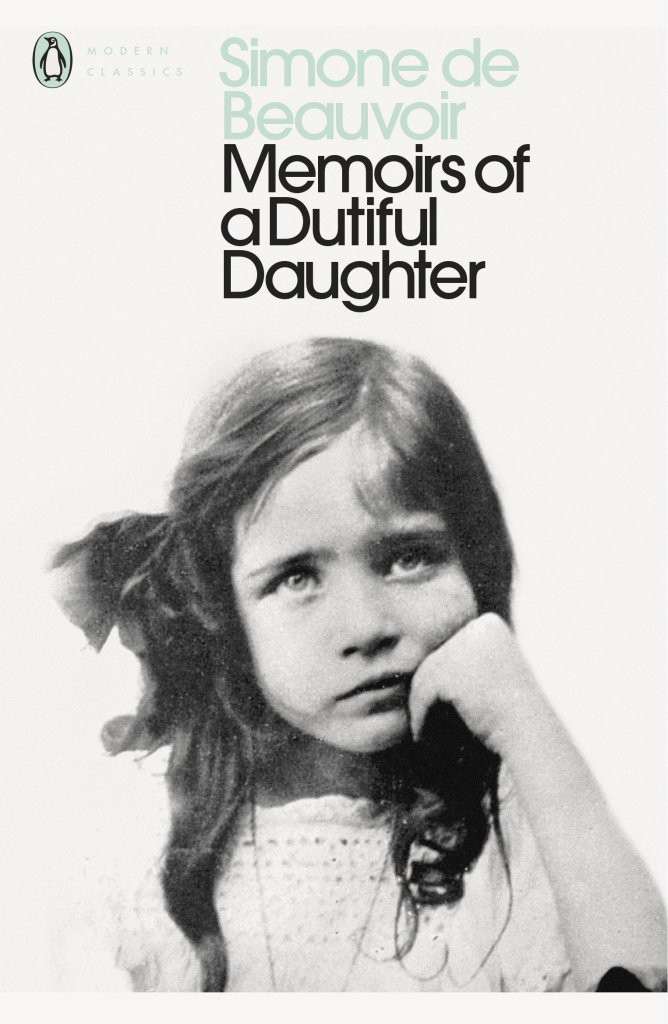
Memoirs of A Dutiful Daughter

This is the book Rory is reading on the couch when Lorelai gets home from the fashion show.

Memoirs of a Dutiful Daughter is a 1958 memoir by French author, existentialist philosopher, and feminist, Simone de Beauvoir, previously mentioned. It’s a beautifully-written, intimate portrait of her life growing up in a privileged, sheltered, upper middle class French family, rebelling as an adolescent against their conventions, and striking out on her own with intellectual ambition and a ceaselessly questioning, philosophical mind.

Rory often reads Lorelai’s books (they both have an interest in female biography and memoir), and this feels like one Lorelai would have been drawn to. She and de Beauvoir both had the same urge to escape a wealthy, claustrophobic background (Lorelai had Rory as part of her escape, while de Beauvoir had Sartre), and Lorelai spoke of always wishing she could use the word existentialist in a sentence.

The title of the memoir is ironic, but Rory really is a very dutiful daughter to Lorelai. Later on, she too will rebel against her mother.

Snow-White and Rose-Red

FRANCIE: Well, no one has proof [the Puffs exist]. It’s just folklore.
IVY: Like Snow-White and Rose-Red.

Snow-White and Rose-Red is a German fairy tale, best known from the version in the collection of the Brothers Grimm. In the story, Snow-White and Rose-Red are two sisters, one blonde and quiet, and the other dark-haired and lively, who live with their widowed mother in a cottage in the woods. The girls love each other and share everything equally.

They make friends with an unusually polite bear, giving him a warm place to spend the winter, and playfully rolling around with him before the fire. Later on, their bear friend saves them from a wicked dwarf, and is revealed to be a prince, put under a curse by the dwarf. It turns out they were rolling around and cuddling a prince in a fur suit the whole time! He marries Snow-White, and just as it looks like the girls really are going to share everything, the prince turns out to have a convenient brother for Rose-Red, and they all live happily ever after (their mother fades out of the story).

It’s one of the more frankly erotic fairy tales, a story of innocence reaching sexual maturity. It’s somehow fitting that a Chilton girl knows of this lesser-known fairy tale, and the name might remind us of Francie’s red hair! (Modern versions of the story often give Rose-Red literal red hair to match Snow-White’s literal fair hair).

Chateau Mimsy

MENA: I still say we approach Chateau Mimsy.
AVA: That space is too small, Mena.

A fictional venue, presumably in or around Hartford.

“Mimsy” is a word made up by English writer Lewis Carroll, previously discussed, from his 1871 novel Through the Looking-Glass and What Alice Found There, the sequel to Alice’s Adventures in Wonderland, previously discussed.

The word appears in a nonsense poem called Jabberwocky, which Alice reads in a book in the dreamscape of the looking-glass world. It seems unintelligible until she holds it up to a mirror, and can then read it. Even then, the poem is only vaguely understandable, filled with invented words. Jabberwocky is considered to be one of the greatest nonsense poems in the English language – playful and whimsical, with many of its words entering the lexicon.

The first stanza reads:

‘Twas brillig, and the slithy toves
Did gyre and gimble in the wabe;
All mimsy were the borogoves,
And the mome raths outgrabe.

Later in the novel, the character of Humpty Dumpty gives Alice an explanation of some of the poem’s vocabulary. His definition of “mimsy” is that it is a cross between “flimsy” and “miserable” – a strong suggestion that Chateau Mimsy is not only too small, but also dingy and cheerless!

There has already been a bed and breakfast named after a Lewis Carroll character – The Cheshire Cat in Portsmouth, where Lorelai and Rory stayed on their road trip. Apparently venues with names from Lewis Carroll are a feature of the Gilmore Girls universe.

Pop Up Book

[Rory walks out of the dining hall and runs into Paris.]
RORY: God! You’re like a pop up book from hell.

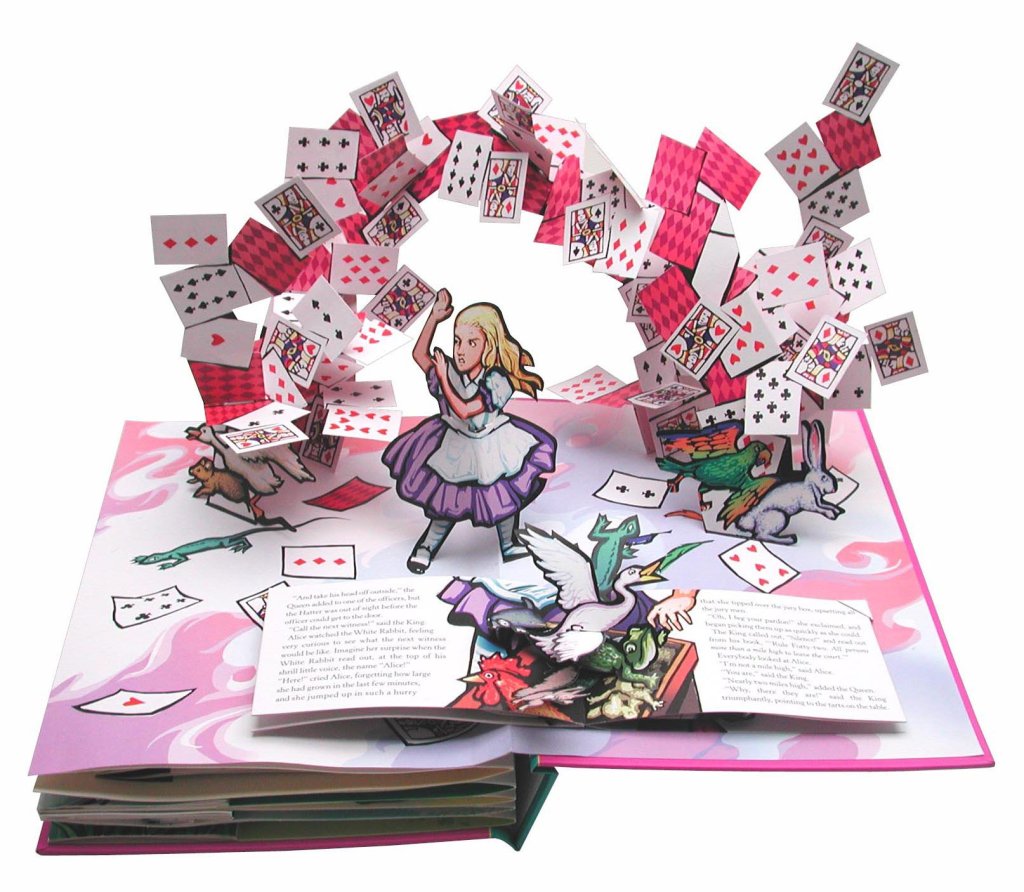
A three-dimensional book, designed so that when it is opened, a scene or picture made from folded cardboard appears. They date to the Middle Ages, and were first made for adult readers – usually scholarly works, providing three-dimensional diagrams, for example. Not until the late 18th century did they begin to be made for children.

The Books in Rory’s Backpack

Rory has trouble packing the books she’s reading into her backpack, which is already filled with school textbooks.

Savage Beauty: The Life of Edna St. Vincent Millay

A 2001 biography by American writer Nancy Milford. It examines the life of the American poet, an icon of the Jazz Age who was an influence on Dorothy Parker, who Rory has already read. She has almost certainly read Millay’s poetry as well. This is the book Rory reads on the bus.

The Sound and the Fury

A 1929 novel by American author William Faulkner. Written from the perspectives of several characters, and utilising stream of consciousness, it is both Modernist (like James Joyce and Virginia Woolf) and Southern Gothic (like Eudora Welty). It seems like a natural progression in Rory’s reading, and is her second book to read on the bus, in case she doesn’t feel like reading biography.

The Last Empire: Essays 1992-2000

A 2001 collection of essays by American writer and intellectual, Gore Vidal, written between the presidency of Bill Clinton and the electoral crisis of 2000. A provocative look at the history, politics and culture of America, including a revisionist look at Mark Twain. An indication of the type of journalism Rory is most interested in, Gore Vidal was the one who promoted the work of Dawn Powell, making it seem as if Rory is allowing each book to open her up to a wider selection of literature. This is her book to read at lunch.

The Collected Stories of Eudora Welty

A 1980 collection of short stories by Eudora Welty, previously discussed. The 1983 paperback edition won a US National Book Award. Rory obviously enjoyed the novel by Eudora Welty enough to try her short stories. It’s never said what the stories are for; presumably it’s an alternative lunchtime read, or an alternative bus book.

Glass Slipper

LUKE: So, back from the ball, huh?
LORELAI: Yes, I left behind a glass slipper and a business card in case the prince is really dumb.

Yet another Cinderella reference. In the fairy tale, Cinderella loses the glass slipper at the ball by which the prince, through a laborious and long-winded process, eventually manages to track her down. Lorelai suggests leaving a business card might have led to quicker results.

Is Lorelai’s response supposed to be a hint to Luke, or just a comment on the stupidity of Christopher? Either way, it feels as if Luke’s opening gambit is his way of testing to see if Christopher is going to be sticking around or not.

“And then there were three”

DEAN: Tomorrow you start paying. Bye. [leaves]
LORELAI: Bye. And then there were three.

A reference to the American counting game, originally called “Ten Little N*iggers”, and later “Ten Little Indians”, and now “Ten Little Soldiers”. A standard of black and white minstrel shows, the original title was used for a 1939 mystery novel by Agatha Christie, now less controversially called And Then There Were None. In the novel, a series of ten murders are planned to fit with the structure of the original black and white minstrel rhyme; the pertinent line is, “Four little n*gger boys going out to sea, a red herring swallowed one, and then there were three”.

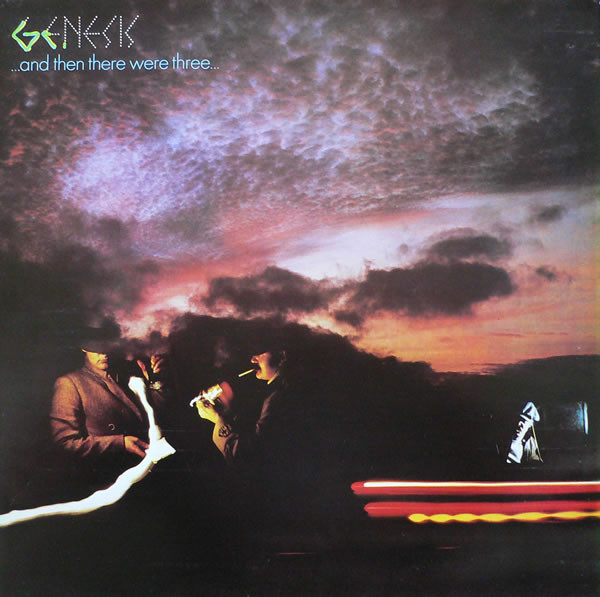
Lorelai may be thinking of the 1978 album … And Then There Were Three, by English rock band Genesis. The title was chosen because it was the first one they released as a trio, following the departure of their guitarist. It reached #3 in the UK and #14 in the US. Its most successful single was Follow You Follow Me, which coincidentally or not, is a title vaguely reminiscent of Where You Lead (I Will Follow), the theme song of Gilmore Girls.

Thank Heaven for Little Girls

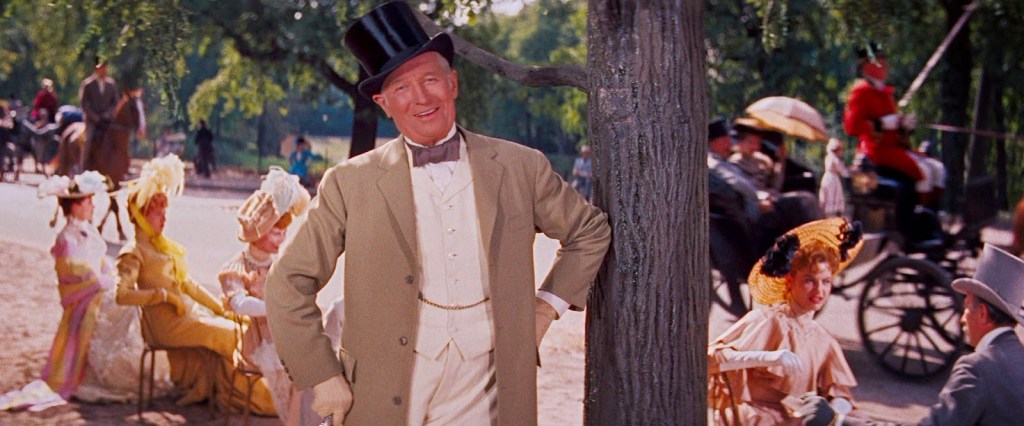
The song which is played while the debutantes perform their “fan dance” – not the burlesque entertainment the name leads you to believe, but a rather tame affair holding small white fans over their heads. Luckily for Rory, little actual dancing ability seems to be required for it.

Thanks Heaven for Little Girls is a 1957 song written by Alan Jay Lerner and Frederick Loewe, performed by Maurice Chevalier in the 1958 musical comedy, Gigi, based on the novelette by French author Colette. The film is about a sixteen-year-old girl being trained to be a courtesan in 19th century Paris, who winds up becoming a wife rather than a mistress.

The lyrics describe the pleasure men derive from little girls of “five or six or seven”, knowing that in a decade or so, they will have developed into bigger girls, who “grow up in the most delightful way”.

As a song about the joys of girls developing into nubile young women so you can marry them, it’s on theme for a debutante ball, but also wildly and hilariously inappropriate. The show does seem to agree with Lorelai (big surprise!) that there’s something pretty creepy about coming out parties and debutante balls.

Jeeves

DEAN: I think you look like a cotton ball.
RORY: Why, thank you Jeeves.

DEAN: But a really cute cotton ball.

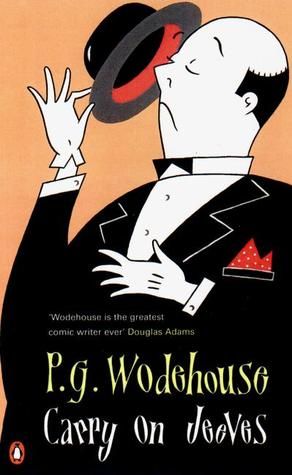
Reginald Jeeves is the valet to Bertie Wooster in the Jeeves stories by English comic writer P.G. Wodehouse. The first Jeeves story appeared in print in 1915, and the last was published in the novel Aunts Aren’t Gentlemen, in 1974. It is not certain, but quite likely, that Rory has read at least one of Wodehouse’s books starring Jeeves.

In the stories, Jeeves is the brilliant mind who helps the more simple Bertie solve his myriad life problems. He is sometimes incorrectly referred to as a butler, although he did occasionally take on butler duties for other characters.

Rory gets back at Dean for comparing her to a cotton ball in her white dress by comparing him to a valet in his formal wear. Incidentally, Rory looks much prettier in her debutante dress than just “a really cute cotton ball”!