Michael Chrichton

LORELAI: Every now and then, I’m seized with an overwhelming urge to say something like, “As Marcel Proust would say …”, but of course I have no idea what Marcel Proust would say so I don’t even go there. I could do, uh, “As Michael Crichton would say ..”, but it’s not exactly the same, you know.

Michael Chrichton (1942-2008) was a best-selling American author, screenwriter, director, and producer. He is best known for his science fiction, thriller, and medical fiction novels. Many of his books have been adapted into action films. Lorelai has apparently read at least one of his books, but it is unclear which one/s, as he was a fairly prolific writer.

In 2001, his most recent novel would have been Timeline (1999), a thriller about time travel to medieval France. This is a rather amusing counterpoint to Proust’s masterwork In Search of Lost Time, which is also set in France and deals with the problem of time in a completely different way.

Proust

LORELAI: (turns around to look at Max’s books) Wow these are beautiful! Hmm, I never read Proust, I always wanted to.

Marcel Proust (1871-1922) was a French author, best known for his monumental seven-volume part-autobiographical novel, À la recherche du temps perdu (“In Search of Lost Time”, earlier translated as “Remembrance of Things Past”), published between 1913 and 1927. He is considered to be one of the most influential writers of the twentieth century.

In a television series where the flow of time is a major theme, it’s not surprising that Proust makes a significant appearance, as his novel is a philosophical meditation on the nature of time, and how “clock” time can be very different to our personal experience of time.

“Where’s the scarecrow?”

LUKE: Okay, we’re supposed to follow the blue line, around the corner and then we should be –
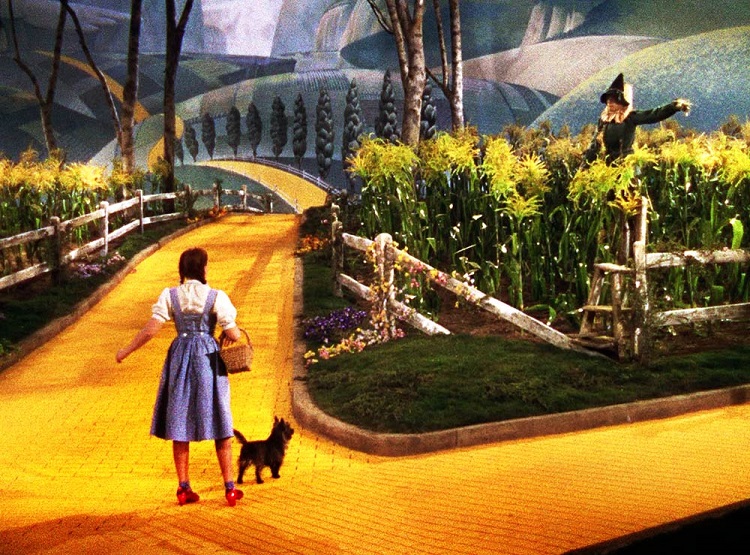
LORELAI: Where’s the scarecrow when you need him?

Lorelai is referring to the 1939 musical fantasy film The Wizard of Oz, produced by Metro-Goldwyn-Mayer, and based on L. Frank Baum’s 1900 children’s book The Wonderful Wizard of Oz. It was the #9 film of 1939, and a critical success on release, although so expensive to make that it didn’t make much of a profit for MGM. It won two Academy Awards for its music. After being broadcast on TV in 1956, and annually from 1959 to 1991, the film became one of the most famous in history, and is recognised as a cultural icon and one of the best films ever made.

Luke’s comment about following the blue line seems to remind Lorelai of the song Follow The Yellow Brick Road, where Dorothy (Judy Garland) is sent on her journey to find the Wizard by the diminutive Munchkins, after she is given the instruction to follow the Yellow Brick Road by Glinda the Good Witch of the North (Billie Burke). The Scarecrow (Ray Bolger) makes his appearance in the next scene, when the Yellow Brick Road branches off in two different directions, just as the hospital’s blue line does.

There will be many more references to the movie throughout the run of Gilmore Girls, and it serves as an inspiration for the show. Like The Wizard of Oz, Gilmore Girls creates a specifically American fantasy land which is both cosy and uncomfortable, with a story line which contains comedy and drama. Like Gilmore Girls, The Wizard of Oz is a quirky journey of growth where the lesson to be learned is that you already have everything you need before you even set out.

Cosmo Woman

NURSE: Ms. Gilmore, uh, I need you to –
EMILY: It’s not “Ms. Gilmore”, it’s Mrs. Gilmore! Mrs. Gilmore, I’m not a Cosmo Woman!

Emily is referring to Helen Gurley Brown (1922-2012), who became editor of Cosmpolitan magazine in 1965 after the success of her best-selling 1962 advice book Sex and the Single Girl. She championed glamorous, fashionable, and sexually liberated women, who became known as “Cosmo Girls”.

It’s possible that Emily, in her state of distress, has somehow confused Helen Gurley Brown and feminist Gloria Steinem (born 1934) – Steinem became the editor of Ms. magazine in 1972, which featured Wonder Woman on its first cover.

Emily would have been a wife, and then a mother, at the time of the rise of Gurley Brown and Steinem – very proud to be “Mrs. Richard Gilmore”, and the opposite of the independent career woman in Cosmpolitan, and of the woman speaking out against the restrictions of marriage and family in Ms.

I’m not sure whether she says “Cosmo Woman” via mixing up Cosmo Girl and Wonder Woman from Ms. Magazine, or whether she simply can’t bear to refer to herself as a “girl” when she’s a mature-aged woman.

Little Bo Peep

INN ASSISTANT (looking through Christmas ornaments): So this isn’t a fairy?
MICHEL: That is Little Bo Peep.

Little Bo Peep is a well known nursery rhyme, in which the character of Little Bo Peep is a shepherdess – hence the staff that the ornament carries, which the assistant thinks is a fairy wand. The song dates to the 19th century, but bo peep was known in the Middle Ages to mean that someone was being punished in the pillory, and the link with sheep is also very old.

The Metamorphosis

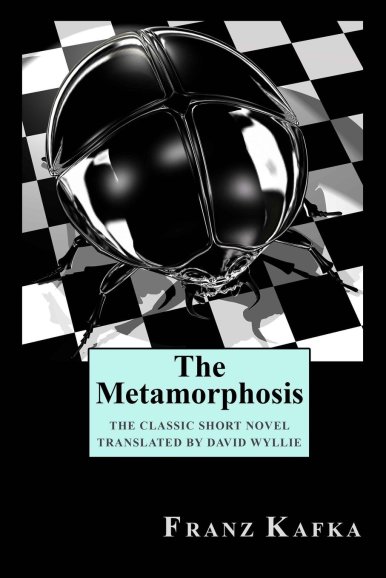
This 1915 absurdist novella by Czech author Frank Kafka is the book that Rory buys Dean for Christmas.

The story is about a travelling salesman named Gregor Samsa who wakes one morning to find that he has been transformed into a large and verminous beetle-like insect, becoming a disgrace to his family and an outsider in his own home. Both harrowing and comical, the book is a meditation on human guilt and isolation. Translated into English in 1933, The Metamorphosis is one of the most influential literary works of the twentieth century.

Rory believes that the book is a “romantic” present. Lane quite rightly tries to talk her out of this, describing the book as a “confusing Czechoslovakian novel”. She urges Rory to consider what Dean will think of the present, and says that she is giving Dean something that she would like, comparing it to Dean giving Rory a football for Christmas.

Lane’s counsel is sound, and she is hinting that once again Rory is using literature to keep others at an emotional distance, since she identifies the potential Christmas gift as saying “let’s be friends”. It’s a genuinely terrible present for Dean, and shows that Rory is still trying to turn her boyfriend into someone he isn’t.

We never discover if Rory took Lane’s advice or gave the book to Dean anyway. At the end of the scene she sounded unconvinced but also unsure, so you could argue it either way.

Rory’s idea of a book by a famous Czech author was probably inspired by her grandfather’s recent trip to Prague. In the last episode Emily told her that Richard was going to bring her back something special, and my bet is that he brought her something from the gift shop at the Kafka Museum, probably a book (possibly even this book). Rory may have thought that since she loved getting a book by Kafka as a present, Dean would as well.

Rory’s attraction to The Metamorphosis is obvious: like Gregor Samsa, she feels that she has become an object of disgust to her family, and is likewise suffering from feelings of intense shame and isolation – she is not speaking to her mother, and has not even spoken to Dean since they overslept at Miss Patty’s.

The Metamorphosis begins with Gregor Samsa oversleeping, and then finding he is trapped in a waking nightmare without reason or explanation. We can be sure that this is exactly how Rory feels, and the ending where Samsa voluntarily dies rather than burden his family any further shows just how deep her feelings of depression are. Quite possibly Rory has wished herself dead.

Rory might be playing her situation for laughs by making jokes about The Miracle Worker and Narcolepsy Boy, but make no mistake, she is suffering horribly. Like The Metamorphosis, there is both comedy and misery in equal measure.

By giving Dean the book, Rory was hoping to show him exactly how she feels; the “romantic” part of the present is her sharing her deepest emotions and fears with Dean, reaching out and laying herself completely bare to him. Unfortunately, Lane is right, and Dean would have no way to interpret it as anything other than a strange, confusing book about a big bug.

The Miracle Worker

LANE: Let me guess. You and Lorelai haven’t made up yet?
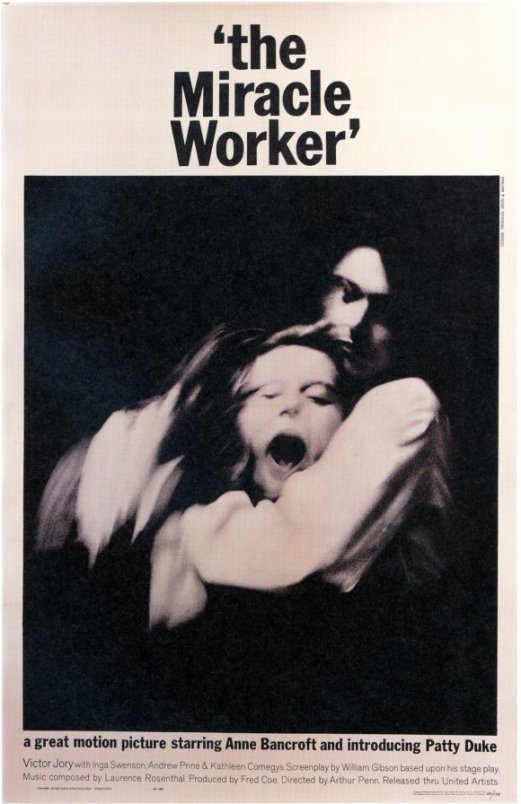
RORY: Nope. Things are still very Miracle Worker at my house.

Most likely a reference to the 1962 biographical film The Miracle Worker, directed by Arthur Penn and based on the 1959 play of the same name by William Gibson (originally part of the 1957 television drama anthology Playhouse 90); Gibson wrote the screenplay for the movie.

The film is the story of Anne Sullivan (1866-1936), the sight-impaired teacher of Helen Keller (1880-1968), who had become both blind and deaf at a very early age. Anne was able to break through Helen’s almost total isolation from lack of language, allowing her to communicate with the world by spelling words into her hand and teaching her to read Braille.

Helen made remarkable progress at a school for the blind with Anne’s support, and went on to become the first blind person to earn a bachelor of arts degree, forging an inspirational career as an author, political activist, and lecturer.

William’s Gibson’s source for The Miracle Worker was Helen Keller’s 1902 autobiography, The Story of My Life, and the title comes from Mark Twain‘s description of Anne Sullivan as “a miracle worker”.

The Miracle Worker received rave reviews, and is still considered one of the most inspirational films ever made. Anne Bancroft, who played Anne Sullivan, won the Academy Award for Best Actress, while Patty Duke, who played Helen Keller, won the Academy Award for Best Supporting Actress (in the 1979 television remake, Patty Duke played Anne Sullivan).

Rory possibly means that she and her mother are still not talking, just as Helen Keller was not able to communicate until she was taught to by Anne Sullivan. She could also be referring to the famous fight scene in the movie, shown on the poster, where Anne Sullivan struggles physically with Helen Keller in an effort to make her eat politely at the breakfast table, to mean that she and Lorelai still fighting.

The Portable Dorothy Parker

DEAN: So, uh, what are you reading?
RORY: The Portable Dorothy Parker.

Dorothy Parker (1893-1967) was an American poet, short story writer, newspaper critic, and satirist, famous for her acerbic wit and her membership of the Algonquin Round Table, a group of writers known for their hard-drinking, wisecracking ways.

The Portable Dorothy Parker, a collection of her poems, stories, and journalism pieces, was first published in 1944. It was first revised in 1973, with an introduction by Brendan Gill, a critic for The New Yorker born in Hartford, and educated at Yale. I believe Rory is reading the 1976 Penguin edition.

Rory greatly admires Parker’s wit, and we know Amy Sherman-Palladino does too, because her production company is named Dorothy Parker Drank Here – the logo can be seen at the end of every Gilmore Girls episode.

The fact that Rory takes a book everywhere, even to a dance with her boyfriend, may indicate that although her love of reading is perfectly genuine, she is using books as a coping mechanism in social situations, possibly using them to keep others at a distance.

Double Indemnity

This is the movie that Lorelai and Emily watch on TV while Rory is at the dance. Double Indemnity is a 1944 film noir, directed by Billy Wilder, and based on James M. Cain’s 1943 novella of the same name; Raymond Chandler co-wrote the screenplay with Wilder. The original novella was partly based on a true story – a 1927 high-profile murder by a married woman and her lover, in which the criminals were soon arrested and convicted.

The film stars Fred MacMurray as an insurance agent, and Barbara Stanwyck as a flirtatious housewife who wants her husband dead so she can collect the insurance money. Unable to resist her charms, the insurance agent uses his knowledge to make her husband’s murder look like an accident, triggering the “double indemnity” clause so that she will receive double the amount.

Double Indemnity was an immediate hit on release, and had good reviews from critics. Its reputation has grown over the years, and it is now considered one of the greatest in the film noir genre, and is sometimes cited as the first film noir ever made.

Emily mentions that she loves Barbara Stanwyck’s husky voice, and Lorelai says Emily’s voice is somewhat like Stanwyck’s. Lorelai teases that Emily could have gotten Fred MacMurray to kill Richard if she’d really wanted to.

Although Emily usually gets annoyed with Lorelai’s constant jokes, for once she is able to accept the teasing with little complaint – perhaps because it is complimentary for a change.