The Brady Bunch Variety Hour

This is the show Rory and Lorelai are watching on television when Rory’s college application from Harvard is delivered by the mailman during the cold open.

The Brady Bunch Variety Hour is a variety show featuring sketches and songs, a spin-off from The Brady Bunch sitcom, previously discussed. It features the same cast as the original show, with the exception of Eve Plumb, who played Jan, previously mentioned. She was replaced with Geri Reischl, forever to be known as “Fake Jan”.

The premise of the show is that the Brady Bunch family have been chosen to star in a new variety television show, and moved to southern California. It was originally going to be a one-off one-hour special in November 1976, but high ratings meant it was extended for nine episodes and aired sporadically over six months, ending in May 1977.

There were many problems filming the show, and the erratic scheduling affected ratings. It’s considered an unmitigated disaster, and as this episode says, TV Guide rates it as #4 on the list of worst shows of all time.

Lorelai and Rory are watching the first episode (the pilot) of The Brady Bunch Variety Hour.

“Break into a barn and put on a show”

JESS: Seemed to me like you’re still pretty together. I half expected you to break into a barn and put on a show.

Jess is referring to the 1950 musical film Summer Stock, directed by Charles Walters, starring Judy Garland, and previously mentioned. In the film, Judy Garland’s character, Jane, owns a farm, and one day her actress sister Abigail (played by Gloria DeHaven) breaks into her barn to rehearse with her fiancé, theatre director Joe (played by Gene Kelly), along with their theatre troupe.

Jane reluctantly allows them to go ahead, and inevitably gets sucked into the action by taking part in their show, including their big song and dance numbers. By the end, Jane has dumped her boring farmboy fiance Orville (played by Eddie Bracken), and winds up with Joe, while Abigail has, slightly implausibly, been smitten with Orville. The film was a box office success, and is iconic in popular culture, often referenced in songs and music videos.

Note that Jess likens Rory and Dean to a couple who break up to find different partners – this is essentially what ends up happening.

Love Is in the Air

This is the song that Luke sings to Lorelai, in order to tease her about being asked out by Kirk. “Love Is in the Air” is a 1977 disco song by Australian singer John Paul Young, written by George Young and Harry Vanda, and released as the lead single from John Paul Young’s album Love Is in the Air. It went to #3 in Australia, and was a world-wide hit, going to #5 in the UK and #7 in the US, but most popular in Norway, Sweden and South Africa, where it went to #2. It went to #1 on the Billboard Adult Contemporary chart.

The song was featured in the 1992 Baz Luhrmann film Strictly Ballroom, remixed with a ’90s dance beat. Re-released as a single from the Strictly Ballroom soundtrack, it went to #3 in Australia, and was most popular in New Zealand at #2.

It is a bit surprising that Luke knows this song, and most likely watched Strictly Ballroom, which doesn’t seem like his sort of film. Maybe he went to it with a girlfriend?

Pageboy Haircut

LORELAI: I know, but this goes against every rule I have in the Gilmore Survival Guide. Number one – no running with scissors. Number two – no pageboy haircuts. Number three – never ever have lunch alone with a mother.

A pageboy haircut has straight hair hanging below the ears before it turns under, usually with a fringe at the front. The name is from the haircut believed to have been given to medieval page boys, or young servant boys.

The pageboy haircut was popularised for women by New York hairdresser M. Lewis in the early 1950s, gaining peak popularity in the mid-1970s and 1980s. Two famous women with pageboy haircuts were Toni Tenille, from Captain & Tenille, and Diana, Princess of Wales – the style was often called the “Lady Di” in the UK.

The pageboy haircut was popular for young boys in the 1900s, popularised by child actors such as Jackie Coogan. It became part of adult male fashion in the 1960s, thanks to British rock bands such as The Beatles and The Rolling Stones, then copied by American punk, garage, and new wave bands such as The Velvet Underground, The Ramones, and Blondie.

“Putting her on an iceberg”

RORY: Are you sure the first thing you wanna do in office is to get a ninety-three year old woman sacked?

PARIS: Hey, at least I’m not putting her on an iceberg and shoving her off to sea …

Paris refers to a stereotype of Eskimo culture where the elderly were put on an ice floe to die when they became a burden. Although some Eskimos did practice senilicide (the killing of the elderly), it was rare, usually only practised during famines, and there is no record of anyone being put out on the ice to die – simple abandonment was probably the most common method. In many cases, it may have been what we might refer to as assisted suicide. It is no longer practised in Eskimo culture, and hasn’t been for a very long time.

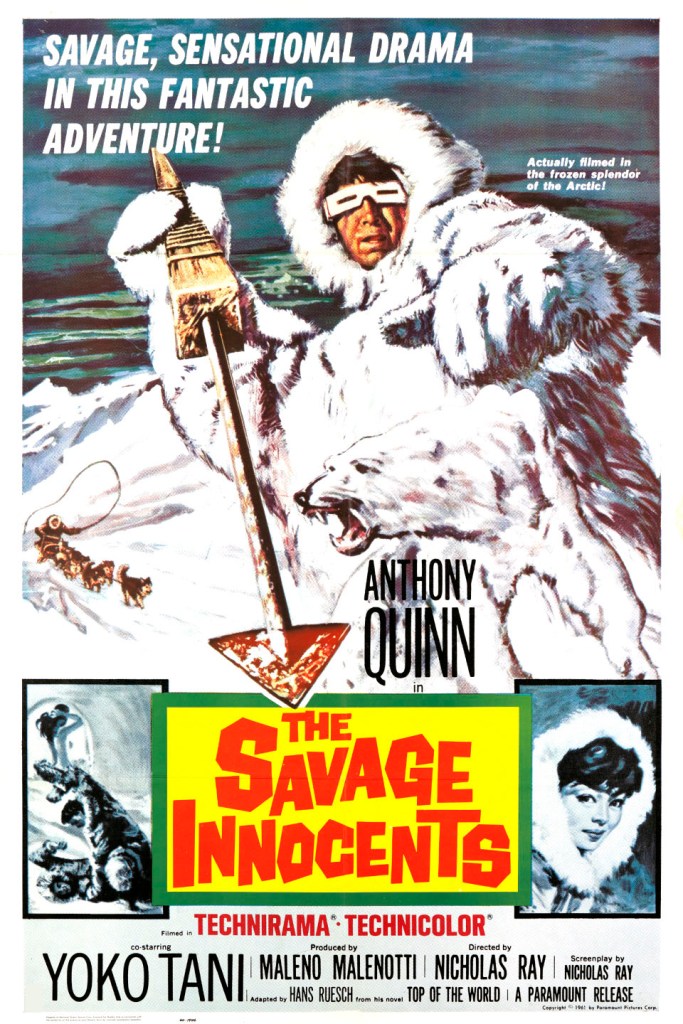
The idea of elderly Eskimos being pushed out to sea on ice floes might have come from the 1960 adventure film, The Savage Innocents, directed and co-written by Nicholas Ray, and based on the 1950 novel Top of the World by Swiss author Hans Ruesch. The film stars Anthony Quinn as an Inuit hunter – which is believed to be the inspiration for Bob Dylan’s 1967 song, “Quinn the Eskimo (The Mighty Quinn)”, successfully recorded by British band Manfred Mann in 1968.

In the film, the hunter’s mother-in-law is put on the ice to die, but is rescued soon after. In another scene, the hunter’s wife walks across the ice to commit suicide; a piece of ice breaks off and she briefly floats on the ice floe before drowning herself. The two scenes together may have suggested the popular idea of the elderly being set adrift on the ice to die.

Although Paris is made to seem a monster by getting rid of the librarian, she is ninety-three years old, and is in intensive care during this episode! Surely it is time for her to retire, on health grounds? I don’t feel as if Paris is being that unreasonable here.

We Are Family

RORY: Hey, we are family.

LORELAI: Yeah, well, look how great that worked out for Sister Sledge.

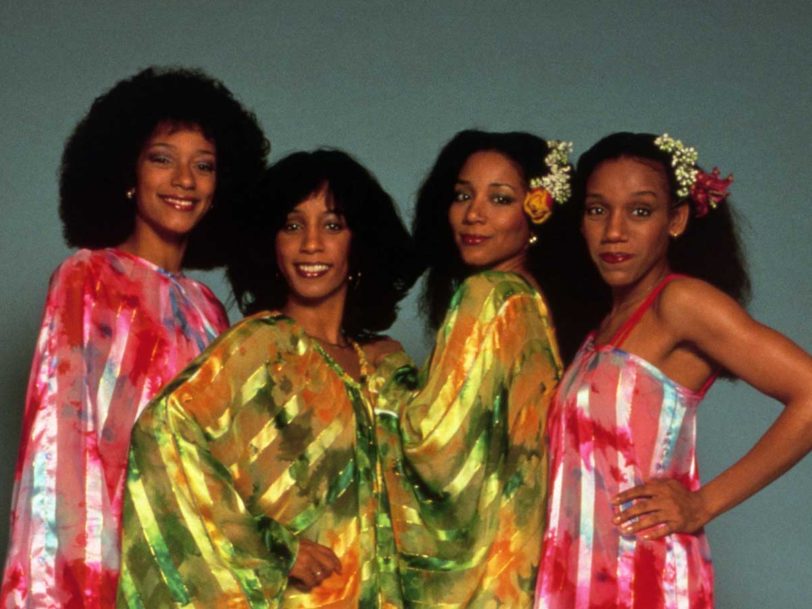
“We Are Family” by vocal group Sister Sledge, previously discussed, and now the third mention of this song on the show.

The group were made up of four sisters – Debbie, Joni, Kim, and Kathy Sledge, who began their musical careers in 1971. Lorelai makes it sound as if some terrible fate befell the Sledge sisters, but in fact “We Are Family” was a worldwide smash hit, and the group was named Billboard’s Best New Artists. They continued on to further career success, touring internationally, and performed at the White House for President Clinton in 2000, and for the Pope in 2015. Although Joni died in 2017, the other three sisters are still performing as Sister Sledge.

Lorelai is very possibly thinking of the period in the early 2000s when Debbie, Joni, and Kim produced solo works. Their final 2003 album remains unreleased, but by 2005 they’d got over this hitch, and performed at Glastonbury. In 2002, it might have seemed as if Sister Sledge was washed up, but they really did get through it all by sticking together as a family.

“Spread those wings and fly away”

LORELAI: Yes, you are, you’re all grown up and soon you’ll be going off into the world … And after you spread those wings and fly away, I won’t have the opportunity to give you this.

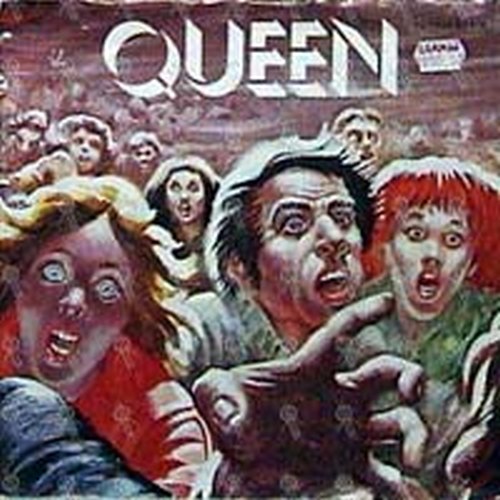
A possible reference to the 1977 song “Spread Your Wings” by English rock band Queen, from their album News of the World; the repeated line is, Spread your wings and fly away. The song was included on Queen’s 1979 live album, Live Killers. The single got to #34 in the UK, and was most popular in the Netherlands at #20. It wasn’t released as a single in North American, but the live version was the B-side to the 1979 song “Crazy Little Thing Called Love”, which went to #1 in the US.

Ben

MICHEL: I am doing nothing. Ben, however, has dropped dead from laughter.

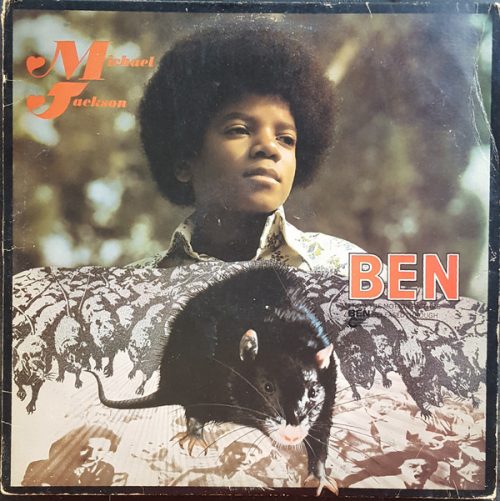
Michel refers to the 1972 drama-thriller film Ben, and its theme song. The film, directed by Phil Karlson, is about a lonely boy, played by Lee Harcourt Montgomery, who befriends Ben, the leader of a colony of rats. Ben becomes the boy’s best friend, protecting him from bullies and keeping his spirits up. However, Ben’s colony turns violent, resulting in several deaths. The rat colony is destroyed by the police, but Ben survives. The film is a sequel to the 1971 horror film Willard, based on the novel Ratman’s Notebooks by Gilbert Ralston.

The theme song, written by Don Black and Walter Scharf, is also called “Ben”. It was performed by Lee Harcourt Montgomery in the film, and by Michael Jackson over the closing credits. Although the film received mixed reviews, and was considered pretty oddball, listeners loved the tender theme. Jackson’s single reached #1 in the charts, making it his first #1 solo hit.

One of Jackson’s most re-released songs, often included on compilation albums, many people don’t realise the sweet song is addressed to a killer rat. It’s a little bit surprising that Michel knows – he didn’t live in the US when the film and song came out – but he seems to have quite an extensive knowledge of American pop culture.

“Dragging his heart all over town”

RORY: I know all of this about Dean … I know how great he is. I knew it before you did!

LORELAI: Well, knowing this has apparently not stopped you from dragging his heart all over this town.

A possible reference to the 1981 song “Stop Draggin’ My Heart Around”, written by Tom Petty and Mike Campbell, first recorded as a Tom Petty and the Heartbreakers song. Stevie Nicks from Fleetwood Mac sang on the record, with Tom Petty joining her for the chorus and the bridge. It was released as the first single from Nicks’ 1981 debut solo album, Bella Donna. It was one of the first music videos played on MTV when it launched on August 1 1981, and peaked at #3 in the US.

The song is about a woman who feels weighed down by her relationship, and wishes to part, despite having an emotional attachment to her lover. That does seem to apply to Rory – she does have feelings for Dean, but feels “dragged down” by him.