In a Young Man’s Mind

This is the song playing when Dave, Zach, and Brian run into Mrs Kim when their car is stuck at the red light.

“In a Young Man’s Mind” is a song by the garage rock band The Mooney Suzuki, from their 2002 album, Electric Sweat. The song was released as a single in 2003.

Part of the lyrics say:

A kid with a guitar
What does he wanna do?
We’ll be like Pete Townsend, Jimmy Page, and Hendrix too
We’re gonna learn how to play
And practice it everyday
But I was really feelin’
I might come a lady’s way

In a young man’s mind
It’s a simple world
There’s a little bit of music
And the rest is girls

Something of a comment on the guys in the band!

When Mrs Kim asks what Dave is doing with these alarming-looking boys, he pretends that he is also in a Christian band, and they are his bandmates. Mrs Kim warns him that Lane has a crush on him, and says she is interested in hiring them some time. Dave gets away with it for another day, although the squeaks are getting narrower.
Dean Martin, New York Mining Disaster

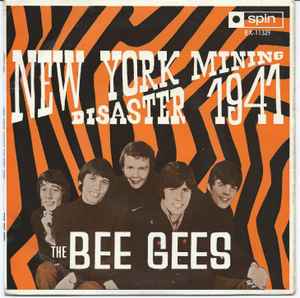
LORELAI: Then we picked the same Dean Martin song on the jukebox twenty-five times and people started complaining, so we picked the Bee Gees’ “New York Mining Disaster” and they begged for Dean Martin back.

Dean Martin, previously discussed. It would be interesting to speculate which Dean Martin song they kept playing – my guess would be his signature song “That’s Amore”, which begins, When the moon hits your eye like a big pizza pie. It makes sense that a pizza place would have that song on the jukebox. Unfortunately, it looks as if John’s of Bleeker Street doesn’t actually have a jukebox. Possibly the jukebox was somewhere else.

“New York Mining Disaster 1941”, the 1967 international debut single by the Bee Gees, written by Barry and Robin Gibb, and their first song to hit the charts in both the UK and US. It received a lot of attention, because rumours had been circulated that the Bee Gees were actually The Beatles, playing under assumed names. It went to #12 in the UK and #14 in the US, and was most popular in the Netherlands and New Zealand, at #3.

Barry and Robin wrote the song sitting in darkness during a power cut. The song recounts the story of a miner trapped in a cave-in. According to the Gibb brothers, the song was inspired by the 1966 Aberfan disaster in Wales. According to Robin, there actually had also been a mining disaster in New York in 1939, but not in 1941, and he thought “New York” sounded more “glamorous”.

Spice Girls, Jonas Salk

LORELAI: No, see, Alex and I talked about everything we plan to do and how he expected to dress and how I expected to dress, and we coordinated to the point where I knew each piece of clothing I had to bring, down to the Spice Girls necklace I plan to wear Saturday morning for breakfast because we agreed to keep it a little whimsical.
RORY: So, not your Jonas Salk necklace?

Spice Girls, previously discussed. [Necklace pictured].

Jonas Salk (1914-1995), virologist and medical researcher who developed one of the first polio vaccines.

Broadway Baby

LORELAI: Well, aren’t we just a Broadway baby.

“Broadway Baby”, a song from the musical Follies, with music and lyrics by Stephen Sondheim and book by James Goldman. First performed in 1971, it takes place in a crumbling Broadway theatre, and follows a reunion of former showgirls who performed in the 1920s and ’30s. It won seven Tony Awards, and “Broadway Baby” has become a popular standard.

Hairspray and The Producers

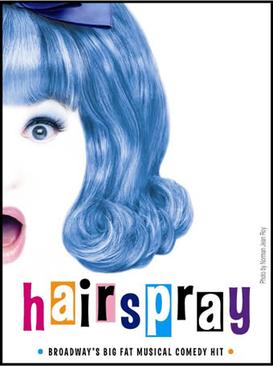
LORELAI: I cannot picture you watching Hairspray.
LUKE: It was okay. I liked The Producers better.

Hairspray, musical with music by Marc Shaiman and lyrics by Marc Shaiman and Scott Wittman, with book by Mark O’Donnell and Thomas Meehan, based on John Water’s 1988 film of the same name. Set in 1962 Baltimore, the story follows teenage Tracy Turnblad’s dream to dance on a local TV dance program. When Tracy wins a role on the show, she becomes a celebrity overnight, leading to social change as Tracy campaigns for the show’s racial integration.

The musical opened in Seattle in 2002 and moved to Broadway later that year. In 2003, Hairspray won eight Tony Awards, including one for Best Musical. It ran for 2,642 performances before closing in 2009. Hairspray has also had national tours, a West End production, numerous foreign productions, and was adapted as a 2007 musical film.

The Producers, previously discussed. Lorelai mentioned wanting to see this musical, but thought it was too hard to get tickets. Luke and Nicole don’t seem to have had any trouble – a sign of Luke leaving Lorelai behind a little bit through his relationships with Nicole.

Levittown

LUKE: Oh, what show?
LORELAI: Levittown, it’s a new musical.

The musical that Lorelai is going to see with Alex, Sookie, and Jackson is fictional. Levittown is a hamlet on Long Island, New York, built by Levitt & Sons as a planned community for returning World War II veterans between 1947 and 1951.

It was the first mass-produced suburb, and became a symbol of the American Dream, and of racial discrimination – the Levitts would only allow whites to buy in the suburb, and as late as the 1990s, only a tiny portion of the community were non-white. They built other Levittowns in Pennsylvania, New Jersey, and Puerto Rico.

Oddly enough, a real play called Levittown – a drama, not a musical – opened off-Broadway in 2009, to lukewarm response, although successful enough to be staged a few times since then.

In real life, there weren’t any new musicals debuting in New York in February 2003.

Baba O’Riley

ZACH: Man, this crunch just now sounded like the drum-fill in “Baba O’Riley”.

“Baba O’Riley”, a song by English rock band the Who, and the opening track to their 1971 album Who’s Next. Written by Pete Townsend, the song refers to his two major inspirations of the time: Indian spiritual master Meher Baba, and American jazz composer Terry Riley.

It was a Top 20 hit in The Netherlands, and a minor hit in Australia. It is considered one of the greatest rock songs of all time, has been highly influential, and is often used in film and television themes and soundtracks.

Keith Moon’s drum fill on the song has a bass pulse underneath while his hands remain busy on the snare drums and toms, in a jazz/swing inspired style. It’s considered a showcase for his signature style.

Crunch refers to a setting when mixing tracks – “crunch” will bring up the high and mid frequencies to add presence to claps, snares, and cymbals.

“I toted the barge, lifted the bale”

RORY: How was work?
JESS: I toted the barge, lifted the bale.

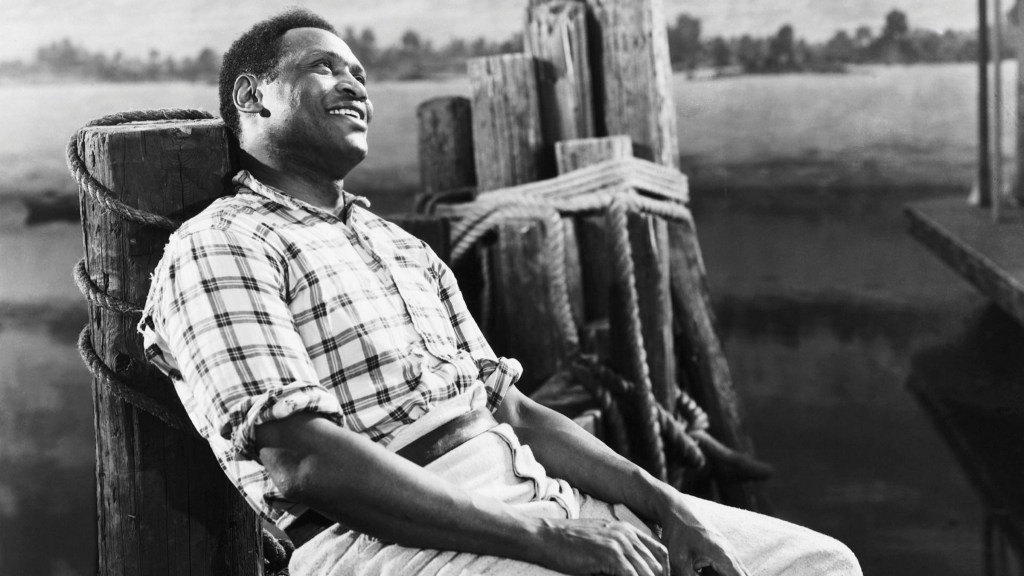
Jess refers to the show tune “Ol’ Man River”, with music by Jerome Kern and lyrics by Oscar Hammerstein III, from the 1927 musical Showboat. The song contrasts the struggles and hardships of African Americans with the endless, uncaring flow of the Mississippi River. It is sung from the point of view of a black dock worker on a showboat, and is the most famous song from the show.

Jules Bledsoe sang the song in the original stage version, and William Warfield in the 1951 film version. In 1928, Paul Robeson recorded the most famous version, which was sung at dance tempo; Robeson’s recording was recorded into the Grammy Hall of Fame in 2006.

The lyrics say, Tote that barge! Lift that bale!, to indicate the hard work undertaken on the river by black workers.

Miss Patty’s Song

MISS PATTY: [sings] It’s a quarter of three, there is no one in the place, except you and me.

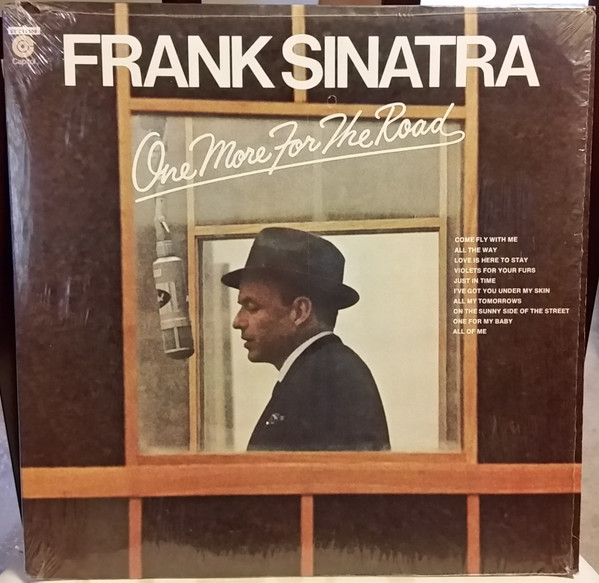
Miss Patty sings, “One For My Baby (And One More For the Road”, a hit song written by Harold Arlen and Johnny Mercer for the 1943 musical film, The Sky’s the Limit, where it was sung by Fred Astaire. It was further popularised by Frank Sinatra, who recorded it several times between the 1940s and 1960s.

Guys and Dolls in Beantown

MISS PATTY: I was a chorus girl in a bus-and-truck tour of Guys and Dolls. Beantown, I love that town. And there I was, me and the girls backstage after the show, and in she comes. And who does [Bette Davis] walk right up to, but little old me. And she sized me up, exhaled some smoke from that regal mouth of hers, and said, “Doll, you don’t got the high notes but you sure got the gams.” I’ll always treasure that moment with Bette and I wanna dedicate this song to her.

Guys and Dolls, a 1950 Broadway musical, with music and lyrics by Frank Loesser, and book by Jo Swerling and Abe Burrows. It is based on several short stories of the 1920s and ’30s by Damon Runyon.

The musical received overwhelming critical acclaim, and praise for its faithfulness to Runyon’s stories. It won several Tony Awards, including Best Musical, and had multiple Broadway and London revivals, as well as a 1955 film adaptation starring Marlon Brando, Jean Simmons, and Frank Sinatra. In 1998, the original cast was inducted into the Grammy Hall of Fame. It is considered one of the most significant musicals of all time.

Beantown, a nickname for Boston.