Tom Waits

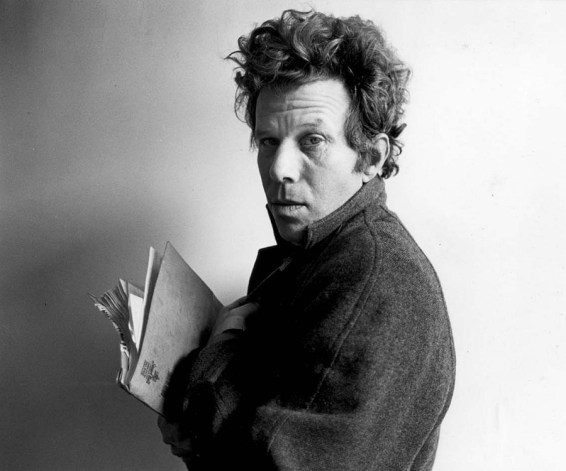
LORELAI: Or it’ll be all sparkly and exciting and you’ll be standing on the dance floor listening to Tom Waits with some great-looking guy staring at you so hard that you don’t even realize that Paris and Tristan have just been eaten by bears.

Tom Waits (born Thomas Waits in 1949) is an American singer, songwriter, and musician with a distinctive gravelly voice. His first album came out in 1973, and his most recent album in 2000 was Mule Variations, which came out in 1999, and was his most commercially successful album at that time; it won a Grammy Award. Waits has gained critical acclaim and a cult following over the years, and was inducted into the Rock and Roll Hall of Fame in 2011.

98°

RORY: Trust me, I’ll hate it. It’ll be stuffy and boring, the music will suck and since none of the kids at school like me, I’ll be stuck in the back listening to 98° watching Tristan and Paris argue over which one of them gets to make me miserable first.

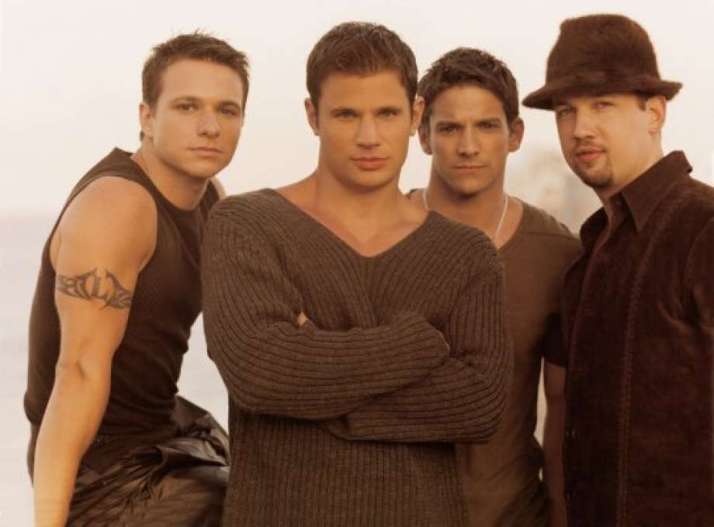
98° is an American boy band consisting of Nick and Drew Lachey, Justin Jeffre, and Jeff Timmons. Their first album was released in 1997, and their Revelation album was released in September 2000, not long before Rory’s dance. The biggest hit from the album was Give Me Just One Night, which went to #2 and was their biggest success. They have sold over 10 million records globally, and had eight hit singles in the US. The band went on hiatus in 2003, but reunited in 2012 and are still touring and producing albums.

Sausalito

EMILY: If she doesn’t want to go it must be because of something you said.
LORELAI: Mom, I promise. All I ever said to her about dances is that you go, you dance, you have punch, you eat, you take a picture, and then you get auctioned off to a biker gang from Sausalito.

Sausalito is a town in the Bay Area of San Francisco, on the north side of Golden Gate Bridge. It’s big claim to fame is that it is “the dock of the bay” in the song by Otis Redding, who once lived there. It’s also mentioned in Jack Kerouac’s On the Road as being a little fishing village full of Italians.

Lorelai’s joking explanation for Rory’s fear of dances sounds suspiciously similar to the plot of the 1967 film The Born Losers, where teenage girls are kidnapped, raped, and beaten by the Born Losers motorcycle gang in a small Californian town. We learn later that it is one of Lorelai and Rory’s favourite films. The story was based on a real life incident in Monterey, California, involving the Hells Angels, which was the impetus for Hunter S. Thompson’s first book:  Hell’s Angels: The Strange and Terrible Saga of the Outlaw Motorcycle Gangs (1966). Could this have been the book that Dean lent to Rory?

The Cure

[Lane runs into Rory’s room and puts on loud music.]
LORELAI: Oh, that’s The Cure. I have to go back in there.

The song by English Gothic rock band The Cure that Lane plays when she escapes into Rory’s room after touching her crush’s hair is Pictures of You. It’s from their 1989 album Disintegration, and was released as a single in 1990, when it went to #27 in the UK and #71 in the US, although #19 on the alternative music charts.

Robert Smith was inspired to write the song after a fire broke out in their house. While going through the remains, he came across his wallet which had pictures of his wife Mary in it. The cover for the single has one of the pictures on it.

The song is a reminder of the photos Rory finds of her parents, the remains of their relationship.

Someone to Watch Over Me

This is the song which plays while Luke sadly watches Lorelai and Max together on their date in the snow.

Someone to Watch Over Me was written by George and Ira Gershwin, for the 1926 stage musical Oh, Kay!, where it was sung by Gertrude Lawrence. It went on to become a jazz standard, recorded numerous times, and several times used in films – including What’s Up Doc? (1972), referred to earlier.

The version used on the show is sung by Rickie Lee Jones, from her 2000 album It’s Like This.

“Potato, po-tah-to”

RICHARD: Perhaps instead of that horrible salmon that keeps showing up.
EMILY: That salmon is a fine delicacy.
RICHARD: Mm, potato, po-tah-to.

Richard is referring to the song Let’s Call the Whole Thing Off, written by George and Ira Gershwin, where the lyrics say, “You like potato and I like po-tah-to, You like to-may-to and I like to-mah-to”. The characters decide that their differences, such as the way they pronounce certain words, are not worth ending their relationship over.

The song was written for the 1937 musical comedy film Shall We Dance?, directed by Mark Sandrich and starring Fred Astaire and Ginger Rogers. The film wasn’t a raging success, but the song has proved enduring, being often re-recorded and used in other films.

When people say “potato, po-tah-to” (or “to-may-toe, to-mah-to”), they mean that the difference of opinion they are having with someone is trivial and not worth arguing about.

Sergeant Pepper

LORELAI (sees Lane in her band uniform): Hey babe. Sergeant Pepper.

Sergeant Pepper’s Lonely Hearts Club Band is a 1967 album by English rock band The Beatles. It was released to immediate commercial and critical success, going to #1 all around the world, and ending as the #1 album of the year in the UK and #10 in the US. It won four Grammy Awards, including Album of the Year – the first rock album to do so. It is one of the highest-selling albums of all time, and regarded as one of the best, and most influential, albums ever made.

The album cover depicts 66 images of famous people, including actors, singers, scientists, comedians, writers, sportsmen, and gurus. The Beatles themselves are shown wearing military-style band costumes; Lane’s scarlet band costume is vaguely similar. The album cover won a Grammy Award.

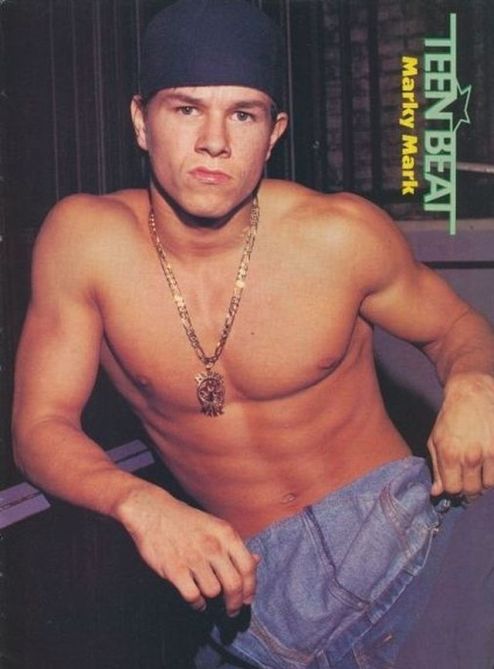
Marky Mark

RORY: You’ll never get that [watching Boogie Nights] past Lorelai.
DEAN: Not a Marky Mark fan?

Dean assumes that Lorelai’s veto of Boogie Nights is because she dislikes Mark Wahlberg (born 1971). In the early 1990s, Mark Wahlberg was in a hip-hop group called Marky Mark and the Funky Bunch; their song Good Vibrations went to #1 in 1991. Wahlberg dropped the stage name Marky Mark after he began his acting career in 1993.

“Embarrassing secrets” films

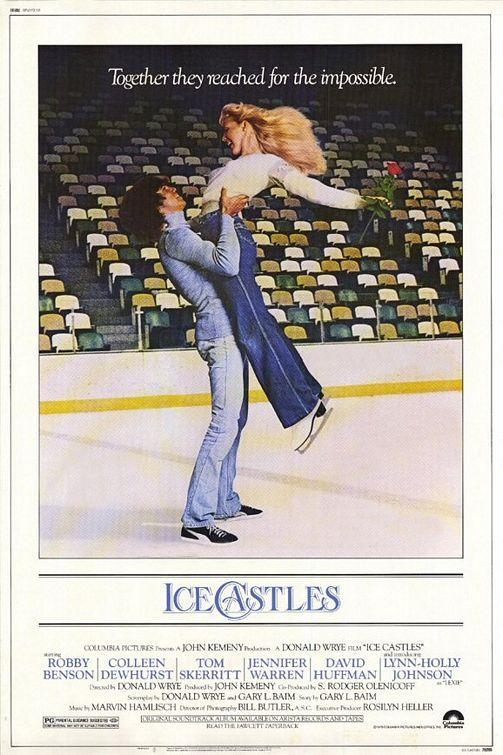
Rory teases Dean that one of his embarrassing secrets must be that the theme music to Ice Castles makes him cry. In turn, Lorelai counters that at the end of The Way We Were, he wanted Robert Redford to dump his wife and kid for Barbra Streisand.

Ice Castles is a 1978 romantic drama film directed by Donald Wrye, and with Lynne-Holly Johnson and Robby Benson in the lead roles. Highly sentimental, it’s about a young figure skater named Lexie who rises to stardom before a tragic accident robs her of her eyesight. With the help of her former boyfriend Nick, she learns to skate competitively even without normal eyesight, as they re-kindle their relationship. The theme song is Through the Eyes of Love, performed by Melissa Manchester.

The Way We Were is a 1973 romantic drama film directed by Sydney Pollack, and with Barbra Streisand and Robert Redford in the lead roles. The story takes place from the 1930s to the 1950s, and is about the relationship between two very different people: Katie is a Marxist Jew with strong anti-war convictions, while Hubbell is a handsome WASP with writing talent, but no strong work ethic or political opinions. Katie and Hubbell fall in love, marry, and have a daughter together, but they are too different for their relationship to last.

At the end of the movie they meet by chance some years after their divorce; Katie has remarried to a Jewish man, and Hubbell has a beautiful girlfriend (despite Lorelai’s recollection, it is Katie who is married with a child, not Hubbell). They share a tender moment together, but too much time has passed, and it is is apparent that love alone is not enough to make their relationship ever work. The Way We Were was the #5 movie of 1973 and won Academy Awards for its musical score and theme song. It is considered to be one of the greatest romantic films of all time.

I think it is not going too far to say that Rory and Lorelai have actually named their own favourite romantic tearjerkers. The films they have chosen reveal quite a bit about their attitude to romance and relationships.

Ice Castles is about a talented sixteen-year-old girl from a small town who is determined to make it to the top of her field, and works hard to get there. Even when fate hands Lexie a cruel blow, she is able to rise above it and overcome her problems. Her boyfriend Nick basically exists in the plot just to encourage her, and to push her to succeed in reaching her goals. Lexie is unfaithful to Nick with an older man, but he is able to forgive her and begin their relationship anew.

I suspect Rory sees Lexie as something to aspire to, and that she understands her sense of driving ambition (Rory starts late at Chilton, just as Lexie comes into the world of competitive skating at a later age than usual). Both are working hard to catch up, and determined to succeed. Not having any relationship experience, her romantic fantasy is one where she can sexually experiment and be forgiven for it, and have a partner who is her support system and makes her dreams his own. The film’s setting in the snow and ice of winter suggests Rory’s virgin status.

The Way We Were has major parallels with Lorelai’s own life. Like Katie, she is a quirky and opinionated character, and Katie’s attraction to the handsome, privileged Hubbell reminds us of Lorelai’s relationship with Christopher – like Katie and Hubbell, Lorelai and Christopher were friends before they were lovers.

Katie and Hubbell separated when their daughter Rachel was born, as a parallel to Lorelai and Christopher breaking up after the birth of Rory. Like Hubbell, Christopher has gone to live in California and is not part of his daughter’s life. Just like Katie with Hubbell, Lorelai still has feelings for Christopher, but recognises that he is weak and lazy, and that their relationship could not work long term. She will not compromise herself to be with a man, even one she cares for.

That this movie has such a deep fascination for Lorelai is a reminder that her teenage relationship with Christopher is not just the great romance of her life, but her only real romance. Unlike Katie, she has not been able to move on and find someone else, so that she is emotionally stuck.

Lorelai is stunned to discover that Dean has never seen The Way We Were (because most teenage boys love Barbra Streisand movies), and decides that they will watch it for their next pizza-and-movie night. Dean is obviously completely smitten with Rory, because he agrees to this.
Pink Moon

(Dean looks around Rory’s bedroom, and picks up a CD)
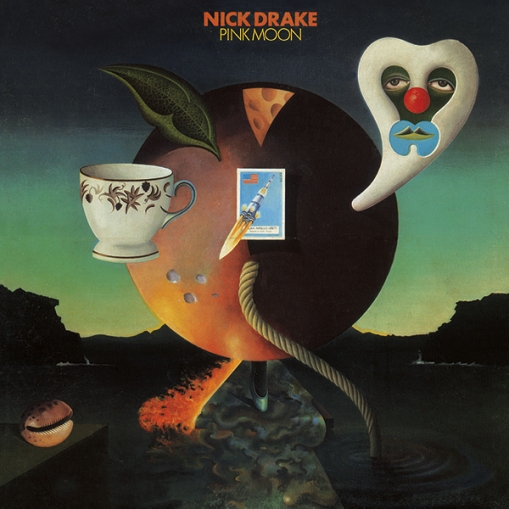
DEAN: Wow. Very clean. How much does it suck that they use Pink Moon in a Volkswagen commercial?

Dean is referring to the song Pink Moon by Nick Drake, earlier identified as one his favourite singers.

This is by far the most pretentious and hypocritical thing the usually down-to-earth Dean ever says in Gilmore Girls. Nick Drake had been obscure for decades when his song Pink Moon was used in a Volkswagen commercial. Without the commercial, Dean would never have even heard of Nick Drake, and as the commercial only came out in December 1999, he had been a Nick Drake fan for less than a year.

I can only imagine he was trying to impress Rory with his hipness, by making out that he had somehow known about Nick Drake previous to the commercial, to the point where he could feel betrayed that they used his music to sell Volkswagen. I’m not buying it.

In turn, Rory clearly went out and bought the Pink Moon album just because Dean liked it, then pretends that she knows and cares all about it to the same extent. But the show lets us know that, whereas that isn’t the case with Dean’s statement.