Lord Jim

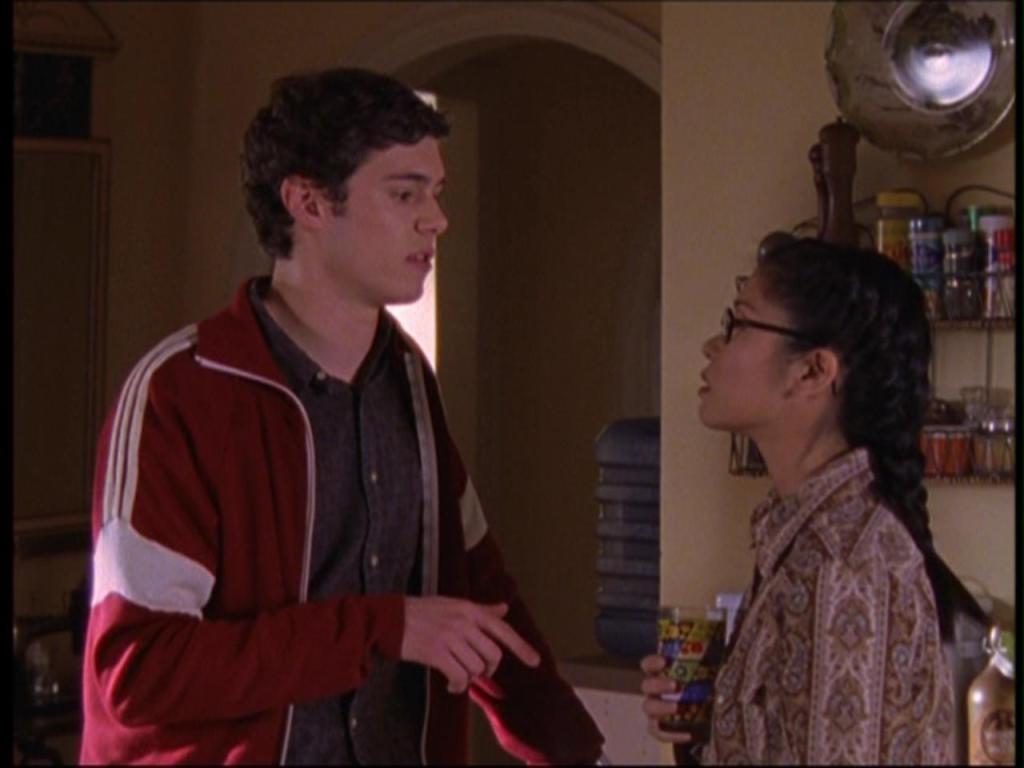
EMILY: Oh, and that attitude – I wanted to slap that monosyllabic mouth of his. And God forbid they’re in another accident together or his heap of a car breaks down and Lord Jim has decided cell phones are beneath him and they’re stranded in the middle of nowhere. How can you let this happen? He had a black eye. He belongs in jail!

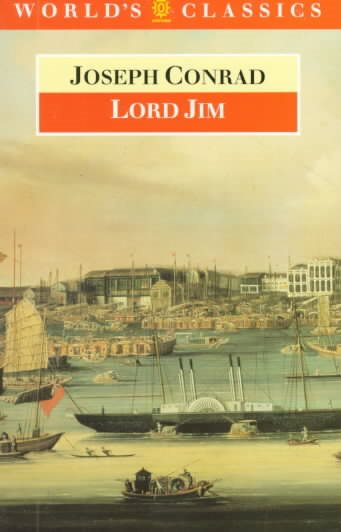
Lord Jim, 1900 novel by Joseph Conrad. The novel features a young British seaman named Jim, who is working on a steamship where the captain and crew abandon the passengers when the ship begins sinking. Although Jim argued for the passengers being saved, he leaps into the rescue boat with the rest of the crew.

Wracked with guilt, Jim finds other jobs on ships, but leaves abruptly once his disgrace becomes known. After getting into a fist fight in Bangkok, Jim is offered the chance to redeem himself by becoming a trade representative in a village on a remote island that that is shut off from most commerce. He becomes successful here, and called “Lord Jim” by the villagers, but comes to grief two years later.

Jim doesn’t seem terrifically similar to Jess, and I can only think Emily is thinking of the fist fight (which Jess didn’t get into, but she thinks he did), and the life of disgrace which leads him to find sanctuary in a remote village (which is how she apparently sees Stars Hollow!).
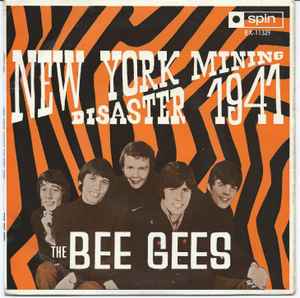
Dean Martin, New York Mining Disaster

LORELAI: Then we picked the same Dean Martin song on the jukebox twenty-five times and people started complaining, so we picked the Bee Gees’ “New York Mining Disaster” and they begged for Dean Martin back.

Dean Martin, previously discussed. It would be interesting to speculate which Dean Martin song they kept playing – my guess would be his signature song “That’s Amore”, which begins, When the moon hits your eye like a big pizza pie. It makes sense that a pizza place would have that song on the jukebox. Unfortunately, it looks as if John’s of Bleeker Street doesn’t actually have a jukebox. Possibly the jukebox was somewhere else.

“New York Mining Disaster 1941”, the 1967 international debut single by the Bee Gees, written by Barry and Robin Gibb, and their first song to hit the charts in both the UK and US. It received a lot of attention, because rumours had been circulated that the Bee Gees were actually The Beatles, playing under assumed names. It went to #12 in the UK and #14 in the US, and was most popular in the Netherlands and New Zealand, at #3.

Barry and Robin wrote the song sitting in darkness during a power cut. The song recounts the story of a miner trapped in a cave-in. According to the Gibb brothers, the song was inspired by the 1966 Aberfan disaster in Wales. According to Robin, there actually had also been a mining disaster in New York in 1939, but not in 1941, and he thought “New York” sounded more “glamorous”.

Moose Murders

ALEX: This is the worst piece of crap I’ve ever seen … I saw Moose Murders. This stinks worse.

Moose Murders, a play by Arthur Bicknell, self-described as a mystery farce. A notorious flop, it is now widely considered the standard of awfulness against which all Broadway failures are judged, and its name has become synonymous with those distinctively bad Broadway plays that open and close on the same night. It had its single performance (excluding 13 previews) at the Eugene O’Neill Theatre on February 22, 1983.

Despite the scathing reviews and its bad reputation, it has been staged by community theatre groups a number of times – it’s possible Alex saw one of these, rather than the original Broadway show in the early 1980s, which seems a bit unlikely.

Big White Stetson

JESS: What if Dean had sucker-punched me and I had to defend myself? You’re not even considering the possibility that that’s what happened?
RORY: Dean wouldn’t do that.
JESS: Oh, no, he might get his big white Stetson dirty.

Stetson, a brand of hat symbolic of the pioneering West, made by the John B. Stetson Company, which was founded in Philadelphia in 1865. They quickly became associated with legends of the old West who wore Stetsons, such as Buffalo Bill, Calamity Jane, Will Rogers, and Annie Oakley.

Later, cowboys in Western movies were invariably shown wearing Stetson hats – in film symbology, the “good guys” are often thought of as wearing white Stetsons, and the “bad guys” black ones. In actual fact, it isn’t as clear cut as people seem to remember this trope, but film and TV cowboys such as Tom Mix and the Lone Ranger must have helped cement the idea of the good guy wearing a white hat.

Big Rig, Bennies and Goofballs

EMILY: There was something with a big rig. Oh, those things, they scare the life out of me. And apparently, all the men who drive them are hopped up on bennies and goofballs.

Big rig, informal English for a large truck, an 18-wheeler – otherwise known as a semi-trailer truck, a semi-trailer, a semi-truck, or just a semi.

Bennies, slang for the drug Benzedrine, an amphetamine used recreationally since the 1920s.

Goofballs, slang for tranquilisers or sleeping pills, used as a recreational drug. Note that you can’t really get “hopped up” on sleeping pills, and taking them alongside amphetamines seems counterproductive, suggesting that Emily’s knowledge of the drug scene is limited. I think this is her attempt to seem cool and hip in front of Jess.

Another of Lane’s Zany Schemes

LANE: At 3:40, my mom will be on her way to the yarn store for her bimonthly sew-a-thon with Lacey Schwartz and Bich Ho.
DAVE: The yarn store’s on Peach.
LANE: Plum.
DAVE: That cuts us off from our usual route to the interstate.
LANE: There’s a back road that circles around it, but it’s gonna be muddy from the rains.
DAVE: How about I have the guys take the usual route, I’ll go by foot on Peach, down the alley behind Al’s, over the fence, and they can pick me up a half a mile down by the Shell station.
LANE: Perfect. Uh, what, that’s not complicated.

Lane and Dave have come up with some ingenious plan to avoid seeing Mrs Kim, so that she doesn’t realise Dave is in (gasp) a band. And even worse, that Lane is too. Lane confessed her feelings about Dave to her mother at the family wedding, and we don’t know any more since then. Presumably Mrs Kim is still unable to move on from Dave not being Korean.

We learn a little bit of back story during this scene. Mrs Kim’s life apparently doesn’t revolve entirely around work, church, and family – she also attends a sewing circle (?) once a fortnight at the local yarn store with two women named Lacey Schwartz and Bich Ho (Ho is a common Vietnamese surname, and Bich is a Vietnamese girl’s name meaning “jade”).

The yarn store is on Plum Street, one street over from Peach Street, which is where Dean and his family live. Lorelai described this area to Jess as a desirable residential neighbourhood, so it’s slightly surprising to learn it has shops around it as well – and also leads to the alley behind Al’s, which is always implied to be in the centre of town. Maybe Peach is a very long street? Incidentally, I wonder if this alley is the one Lorelai and Rory were shown walking down in “The Break Up, Part 2”?

Unlike Henry, Dave readily fits in with all of Lane’s zany schemes to keep secrets from her mother, and even comes up with own solutions. They are clearly made for each other.

“The woman taught me everything”

RORY: The woman taught me everything I’ve already forgotten about dancing, baton twirling and gymnastics.

We learned in “Rory’s Birthday Parties” that Miss Patty is Rory’s former ballet teacher. Apparently she also learned gymnastics and baton twirling from her. Rory is physically awkward and slightly clumsy – I can’t imagine she did well in any of these classes. It’s also amazing she managed to learn ballet and gymnastics, and still be that physically awkward!

Dean Martin Roast

LORELAI: It’s like a Dean Martin Roast.
RORY: Those are never funny to me.
LORELAI: Yeah, they’re mean.

The Dean Martin Celebrity Roast is a series of television specials hosted by entertainer Dean Martin, airing from 1974 to 1984. For a series of 54 specials and shows, Martin and his friends would “roast” a celebrity. Roasting means to joke about and insult a celebrity, while also honouring them. The roasts were patterned after the roasts held at the New York Friars’ Club.

The specials were released on DVD, which is presumably how Rory was able to watch them. I find it unbelievable they would buy DVDs they didn’t find funny, or that they dislike “mean jokes” – Lorelai and Rory are both pretty cruel when it comes to humour. I can only think this is a little act they are putting on for Emily.

Cabana Boy, Schlepped

EMILY: And then she just brushed me off with a wave of her regal hand. Not even a word, just a . . . like I’m her cabana boy. Next thing you know, instead of just walking out of the room, she’ll make me bow and back out. Imperious attitude, she never gives it a rest. I schlepped her to the doctor the other day – by command, not request – and the elevator operator there greeted us nice and friendly. Her doctor’s on the second floor and by the time we got there, that operator was in tears.

In North America, a cabana is a hut, cabin, or shelter at beach or swimming pool, often part of a resort. They can be quite elaborate or luxurious. The word comes from the Spanish for “hut, cabin”. A cabana boy [pictured] is a young male attendant who serves guests from the cabana – typically, these young men are treated like servants by the wealthy, and will be willing to do many little tasks for them in the hopes of receiving tips or favours in return.

Schlepped: Informal American English, meaning “walked or proceeded somewhere in a reluctant manner, typically in the fulfilment of some unwanted burden or duty”. It is from the Yiddish shlepn, meaning “pull, drag”.

Trix moved back to her house in Hartford in January 2003, citing health concerns. It’s only early February, and she is already driving Emily up the wall, treating her like a servant.

Note that Trix had a doctor’s appointment, as a reminder that her health needs monitoring. By the way, Trix previously said that she couldn’t abide women driving, so how did Emily transport her to the doctor’s office?

Georgia

During the scene at the nursery, we get a very good shot of Georgia in her crib at the nursery. The baby portraying Georgia is unlisted in the credits, and as usual with TV and film infants, they are clearly at least three months old.

The card on her crib says she is named Georgia, and her mother is S. Tinsdale (no father on the card, presumably because he isn’t a patient).

It gives her date of birth as 31st January 2003, although she was born at 1.17 am – which means she can’t have been born on the 31st January! Sherry went into labour on the night of the 31st January, meaning that if Georgia was born at 1.17 am the next morning, it would be the 1st of February. Can nobody gets babies’ birthdays correct on this show?

Her weight at birth was 6 pounds and 20 ounces, just a little under the average for a baby girl, and she is 18.9 inches long – again, just a smidge under the average. One of her doctors was Schreiber, and I’m afraid I can’t read the second name or what their role was. It looks something like Sasaberi.