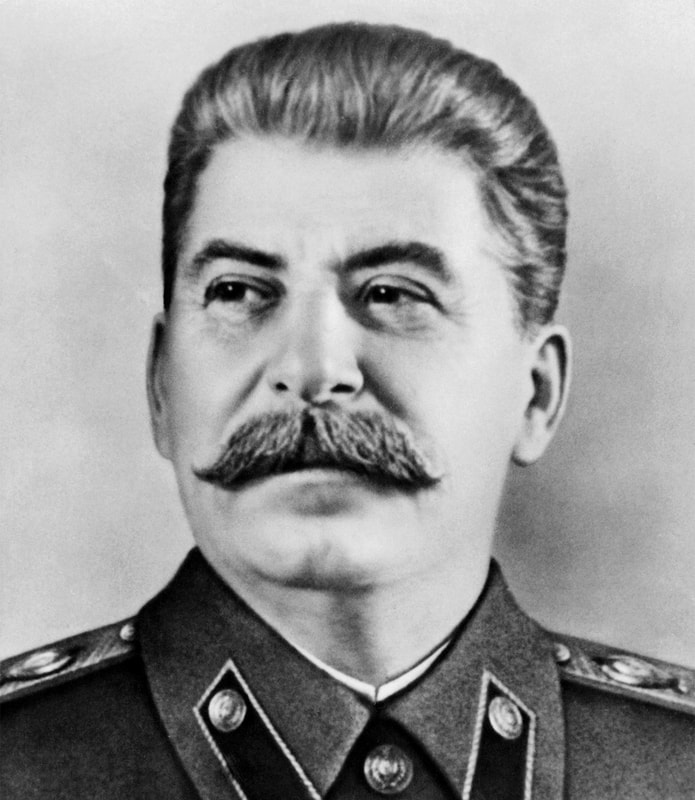
LORELAI: You know who’s behind you? It’s Joseph Stalin, my good friend. What are you doing back from the dead, Joe?
Joseph Stalin, previously discussed.
Footnotes to the TV series
LORELAI: You know who’s behind you? It’s Joseph Stalin, my good friend. What are you doing back from the dead, Joe?
Joseph Stalin, previously discussed.
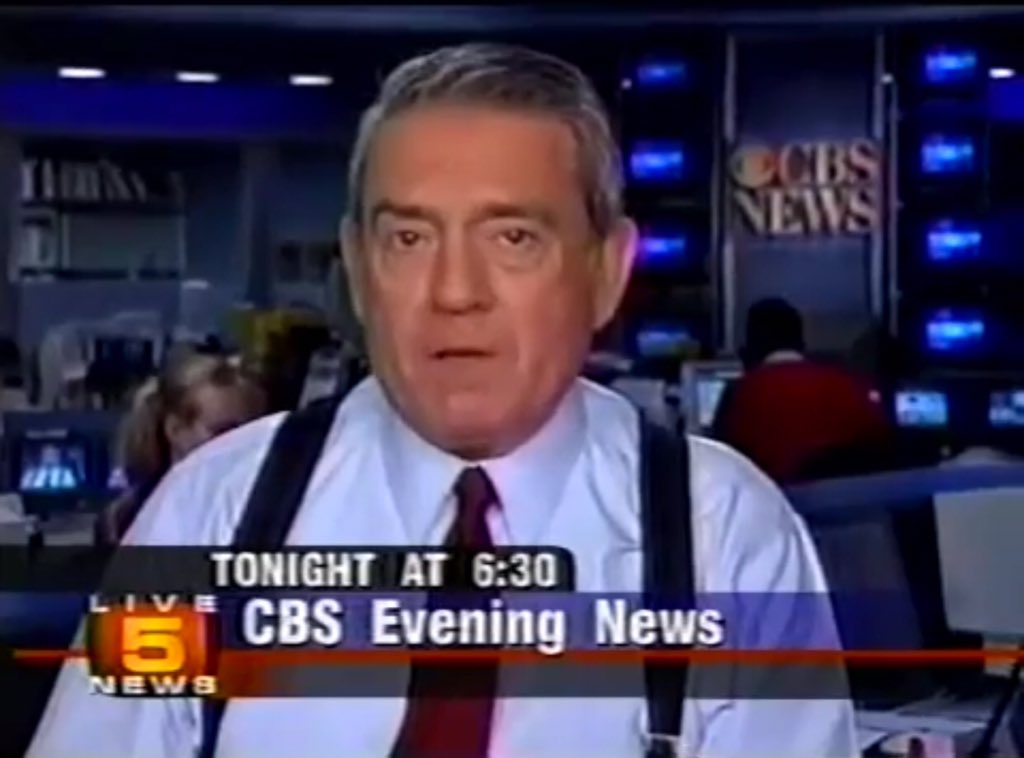
SOOKIE: They still say, ‘And now the CBS Evening News with Dan Rather.’ You see? Dan is still associated with it even though he’s off snorkeling or something, just like I’m gonna be associated with the dinner because Bob is substituting for Sookie.
Daniel “Dan” Rather (born 1931), journalist, commentator, and former national evening news anchor. Rather became a national name after his reporting saved thousands of lives during Hurricane Carla in 1961, creating the first radar weather report, and helping to initiate the successful evacuation of 350,000 people.
Rather reported on some of the most significant events of the modern age, such as the fall of the Berlin Wall, the Gulf war, 9/11, the second Iraq war, and the war on terror. He famously reported from Dallas at the time of John F. Kennedy’s assassination. He was promoted at CBS News, where he served as White House correspondent beginning in 1964. He covered the presidency of Richard Nixon, including the Watergate scandal, and the president’s resignation.
In 1981, Rather was promoted to news anchor for the CBS Evening News, a role he occupied for 24 years. Along with Peter Jennings at ABC News and Tom Brokaw at NBC News, he was one of the “Big Three” nightly news anchors from the 1980s through the early 2000s. He frequently contributed to CBS’s weekly news magazine, 60 Minutes.
After a 2005 controversy over fabricated documents, he was fired in 2006. He now has a news program on cable television, a Youtube channel, and a Substack newsletter.

LORELAI: I can’t believe [the Beales] were related to Jackie.
RORY: Well, the Kennedys kind of hid them in the background for many years.
LORELAI: Well, when you’re a Kennedy, how do you even choose who in the family to hide?
I’m not sure that there’s much evidence that the Kennedy family “hid” Jackie’s relatives away. Jackie and her sister Lee Radziwill certainly didn’t seem to pay them much attention until they began to be featured in the tabloid press as eccentric upper-class hoarders.
However, it’s said Jackie and Lee paid for Grey Gardens to be cleaned up to some extent – the house in the documentary is actually much less of a hovel than it had been previously. And it was Jackie and Lee who approached the filmmakers about the documentary, hoping it could be a way for the Beales to make some money, so they actually helped give them publicity, rather than hid them away.
Lorelai’s snarky comment reflects the number of scandals the Kennedy family have had over the years. She may be specifically thinking of Rose Marie “Rosemary” Kennedy (1918-2005) [pictured], the sister of President John F. Kennedy. Due to a difficult birth, she was developmentally delayed, although it is unknown to what extent, as the Kennedy family kept her life private.
When Rosemary was in the early twenties, she became increasingly irritable, and went into convulsions, as well as attacks of rage in which she would hit other people. At the age of 23, her father, Joseph Kennedy, agreed to her being lobotomised to help control her violent mood swings – he did not tell his wife until the procedure had taken place.
The lobotomy had a devastating effect on Rosemary, whose mental capacity became that of a two year old. She couldn’t walk or speak intelligibly, and was incontinent. She was immediately institutionalised, and separated from her family for over 20 years – her siblings did not know where she was, and the press was told she was “reclusive”. After her father’s death in 1969, she gradually became part of the family again. By that time, she had learned to walk, although with a limp.
Some say that Rosemary was one of the inspirations for Eunice Kennedy Shriver to later found the Special Olympics, although Eunice said that the Games were never about one individual.

[Lorelai and Rory are on the couch watching television]
RORY: I like these women.
LORELAI: I love these women.
During the cold open, Lorelai and Rory watch Grey Gardens, a 1975 documentary by Albert and David Maysles. The film depicts the everyday lives of two reclusive, upper-class women, a mother and daughter both named Edith Beale, who lived in poverty at Grey Gardens, a derelict mansion in the wealthy Georgica Pond neighbourhood of East Hampton, New York.
Edith Ewing Bouvier Beale (1895–1977), known as “Big Edie”, and her daughter Edith Bouvier Beale (1917–2002), known as “Little Edie”, were the aunt and the first cousin, respectively, of former US First Lady Jacqueline Kennedy Onassis. The two women lived together at the Grey Gardens estate for more than fifty years with limited funds in increasing squalor and isolation.
Throughout the fall of 1971 and into 1972, their living conditions—their house was infested by fleas, inhabited by numerous cats and raccoons, deprived of running water, and filled with garbage and decay—were exposed as the result of an article in the National Enquirer and a cover story in New York Magazine after a series of inspections by the Health Department.
With the Beale women facing eviction and the razing of their house, in the summer of 1972 Jacqueline Onassis and her sister Lee Radziwill provided the necessary funds to stabilize and repair the dilapidated house so that it would meet village codes.
Albert and David Maysles became interested in their story and received permission to film a documentary about the women, which was released in 1976 to wide critical acclaim. Their direct cinema technique left the women to tell their own stories.
The film was controversial from the start, with some feeling that the Beales were being exploited, and that because they were paid for taking part, the documentary was ethically compromised.
“Big Edie” died in 1977 and “Little Edie” sold the house in 1979, dying in Florida in 2002. The fashion designer Liz Lange now owns the house, which has been extensively remodelled and landscaped.
Lorelai and Rory both enjoy eccentric biographies, and stories about mother-daughter relationships, so this film is a natural fit for them. It’s clear they can see a little of themselves in “Big Edie” and “Little Edie” – like the Beales, the Gilmores share the same name. Other similarities are that their home is similarly described as needing work (“The Crapshack”), and they live a life of of genteel squalor, doing exactly as they please. Most importantly, like the Beales, the Gilmore girls are intensely codependent.
It’s hard not to think that Gilmore Girls was influenced to some extent by Grey Gardens – their names even have the same initials!

DEAN: What do you want?
RORY: Do you remember that girl Butterfly who lived in a tree for a year? I can officially attest that she was nuts.
Rory refers to Julia “Butterfly” Hill (born 1974), environmental activist. She is best known for having lived in a 180 foot tall, roughly 1500-year-old California redwood tree for slightly more than two years between 1997 and 1999. Hill lived in the tree, affectionately known as Luna, to prevent loggers from cutting it down. She is the author of the 2000 book The Legacy of Luna and co-author of One Makes the Difference. Her story has often been alluded to in popular music and culture.
Rory climbs a tree in order to reach Dean while he’s in his bedroom, in the same way she climbed a tree to talk to Lane when she was grounded. There is a slight feeling of Romeo and Juliet, with Rory taking Romeo’s role in talking to Juliet while she’s on her bedroom balcony.

RORY: I can’t believe I had a meeting at Yale today … And I can’t believe the only name that popped into my head when he asked for my role model was Gloria Estefan.
Gloria Estefan (born Gloria Garcia in 1957), Cuban-American singer, actress, and businesswoman. She began her career as lead singer of Miami Sound Machine, previously mentioned, and released her first solo album in 1989. She has 38 #1 hits, and her success has been credited with paving the way for other Latin musical artists.
Hailed as “the Queen of Latin Pop” by the media, Gloria Estefan has won seven Grammy and Latin Grammy Awards, multiple Billboard awards, was BMI Songwriter of the Year, received the Presidential Medal of Freedom in 2015, was a Kennedy Center Honors recipient in 2017, and was honoured with an American Music Award for Lifetime Achievement. She was inducted into the Songwriters Hall of Fame, and has a star on the Hollywood Walk of Fame, and the Las Vegas Walk of Fame.
She has been named one of the top artists of all time, is the second best selling female Latin artist in history, and one of the best-selling female singers of all time.

LORELAI: What’s he so excited about?
EMILY: Oh, who knows? Dickens must have dropped a pencil here at some point.
English author Charles Dickens, previously mentioned.
Charles Dickens made his first trip to the US in 1842, and did visit New Haven and Yale University, praising both. In 1868, after another trip, he described Hillhouse Avenue in New Haven as the most beautiful street in America. It’s possible he really did drop a pencil somewhere on campus!
Yale University does have a quill pen once owned by Charles Dickens [pictured], held at the Beinecke Rare Book and Manuscript Library at Yale University. Richard may have taken Rory to see it, inspiring Emily’s comment.

EMILY: What can we do in a bathroom?
LORELAI: Meet George Michael.
George Michael, born Georgios Panayiotou (1963-2016), English singer, songwriter, and record producer. He is considered one of the leading icons of the MTV generation, and a leading creative force in music production, songwriting, vocal performance, and visual presentation.
George Michael rose to fame as one half of the music duo Wham! Their first two albums, Fantastic (1983), and Make it Big (1984), went to #1 in the UK and the US, and their biggest hit singles include “Wake Me Up Before You Go-Go”, and “Last Christmas”.
George Michael’s first solo single was “Careless Whisper”, which was released on Make it Big, and went to #1 globally. His debut solo album Faith was released in 1987, going to #1 around the world, and producing four #1 hit singles. He was the best-selling musical artist of 1988, and Faith won a Grammy in 1989. He released three more best-selling albums between 1990 and 2004.
Lorelai refers to the fact that George Michael’s sexuality became public knowledge after he was arrested in 1998 for soliciting an undercover policeman in a public toilet in Will Rogers Memorial Park in Beverley Hills, California. The charge was public lewdness. He was fined $810 and sentenced to 80 hours community service. He later made fun of the incident in the music video for his song “Outside”.
George Michael was accused of taking part in anonymous public sex in a toilet on Hampstead Heath in London in 2006, and in 2006 and 2008, he was arrested for possession of drugs in public toilets in London. But that’s all in the future at this point.

EMILY: Richard Gilmore, you are going to give these girls the wrong impression.
RORY: What impression is that, Grandma?
LORELAI: That you were the Helena Bonham Carter of the society set?
Helena Bonham Carter (born 1966), English actress. She rose to fame in 1985 film A Room With a View, and became a favourite choice for playing a virginal “English rose” in period dramas – something she was uncomfortable with. Bonham Carter gained worldwide recognition in the 2000s, and has had many major roles, including awards for biographical film and TV The King’s Speech, Enid, and The Crown.
Lorelai is referring to the fact that in 1994, Helena Bonham Carter began an affair with fellow actor Kenneth Branagh while they were filming Mary Shelley’s Frankenstein, even though Branagh was married to actress Emma Thompson at the time (they married in 1989).
Branagh and Thompson divorced in 1995, and Bonham Carter and Branagh broke up in 1999. They have all made peace with one another now, and the three of them had major roles in the Harry Potter film series. Helena Bonham Carter married director Tim Burton in 2001, the year before this episode aired. They divorced in 2014.
Amy Sherman-Palladino seems to have modelled her image very heavily on Helena Bonham Carter, who is known for her eccentric fashion and dark aesthetic, and for playing quirky female roles. I’d imagine she would be one of Sherman-Palladino’s favourite actresses, as well as her style icon.

EMILY: And then he’d talk about the paintings he had seen in Paris and the colors of Titian, and by the end of the date, you thought he was the most brilliant man in the entire world.
LORELAI: Using Titian to score. Even Titian didn’t do that.
Tiziano Vecelli, known in English as Titian (c.1489-1576), Italian painter of the Renaissance and considered the most important artist of the 16th century Venetian school. Titian was one of the most versatile of Italian painters, equally adept with portraits, landscape backgrounds, and mythological and religious subjects. His painting methods, particularly in the application and use of colour, exercised a profound influence not only on painters of the late Italian Renaissance, but on future generations of Western artists.
[Painting shown is Titian’s Bacchus and Ariadne].
 The Annotated Gilmore Girls