In the early 2000s, it was free to apply to up to three colleges, but after that you had to pay a small application fee for each one. Because of this, it was common to only make three applications, and it looks as if Rory applied to three universities: Harvard, Princeton (where her paternal grandfather went), and Yale (where her maternal grandfather went). She probably didn’t want to ask Lorelai for the money for further applications, knowing that she’d be upset about it, nor did she want to go behind her mother’s back and ask her grandparents for the money.
Lorelai acts as if applying to Yale is a complete shock, even though she knows Rory had an interview there, and she herself read a brochure about it, as if she was trying to get used to the idea. Apparently she needed a lot more time for it to sink in.
DOUGLAS: We have a grandson your age, he’s going through hell.
NATALIE: He’s already been turned down for early admission to Stanford, his dream.
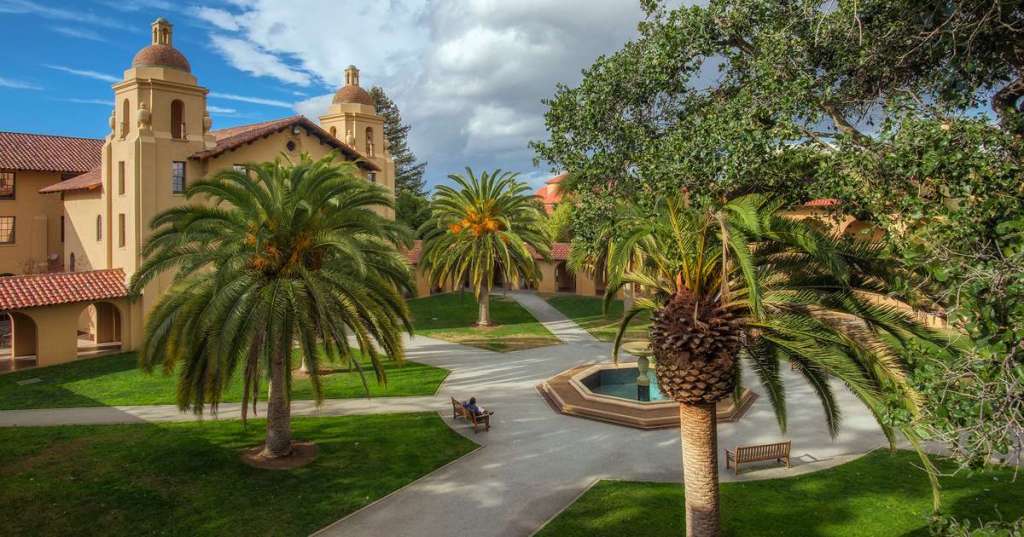
Stanford University, officially Leland Stanford Junior University, is a private research university in Stanford, California, in the San Francisco Bay area, ranked among the top universities in the world. It was founded in 1885 by US Senator and former governor of California Leland Stanford and his wife Jane, in memory of their only child, Leland Stanford Jr, and opened in 1891 as a coeducational institution.
After World War II, the university’s provost, Frederick Terman, supported faculty and graduates to build a self-sufficient local industry that would later become known as Silicon Valley. It also houses the conservative public policy think tank, the Hoover Institution, one of the most influential of its kind in the world.
85 Nobel laureates, 29 Turing Award laureates, and eight Fields Medallists have been affiliated with Stanford as students, alumni, faculty, or staff. Stanford alumni have founded numerous companies, which combined produce more than $2.7 trillion in annual revenue and have created 5.4 million jobs as of 2011, roughly equivalent to the seventh largest economy in the world.
Stanford has won more College Athletics team championships than any other university, and Stanford students and alumni have won almost 300 Olympic medals.
Stanford is the alma mater of US President Herbert Hoover, 74 living billionaires, and 17 astronauts. Its alumni include the current presidents of Yale and MIT and the provosts of Harvard and Princeton. It is also one of the leading producers of Fulbright Scholars, Marshall Scholars, Rhodes Scholars, and members of the United States Congress.
Stanford is one of the hardest universities to get into, with an acceptance rate of less than 5% – that’s tougher than both Harvard and Yale, and indeed, all the Ivy League universities. It’s perfectly believable that Douglas and Natalie’s grandson didn’t get accepted.
In real life, the deadline for early admission to Stanford is November 1, and notifications aren’t sent out until mid-December, so Douglas and Natalie’s grandson couldn’t really know he’d been turned down by Thanksgiving. (Although, if it is just before Christmas, according to the show’s actual timeline, this would make sense!).
Nordstrom is a luxury department store headquartered in Seattle, Washington, and founded by John W. Nordstrom and Carl F. Wallin in 1901. The original Wallin & Nordstrom store operated exclusively as a shoe store, and a second Nordstrom’s shoe store opened in 1923. The growing Nordstrom Best chain began selling clothing in 1963, and became the Nordstrom full-line retailer that presently exists by 1971.
There is a Nordstrom at Westfarms Mall in West Hartford.
LUKE: Well, that we’re not Native Americans who got their land stolen in exchange for smallpox infested blankets.
Luke refers to the commonly held belief that British colonists gave Native American tribes blankets that were infected with smallpox, as an act of genocidal biological warfare. There is only one recorded instance of this actually being planned, in Pennsylvania. It is unknown whether this cruel scheme was ever put into operation, and if so, whether the blankets made anyone ill – they were old, and may have no longer been infectious.
Nine months later, smallpox was raging in the community, but it was everywhere by then, and cannot be traced to a blanket. There is no suggestion that land was traded in exchange for the blankets (if they were given at all).
However, while Luke’s statement isn’t strictly correct, there is no denying the overall truth that Native Americans had their land taken from them, often brutally, and that their population was devastated by smallpox, to which they had no immunity.
The Visigoths, an early Germanic people. Under their first leader, Alaric I, they invaded Italy and sacked Rome in 410. They later settled in southern Gaul and Hispania (modern France and Spain), and maintained a presence there from the 5th to the 8th century AD.
Lorelai refers to the popular idea of medieval castle defenders pouring boiling oil onto their assailants in order to protect themselves during a siege. There are only a few known instances of it actually happening (none against the Visigoths).
Historians think that the oil would have been hot, rather than boiling, and that it had the added advantage of making everything too slippery to climb. It probably wasn’t used very often, as oil was so expensive that hardly anyone had enough of it in stock. Boiling water and hot sand were far more commonly used.
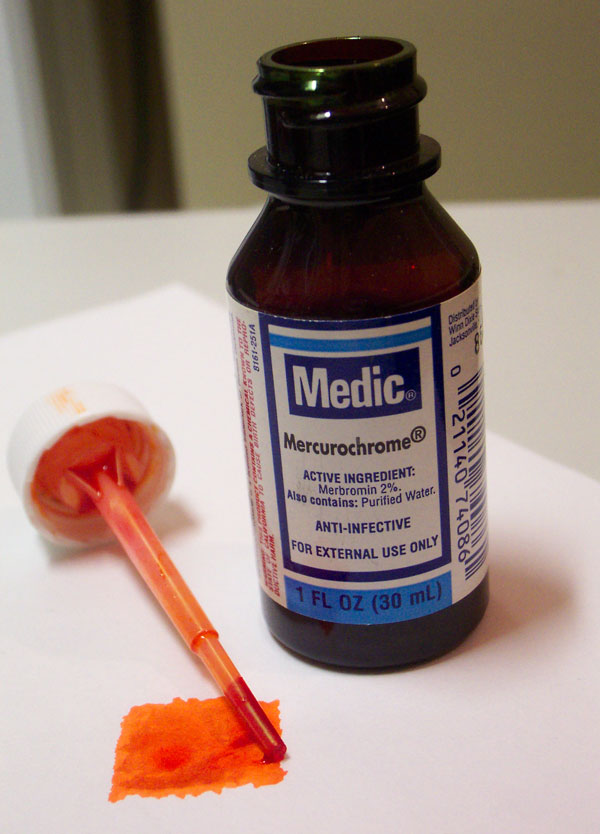
LORELAI: Looks like a big scratch. Wow, Bactine, Neosporin, Mercurochrome – what’s with all the pharmacologicals?
Bactine: an antiseptic treatment containing lidocaine anaesthetic, first marketed in 1950.
Neosporin: broad spectrum antibiotic cream containing anaesthetic, approved for use in the US in 1971.
Mercurochrome: a topical antiseptic with a dye which stains the wound bright red. First developed in 1918, its distribution in the US was halted in 1998, due to concerns about it containing mercury. Somehow it is still available for sale in Stars Hollow in 2002! It is now manufactured in the US without any mercury.
LOUISE: I’m having [Thanksgiving] dinner with my dad.
MADELINE: Isn’t he still in jail?
LOUISE: Yes, but his company donated some treadmills for the inmates so he swung a special trailer for dinner that they’re gonna set up for us in the parking lot. We have it for about two hours and then one of the Manson girls gets us.
In the episode “Back in the Saddle”, Louise mentioned that her father was due in court, on mysterious charges (she didn’t bother finding out what he had been arrested for). Now it’s seven months later, and Louise’s father is undertaking his sentence – for whatever it was. Madeline refers to it as “jail”, rather than “prison”, possibly suggesting a shorter, lighter sentence (although sometimes people use the word jail for both jail and prison, so that’s not certain at all).
It does sound as if Louise’s father is in a low or medium security facility, since he is permitted to spend his Thanksgiving dinner in a trailer in the parking lot with his daughter (and possibly other family members, it seems unlikely only Louise would go and see him). These trailers are a reward for good behaviour given to model prisoners, so Louise’s father is clearly well-behaved – even the donation of treadmills to the prison would not be enough on its own. Connecticut is one of only four states that allow extended visits like this (the others are California, New York, and Washington).
Louise says the trailer then goes to “one of the Manson girls”, referring to the female members of the Manson family who were convicted for their crimes. In real life, they were incarcerated in California, and in high security prisons, so this could not have really happened. (Squeaky Fromme was in a high security mental treatment facility in Texas).
Interestingly, there is a state prison in Cheshire, Connecticut called the Manson Youth Institution, for men under the age of 21. Louise can’t be referring to that either, as they are young men, not women, and they are not permitted visits such as she describes.
It is just possible that Louise’s father is being held at the federal correctional facility in Danbury, Connecticut [pictured], a medium and low security prison and satellite prison camp which has facilities for both male and female inmates – so if Louise’s dad’s trailer wasn’t going to a “Manson girl”, it could feasibly be going to a female prisoner, at least. The facility in Danbury has often featured in pop culture, including Orange is the New Black.
EMILY: Well, I certainly hope you’re feeling better now because I want you to come to dinner tomorrow night.
LORELAI: Tomorrow? Tomorrow’s Thanksgiving.
In 2002, Thanksgiving Day was on Thursday 28 November – very close to the original episode broadcast date of 26 November.
There has actually been far too many events for them to have all occurred before the end of November, and by my reckoning it’s almost Christmas. But we’re in TV Land here, where the timeline can be stretched a long way.
[Later that night, Rory walks into her bedroom, turns out the light and tries to go to sleep. A moment later, she turns the light back on, grabs her Yale brochure from her night table and starts reading it. Upstairs, Lorelai is reading the same brochure in her bedroom.]
The episode ends with both the Gilmore girls reading a Yale brochure, so the viewer can tell that Rory is now seriously considering applying, and Lorelai is also trying to get used to the idea.
The application deadline for Yale is immediately after the New Year, in early January, so Rory has time still to put together a good application.
[Lorelai and Rory get out of a cab and start walking down the sidewalk]
LORELAI: Thanks. Uh, well, here’s the good news. You no longer have to worry about which college to go to, ’cause that cab ride was your college tuition.
According to a taxi fare calculator I consulted, it would cost about $85 to travel by cab from Yale University to Washington Depot. This seems quite cheap to me, and as Stars Hollow seemed to be in the Wallingford area in Season 1, that would be even cheaper – about $40.
Does that sound correct? I know you have to add extra for the tip in the US, and there’s probably surcharges for heavy traffic and paying tolls, but even so, that seems pretty reasonable for a cab ride to another town about an hour’s drive away.
Lorelai and Rory did stop off for tacos at Hector’s on the way home, which would have been extra money for the taxi. It is dark when they get back to Stars Hollow, so it seems that they spent a bit longer in New Haven, even allowing for early nightfall in November.





 The Annotated Gilmore Girls