Brandeis

PARIS: You can go somewhere else. Go to Brandeis. Brandeis is nice.

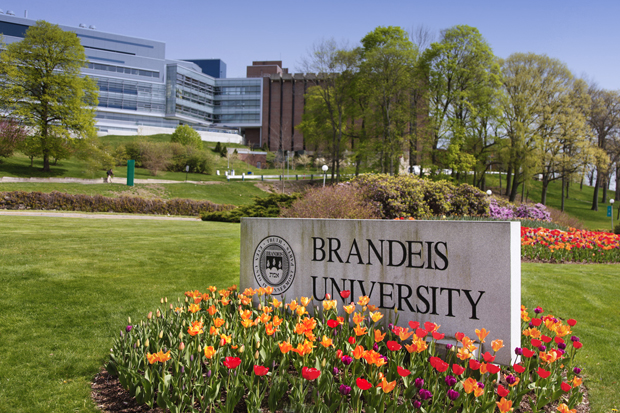
Brandeis University is a private university in the city of Waltham, Massachussetts, just outside Boston. It was founded in 1948 as a secular, non-sectarian, co-educational university, sponsored by the Jewish community.

It has a strong focus on the liberal arts, and promotes tolerance on its campus. About half the student population is Jewish, and Jewish culture is strongly in evidence. It has a reputation (I don’t know how earned or how accurate) for being slightly quirky and accepting of social misfits.

It is amusing that Paris suggests Rory attend a Jewish-sponsored university near Boston while she strives to get into a Christian-sponsored university near Boston. Perhaps Brandeis is a “nice” (i.e. liberal, tolerant, accepting) school that others (staff at Chilton?) have suggested Paris might like to attend if she doesn’t get into Harvard, or even prefer to Harvard, (since she’s a Jewish social misfit), so she turns it back on someone else.
“Ten generations of Gellers”

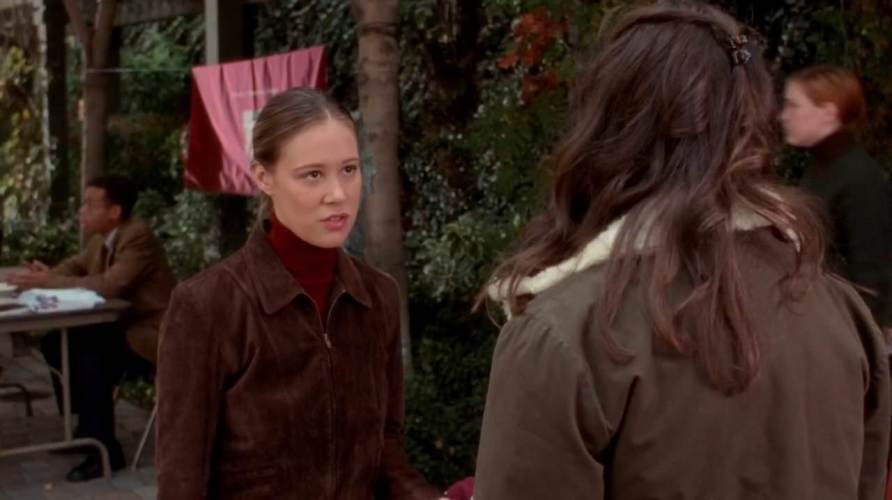
PARIS: Ten generations of Gellers have gone to Harvard. I have to go to Harvard.

According to Paris, the Geller family have been attending Harvard University since the 18th century. This doesn’t seem possible, as the Gellers are Jewish, and at that time Jews weren’t permitted to attend Harvard (and tended to be excluded from higher education, and many other institutions). The first Jewish student at Harvard in 1720 had to convert to Christianity, and still wasn’t really accepted. Even in the twentieth century, there were heavy restrictions on Jews attending Harvard.

It is possible that Paris is lying in a desperate attempt to persuade Rory that she “deserves” to go to Harvard more than Rory does. Of course later on Paris and Rory do attend the same university together.

The Pope

Lorelai jokes that the pope already has plans, but he’s trying to get out of them so he can attend Rory’s birthday party.

The pope is the Bishop of Rome and the leader of the Catholic Church, also the head of state in Vatican City. One of the most enduring institutions in the world, the papacy has played a prominent role in world history. By tradition, the popes trace their line of succession back to St. Peter, and the title is from the Latin for “father”.

In 2000, the pope was John Paul II (1920-2005), who was elected in 1978. Born Karol Wojtyla in Poland, he was the first non-Italian pope since the 16th century, and one of the longest-serving popes in modern history. He greatly improved the Catholic Church’s relationship with other religions, and is credited with helping to end Communism in Europe. He was canonised a saint in 2014.

Worship pudding

EMILY: Yes, but you like pudding.
LORELAI: Oh, I love pudding. I worship it. I have a bowl up on the mantel at home with the Virgin Mary, a glass of wine, and a dollar bill next to it.

Another reference to the Virgin Mary – interesting as the saint is the inspiration for the Gilmore surname. Lorelai’s statement brings to mind those primitive shrines where worshippers place votive offerings in front of saint’s statues, such as flowers or coins. Note the implication from Lorelai that she worships alcohol and money.

Dalai Lama

LUKE: The counter is a sacred space. My sacred space. You don’t do yoga on the Dalai Lama’s mat and you don’t come behind my counter, period.

The Dalai Lama is the title of the spiritual leader of the Tibetan people; part of the Gelug school of Tibetan Buddhism, and a symbol of Tibetan nationalism. The title was created in the 16th century, and literally means something like “great guru”.

The current Dalai Lama is the 14th, named Tenzin Gyatso (born Lhamo Thundup in 1935). Living in exile from his country in India, the Dalai Lama has become not just a Tibetan or Buddhist figurehead, but a global spiritual leader.

“Jesus, Mary, Joseph, and a camel”

LORELAI: Jesus, Mary, Joseph and a camel [whispers] This is really bad coffee.

“Jesus, Mary, and Joseph” is a specifically Catholic expletive, which expands on the expletive “Jesus!” by adding his earthly parents. Lorelai humorously expands it further by adding a camel.

It suggests that Lorelai is familiar with the original expletive through contact with a Catholic friend or acquaintance, but who this might be remains a mystery.

Joan of Arc

LORELAI: Sookie, I need coffee to go.
SOOKIE: [holding her head in her hands] There’s fresh over there.
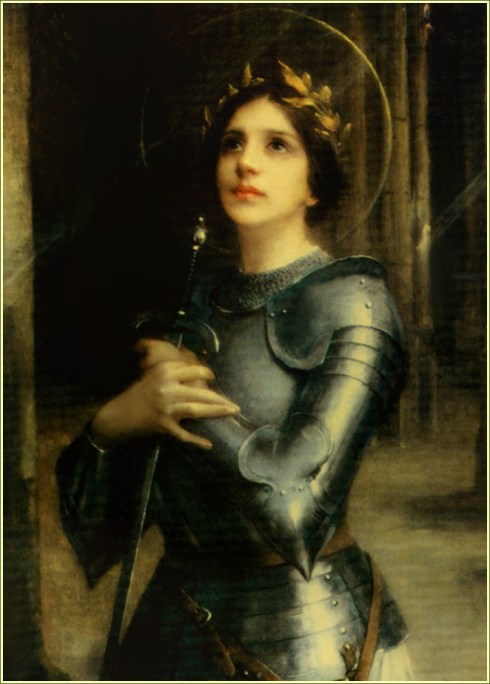
LORELAI: Ooh, good. [picks up an empty pot] Fresh in my first lifetime as Joan of Arc.

Joan of Arc (c1412-1431) is a Catholic saint who is a patron of France, and considered a heroine in her home country for her role in the Hundred Years War, where she led the French army to victory. Since the Middle Ages, women have seen her as an inspiring example of a brave and active woman.

It is somehow typical of Lorelai that even in a joke, she imagines her first lifetime as a national heroine and proto-feminist icon.

Mary

Lorelai explains to Rory that Tristan (Chad Michael Murray) called her Mary because of the Virgin Mary, meaning that she looks like a good girl, a virgin. When Rory asks what he would have called her if she’d looked like a slut, Lorelai says jokingly that maybe he would have added a Magdalene to it.

In the New Testament, Mary Magdalene is one of the followers of Jesus Christ, said to have been witness to his crucifixion and resurrection. The Gospels tell us that before she became his follower, Mary Magdalene was healed by Jesus, who drove seven demons out of her. In medieval Christianity she was portrayed as a repentant prostitute, although this is not supported by the Bible.