“Sign of the devil”

RORY: I like the brown.

LORELAI: Come here a sec, you’ve got some dirt on your forehead. I’m sorry, it’s just the sign of the devil, my mistake.

Lorelai refers to the Mark of the Beast which is mentioned in the Bible in Revelation 13:16-17.

He causes all, both small and great, both rich and poor, both free and slave, to receive a mark on their right hand or on their forehead, so that no one may buy or sell, except he who has the mark or the name of the beast or the number of his name.

The “beast” is also called “the false prophet” or Antichrist who “speaks like a dragon” – that is, speaks arrogantly, as if to place himself even above God. The meaning of the text has been hotly debated, but many biblical scholars think that “the beast” is the Roman Empire, the Emperor Nero, and the ruling elites. However, there is a popular view that “the beast” is the Devil himself. (See the entry for Antichrist for information on how the Antichrist and Devil have become conflated).

The Greek word translated as “mark”- charagma (χάραγμα) – can mean a mark that is engraved, imprinted, or branded. The word is the same one used to refer to stamped money, documents, or coins. As Roman coins carried the image of the emperor, it seems to fit in with the idea of “the beast” being the Roman Empire and emperor.

During the time when Nero was emperor, in 66 AD, the Jews revolted against the Romans and coined their own money so that they did not need to carry around this symbol of oppression to do business. This is about the same time that scholars believe Revelation was written, and some believe that these verses pertain to that, or are informed by it.
“The Solomon of wine”

[Peyton pours some of the wine into the second glass]

LORELAI: Aw. You’re the Solomon of wine.

Lorelai refers to King Solomon, a monarch in the Hebrew Bible and Old Testament renowned for his wisdom, to the point that calling someone “a Solomon” means that they are very wise.

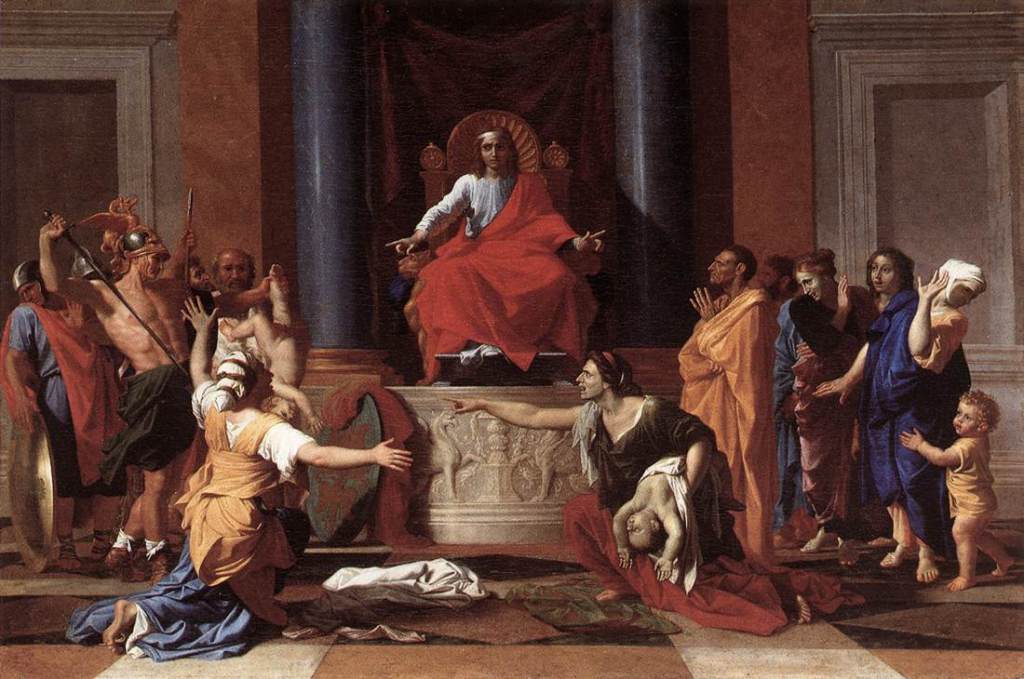
The best known story about him is The Judgement of Solomon, in which two prostitutes who lived together gave birth the same day. Only one of the babies lived, and both women laid claim to being its mother. Solomon easily resolved the dispute by commanding the child to be cut in half and shared between the two. One woman promptly renounced her claim, proving that she would rather give the child up than see it killed. Solomon declared the woman who showed compassion to be the true mother, entitled to the whole child.

Lorelai means that Peyton is like Solomon because he resolves his playful “dispute” with Lorelai over the last glass of wine by pouring it into two glasses (cutting the wine in two).

[Painting is The Judgement of Solomon by Nicolas Poussin, 1649]

I Don’t Mind

The song that is playing while Rory dyes Lane’s hair purple.

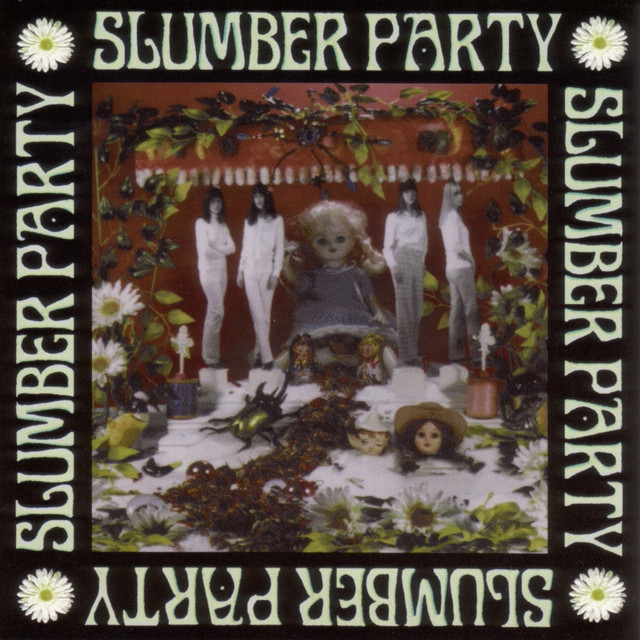
“I Don’t Mind” is a 2000 song by all-girl dream-pop band Slumber Party, from their self-titled debut album. The band received rave reviews from critics, but never made much of an impression on the public. The general consensus is that they just sounded too different from other bands in the early 2000s, and the word “underrated” for once doesn’t seem out of place here. Another shout-out to a girl band!

The opening stanzas say:

I don’t mind if you find
someone’s God, if he were different than mine
every time, by design
He’s hearin’ you and you

I just wanna be true
Live my life in the summer night with you
Whenever I go, remind me I’ve been gone for so long

The lyrics suggest that Lane is open to a relationship with Dave even if he doesn’t’ share her religion or worship God the same way. It ends on a worrying note:

I don’t mind if you find
The girl of your dreams and leave me behind

It’s as if Lane is already fearing for the future and preparing to let Dave go, when she’s only just fallen for him. Fortunately, this level of pessimism is unnecessary right now.

Amish School in Nicaragua, Piece de resistance

LANE: Oh, and the piece de resistance! She found an Amish school in Nicaragua.

This is completely fictional. There are no Amish colleges or universities, as their education only goes up to eighth grade. There is an Amish community in Nicaragua, but it isn’t as strict as others – they use electricity and drive cars.

Pièce de résistance – French phrase commonly used in English. It means, “the most important or remarkable feature”.

Richard Nixon

LANE: Quaker College was a delightful surprise, with its special appeal to Richard Nixon, who’s dead but still deeply involved in campus recruiting.

Richard Nixon, former US president, previously and frequently mentioned. He was born into a evangelical Quaker family in California in 1913, and brought up in Quaker ways of the time, such as abstaining from dancing, alcohol, and swearing. He largely left his religion behind in his pursuit of political power, and doesn’t seem to have attended Quaker meetings or events in adulthood.

Nixon was offered a scholarship to Harvard, but chose to remain close to home instead and attended Whittier College in Whittier, California from 1930 to 1934, graduating with a BA in History. Although named after the Quaker poet John Greenleaf Whittier, the college hasn’t been officially affiliated with the Society of Friends since the 1940s. A liberal arts college, Latino students make up half the population, and 75% of the students are people of colour. If Richard Nixon is recruiting students from beyond the grave, his policy is perhaps slightly unexpected.

Quaker College

LANE: Quaker College was a delightful surprise …

Quakers belong to the religious movements known as the Religious Society of Friends. Members usually share a belief that every person can experience the light of Christ within themselves. They avoid doctrines, creeds, and hierarchies, and some Quakers are non-theists, so beliefs can be very diverse. The movement arose in Britain in the 17th century, stressing a personal relationship with Christ through reading and studying the Bible. They tend to follow a simple, truthful, peaceful, and sustainable lifestyle. There are many Quaker organisations devoted to peace and humanitarian causes.

There are fourteen Quaker colleges and universities in the US. The best known is probably Bryn Mawr College, a women’s liberal arts college in Bryn Mawr, Pennsylvania. It’s an elite institution, and many famous women have attended, including Katharine Hepburn, poets Hilda Doolittle and Marianne Moore, and Korean-American pop star Michelle Zauner. I think Lane would be extremely lucky to go there, but I doubt her parents can afford it.

There isn’t anywhere called Quaker College – the closest would be Friends University in Wichita, Kansas [pictured]. It has an attractive campus, a strong track record of producing contemporary artists, and its choir travels the world. Again, it sounds like a pretty great option for study. Presumably Lane isn’t giving its name, but designating it as a Quaker-run college.

Wimple

RORY: She made you apply to every one [of the colleges]?

LANE: And measured my head for a wimple.

Wimple, a medieval form of female headcovering, formed of a large piece of cloth worn draped around the neck and chin, covering the top of the head. Its use developed in early medieval Europe; in medieval Christianity it was unseemly for a married woman to show her hair. Today a plain wimple is worn by the nuns of certain orders who retain a traditional habit.

Once again, the show (or Lane?) somehow conflates Mrs Kim’s Seventh Day Adventism with Catholicism, something that seems to happen a lot.

Party Schools

MRS. KIM: They’re all good religious programs, and I’ve already thrown out the ones that let boys and girls sit in the cafeteria together, the party schools.

Party school, a college or university with a reputation for heavy drinking and drug use, or a general culture of licentiousness at the expense of educational credibility and integrity. It’s a term mostly used in the US, and The Princeton Review publishes a list of “party schools”. The University of Connecticut is on it.

Mrs Kim considers any college where boys and girls are permitted to sit together to eat a “party school”. In real life, Seventh Day Adventist colleges and universities often do have restrictions on contact between male and female students, but nothing so extreme as not letting them eat together, that I have heard about.

Reverend Melmin

MRS. KIM: College applications … Every one in this pile approved by me and Reverend Melmin.

Last season Lane mentioned “the reverend” who takes them for Bible study class on Saturday morning plays handball. Now we discover his name is Reverend Melmin, who must be the pastor of the Seventh Day Adventist congregation in Stars Hollow. In real life, Seventh Day Adventist pastors aren’t actually addressed as “Reverend”, I think he would be “Pastor Melmin”.

“Waving a crucifix”

LANE: No, you’re thinking your mom, here, Rory. If I said that to mine, she’d start waving a crucifix at me.

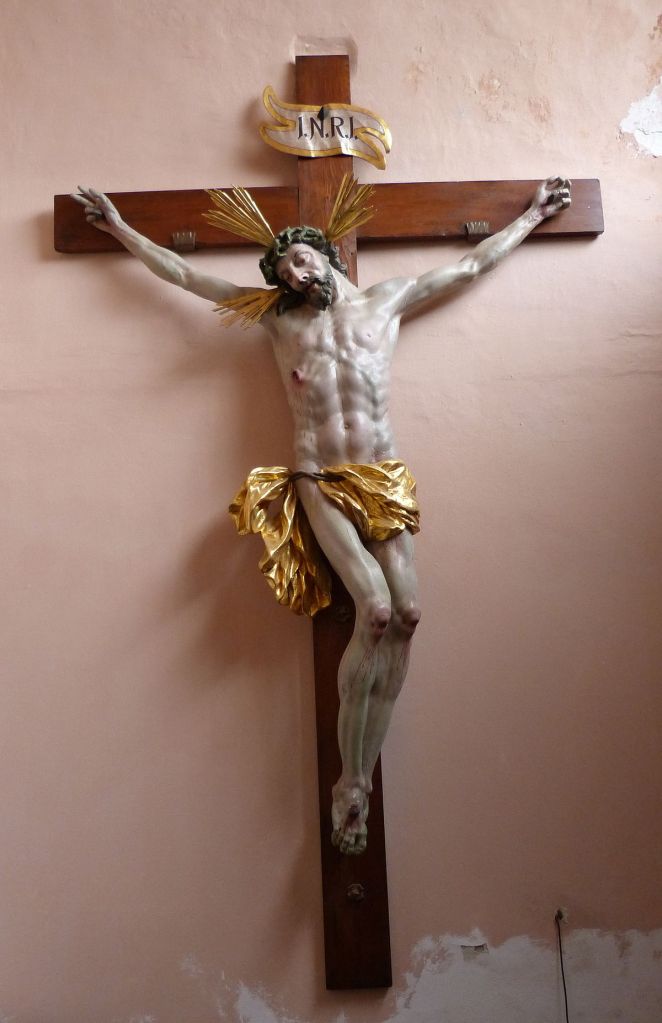
A crucifix is a cross with an image of Jesus on it, as distinct from a plain cross. The word comes from the Latin for “fixed to a cross”. It’s a principal symbol in Christianity, particularly for those in the Roman Catholic and the Eastern Orthodox faiths.

Seventh Day Adventists, like many Protestant religions, don’t actually use crucifixes, or wear crosses on chains, and often Seventh Day Adventist churches don’t even have a plain cross. Gilmore Girls seems to use Mrs Kim as a sort of grab-bag of extreme religious tropes and clichés, even when it doesn’t make any logical sense.