“Istanbul is Constantinople”

LORELAI: I do know Instanbul is Constantinople, so if you’ve got a date in Constantinople, she’ll be waiting in Instanbul.

Lorelai refers to the 1953 novelty song “Istanbul (Not Constantinople)”, with lyrics by Jimmy Kennedy and music by Nat Simon. Written on the 500th anniversary of the fall of Constantinople to the Ottomans, the lyrics humorously refer to the official renaming of the Turkish city Constantinople to Istanbul. It’s said to be a response to the 1928 song “C-O-N-S-T-A-N-T-I-N-O-P-L-E”, recorded by Paul Whiteman and His Orchestra.

It was originally recorded by Canadian vocal group The Four Lads and peaked at #10 on the charts, becoming their first gold record. It’s been covered several times, and Lorelai might be thinking of the 1990 version by alternative rock band They Might Be Giants, from their album Flood. Released as a single, it went to #61 in the UK, and has been used on the soundtracks of several animated series, including Liquid Television and Tiny Toon Adventures in the 1990s.

The song is a part of the repertoire of the Yale a capella group, The Duke’s Men of Yale. As we later discover that Richard was in a different a capella group at Yale, is it possible Lorelai first learned the song from her father?
“You came bearing gifts?”

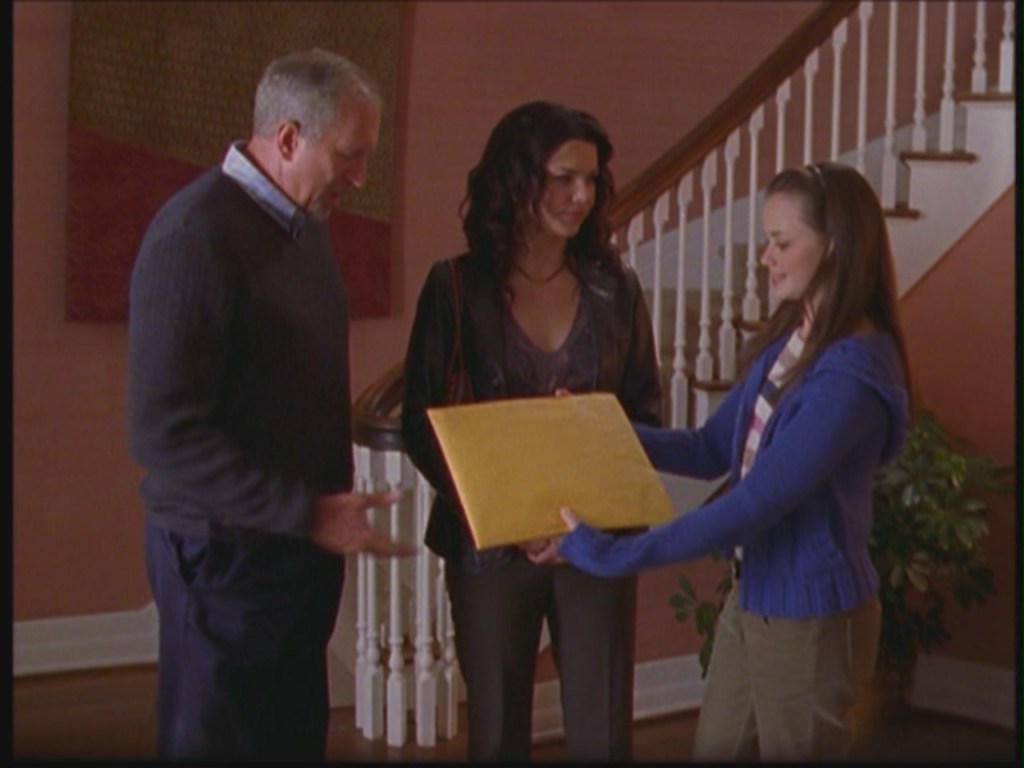
DARREN: You came bearing gifts?

RORY: What? Oh, this. No, this is not a gift. These are my records – grades, SATs.

Some fans are horrified that Lorelai and Rory do not bring a small gift to their hosts, as a thank you for their hospitality (a common polite custom in the US, as elsewhere). However, considering that Rory is trying to get into Harvard with Darren’s help, a gift may feel uncomfortably like a bribe in this situation.

It would be inappropriate to bring a gift to your college interview for this reason, and this is almost an informal college interview. I am unable to tell from Darren’s response whether he expected a gift, but in any case, he doesn’t seem disappointed not to receive one.

I would welcome comments on this – are Lorelai and Rory guilty of a breach of etiquette, or are they keeping their hands clean of corruption? Does Darren look perturbed when he thinks Rory is presenting him with a gift, as if he thinks she is doing something wrong?

Ted Williams

LUKE: Taylor, no, no, no, no, and every day from now on ’til the end of my life, I am gonna come in here and say, “Taylor, no!” And when I die, I’m gonna have them freeze me next to Ted Williams, and when they find the cure to what I died of and they unfreeze me, my first words are gonna be, “How’s Ted?” followed closely by, “Taylor, no!”.

Theodore “Ted” Williams (1918-2002), professional baseball player and manager who played his entire career for the Boston Red Sox, from 1939-1960. Inducted into the Baseball Hall of Fame in 1966.

Ted Williams died in Florida of cardiac arrest at the age of 83 on July 5, 2002. Although his last will and testament asked that he be cremated and his ashes scattered in the Florida Keys, his son John-Henry and his younger daughter Claudia chose to have his remains cryonically frozen.

Ted’s elder daughter, Bobby-Jo Ferrell, brought a suit to have her father’s wishes recognised. John-Henry’s lawyers then produced a “pact” signed by Ted, John-Henry, and Claudia, agreeing that they would all be frozen, in the hopes of being together again one day. Ted’s signature was found to be genuine, and Bobby-Jo dropped the case due to lack of funds. Publicity from the case increased the number of enquiries to cryonics organisations.

Ted Williams’ biographer, Leigh Montville, claims that Williams’ signature on the pact was a practice autograph on a plain piece of paper, around which the family agreement was written. He had signed the pact Ted Williams, as he did for autographs, while legal documents were signed Theodore Williams.

John-Henry Williams unexpectedly died from acute leukaemia in 2004, and was also cryonically frozen by Alcor in fulfilment of the family agreement.

Note this is another baseball reference from Luke.

[There are picture available of Ted Williams’ frozen head, but they’re frankly a bit disturbing, so I’ve gone with one from during his career].

Dogtown and Z-Boys

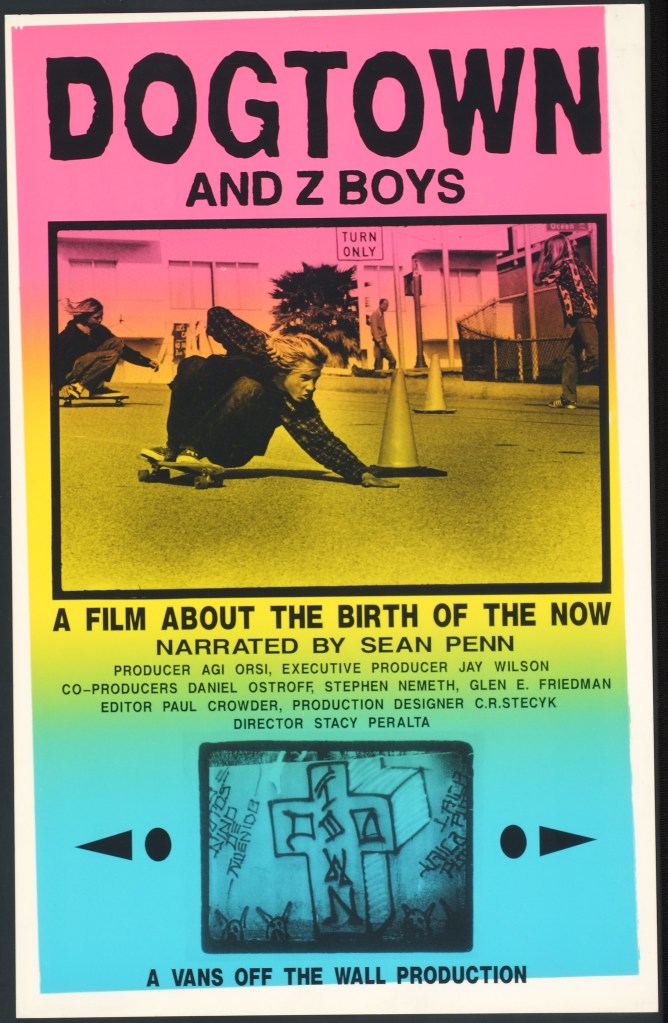
TAYLOR: I’m telling you, Luke, if we don’t quickly furnish these skateboarding Z-boys with a moral distraction, they’re gonna turn Stars Hollow into Dogtown.

Taylor refers to the 2001 documentary, Dogtown and Z-Boys, directed by Stacy Peralta and narrated by Sean Penn. It explores the pioneering Zephyr skateboarding team in southern California of the 1970s (of which Peralta was a member), using archival footage, contemporary interviews, and a rock and roll soundtrack. The documentary received good reviews, and won two awards at the Sundance Film Festival, as well the Independent Spirit Award for Best Documentary. It was also a commercial success, making over a million dollars at the box office by 2002, and selling almost 2 million videos and DVDs by 2004.

I can only speculate that Taylor watched the documentary in order to familiarise himself with the horrors of youth culture – a sort of “know your enemy” information session. It clearly gave him a disturbing glimpse into what depths Stars Hollow could sink without his intervention.

Old Fashioned Drinks

While Luke is serving customers at the diner, Kirk and two young boys come in, ordering old fashioned soda shop drinks. It soon transpires they were sent by Taylor, making a point how necessary such a soda shop is, which Taylor wants to install in the space next to the diner, owned by Luke. Kirk already works for Taylor, and the two boys are presumably in his Boy Scout troop.

Egg Cream: Previously discussed.

Black Cow: Traditional name for a root beer float, which is root beer with vanilla ice cream. In some areas, the ice cream has to be chocolate in order to be called a black cow, and others say brown cow instead. (Root beer is a North American soft drink made using the root bark of the sassafras tree, or the sarsaparilla vine, Smilas ornata). Frank J. Wisner, owner of Colorado’s Cripple Creek Brewing, is credited with creating the first root beer float in 1893. The North American fast food chain A&W Restaurants are well known for their root beer floats.

Chocolate Phosphate: Traditional soda fountain drink, which is chocolate syrup and acid phosphate added to club soda. Acid phosphate is a mixture added to drinks which gives it a slightly tart flavour, and aids carbonation – a partially neutralised solution of diluted phosphoric acid made with salts of calcium, magnesium, and potassium. It’s recently come back into fashion as a mixer for soft drinks and cocktails.

Note also in this scene, references to ham on rye sandwiches and Coney island, previously discussed.

Kim Deal

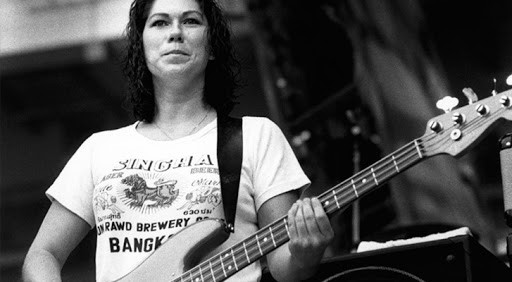
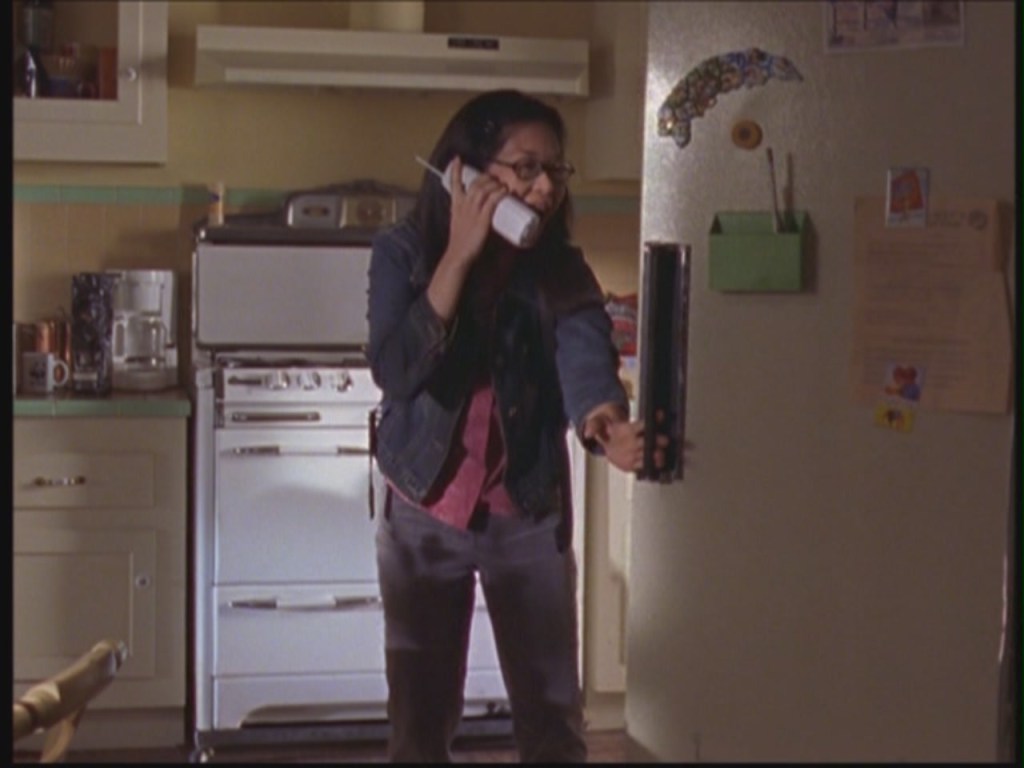
LANE: You are not telling me that you did not know that Kim Deal was in the Pixies before the Breeders! I refuse to accept that! [hangs up] These kids have no sense of history.

Kimberley “Kim” Deal (born 1961), singer-songwriter and multi-instrumentalist. She was the bassist and co-vocalist in alternative rock band Pixies, previously discussed, joining in 1986. During the band’s hiatus, she formed the alternative rock band the Breeders in 1989. After the Pixies broke up in 1993, she returned her focus to the Breeders, who themselves went into hiatus in 1994, during which time Deal formed the short-lived rock band the Amps, performing under the name Tammy Ampersand. She reformed the Breeders in 2002, then returned to the Pixies when the band reunited in 2004. In 2013, she left the Pixies to concentrate on the Breeders, who released their fifth album, All Nerve, in 2018.

One of the reasons the person on the phone may not have known that Kim Deal was previously in the Pixies is because she performed under the stage name Mrs John Murphy while in the band.

Lane is not just looking for any band to drum for – it needs to be a band who shares her obsession with alternative rock and indie music, and knows their music history.

Progressive Rock

LANE: [on phone] No, wait, wait, wait, progressive rock is a really passé style now but I listed it as an influence because it was a progenitor of great things that came afterwards.

Progressive rock, usually shortened to prog rock or just prog, a broad genre of rock music developed during the mid-to late 1960s, peaking in the early 1970s. Initially termed “progressive pop”, the style grew out of psychedelic bands who abandoned standard pop traditions in favour of instrumentation and composition more often associated with jazz, folk, or classical music.

Additionally, lyrics were more poetic, technology was harnessed for new sounds, music approached the condition of “art”, and the studio, rather than the stage, became the focus of musical activity, which often involved creating music for listening rather than dancing. Examples of prog rock bands include Emerson Lake & Palmer, Genesis, King Crimson, The Moody Blues, and Pink Floyd.

Lane says that progressive rock is passé, in that its heyday was in the 1970s, but in fact there were a wave of bands in the 2000s who revived the genre, such as System of a Down and Thirty Seconds to Mars. Perhaps that’s what she means by it being a progenitor of great things?

Lane is receiving responses to the advertisement she posted looking for a band that needed a drummer. Naturally she is deluged with enquiries, beginning early in the morning! Yes, the local area is filled with bands looking for a drummer, scanning the advertisements for one, and eagerly calling before breakfast to find them! We are in complete fantasy land here. Instead of being stunned that she gets any answers at all, Lane is irritated that they aren’t all on her musical wavelength.

Paris Freaks Out

PARIS: What the hell did Romaine mean when he was going on about weeding out the hyper-intense in the interview process? He stopped just short of calling me by name, I’m losing it!

Paris also freaks out over the college panel, even having to run home and throw up out of anxiety. She’s especially upset that Mr Romaine mentioned weeding out “the hyper-intense” during college interviews. In a future episode, Paris will indeed miss out on a place in her first choice of college because of her hyper-intense interview.

Note that Rory has a cell phone for the first time in this scene – previously, she always used a pager. Don’t get attached to the cell phone, she will revert to using a pager in the very next episode. It’s possible that Paris called Lorelai’s phone, and Rory was borrowing it; Lorelai has lent Rory her phone before.

The Bus Stop

EMILY: You look flushed.

RORY: I ran from the bus stop, I’m okay.

In the very first episode of Gilmore Girls, Emily said that Chilton was five minutes from their house. That may have been an exaggeration, but the show has always implied that Rory’s grandparents lived within walking distance of her school. Now she seemingly has to catch a bus to reach her grandparents’ house.

Perhaps their house is 5 minutes drive from Chilton, or around 20 minutes walk. It’s possible Rory usually walks the mile or so to get there, but took a bus this time, worrying that she would be late for dinner.

Random College Admissions

EMILY: Every child that applies has the same high grade point average, they’ve taken the same AP classes, and they’re all on the student council … One college admissions officer said that he sometimes puts a random stack of applications in the yes pile and the rest in the no pile because he knows it doesn’t make any difference. He doesn’t even so much as glance at them.

It’s true that it’s very difficult to tell apart applications from high-achieving students who’ve all been to Ivy League feeder schools and all got the same grades in the same classes. And a college admissions officer only has a few minutes to decide whether an application should go on the yes or no pile. It’s a hard decision to make in a very competitive Ivy League college environment.

However, like Lorelai, I find it hard to believe this story – most of all, I find it hard to believe in a college admissions officer who would openly admit to this practice in a print publication. I think Emily must have got over-excited, and what they really said was something like, “Sometimes it seems as if I might as well choose the applications randomly when they are all so similar”. Or else the magazine just made it up.

College admissions officers certainly admit that it’s a tough decision to make, and that they don’t always make the right choice – many of them have stories about rejecting a candidate who didn’t seem quite good enough, and then they went on to become something amazing. (They also remember the times they had to grit their teeth and let in terrible candidates because they were on athletics scholarships or had bought their way in). In any case, the final decision is made by a committee, it isn’t just one person deciding who gets in.