Boonesville

[Rory and Jess are walking toward her bus]

RORY: I think this one’s mine.

JESS: Yup, the sign says Boonesville.

The “boondocks” or the “boonies” is American slang for a distant or remote rural location, especially one with few amenities. “Boonesville” is obviously a town in the boondocks.

The word boondocks comes from the Tagalog word bundok, meaning “mountain”. It was coined by U.S. Marines fighting against Filipino guerrillas after the Spanish-American War (1899–1902), for the rough hill country there. Later, American troops in the Philippines during World War II shortened it, and after the war it began to be used more widely.

Although we can’t be certain what time it is when Rory goes to the bus terminal with Jess, the express bus she took in the morning takes two and a half hours to get to New York, so to arrive in Hartford by 5.30 pm in order to be at the graduation ceremony by 6 pm, she cannot plan to leave any later than 3 pm.

Assuming Rory met Jess in Washington Square Park some time after midday, they have had time to eat lunch and catch the subway to a record store before coming to the bus terminal (which should have only taken 15 minutes to Times Square on the subway). They could have easily spent two, or two and a half hours together in New York.

Rory probably thinks she has timed everything perfectly – oh, how wrong she is!
The Go-Go’s

JESS: Go-Go’s. You must have that one.

RORY: No, for my mom. This was her favorite group when she was my age, and it’s signed by Belinda. This would be the perfect graduation present. I’ve been looking for something all week long, and I couldn’t find anything and now I have Belinda.

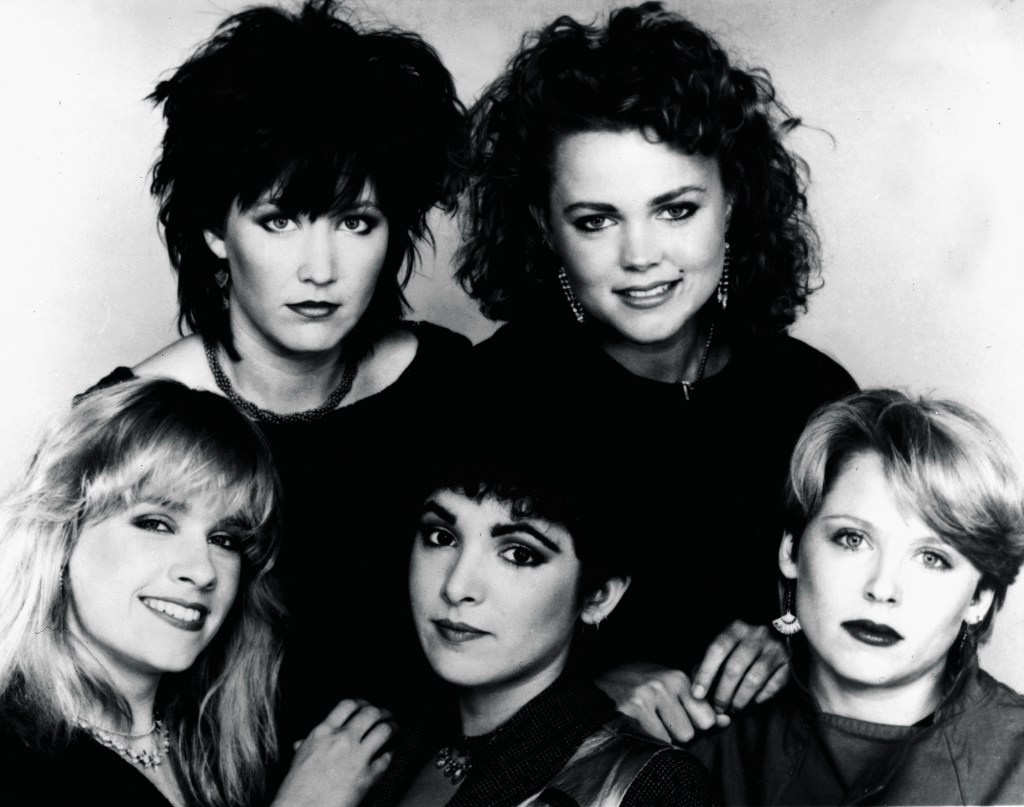
The Go-Go’s, rock band formed in Los Angeles in 1978, the classic line-up consisting of Charlotte Caffey on lead guitar and keyboards, Belinda Carlisle on lead vocals, Gina Schock on drums, Kathy Valentine on bass guitar, and Jane Wiedlin on rhythm guitar. They are widely considered the most successful all-female rock band of all time.

Originating in the punk scene of the 1970s, their 1981 debut album Beauty and the Beat went to #1 on the Billboard charts – the first (and so far, only) time this has been achieved by an all-female group writing their own material and playing their own instruments. Considered a cornerstone of the new wave movement, it had two major hits – “Our Lips Are Sealed” (#20) and “We Got the Beat” (#2). It spent six weeks at the top of the charts, and sold more than two million copies. Their follow-up albums were Vacation (1982) and Talk Show (1984).

The Go-Go’s broke up in 1985 to follow solo careers, and have regrouped several times in order to tour together. Their most recent album is God Bless The Go-Go’s (2001), and they received a star on the Hollywood Walk of Fame in 2011. Although their 2016 performance was billed as a farewell tour, they remain active. They were inducted into the Rock and Roll Hall of Fame in 2021.

I’m not sure, but I think the album that Rory picks out is their first one, Beauty and the Beat. You can only see the back of it, but it has the same colour scheme as the debut album. It is signed by Belinda Carlisle (born 1958), the band’s lead vocalist. She had a successful solo career in the 1980s, with such hits as “Mad About You”, “I Get Weak”, and “Heaven is a Place on Earth”, the last reaching #1.

Note this is another all-female rock band that Lorelai likes.

Slint

JESS: Who’s Slint? …

OWNER: Grunge band out of Kentucky. Two albums, plus a double-A side single, disbanded in ’94.

Slint, an indie rock band (not grunge) from Louisville, Kentucky, formed in 1982 by drummer Britt Walford and guitarist and vocalist Brian McMahan. They named the band after a pet goldfish.

Their two albums were Tweez (1989) and Spiderland (1991); they released an untitled EP in 1994 (recorded in 1989), which is what the record store owner means by a double-A single. One side of the EP is called “Glenn”, and the other side “Rhoda”, and both tracks were intended to be released as singles (“Rhoda” was about a dog). They broke up in 1990, but reformed briefly in 1992 and 1994, and regrouped again in 2005, 2007, 2013, and 2014 for international tours.

Although Slint’s work received minimal attention at first, their second album was praised by the UK music press for its originality and emotional intensity, and became a major influence on post-rock bands such as Mogwai and Explosions in the Sky. Spiderland is a favourite of Dinosaur Jr, P.J. Harvey, Pavement, and The Shins, and is regarded as one of the best albums of the 1990s.

The band have been likened to Pavement, one of Jess’ favourite bands, suggesting he would also enjoy Slint.

Note that the record shop owner is played by Chuck E. Weiss (1945-2021), legendary singer, songwriter and musician, known for an eclectic mix of blues, beat poetry, and rock and roll. He is referred to in the lyrics of several Tom Waits‘ songs, and is the subject of “Chuck E’s in Love” by Rickie Lee Jones. His most recent album at this point was Old Souls and Wolf Tickets (2001), and his parents owned a record store in Denver, Colorado.

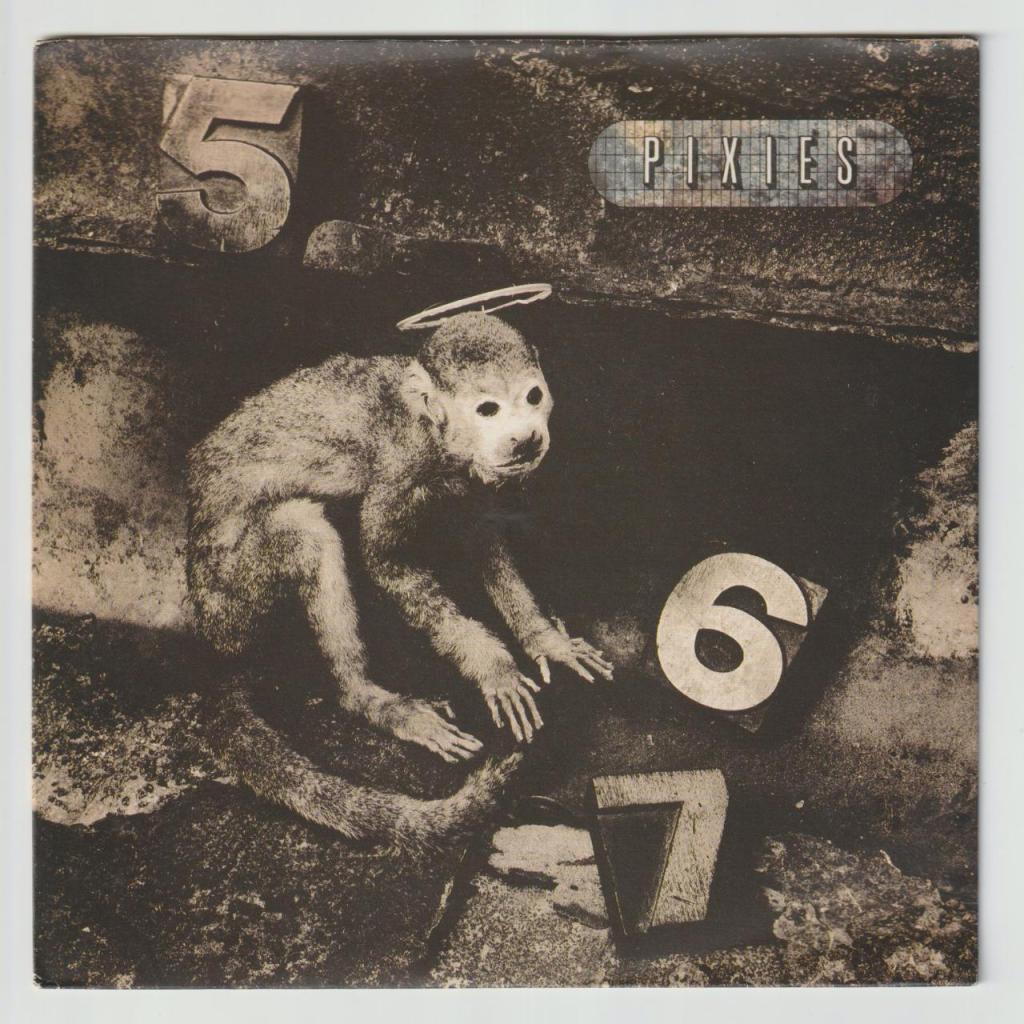
Monkey Gone to Heaven

This 1989 song by alternative rock band The Pixies plays while Rory and Jess are in the record store. Written and sung by the band’s frontman, Black Francis, it was released as a single from their 1988 album Doolittle. The song received a positive reaction from critics and went to #5 on the Billboard Modern Rock Tracks, and to #60 in the UK. It is considered one of the greatest songs ever.

Although the lyrics reference biblical numerology and environmental concerns, I think the song was chosen simply because it was a believable choice for a cool indie record store, and to indicate that Jess (a naughty little monkey!) is simply in heaven, being in a great record store with Rory, the girl he likes.

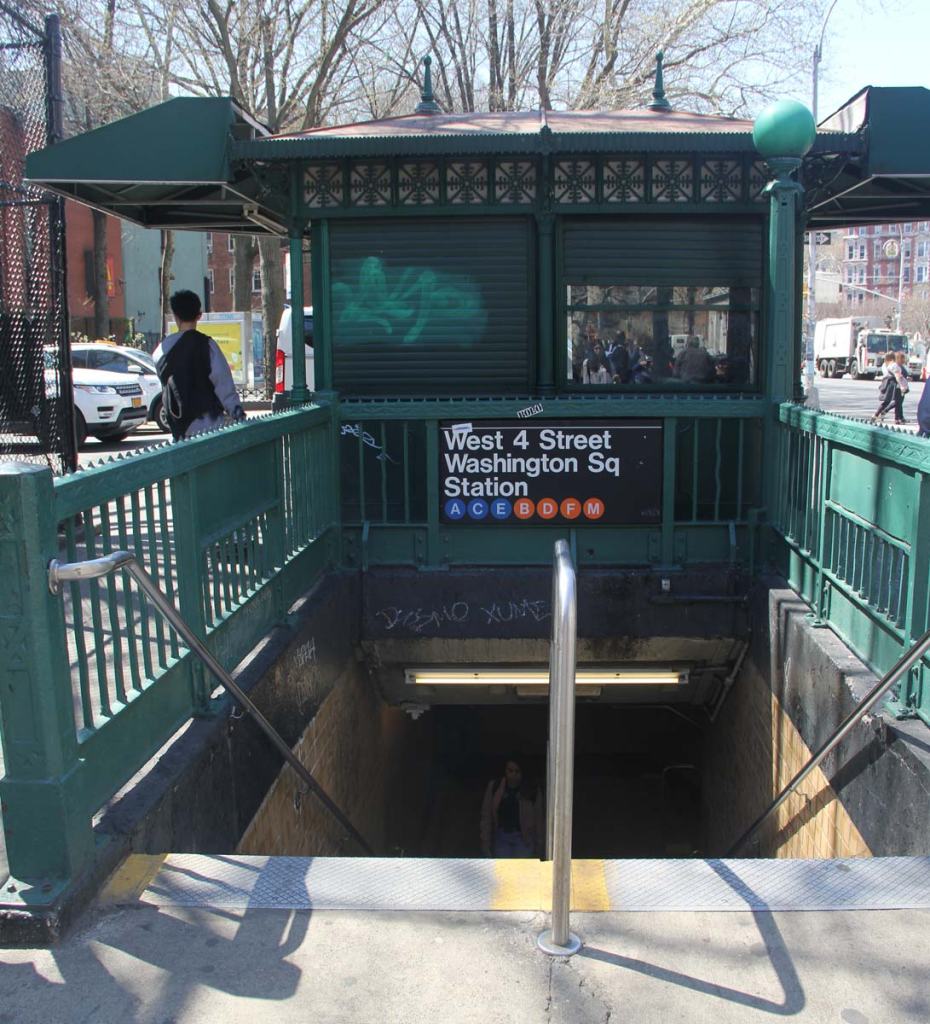
Subway

RORY: Where you going?

JESS: Subway.

RORY: I thought we were gonna walk.

JESS: It’s fifteen blocks. Come on, I think you’ll like it.

The New York City Subway System is a rapid transit system owned by the government of New York and leased to the New York City Transit Authority. It opened in 1904, and is one of the world’s oldest public transport systems, one of the most used, and the one with the most stations, with 472 in operation. Stations are located throughout the boroughs of Manhattan, Brooklyn, Queens, and The Bronx.

There is/was a concentration of record stores in the East Village, and the one that Jess takes Rory to could very well be located in this area. If they caught the subway near Washington Square, and got off at the Bleeker Street, Broadway-Lafayette Street, or Second Avenue subway station, that would take them around fifteen blocks into the East Village, saving them about 25 minutes of walking.

It’s amusing that Rory is so prepared to walk for another half hour or so – she’s already had a long walk to get to the park! You’d think she’d be glad to catch the subway.

High Fidelity

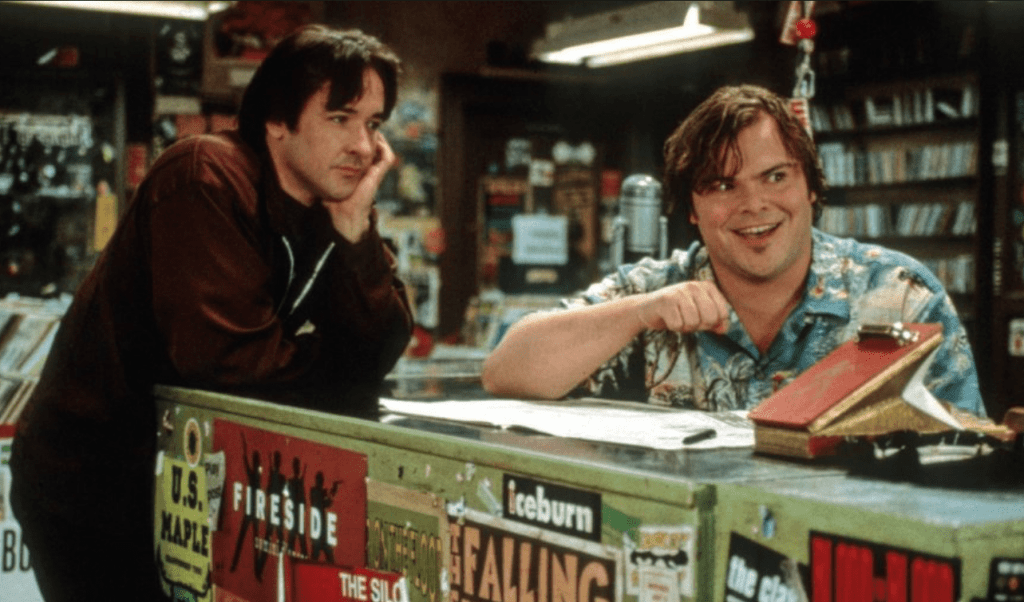
JESS: There’s a record store you should check out. It’s run by this insane freak who’s like a walking encyclopedia for every punk and garage-band record ever made. Catalog numbers . . . it’s crazy. The place is right out of High Fidelity.

High Fidelity, 2000 romantic comedy-drama film directed by Stephen Frears, based on the 1995 British novel of the same name by Nick Hornby, with the film’s action moved from London to Chicago, but otherwise faithful to the book.

The film stars John Cusack as a music-lover named Rob with little understanding of women who owns a record store called Championship Vinyl. He and his employees Dick and Barry (played by Todd Louiso and Jack Black), armed with an encyclopedic knowledge of music, compile “Top 5” lists for every occasion, and openly mock their customers’ tastes. Eventually, Rob is able to produce a mixtape to please his girlfriend, Laura (played by Iben Hjejle).

High Fidelity was a commercial and critical success, receiving praise for its witty dialogue, strong performances and solid soundtrack. It’s been voted one of the best romantic comedies, and one of the greatest films of all time. It was made into a 2020 television series.

It’s interesting that Jess compares the record store he is taking Rory to with one out of a romantic comedy – especially one where a smart but emotionally obtuse young man learns to express his feelings.

EDIT: Thank you to High Fidelity fan Alisa for supplying the correct name of the actress playing Laura.

“A friend to all of us dispossessed”

JESS: [Looks at Rory’s cast.] I like this Emily chick. Friend of yours?

RORY: She’s a friend to all of us dispossessed.

Jess refers to the sticker of Emily the Strange, previously discussed.

Rory refers to both herself and Jess as “dispossessed”, deprived of what they deserve, of their birthright. It’s the first time that Rory hints at any possible resentment that Lorelai removed her from Richard and Emily’s world, the world of wealth and privilege she had been born into.

She is also identifying both Jess and herself as having been literally de-possessed, cast off by one or more parents. Apart from literature, this is the main thing that binds Jess and Rory together. The casual way she says this to Jess suggests that they might have talked about it previously.

And more generally, Rory and Jess are both part of that “dispossessed” generation of the 1990s, the Millennials who would later be jeered at by A Year in the Life. You can see the emo-esque Emily the Strange as one of their unofficial spokespeople.

“I’ve been hurt before”

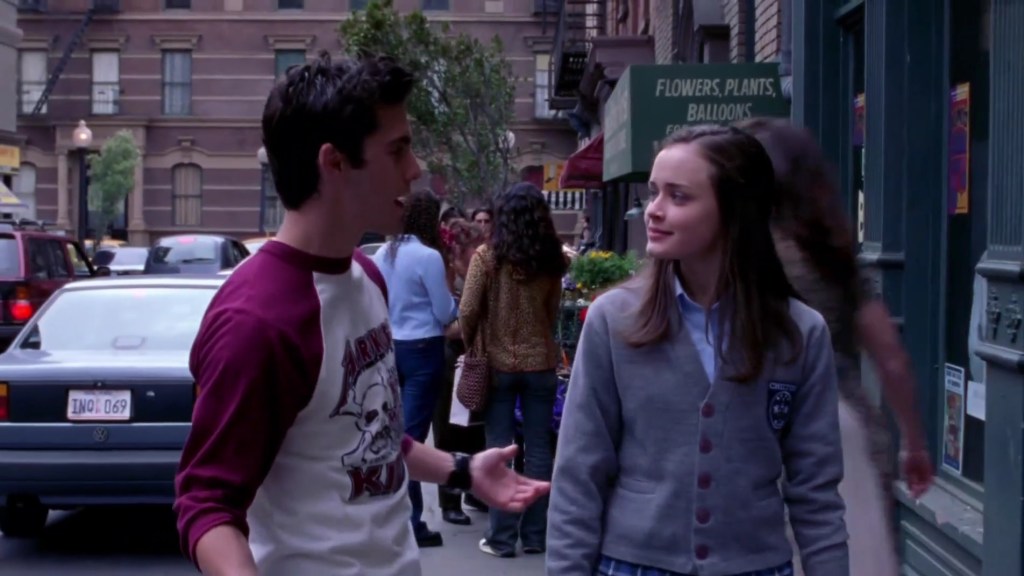
JESS: Oh, come on, let me see your withering stare.

RORY: It’s dangerous. I could hurt you.

JESS: I’ve been hurt before.

A serious statement masquerading as a joke. Jess truly has been hurt by life, and he’s probably also been hurt by Rory, and her efforts to keep him at bay and continue seeing Dean, even as it became increasingly clear that she didn’t really want him any more. Jess comes this close to saying, “You’ve hurt me before”. Don’t worry Jess – Rory has more emotional pain in store for you!

Note that Jess and Rory walk past a florist’s, a romantic symbol, but it’s selling balloons – condoms can also be used as balloons. The car driving past has a licence plate of INQ 069 – ink + 69, as if writing and sexual attraction is what’s drawing Rory and Jess together. Sex, romance, reading; the holy trinity of Rory and Jess!

(This is the second licence plate ending with 69 I’ve noticed, so it might be a running joke, although last time it could have been highlighting the sexual attraction between Lorelai and Christopher).

The Big Apple

RORY: I’m just saying I’m no stranger to the Big Apple.

JESS: You are if you’re calling it the Big Apple.

The Big Apple is a nickname for New York City, first popularised in the 1920s by John FitzGerald, a sports writer for The New York Morning Telegraph. Its popularity since the 1970s is mostly due to a promotional campaign by the city’s tourism authorities to boost the city during a fiscal crisis.

Although Rory says she’s been to New York a few times, she only mentions The Bangles concert in 2001 and a 2000 shopping trip where she didn’t even get out of the car. This could very well be her third trip to New York (and the second where her feet touched the ground!).

Hummel

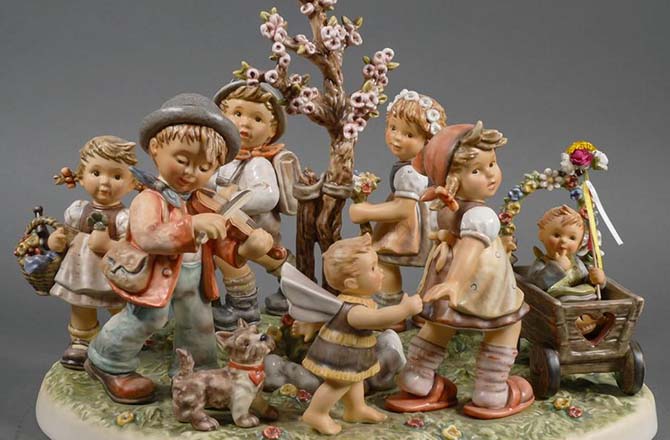
RORY: And a couple years ago Mom drove us in to shop, and she couldn’t find a good parking place and all of the parking lots were a total rip-off, so she kept making U-turns and cutting off taxis and we were being screamed at in so many different languages that we just turned around and drove home and bought a Hummel at the curio store in Stars Hollow.

Hummel figurines, often just called Hummels, are a series of porcelain figurines based on the drawings of Sister Maria Innocentia Hummel, a German nun from the Franciscan Order. These sketches began to appear in Germany and Switzerland during the 1930s, mostly pastoral scenes of children.

Porcelain-maker Franz Goebel acquired the rights to turn the sketches into figurines, the first line produced in 1935. Introduced at the Leipzig Trade Fair, they quickly found American distributors. The popularity of Hummels grew after World War II as American soldiers stationed in West Germany began sending them home as gifts.

Nostalgia was a big factor in the figurines becoming popular, and they were commonly purchased during European travel as souvenirs. During the 1970s, prices began to skyrocket, and the M.I. Hummel Club was founded in 1977. Today a genuine Hummel would cost over $100 for a small piece, to more than $1000 for a larger and more elaborate one.

Lorelai bought a Hummel in 2000, presumably before the show opens in September of that year. Although I can see how Lorelai would appreciate the kitschy appeal of these collectables, I cannot recall actually seeing a Hummel on display in their house.