The Metamorphosis

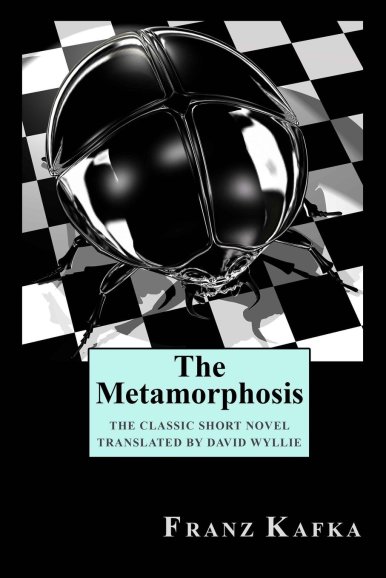
This 1915 absurdist novella by Czech author Frank Kafka is the book that Rory buys Dean for Christmas.

The story is about a travelling salesman named Gregor Samsa who wakes one morning to find that he has been transformed into a large and verminous beetle-like insect, becoming a disgrace to his family and an outsider in his own home. Both harrowing and comical, the book is a meditation on human guilt and isolation. Translated into English in 1933, The Metamorphosis is one of the most influential literary works of the twentieth century.

Rory believes that the book is a “romantic” present. Lane quite rightly tries to talk her out of this, describing the book as a “confusing Czechoslovakian novel”. She urges Rory to consider what Dean will think of the present, and says that she is giving Dean something that she would like, comparing it to Dean giving Rory a football for Christmas.

Lane’s counsel is sound, and she is hinting that once again Rory is using literature to keep others at an emotional distance, since she identifies the potential Christmas gift as saying “let’s be friends”. It’s a genuinely terrible present for Dean, and shows that Rory is still trying to turn her boyfriend into someone he isn’t.

We never discover if Rory took Lane’s advice or gave the book to Dean anyway. At the end of the scene she sounded unconvinced but also unsure, so you could argue it either way.

Rory’s idea of a book by a famous Czech author was probably inspired by her grandfather’s recent trip to Prague. In the last episode Emily told her that Richard was going to bring her back something special, and my bet is that he brought her something from the gift shop at the Kafka Museum, probably a book (possibly even this book). Rory may have thought that since she loved getting a book by Kafka as a present, Dean would as well.

Rory’s attraction to The Metamorphosis is obvious: like Gregor Samsa, she feels that she has become an object of disgust to her family, and is likewise suffering from feelings of intense shame and isolation – she is not speaking to her mother, and has not even spoken to Dean since they overslept at Miss Patty’s.

The Metamorphosis begins with Gregor Samsa oversleeping, and then finding he is trapped in a waking nightmare without reason or explanation. We can be sure that this is exactly how Rory feels, and the ending where Samsa voluntarily dies rather than burden his family any further shows just how deep her feelings of depression are. Quite possibly Rory has wished herself dead.

Rory might be playing her situation for laughs by making jokes about The Miracle Worker and Narcolepsy Boy, but make no mistake, she is suffering horribly. Like The Metamorphosis, there is both comedy and misery in equal measure.

By giving Dean the book, Rory was hoping to show him exactly how she feels; the “romantic” part of the present is her sharing her deepest emotions and fears with Dean, reaching out and laying herself completely bare to him. Unfortunately, Lane is right, and Dean would have no way to interpret it as anything other than a strange, confusing book about a big bug.
Baccarat candlesticks

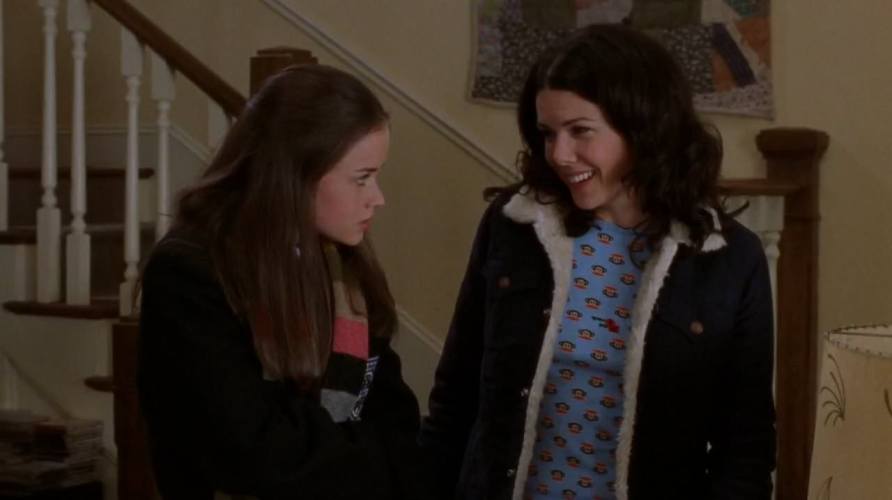
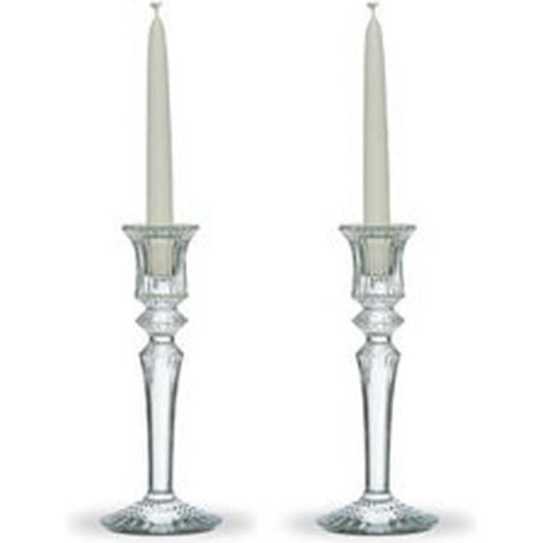
Emily is horrified to discover that the Baccarat candlesticks she bought Lorelai for Christmas in 1999 were exchanged for a lamp decorated with “leering” monkeys holding coconuts.

Baccarat is a French manufacturer of fine crystal glassware, located in the town of Baccarat. The glassworks were founded in 1764 by King Louis XV. An American subsidiary of the company was created in New York City in 1948.

Emily may have bought the candlesticks from Lux Bond and Green, a jewellery store in West Hartford authorised to sell Baccarat products. A classic pair of Baccarat candlesticks (like the ones in the picture) will set you back around $500, but a fancier double candlestick holder would be over $6000.

I doubt that the same store that sells Baccarat also sells the novelty monkey lamp so there probably wasn’t an actual exchange of goods – Lorelai may have simply made a cash exchange, meaning that she pocketed a tidy profit after purchasing the monkey lamp somewhere else.

(The monkey lamp may have been partly inspired by Daniel Palladino’s first gift to Amy Sherman-Palladino when they were courting – the toy game Barrel of Monkeys, a barrel filled with plastic monkeys that can be interlinked together).

The Outsiders

RORY: And these kids at my school – awful. Have you seen The Outsiders?
DEAN: Yeah, I have.
RORY: Just call me Ponyboy.

The Outsiders is a 1983 teen drama film directed by Francis Ford Coppola, adapted from the popular novel of the same name by S.E. Hinton. The movie looks at the conflict between the Greasers, tough working-class teens, and the Socs, a gang of wealthier kids.

The main protagonist is Ponyboy Curtis (C. Thomas Howell), who is one of the Greasers, but is good at school and loves literature; while hiding out after his friend Johnny killed a Soc to defend him, Ponyboy reads Gone With the Wind and recites Robert Frost’s poem Nothing Gold Can Stay.

Rory feels the social difference between she and her Chilton classmates very strongly, identifying herself with a teenager from the wrong side of the tracks, albeit one who loves reading.

It is worth noting that Rory doesn’t ask Dean if he’s read The Outsiders, even though it is a very well known book for teenagers, and often set as a school text. By now she may have got the idea that Dean isn’t much of a reader.

Either that, or Rory hasn’t read it herself, rejecting it as beneath her reading level, or something that is too typically teenage to bother with.

Emily Post

EMILY: Young man, come in here please.
LORELAI: Hey, Dean, meet my mother, Emily Post.

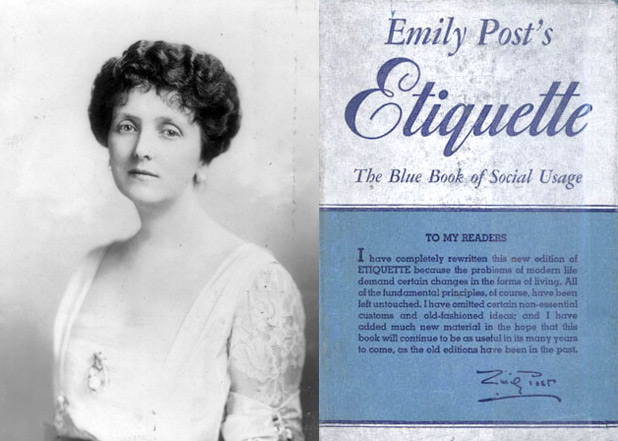
Emily Post (1872-1960) was a famous expert on etiquette. Her 1922 book Etiquette in Society, in Business, in Politics and at Home became an instant best-seller, was popular for decades, and made her name. She went on to write newspaper columns on etiquette, and founded the Emily Post Institute in 1946, which carries on her work.

It’s interesting to wonder if Emily Gilmore is named after her.

Sookie’s First Aid Kit

As she was first characterised as highly accident-prone, it makes sense that Sookie is always equipped with some basic first aid equipment, which she offers to Lorelai when she hurts her back while making Rory’s dress.

Ace bandage: Ace is a popular American brand of elastic bandages, first produced in 1918 – the name stands for All Cotton Elastic. The brand was bought by 3M in 2009.

Percodan: The brand name of a strong painkiller which combines aspirin and the semi-synethetic opioid oxycodone, manufactured by Endo Pharmaceuticals. It’s only available on prescription, and is now considered a fairly old-fashioned medication, with use declining.

Vicodin: The brand name of a strong painkiller which combines paracetamol with the semi-synethetic opioid hyrocodone. It’s only available on prescription, and can be addictive; it is sometimes (illegally) used for recreational use.

Darvocet: The brand name of an opioid painkiller manufactured by Eli Lilly and Company. It was taken off the market in 2010 due to concerns about fatal overdoses.

Muscle relaxant: A drug used to treat muscular pain and spasms, nearly always with sedative effects. They can be addictive, and are only meant to be prescribed for short-term use. Sookie’s reluctance to use “the very mild” drug’s name suggests that it may be Diazepam, previously known as Valium.

You can’t help wondering if Sookie’s clumsiness might have been increased by a dependence on prescription painkillers.

Sixteen Candles

LORELAI: However, not really, since you’ve never actually been to one you’re basing all your dance opinions on one midnight viewing of Sixteen Candles.

Sixteen Candles is a 1984 teen comedy film directed by John Hughes, starring Molly Ringwald. As earlier discussed, it is about a girl named Samantha “Sam”, whose family appear to have forgotten her sixteenth birthday. A significant portion of the film is set at a school dance, where a geeky younger student with a crush on Sam tries to take her knickers for a bet, while Sam pines for a boy named Jake. The film was a commercial success, and was well reviewed; it’s now regarded as one of the best films of 1984.

Lorelai must have taken Rory to see a midnight screening of the film at the Black-White-Read Bookstore, probably within the last year or two. Now that we know Rory has seen the film, it’s opens up the possibility that the Happy Birthday song from the film was actually playing in Rory’s head during the birthday invitation scene.

Sausalito

EMILY: If she doesn’t want to go it must be because of something you said.
LORELAI: Mom, I promise. All I ever said to her about dances is that you go, you dance, you have punch, you eat, you take a picture, and then you get auctioned off to a biker gang from Sausalito.

Sausalito is a town in the Bay Area of San Francisco, on the north side of Golden Gate Bridge. It’s big claim to fame is that it is “the dock of the bay” in the song by Otis Redding, who once lived there. It’s also mentioned in Jack Kerouac’s On the Road as being a little fishing village full of Italians.

Lorelai’s joking explanation for Rory’s fear of dances sounds suspiciously similar to the plot of the 1967 film The Born Losers, where teenage girls are kidnapped, raped, and beaten by the Born Losers motorcycle gang in a small Californian town. We learn later that it is one of Lorelai and Rory’s favourite films. The story was based on a real life incident in Monterey, California, involving the Hells Angels, which was the impetus for Hunter S. Thompson’s first book:  Hell’s Angels: The Strange and Terrible Saga of the Outlaw Motorcycle Gangs (1966). Could this have been the book that Dean lent to Rory?

“Strict rules about dating”

When Max goes to Lorelai’s house, she tells him that she has always kept her dating life completely separate from her life with Rory, and that although she has dated men, and had a sex life, none of the men have ever been to her house.

From this we know that Lorelai has tried to put Rory’s needs before her own, and that she has to some extent used Rory as an excuse to keep men at a distance and avoid commitment.

The logistics of how she kept the men completely away from her house are something of a puzzle – I’m guessing she never dated men who lived in Stars Hollow, the relationships never progressed very far, and that she must have had reliable babysitters who could care for Rory while she was out on a date (Babette, Sookie, and Miss Patty seem like good candidates).

“What’s up, Teach?”

MAX: Well, well, well.
LORELAI: What’s up, Teach?

Probably a play on “What’s up, Doc?”, the famous catchphrase of Bugs Bunny in the Warner Brothers cartoons. It was first used in the 1940 animated film A Wild Hare, and director Tex Avery chose it as a common phrase used at the time in his native Texas.

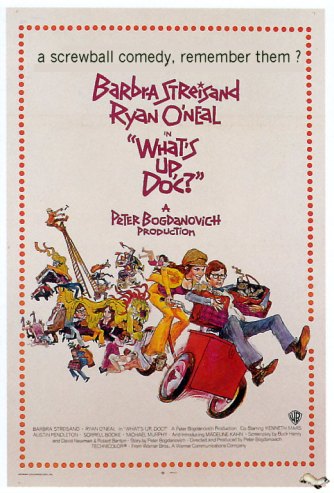
It’s also very possible Lorelai is thinking of the film What’s Up, Doc?, a 1972 screwball comedy directed by Peter Bogdanovich, and starring her favourite, Barbra Streisand. The #3 movie of 1972, it is considered one of the greatest comic films of all time.

The movie ends with the lovers kissing as they watch the 1950 Bugs Bunny film, What’s Up, Doc? Maybe Lorelai is already thinking of kissing Max at the movies, as she is just about to take him to one.