“Donna Reed wasn’t real”

DEAN: You do realize that Donna Reed wasn’t real, don’t you?
RORY: Yes, I know she wasn’t real, but she represented millions of women that were real and did have to dress like that and act like that.

Maybe Dean has an excuse for not knowing this, but how can Rory not know that Donna Reed was a real person? She’s been watching The Donna Reed Show for years, it seems, and would have seen the name Donna Reed in the credits, if nothing else.

Not only that, but the character of Donna Stone on The Donna Reed Show was strongly based on Donna Reed’s real personality and way of life, to the point where friends and family could instantly recognise the character as a TV version of the actress. Even the fictional character has a basis in fact.

Dean and Rory’s Argument

Dean might have kept his mouth shut in front of Lorelai, but now he and Rory are alone they end up arguing about The Donna Reed Show. He basically can’t see anything wrong with a woman cooking dinner for her husband and family, and points out that’s exactly what his mother did for years, and now that she works, she still does it on the weekends.

Their different family backgrounds have helped shape their differing values, and Rory cannot really find a way to respect Dean’s experiences and views without feeling that she is betraying Lorelai, and the way she was raised. In fact, she sounds as if she’s beginning to have doubts about whether Lorelai is completely in the right.

Her argument that it’s okay for Dean’s mother to cook if she wants to because women have choices now doesn’t really make sense. If women (like Mrs. Forester) are free to do as they wish now, then why is Rory getting upset about how things were in a previous era? Why is it even an issue? And how exactly does it affect her?

Rory’s read books on feminism, but isn’t able to explain her feminist ideals to Dean. Perhaps she’s afraid that if she did so, the difference in their opinions and values would become too starkly obvious. Or maybe she wonders if Simone de Beauvoir can really help in this situation.

When Dean says that Rory only thinks the way she does because of her mother, it raises the question, yet again, as to whether Rory even has an identity of her own apart from Lorelai. Perhaps because of this comment, she doesn’t confide in Lorelai as to what’s bothering her, or what she plans to do.

“Four girls talking dirty”

BABETTE: He’s [the new kitten] just the cutest thing. But he’s so teeny. There’s no way he can go with us and I would hate for him to stay all alone in the house so I was thinking maybe Rory could come over and house-sit for the evening.
RORY: I’d love to.
BABETTE: Oh great! We’ve got a kitchen full of food and Morey just got cable so you can watch those four girls talking dirty if you want to.

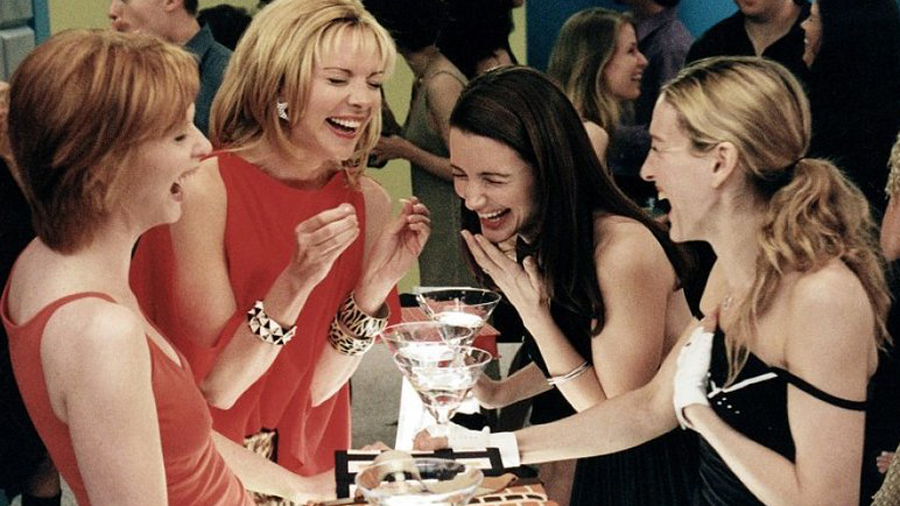
Babette is referring to Sex and the City, an American romantic comedy-drama television series, originally running from 1998 to 2004 on the cable channel Home Box Office (HBO). The show was based on the 1997 book of the same name by Connecticut-born author and journalist Candace Bushnell, which drew on her column of the same name for the New York Observer, describing the dating lives of herself and her friends.

The “four girls” in the show are the narrator, journalist Carrie Bradshaw (Sarah Jessica Parker), PR businesswoman Samantha Jones (Kim Cattrall), art gallery assistant Charlotte York (Kristin Davis), and lawyer Miranda Hobbes (Cynthia Nixon). The four friends have many sexually frank discussions (“talk dirty”) about their various relationships, and story lines include subjects such as oral sex, bondage and discipline, infidelity, pregnancy, abortion, and sexually transmitted infections.

Sex and the City has won numerous Emmy, Golden Globe, and Screen Actor’s Guild Awards, and is now regarded as a classic television show, still with a cult following. The show led to two feature films, and a prequel series, The Carrie Diaries.

It’s an interesting little throwaway in an episode devoted to The Donna Reed Show. Times certainly changed for women on TV between the mid-1960s and the early 2000s, but it’s a matter for debate whether any real progress was made, or whether the images of femininity on Sex and the City are any less glamourised, idealised, and unrealistic than on The Donna Reed Show.

Sex and the City, as a quippy, pop culture-laden, female-centred show created for a female audience, and focused on a successful single woman who’s attractive and glamorous, whose daughter is an aspiring journalist, is another forerunner to Gilmore Girls.
“Italians’ feet”

LORELAI Mmm. Kick-ass wine.
EMILY: How poetic.
LORELAI: It’s got a nice smell: earthy, vibrant. I can taste the Italians’ feet.

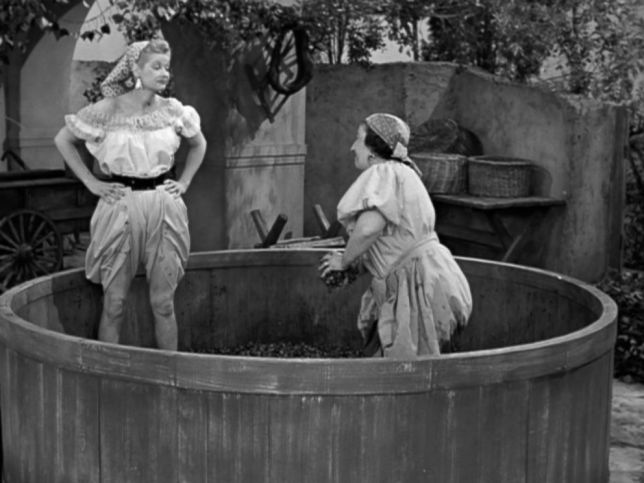
Lorelai is referring to grape-stomping or pieage, a traditional winemaking technique where the grapes are crushed by human feet – evidence of the practice can be found in pictures from ancient Egypt and ancient Rome. Since the Middle Ages this part of the winemaking process is nearly always done by machinery, and even in ancient times there were wine presses to do most of the work.

However, grape stomping has never been completely abandoned, and survives in small pockets. These days it is often a fun event at cultural festivals and wine festivals, and some vineyards will charge you for the pleasure of partaking in the activity.

The popular idea of grape stomping being part of the winemaking process can probably be traced back to I Love Lucy. In the 1956 episode Lucy’s Italian Movie, while on a trip to Rome a film producer suggests Lucy audition for his new movie called Bitter Grapes. Lucy thinks it must be about winemaking, so finds the only winery left in the area that still makes wine using grape-stomping so she can practice the technique in advance.

This probably explains why Lucy-loving Lorelai immediately connects the wine to Italian feet in particular.

“Written by a man”


Lorelai says that the scripts for The Donna Reed Show were written by a man, which Rory endorses. Although most of the writers on the show were male, there were female writers too, including Barbara Avedon (creator of Cagney & Lacey) [pictured], Helen Levitt, Erna Lazarus, Peggy Chantler Dick, Kay Lenard, Mathilde Ferro, Jacqueline Trotte, Sheila Lynch, and Janet Carlson.
Amusingly, That Damn Donna Reed was written by a man – Daniel Palladino. There may be a slight suggestion here that just because a man writes a script for female characters doesn’t automatically make it anti-woman or oppressive to them, just as a script by a woman isn’t necessarily a feminist text.

Lorelai and Rory’s Commentary

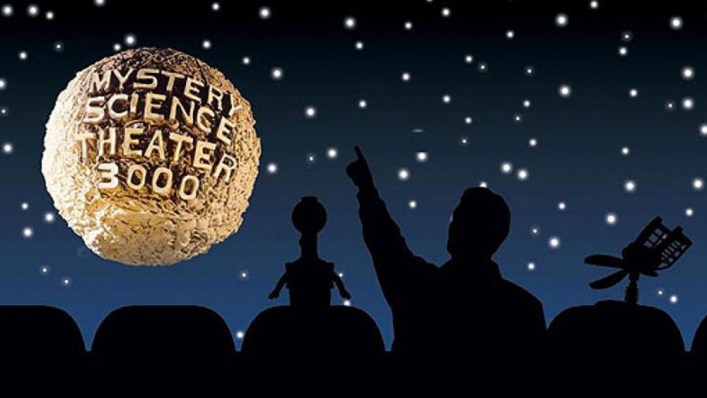
As they watch The Donna Reed Show, Lorelai and Rory make up their own snarky dialogue to accompany the episode. This is highly suggestive of the American comedy television series Mystery Science Theater 3000, which originally ran from 1988 to 1999.

The premise of the show is that the host has been kidnapped by mad scientists and imprisoned on a space ship to watch bad movies until it drives him crazy. To keep his sanity, the host builds sentient robots to act as his companions, and makes sarcastic comments on the film he is forced to watch. This may be one of the inspirations for Lorelai and Rory’s behaviour.

Donna Reed

DEAN: So, who’s Donna Reed?
LORELAI: You don’t know who Donna Reed is? The quintessential ’50s mom with the perfect ’50s family?
RORY: Never without a smile and high heels?
LORELAI: Hair, that if you hit it with a hammer, would crack?

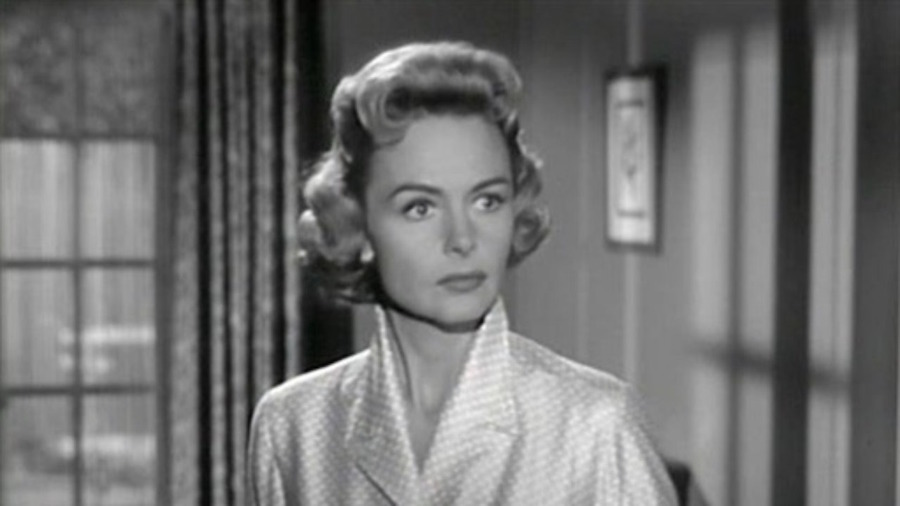
Donna Reed, born Donna Mullenger (1921-1986) was an American actress and producer, with a career lasting over 40 years, and roles in more than 40 films. She is well known for her role as Mary Bailey in the 1946 film It’s a Wonderful Life, and in 1953 won Best Supporting Actress playing Lorene Burke in From Here to Eternity.

The Donna Reed Show made her a household name and earned her a Golden Globe for Best Female TV Star, and several Emmy nominations. She also appeared on television in The Love Boat, and as Miss Ellie Ewing on Dallas from 1984-85, her final role.

As Lorelai and Rory only talk about Donna Reed in regard to her role on The Donna Reed Show, it suggests that they are ignorant about her life and career otherwise, or simply discount it. You can’t help but feel that the writer is setting them up as straw feminists.

The Donna Reed Show

This is the television program that Lorelai and Rory watch with Dean, and is the basis for the episode’s title.

The Donna Reed Show is a sit-com starring Donna Reed as middle-class housewife Donna Stone. Carl Betz played opposite her as Donna’s paediatrician husband Alex, and Shelley Fabares and Paul Petersen were their teenaged children, Mary and Jeff.

Although Lorelai and Rory consider the show hopelessly outdated and sexist, episodes occasionally examined issues such as women’s rights (not with any radical outcomes, it must be said). But Donna Stone was a more assertive mother than had previously been shown on television, and it was the first sitcom to focus on the mother as the central figure in a domestic comedy. It helped pave the way for shows such as Roseanne and even Gilmore Girls (both shows that Amy Sherman-Palladino worked on).

The Donna Reed Show was attacked by feminists in the 1970s as presenting an idealised view of domesticity, so Rory and Lorelai’s criticisms feel really behind the times. It’s strange that they are giving feminist opinions from a generation ago as if they are clever and new – maybe they really do watch too many old movies?

The Donna Reed Show originally aired from 1958-1966, and was one of the most popular programs of 1963-64. It was only cancelled when Donna Reed became tired of doing the show.

Reruns of The Donna Reed Show were shown on Nick at Nite from 1985 to 1994. It wasn’t on TV in 2001, and hadn’t yet been released on DVD, meaning that the only way Lorelai and Rory can be watching the show is because they taped it off TV ages ago and are still watching it on video at least seven years later. Despite their mocking of the show, they must really be huge fans! (Again, how a show that hadn’t been on TV in nearly a decade is a relevant target for their attacks is a puzzle).

Jellystone Park

RORY: You were right [about Madeline and Louise checking out two guys].
PARIS: And before it’s dark, they’ll have every picnic basket that’s in Jellystone Park.

Paris is referring to the Hanna-Barbera cartoon character Yogi Bear, who, together with his sidekick Boo-Boo Bear, spent all his time trying to steal picnic baskets from Jellystone National Park (based on the real life Yellowstone National Park). Yogi Bear made his debut in 1958 on The Huckleberry Hound Show, and got his own show, The Yogi Bear Show, in 1961. Since then he’s appeared in numerous TV shows, animated films, video games, and comic books.

Paris is likening Yogi and Boo-Boo’s obsession for stealing picnic baskets to Madeline and Louise’s persistence in going after guys.

Joanie Loves Chachi

LOUISE: So how’s that going? Are you two [Rory and Dean] still Joanie Loves Chachi?
RORY: God, I hope not.

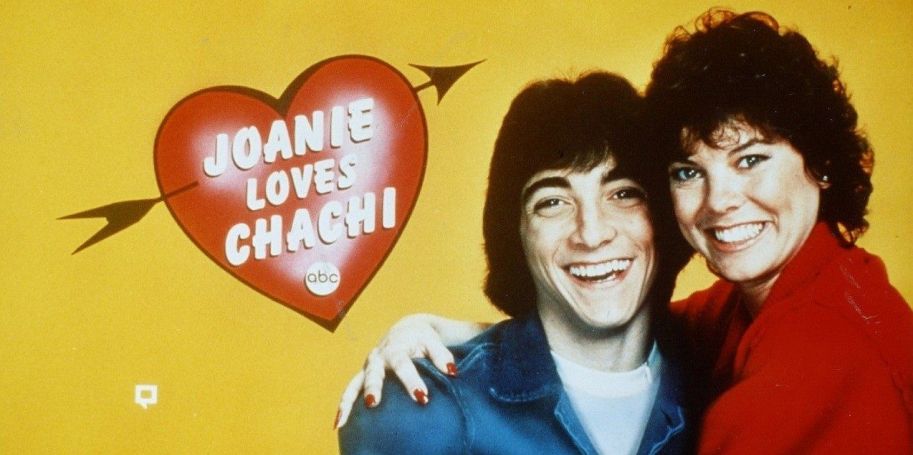
Joanie Loves Chachi was a sit-com which ran from 1982-1983. A spin-off from Happy Days, it starred Erin Moran as Joanie Cunningham (Richie Cunningham’s sister), and Scott Baio as her boyfriend Chachi Arcola (The Fonz’s cousin), with the pair becoming singer-songwriters in Chicago. The show quickly tanked as it turned out people weren’t watching Happy Days so they could see these two lovebirds warble at each other.

Rory’s disgusted response seems to indicate that she knows the show was a disaster and doesn’t want her relationship compared to it. The show ended before Rory and Louise were born, and was never popular, but reruns were shown on Nick at Nite (apparently all teenagers on Gilmore Girls watched Nick at Nite so they could keep up with 1980s cultural references).