White Slavery

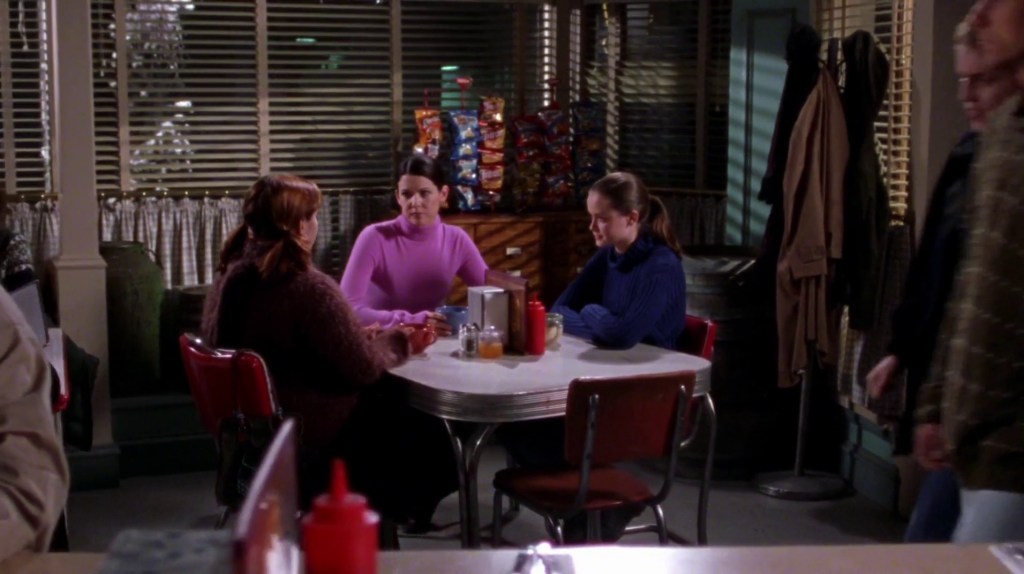
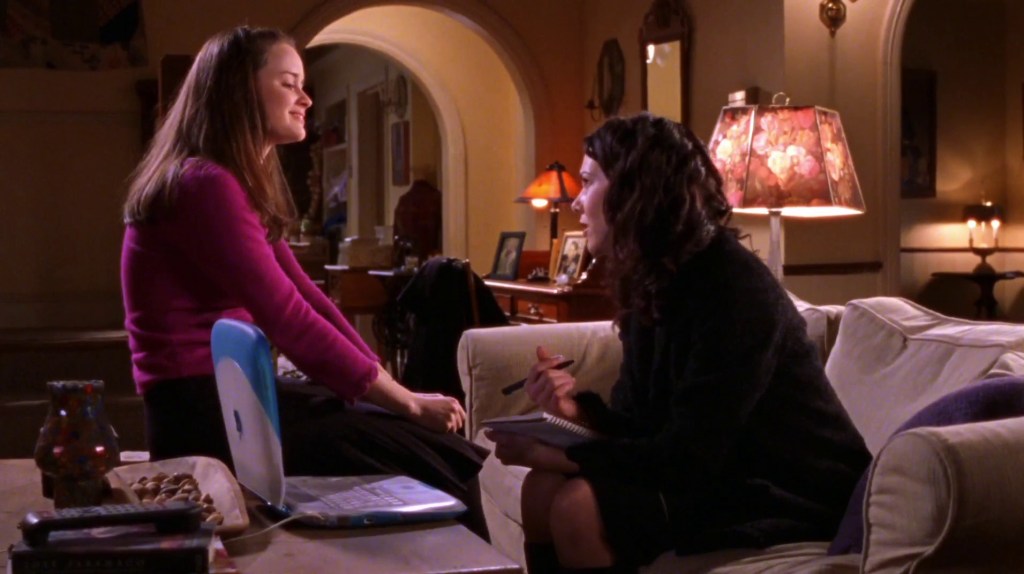
RORY: You know Mom, I hate to bring this up, but I think there’s a really obvious solution to our problem …
LORELAI: I think if I sold you into white slavery, I would miss you.

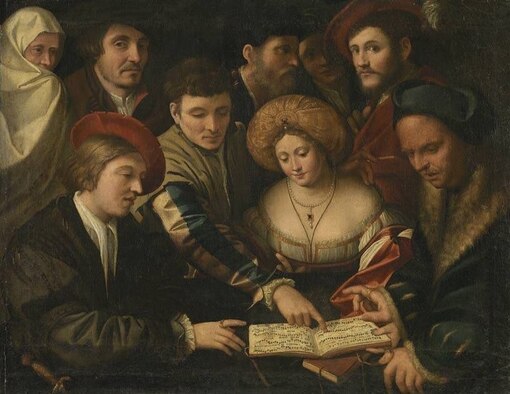
“White slavery” is a term for sex trafficking dating to the 19th and early 20th centuries, which came to become a blanket term for prostitution, especially that of minors. The name comes from the accounts of white women captured and enslaved in Middle Eastern harems, the so-called “Circassian beauties” from the Caucasus.

Stretch Corduroy and Low Rise Jeans

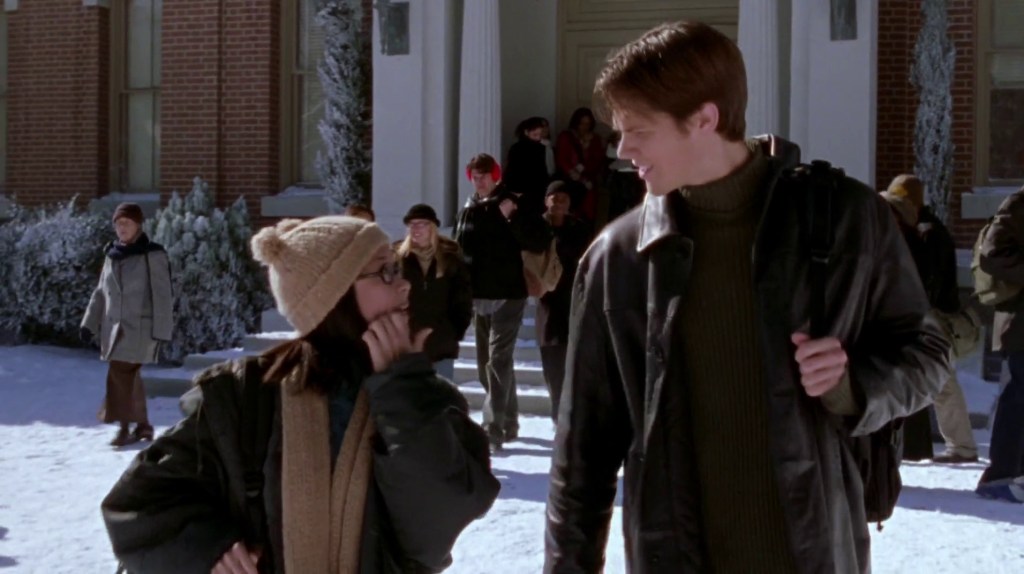
PARIS: Madeline’s 500 words on test anxiety spends 400 of them arguing that stretch corduroy is the best material for low-rise jeans.

Corduroy is a durable fabric with a distinctive raised texture that gives the illusion of stripes. Stretch corduroy has a small amount of spandex added to the fabric so that it can flex both vertically and horizontally.

Low-rise jeans, or low-cut jeans, are jeans that sit low on, or below, the hips, usually at least 8 cm below the navel. They came into use in the 1990s for both sexes, with their popularity increasing in the 2000s.

Shindig

DEAN: Hey Lane. Are you going to this big shindig at the inn tonight?
LANE: Yeah, I’m just trying to trick my mom into not going with me.

A shindig is an informal word for a small party, especially one that is lively, noisy, or out of control. Originally it was entirely rural, and seems to come from the American South, with the suggestion that the dancing was going to get so vigorous in such a small space that you’d literally be kicking people’s shins. It is not impossible that there is a connection with the Scottish Gaelic word sinteag, meaning “jump, leap”.

Slumber Party

LORELAI: Hey, you know what? Let’s invite everyone …
RORY: And they could even stay in the inn. All those empty rooms, all those uneaten pillow mints.
LORELAI: An out of control, over the top slumber party!

A slumber party, pyjama , or sleepover, is a party where everyone sleeps in the same house. Typically people play pranks and games, watch movies, or stay up all night talking and laughing. Usually for children and teenagers, if organised by adults, expect a lot of drinking, just like the Bracebridge Dinner!

Lorelai avoids Sookie’s plan of her having a cosy dinner with Luke by impulsively inviting everyone they know to the cancelled Bracebridge Dinner. It may not be entirely a coincidence that she also avoids Rory and Jess having a cosy dinner together. The idea of spending some quality time with Jess probably doesn’t appeal much to Lorelai.

This episode (like many of the “towny” instalments) is justifiably a fan favourite, and much of the appeal comes from the wish fulfilment of staying in a hotel with all your friends for free, eating a massive fantasy banquet, doing snow-related activities, and drinking until dawn. Who wouldn’t enjoy that?

Smad

SOOKIE: Oh, that makes me so mad. And so sad. I’m smad!

Smad is a portmanteau word that Sookie invents – that is, a word combining two or more words. Examples would be motel, brunch, smog, spork, sitcom, romcom, dramedy, mockumentary, cosplay, bromance, himbo, Bollywood, chillax, hangry, email, podcast, fanzine, infomercial, emoticon, and chocoholic.

Portmanteau words are a feature of Lewis Carroll’s Alice Through the Looking Glass, previously mentioned. In fact, it was Carroll who invented the term “portmanteau word”. A portmanteau is an old-fashioned suitcase that has two parts hinged together [pictured], just as a portmanteau word has two words hinged together.

Molecular Transport Device

LORELAI: I offered to fund the instant invention of a molecular transport device but they just didn’t go for it.

A reference to the 1975 musical comedy horror film, The Rocky Horror Picture Show, based on the 1973 stage musical. In the film, the mad scientist Dr Frank-n-Furter (played by Tim Curry) has a Sonic Transducer in his laboratory – an “audio-vibratory-physio molecular transport device”. It is capable of breaking down solid matter and projecting it through space, and possibly time.

A transducer is something which converts energy from one form to another (such as light into an electrical signal). A microphone is an example of a transducer – indeed, a sonic transducer, since it changes sound waves into electrical signals. In the musical, it’s basically a teleportation device. See Beam me up, Scotty.

(Picture shows Dr Frank-n-Furter standing against the Sonic Transducer).

Mexican Bean

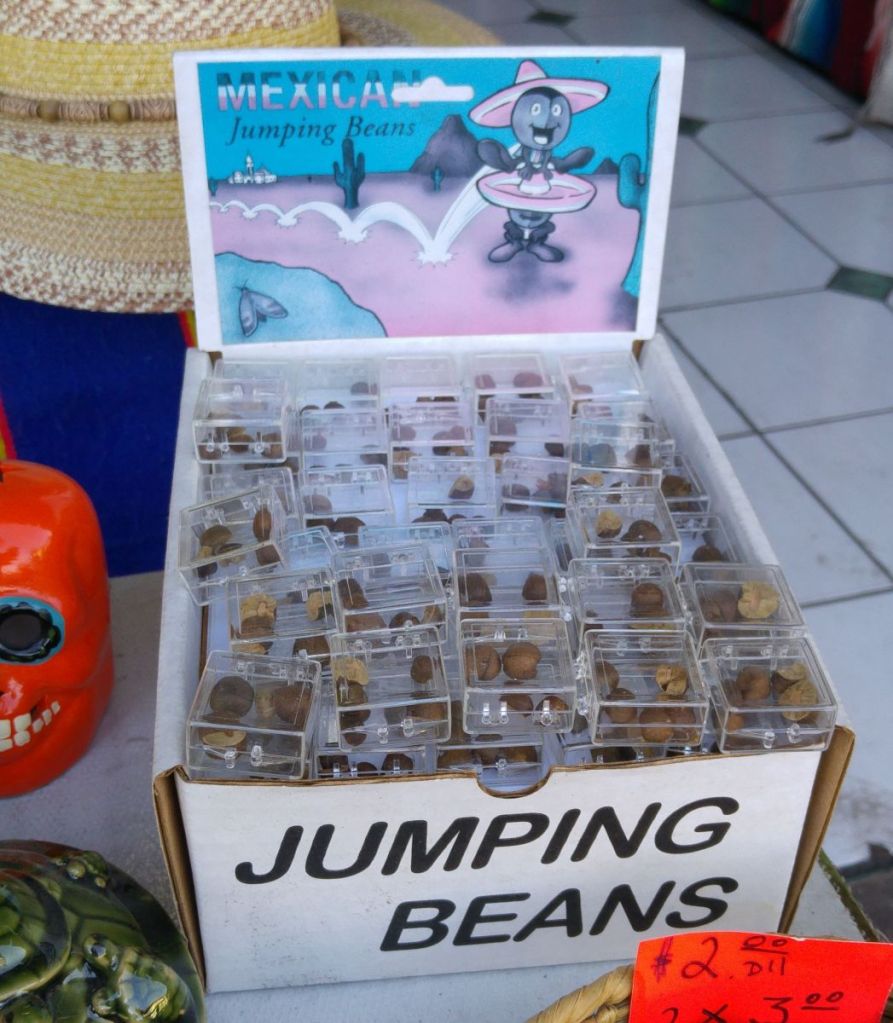
MICHEL: Stop jumping like a Mexican bean.

Mexican jumping beans are not really beans, but seed pods of the plant Sebastiana pavonia, native to Mexico and Costa Rica. The seeds can become inhabited by the larva of a small moth, and if it becomes warm, it will move to eat, causing the seed to “jump”. Holding one in your hand will warm it to the point it becomes quite lively. They are sold as children’s novelty items in the US, and it is common to say that an excitable child is hopping about “like a Mexican jumping bean” .

Sock Hops and Clambakes

PARIS: I’d really like to get an ‘A’ on this assignment, and in order to do that I’m afraid you’re gonna have to discuss your sock hops and your clambakes some other time, okay?

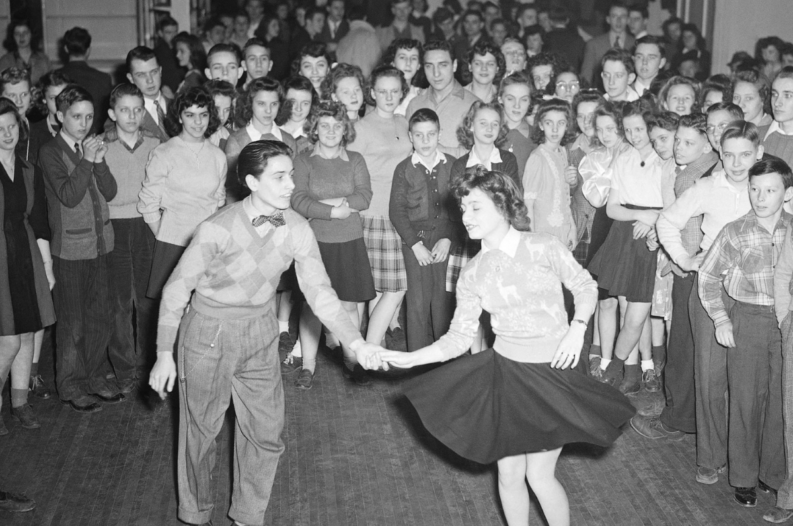
A sock hop [pictured] was an informal sponsored dance event for teenagers in the 1940s and ’50s, commonly held at high school gyms and cafeterias, and often as a fundraiser. The name comes from the fact that dancers were asked to remove their shoes so as not to damage the varnished floor of gymnasiums. The name was dropped once sneakers became common, so shoes could be worn. What we’d call a “school dance” today.

A clambake is a traditional method of cooking shellfish, such as lobsters, clams, and mussels, by steaming them over seaweed in a pit oven. Vegetables such as potatoes, onion, carrot and corn can be added. Usually held as festive occasions along the New England coast.

Chang and Eng

PARIS (to Rory): Why don’t they just sew our sides together and rename us Chang and Eng?

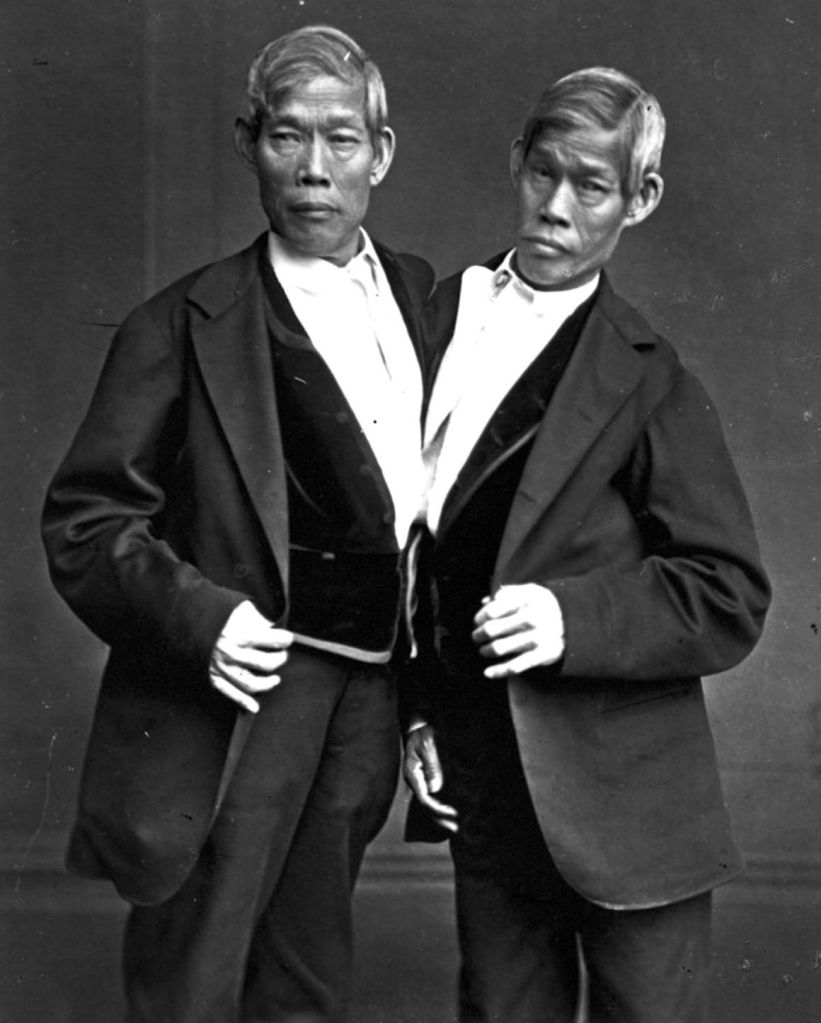
Chang and Eng Bunker (1811-1879), Siamese-American conjoined twins of Chinese ancestry, previously mentioned. Born in modern-day Thailand (then called Siam), they were brought to the US in 1829, and became wealthy by exhibiting themselves in “freak shows”. After ten years, they retired from touring, became American citizens, bought slaves, married two sisters, and fathered twenty-one children between them. For many years, conjoined twins were called “Siamese twins” because of Chang and Eng’s birthplace.