Research on Donna Reed

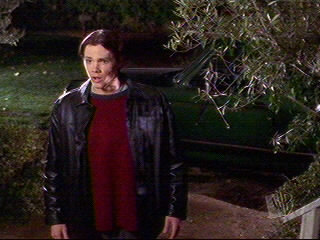
DEAN: As amazing as this whole thing was, I mean, the music, the outfit, the dinner, I hope you know that I don’t expect you to be Donna Reed. And I don’t want you to be Donna Reed. That’s not what I meant. This just totally got blown out of proportion. I’m actually pretty happy with you.
RORY: I know, and I appreciate that, but aside from this actually being fun, I did a little research on Donna Reed.
DEAN: You did research on Donna Reed.
RORY: Look. See, she did do the whole milk and cookies wholesome big skirt thing, but aside from that, she was an uncredited producer and director on her television show, which made her one of the first women television executives. Which is actually pretty impressive.

After her argument with Dean, Rory looked up Donna Reed on Internet Movie Database (IMDd); this was first formed in 1990, began as a website in 1993, and incorporated in 1996. By this stage at least, she must know Donna Reed was real!

Donna Reed and her husband Tony Owens had a production company named Todon (made from both their names) which produced The Donna Reed Show, and Donna Reed helped develop the show. I can’t find any reference to her actually directing any episodes, though presumably as it was her show she would have had a fair amount of creative control.

Rory’s research actually supports her original argument that The Donna Reed Show is sexist, since Donna Reed’s role as an executive producer was uncredited, with her husband receiving the credit. Oddly enough, she somehow seems to think it negates her argument.

However, this episode of Gilmore Girls wants to make an important point about the history of women in television which is generally overlooked. As a female producer herself, Amy-Sherman-Palladino often had to fight to get her ideas taken seriously, and people who had only seen her name on scripts sometimes assumed it was a female pseudonym adopted by a man – Aaron Sorkin was one suggestion.
Johnny Angel

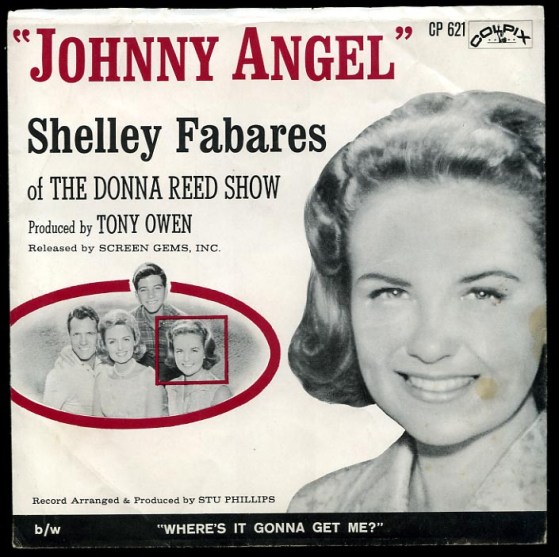
This is the song which plays while Rory and Dean are eating their home-made dinner together at Babette’s.

Johnny Angel is a 1962 teen pop song by Shelley Fabares, the actress who played Mary Stone on The Donna Reed Show. It was a cover version of a song written by Lyn Duddy and Lee Pockriss, and had been earlier recorded with little success. The song was the first single released from Fabares’ debut album Shelley!, and premiered on The Donna Reed Show. It went to #1 on the charts, and sold over one million copies.

The song tells of a girl’s great love for boy, as if to say that Rory is making such a big effort for Dean because she really loves him and wants his approval. The link with Donna Reed makes it an apt choice.

Rory’s Dinner for Dean

Appetisers (premade pastry shells filled with what looks like some sort of processed cheese-like product, such as Velveeta or Cheez Whiz)

Steak

Mashed potatoes (instant, made from a boxed mixture)

Green beans (from a can)

Dinner rolls (ready-made dough, just needs to be placed in oven)

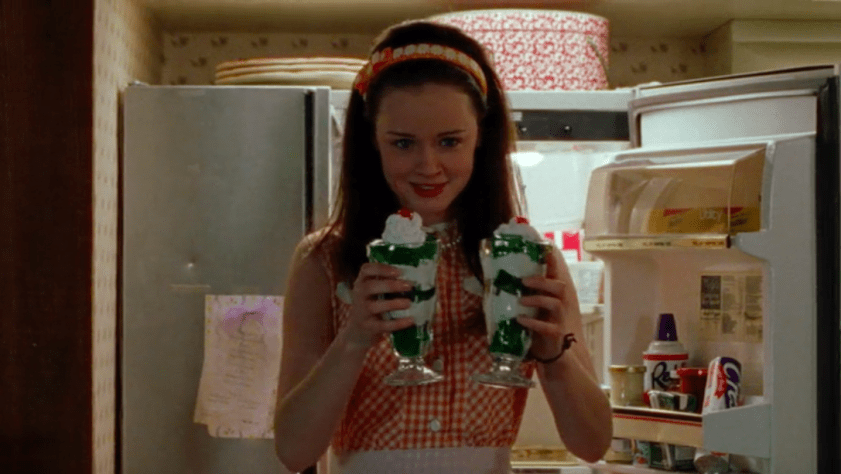
Lime Jello-O (from a box) with Cool Whip imitation cream (from a can) – quick setting due to being made in individual glasses rather than a bowl

Rory’s dinner is clever because most of the ingredients are processed, with each of the food items being available during The Donna Reed Show era of 1958 to 1966. From a practical point of view, it means that Rory, who can’t cook, didn’t have to do a lot of actual food preparation – frying the steak was the only part that required any real kitchen skill, and is pretty basic.

On a deeper level, it is showing the artificiality of the era, and the “fakeness” of being a perfect 1950s/1960s housewife. Obviously any woman who, like Donna Stone, has to provide extraordinary amounts of food, as well as keeping the house spotless, doing the laundry, child-raising, volunteering, and looking immaculate at the same time has to rely on processed and convenience food to save time. It’s unlikely Dean picks up on this sly comment, however.

Unlike the dress, the ingredients for the dinner are easily explained – Babette told Rory there was tons of food in the house, and implied that she could help herself.

“Honey, you’re home”

RORY: Honey, you’re home. Well, say something.
DEAN: Trick or treat?

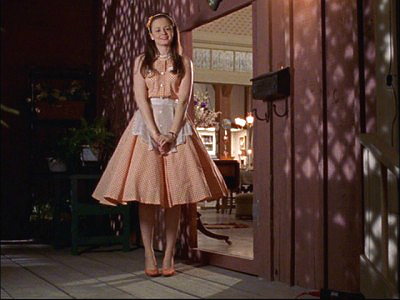
When Rory welcomes Dean wearing her 1950s housewife outfit, she inverts the traditional sit-com catchphrase, “Honey, I’m home!”, perhaps most associated with The Dick Van Dyke Show (1961-1966). Dean doesn’t know what to say, except “Trick or treat?”, the Halloween catchphrase – showing that he recognises Rory is in costume.

Where Rory’s outfit comes from is a complete mystery. It doesn’t look like a collection of clothes she or Lorelai would have at home, and besides she’s been at Babette’s (the dress at least can’t be Babette’s – she and Babette are completely different heights). Did she make a quick stop at a vintage clothing store on the way back from Lane’s, or borrow the clothes from the costume box used for Stars Hollow theatre productions?

In an episode where very little actually makes sense, the dress it just one more unexplained element. It’s almost like those cartoons where characters can pluck anything they need from the air, such as a hammer or a bouquet of flowers.

Flower Girl of Bordeaux

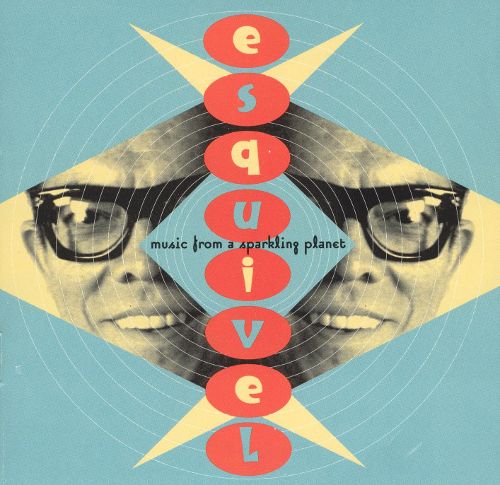
This instrumental piece by Mexican band leader and composer Juan García Esquivel, often known by his surname only, is the “interesting music” which is playing when Dean first arrives at Babette’s and finds Rory in costume. It is from the CD that Rory got from Lane’s “miscellaneous” section, and which she described as “the weird one”.

Esquivel is considered to be the king of late 1950s-early 1960s quirky instrumental pop, or lounge music – Rory’s choice of his music shows that while she has tried to be faithful to period, she is doing so with her own idiosyncratic style, and subverting conventional expectations.

Esquivel’s music was released on a series of CDs in the 1990s; Flower Girl of Bordeaux is from the 1995 compilation album Music From a Sparkling Planet.

Notice how this is a slight callback to the “kick ass” Bordeaux wine drunk earlier in the episode; perhaps an allusion to how intoxicating Rory appears to Dean.

Dean’s Phone Call

RORY (on Babette’s phone): Hello?
DEAN: Um, I wasn’t sure if you still wanted me to come over.
RORY: Oh, I do. I do, I absolutely do.

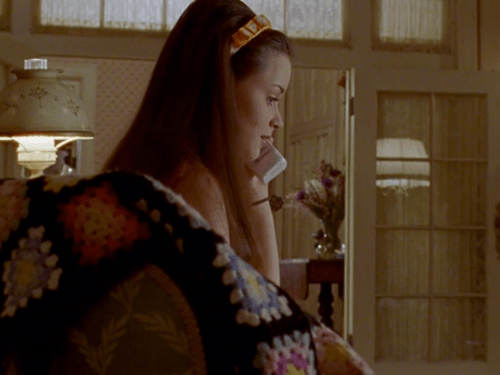
It isn’t clear how Dean knows Babette’s phone number, as Rory didn’t leave it when she rang Dean’s house. It suggests that once he knew that Rory was house-sitting for Babette, he immediately looked her number up in the phone book, and programmed it into his cell phone. Which is a little creepy.

The show tries to make it look as if Rory is sitting in the nude waiting for Dean, even though that doesn’t make any sense. Why would you get naked (while wearing a hair band) while waiting for your boyfriend to come over, especially if you’re not sure he’s even coming? Wouldn’t you look pretty silly if (for example) your mother who lives next door popped over to see how you were getting on in the meantime? And isn’t it kind of gross to sit on your neighbours’ furniture in the nude while they’re away?

However, what Rory is actually wearing and planning doesn’t make much sense either: what would she have done if Dean hadn’t arrived at that point? And Dean’s stalkerish phoning from just outside the house will backfire on him in a future season.

Lorelai’s Magazines

LORELAI: Okay, the last sighting was here, by the InStyle magazine. But then she burrowed through the Glamour and jumped over the Cosmo and knocked over a brand new bottle of nail polish so all I can tell you is if there was any doubt that this chick was a girl, well, there isn’t anymore.

InStyle (founded 1994), Glamour (founded 1939), and Cosmopolitan (founded 1886, became women’s magazine in 1965), are magazines with a focus on beauty, fashion, celebrities, and lifestyle.

Lucy Ricardo

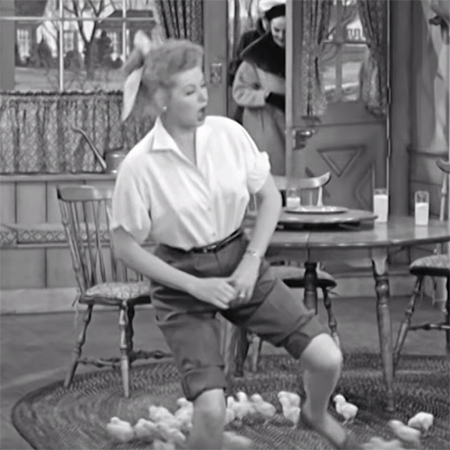
LORELAI: Luke? Stella got out and I don’t know – do I put seed on the floor? Do I make cheeping sounds? Or do I pull a Lucy Ricardo and walk like a chicken so she thinks I’m her mother?

On I Love Lucy, earlier discussed, there was a point in the show when New Yorkers Lucy and Ricky Ricardo began a new life in Connecticut. In the episode Lucy Raises Chickens (4 March 1957), Lucy tries to make money to pay the bills by raising five hundred chickens in the house, and attempts this method of bonding with them.

Marcel Marceau

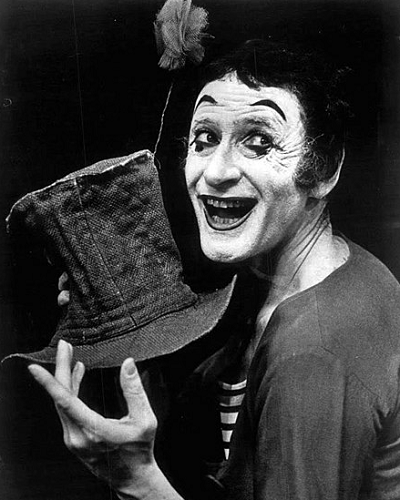
LORELAI: All day long, just chirps like a maniac at the top of her lungs. Now, nothing. Silence. Marcel Marceau chicken.

Marcel Marceau, born Marcel Mangel (1923-2007) was a French actor and mime artist, who called mime “the art of silence”. He was most famous for his stage persona of Bip the Clown, who wore a striped jersey and opera hat. Marceau performed for more than 60 years, winning multiple awards, and helping to inspire the dance style of Michael Jackson.

As a young man during World War II, Marceau worked with the French Resistance to save Jewish children from concentration camps, and also won awards for this humanitarian work.