Stanley and Stella

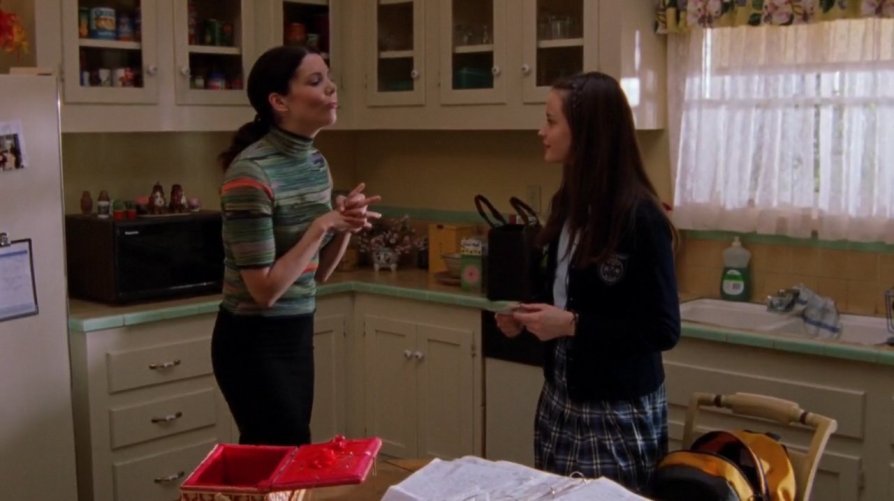
LORELAI: Alright, I’ll name him. [to chick] Hi! Your name is Stanley. Hi, Stanley.
RORY: It’s a girl.
LORELAI: Oh. [to chick] Sorry about the Stanley thing. Your name is Stella. [to Rory] Stella’s nice, and Stella was married to Stanley.

A reference to the 1947 play A Streetcar Named Desire by Tennessee Williams, earlier discussed. In the play, Blanche DuBois’ younger sister Stella is married to Stanley Kowalski, a factory parts salesman.

A Streetcar Named Desire was highly successful on Broadway and in London’s West End, and won the 1948 Pulitzer Prize for Drama. It is regarded as one of the greatest plays of the twentieth century, and is Williams’ best known work. The roles of Stanley and Stella were played by Marlon Brando and Kim Hunter in both the original Broadway production, and the 1951 film version.

I think Lorelai is saying the name Stella is nice, rather than the character, but can’t be quite sure.

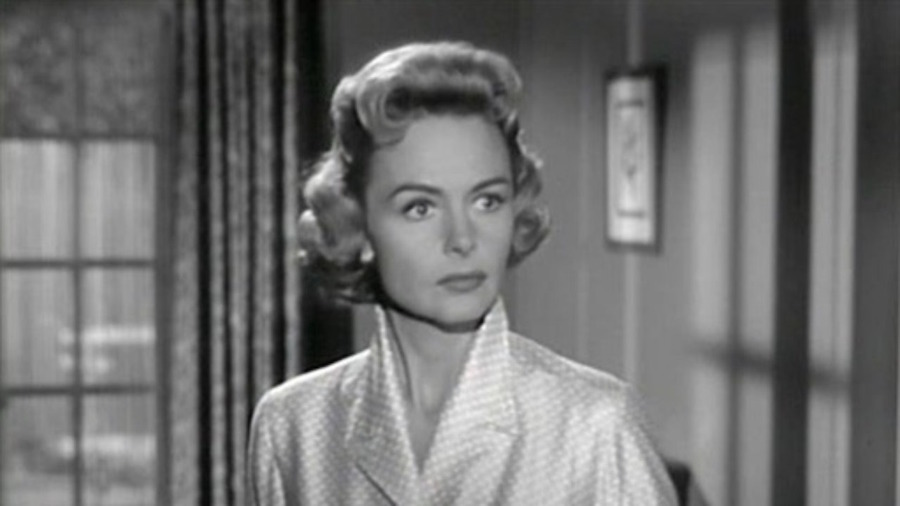
“Donna Reed wasn’t real”

DEAN: You do realize that Donna Reed wasn’t real, don’t you?
RORY: Yes, I know she wasn’t real, but she represented millions of women that were real and did have to dress like that and act like that.

Maybe Dean has an excuse for not knowing this, but how can Rory not know that Donna Reed was a real person? She’s been watching The Donna Reed Show for years, it seems, and would have seen the name Donna Reed in the credits, if nothing else.

Not only that, but the character of Donna Stone on The Donna Reed Show was strongly based on Donna Reed’s real personality and way of life, to the point where friends and family could instantly recognise the character as a TV version of the actress. Even the fictional character has a basis in fact.

Dean and Rory’s Argument

Dean might have kept his mouth shut in front of Lorelai, but now he and Rory are alone they end up arguing about The Donna Reed Show. He basically can’t see anything wrong with a woman cooking dinner for her husband and family, and points out that’s exactly what his mother did for years, and now that she works, she still does it on the weekends.

Their different family backgrounds have helped shape their differing values, and Rory cannot really find a way to respect Dean’s experiences and views without feeling that she is betraying Lorelai, and the way she was raised. In fact, she sounds as if she’s beginning to have doubts about whether Lorelai is completely in the right.

Her argument that it’s okay for Dean’s mother to cook if she wants to because women have choices now doesn’t really make sense. If women (like Mrs. Forester) are free to do as they wish now, then why is Rory getting upset about how things were in a previous era? Why is it even an issue? And how exactly does it affect her?

Rory’s read books on feminism, but isn’t able to explain her feminist ideals to Dean. Perhaps she’s afraid that if she did so, the difference in their opinions and values would become too starkly obvious. Or maybe she wonders if Simone de Beauvoir can really help in this situation.

When Dean says that Rory only thinks the way she does because of her mother, it raises the question, yet again, as to whether Rory even has an identity of her own apart from Lorelai. Perhaps because of this comment, she doesn’t confide in Lorelai as to what’s bothering her, or what she plans to do.

Sunday Best

Troubadour Bus

This is the song that the town troubadour is singing when Rory gets off the bus and is met by Dean. It is the first appearance of the troubadour in the show, played by indie rock singer Grant Lee Phillips, and named Grant in the credits.

It is ambiguous whether the troubadour is actually meant to be the real Grant Lee Phillips who (like many other other celebrities) also exists in the Gilmore Girls universe, or whether Phillips is playing a fictional character who just happens to have the same first name. Perhaps he is a sort of parallel universe version of himself.

Sunday Best was a bonus track on the Australian release of Phillips’ 2001 album Mobilize, however that was months after this episode aired.

Paul and Linda McCartney

LORELAI: You know, this is only like the second night we’ve ever spent apart. Doesn’t that make you sad?
RORY: Yeah, but I’ll get over it.
LORELAI: Uh-huh. Well, Paul and Linda McCartney only spent eleven nights apart their entire relationship. Did you know that?

Paul McCartney is an English musician and singer-songwriter who gained fame as the bass guitarist and singer for the rock band The Beatles. He married his first wife, American photographer Linda Eastman in 1969, and they remained together until the end of her life. Paul and Linda McCartney were a famously close couple, who shared interests in nature, vegetarianism, and animal rights.

In 1993, Paul told People magazine that the eleven days he spent in gaol in Tokyo in 1980 after being found in possession of marijuana was the only time that he and Linda spent apart. This was often quoted in obituaries for Linda, who died of breast cancer in 1998 at the age of 56, which is probably where Lorelai recalls this information from.

It is a bit worrying that Lorelai compares her relationship with Rory to that of a married couple: it might be desirable for a husband and wife to never be separated, but not a mother and daughter. This might be because Lorelai and Rory were partly based on a real life married couple: Amy Sherman Palladino and Daniel Palladino.

“Four girls talking dirty”

BABETTE: He’s [the new kitten] just the cutest thing. But he’s so teeny. There’s no way he can go with us and I would hate for him to stay all alone in the house so I was thinking maybe Rory could come over and house-sit for the evening.
RORY: I’d love to.
BABETTE: Oh great! We’ve got a kitchen full of food and Morey just got cable so you can watch those four girls talking dirty if you want to.

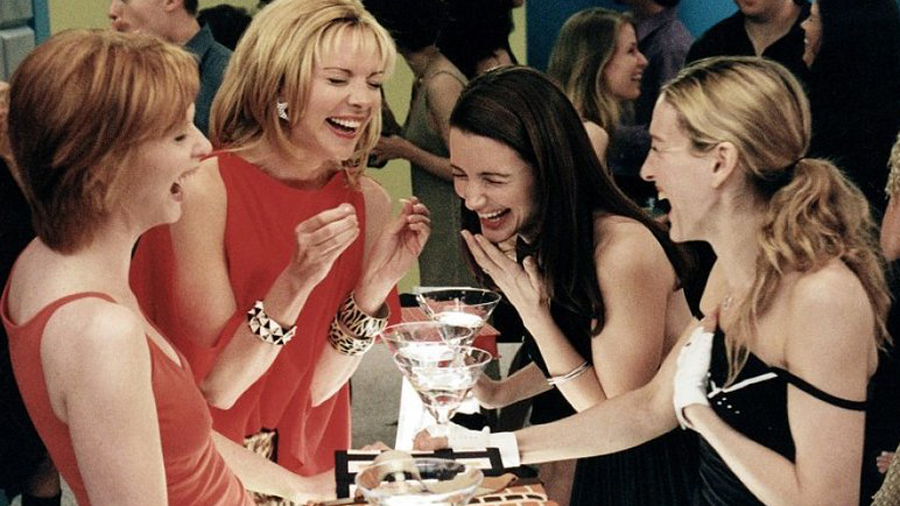
Babette is referring to Sex and the City, an American romantic comedy-drama television series, originally running from 1998 to 2004 on the cable channel Home Box Office (HBO). The show was based on the 1997 book of the same name by Connecticut-born author and journalist Candace Bushnell, which drew on her column of the same name for the New York Observer, describing the dating lives of herself and her friends.

The “four girls” in the show are the narrator, journalist Carrie Bradshaw (Sarah Jessica Parker), PR businesswoman Samantha Jones (Kim Cattrall), art gallery assistant Charlotte York (Kristin Davis), and lawyer Miranda Hobbes (Cynthia Nixon). The four friends have many sexually frank discussions (“talk dirty”) about their various relationships, and story lines include subjects such as oral sex, bondage and discipline, infidelity, pregnancy, abortion, and sexually transmitted infections.

Sex and the City has won numerous Emmy, Golden Globe, and Screen Actor’s Guild Awards, and is now regarded as a classic television show, still with a cult following. The show led to two feature films, and a prequel series, The Carrie Diaries.

It’s an interesting little throwaway in an episode devoted to The Donna Reed Show. Times certainly changed for women on TV between the mid-1960s and the early 2000s, but it’s a matter for debate whether any real progress was made, or whether the images of femininity on Sex and the City are any less glamourised, idealised, and unrealistic than on The Donna Reed Show.

Sex and the City, as a quippy, pop culture-laden, female-centred show created for a female audience, and focused on a successful single woman who’s attractive and glamorous, whose daughter is an aspiring journalist, is another forerunner to Gilmore Girls.

Village Vanguard

BABETTE: Well, see, Morey just got a call to play a gig at the Village Vanguard tonight so we got to go to New York.

Village Vanguard is a jazz club on Seventh Avenue South in Greenwich Village. It opened in 1935 and at first featured many forms of music, such as folk and beat poetry. It became focused solely on jazz in 1957. Some of the big stars who have played at the Village Vanguard include Miles Davis, Thelonious Monk, Charles Mingus, and Sonny Rollins.

It’s an internationally renowned club, so it’s a demonstration of Morey’s recognised talent that he was chosen to play here (even though it seems a bit last minute).

Catherine the Great

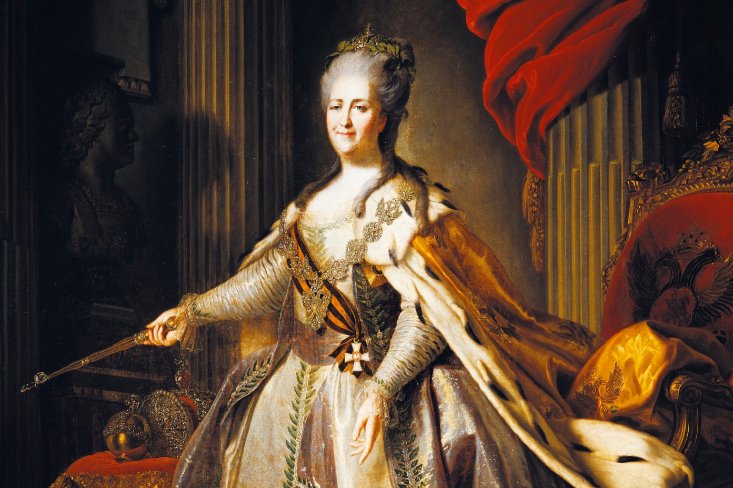
While Lorelai is mending her Chilton school sweater, Rory studies for a History test (her midterm exam?), reading through index cards on Catherine the Great.

Catherine II (1729-1796), also known as Catherine the Great, was Empress of Russia from 1762 to 1796, the country’s longest-ruling female leader. Under her reign, Russia grew larger and stronger, and was recognised as one of the great powers of Europe, while the period of her rule is considered the Golden Age of the Russian Empire and the Russian nobility. As patron of the arts, she presided over the Russian Enlightenment, and decreed the first state-funded institute of higher learning for women.

As Rory’s notes say, she was born Princess Sophie Friederike Auguste von Anhalt-Zerbst-Dornburg in Prussia. Although Lorelai jokes that everyone called her Kitten, her nickname was Figchen, a short form of her middle name Friederike. She received the name Yekaterina (Catherine) in 1744 on converting to the Russian Orthodox faith in preparation for her marriage.

Catherine married her second cousin Peter von Holstein-Gottorp, Duke of Holstein-Gottorp (that’s in north-west Germany) in 1745 – not 1754 as Rory says. Their marriage was indeed unhappy, and Catherine detested Peter at first sight. He had a difficult personality, and both of them were unfaithful to each other, with Catherine taking many lovers during her lifetime.

Peter became Peter III, Emperor of Russia in 1762, but six months later was deposed and possibly assassinated as the result of a conspiracy led by his wife Catherine, who succeeded him to the throne.

In an episode focused on women’s roles, this is a reminder of one of history’s most powerful female leaders.

“Not in the budget”

RICHARD: It costs a fortune to travel first class in Europe. We only do it every two years
EMILY: In the fall.
RICHARD: It’s just not in the budget this year.

Richard and Emily didn’t go to Europe the previous fall, so they would normally have gone this fall, except that it’s not in the budget. Most likely that’s because they are paying for Rory’s schooling – a year’s tuition at Chilton would be enough money for two first-class vacations in Europe. (Of course the idea they could have a cheaper holiday is one they can’t get their heads around, and they wouldn’t enjoy it anyway).

Richard and Emily are extremely tactful about this shortfall of money, even after Lorelai and Rory keep cluelessly pushing them on the issue. Think how easy it would have been for them to snap (or even state calmly), “We’re not going to Paris because we need the money for Rory’s education!”. It’s to their credit they never make Rory feel like a financial burden, and are quick to reassure her if someone else tries to imply that she is.