Lewis Carroll

EMILY: We know that it’s [Europe] there in the spring but we never go in the spring because we always go in the fall.
LORELAI: It’s getting a little too Lewis Carroll for me.

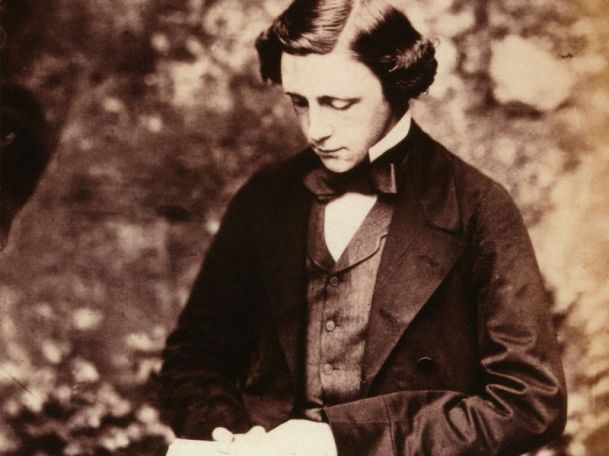
Lewis Carroll was the pen name name of Charles Lutwidge Dodgson (1832-1898), an English writer, mathematician, logician, Anglican deacon, and photographer. In his fantasy works such as Alice’s Adventures in Wonderland, earlier discussed, Carroll constantly plays with language and logic in a nonsensical way. Emily’s statement would not sound too out of place in Carroll’s Wonderland.

Paris

While suggesting that Richard and Emily go to Paris instead of Martha’s Vineyard, Lorelai and Rory mention some of the things associated with this city.

Impressionism: A 19th century art movement associated with small, thin brushstrokes; an emphasis on light and movement; unusual angles; and ordinary subject matters. The movement arose in Paris during the 1870s and 1880s with a number of independent art exhibitions. Famous impressionist artists include Claude Monet, Pierre-Auguste Renoir, and Camille Pissarro.

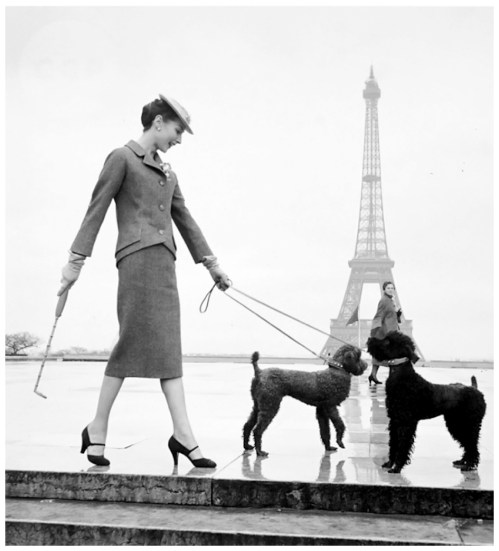
Poodles: A stereotypical image of Paris is an elegant middle-class woman taking her poodle for a walk. Although poodles were very fashionable in France some decades ago, they have fallen out of favour and are no longer chic. (The photo used was taken by American photographer Louise Dahl-Wolfe, and first published in 1940).

Crème brûlée: A rich, creamy custard dessert with a hard caramel topping. It originated in Spain, and was first given its French name (which means “burnt cream”) in the 17th century. It wasn’t common until the 1980s, and was popularised by Italian chef Sirio Maccioni at his New York restaurant Le Cirque. It isn’t particularly Parisian, although you can certainly eat it while in Paris.

It’s in keeping with their lack of travel experience that Lorelai’s and Rory’s visions of Paris are distinctly dated and second-hand.
Martha’s Vineyard

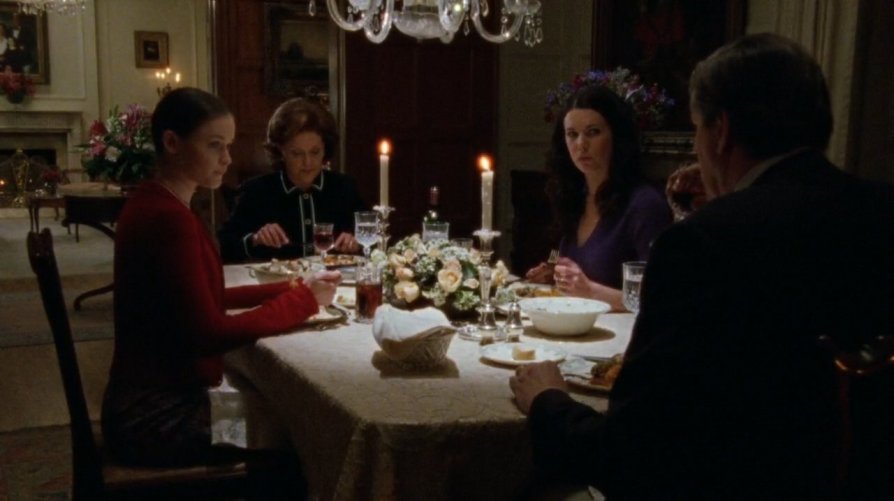
RORY: So when do you guys leave for Martha’s Vineyard?
RICHARD: Ah, we’re not going to Martha’s Vineyard this year.

Martha’s Vineyard, often known as The Vineyard, is an island off Cape Code in Massachusetts, known for being an affluent summer colony. More than half the island’s homes are occupied only seasonally, and the population of around 16 000 can rise to over 100 000 in the summer.

Notice how cleverly the dialogue goes from wine, to wine making, to The Vineyard.

Bordeaux

LORELAI: It’s [the wine’s] got a nice smell: earthy, vibrant. I can taste the Italians’ feet.
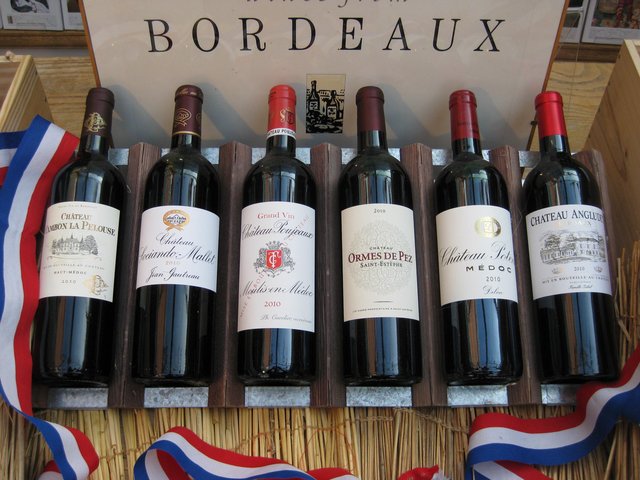
RICHARD: It’s a Bordeaux. It’s French.

A Bordeaux is any wine which comes from the Bordeaux region of south-eastern France, centred around the city of Bordeaux. It is the largest wine-growing region in France, and most Bordeaux wines are red. They can range in quality from ordinary table wine to some of the most expensive in the world. Richard and Emily probably have something from the higher end.

“Italians’ feet”

LORELAI Mmm. Kick-ass wine.
EMILY: How poetic.
LORELAI: It’s got a nice smell: earthy, vibrant. I can taste the Italians’ feet.

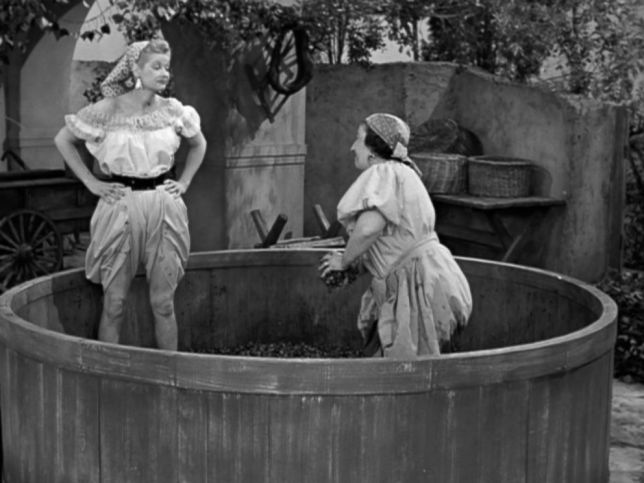
Lorelai is referring to grape-stomping or pieage, a traditional winemaking technique where the grapes are crushed by human feet – evidence of the practice can be found in pictures from ancient Egypt and ancient Rome. Since the Middle Ages this part of the winemaking process is nearly always done by machinery, and even in ancient times there were wine presses to do most of the work.

However, grape stomping has never been completely abandoned, and survives in small pockets. These days it is often a fun event at cultural festivals and wine festivals, and some vineyards will charge you for the pleasure of partaking in the activity.

The popular idea of grape stomping being part of the winemaking process can probably be traced back to I Love Lucy. In the 1956 episode Lucy’s Italian Movie, while on a trip to Rome a film producer suggests Lucy audition for his new movie called Bitter Grapes. Lucy thinks it must be about winemaking, so finds the only winery left in the area that still makes wine using grape-stomping so she can practice the technique in advance.

This probably explains why Lucy-loving Lorelai immediately connects the wine to Italian feet in particular.

River City

TAYLOR: When standards slip, families flee and in comes the seedy crowd. You got trouble, my friends.
LORELAI: Right here in River City!

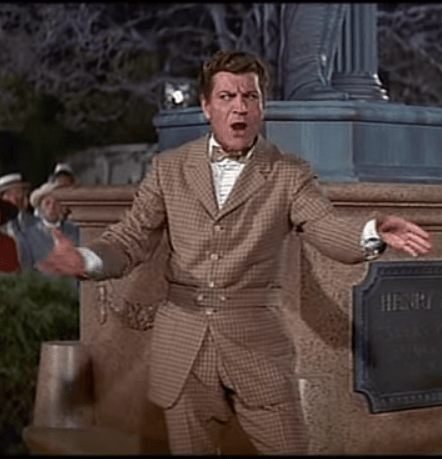
A reference to the 1962 musical film The Music Man, adapted from the hit 1957 Broadway musical of the same name, written by Meredith Willson. Directed by Morton DaCosta, and with Robert Preston in the title role, the film is set in River City, Iowa (based on Mason City) in 1912.

The film is about a conman named Harold Hill who tries to swindle a town by claiming he is raising funds to pay for a marching band. In the song Ya Got Trouble, Harold convinces the townspeople that the pool hall is seducing their boys into sin and vice so that they will sink money into the marching band to save them. The song says repeatedly, “Ya got trouble right here in River City!”.

The Music Man was the #5 film of 1962, and won an Academy Award for its score. Critically acclaimed, it is regarded as one of the best musical films of all time. It was filmed on the same Warner Brothers lot as Gilmore Girls.

Zinnias

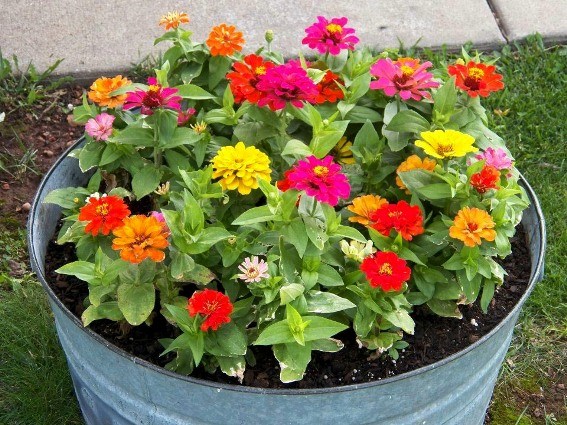
Taylor bemoans the fact that Luke won’t beautify his diner, and suggests that some pots of zinnias outside would freshen the place up.

Zinnias are colourful long-stemmed flowers which are members of the sunflower family. They are native to an area which stretches from the south-west of the United States to South America, with most species originating in Mexico. They are hardy, long-blooming, cheerful-looking flowers which attract bees and butterflies, making them a favourite with home gardeners.

Zinnias symbolise endurance, so Taylor wishing Stars Hollow to be decorated with zinnias could be a sign that he values the history of the town, and wishes for it to last for many more years.