Christiane Amanpour

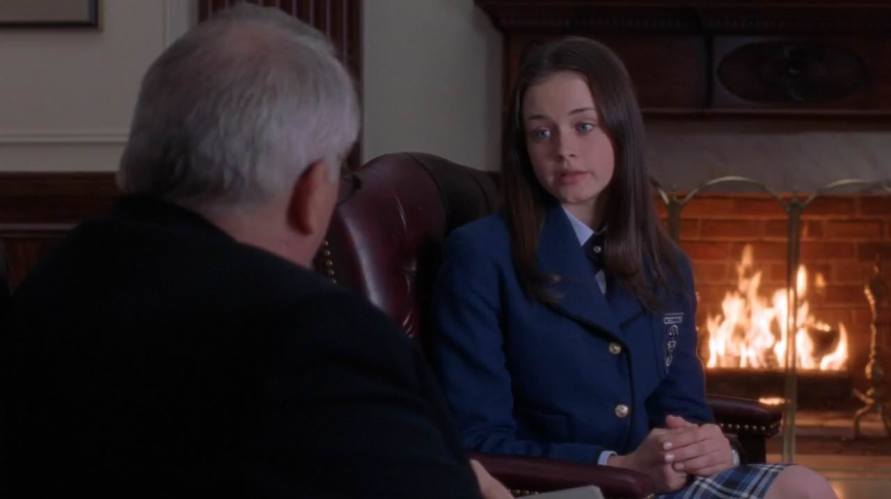
HEADMASTER: What are your aspirations?
RORY: I want to go to Harvard and study Journalism and Political Science.
HEADMASTER: On your way to being . . .?
RORY: Christiane Amanpour.

Christiane Amanpour (born 1958) is a multi award-winning British-Iranian journalist and television host. She began working for CNN in 1983 and quickly made a name for herself an a foreign correspondent, covering the Iran-Iraq War and the fall of European communism. During the 1990s, Amanpour reported from the Persian Gulf War and Bosnian War, and in 1992 became CNN’s chief foreign correspondent. She has reported on major crises around the world and had exclusive interviews with world leaders.

This is the first time we learn that Christiane Amanpour is Rory’s inspiration as a journalist – one who she would have grown up watching and admiring. It is Amanpour’s adventurous career travelling the world which seems to especially attract her.
Schindler’s List

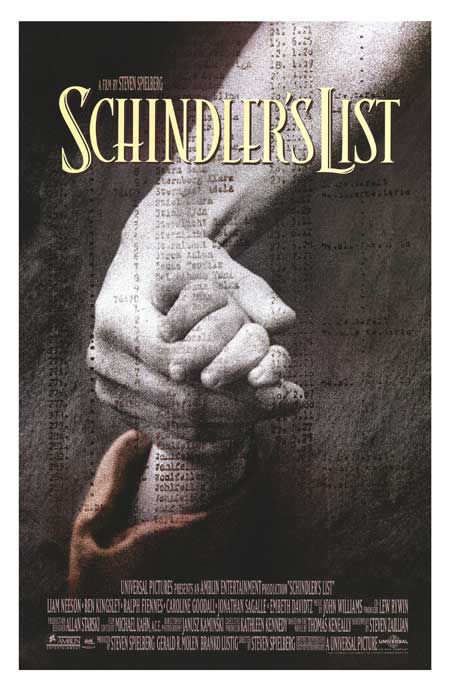
RORY: And I was in the German Club for a while, but there were only three of us, and then two left for the French Club after seeing Schindler’s List, so . . .

Schindler’s List is a 1993 drama film directed by Steven Spielberg. It is based on the Booker Prize-winning 1982 historical novel Schindler’s Ark, by Australian novelist Thomas Keneally. Based on real life events, it tells the story of Oskar Schindler, a German Nazi Party member who unexpectedly became a World War II hero after saving hundreds of Jews from Auschwitz.

Schindler’s List was the #4 film of 1993, was acclaimed by critics, and won seven Academy Awards, including Best Picture.

Honda

00hogea6

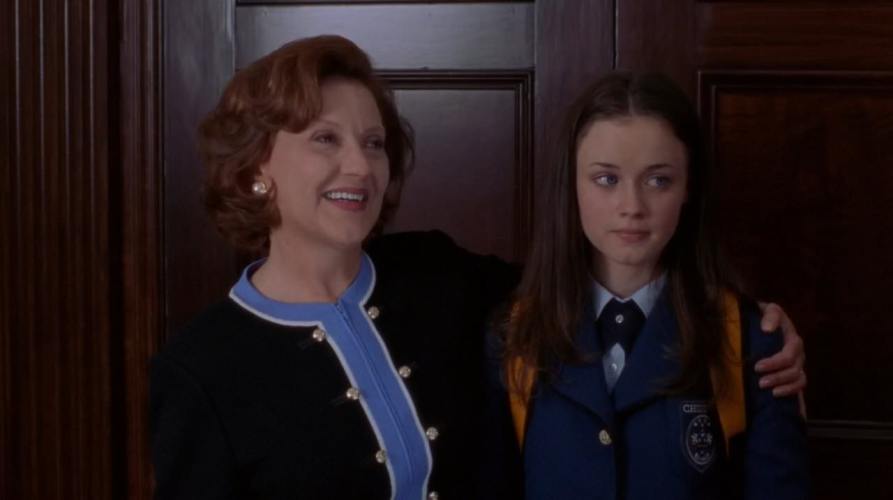
EMILY: This is a very special girl. You take good care of her.
HEADMASTER: We’ll do our best, Emily.
LORELAI: Oh, God. Rory is not gonna be a problem. She’s totally low maintenance, you know, like a Honda. You know, they’re just easy, just . . .  nice office.

Honda is a Japanese company which makes cars and other vehicles. Hondas are well known for being cheap to run and with low repair costs. Given how expensive Rory’s school is, Rory’s “running costs” are not really that low.

“You have to go in with me”

Rory insists that Lorelai go in with her to meet the headmaster – our first clear sign of Rory’s deep dependence on her mother, especially in situations where she has to meet new people. Lorelai doesn’t encourage it, and tries to send her off on her own with a wave and a smile, but when Rory begs her mother for support, Lorelai can’t say no to her. This pattern is set to continue into Rory’s adult years.

(It also makes us wonder – did Lorelai deliberately sabotage her wardrobe choices, hoping that she would look so embarrassing that Rory would not want her mother to accompany her? If so, her plan fails, and she looks like an idiot for nothing).

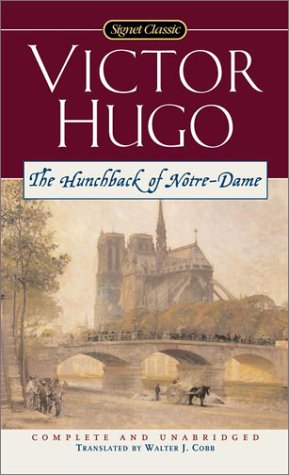
Hunchback

RORY: What are you looking at?
LORELAI: I’m just trying to see if there’s a hunchback up in that bell tower.

Lorelai is alluding to The Hunchback of Notre-Dame, a Gothic novel by French author Victor Hugo which was first published in 1831. Set in the Middle Ages, the protagonist of the novel is Quasimodo, a hunchback who is the bell-ringer in the cathedral of Notre-Dame in Paris. It has several times been adapted to film. The most recent for Lorelai and Rory in 2000 would be the 1996 animated Disney version.

It is ironic that it is Quasimodo’s job to mark the time of day by ringing out the bells in the cathedral to mark the time of day, when Lorelai’s clock did not go off.

“Off with their heads”

[Lorelai and Rory sit in the Jeep staring at the school]
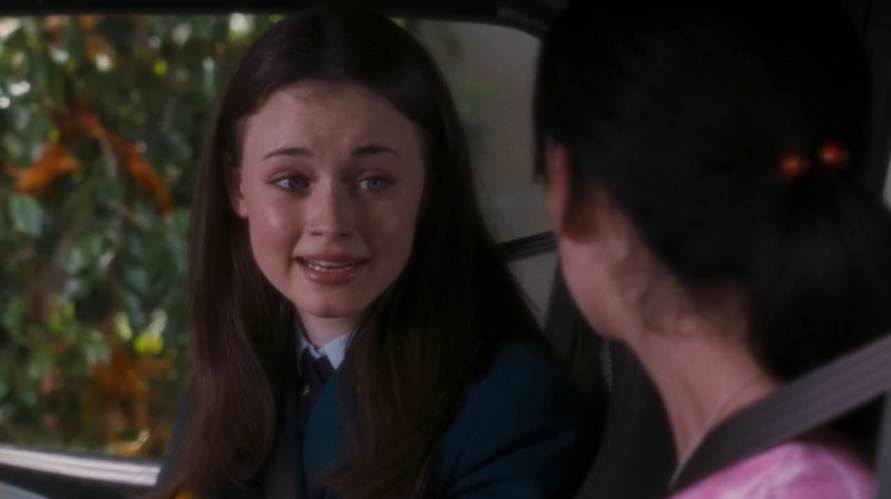
RORY: I remember it being smaller.
LORELAI: Yeah. And less . . .
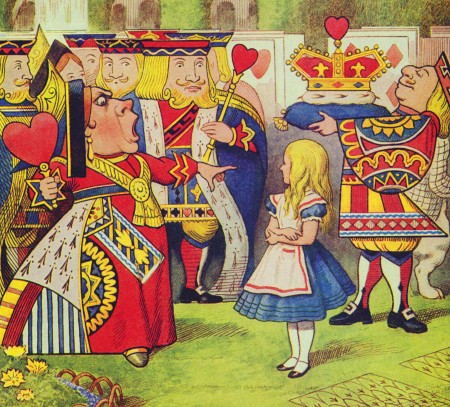
RORY: Off with their heads.

“Off with their heads” is a quote from The Queen of Hearts, a character in Alice’s Adventures in Wonderland, whose furious catchphrase demands immediate death sentences on the flimsiest pretexts.

This nonsensical fantasy novel was written by English author Lewis Carroll (the pen name of Charles Dodgson) and published in 1865. An immediate publishing sensation, it has gone on to become a classic enjoyed by both children and adults. It has been adapted into other media numerous times: as a child, Rory may have seen the 1951 Disney movie Alice in Wonderland, which was re-released on video in 1991 when she was seven – the same age Alice is in the book.

The book begins with a white rabbit looking at his watch and worrying that he is running late, just as Lorelai and Rory began the day behind schedule. The book plays with the concept of time and dates, much as Gilmore Girls does.