This is the book Kirk is trying to buy at the fundraiser, while haggling over the price with Gypsy.
Like Water for Chocolate (in Spanish, Como agua para chocolate) is a novel by Mexican author and screenwriter Laura Esquivel, published in 1989. It is about a young girl named Tita who is forbidden to be with her love, Pedro, and can only express her emotions through cooking. Each chapter of the book contains a recipe for a Mexican dish.
The novel is a magical realist romantic tragedy which has sold more than a million copies in Spain and Latin America, and was also successful in the US. Despite winning the 1994 American Booksellers Book of the Year Award, it received only lukewarm reviews.
The novel was adapted into a highly successful Mexican film in 1992; the screenplay was written by Esquivel. The phrase “like water for chocolate” is a Spanish phrase, referring to emotions that are hot and bubbling over, like water being boiled for making hot chocolate.
Kirk may have enjoyed the film so decided to read the book as well. It’s yet another reference to forbidden love (and food!) in the Gilmore Girls series.
Rory buys several books at the fundraiser, but only a couple of the titles are visible. Gypsy the mechanic is volunteering her time to work at the fundraiser, and she points Rory to the astronomy section, as if Rory has an interest in this area, and Gypsy somehow knows about it. Both quite surprising things to learn! The Buy a Book Fundraiser is held outside the library, and may be raising funds for new books.
Inherit the Wind
A 1955 play by Jerome Lawrence and Robert E. Lee, fictionalising the events of the Scopes “Monkey” Trial. This was a legal trial in July 1925 where schoolteacher John Scopes was taken to court by the state of Tennessee for teaching human evolution. There was intense media scrutiny of the case, with publicity given to the high-profile lawyers who had taken the case. The prosecution had former Secretary of State, William Jennings Bryan, while Clarence Darrow defended Scopes – the same lawyer who had defended child murders Leopold and Loeb, previously discussed. Scopes was fined $100, but the case was overturned on a technicality. The case was seen as both a theological contest, and a test as to whether teachers could teach modern science in schools.
The play gives everyone involved in the Scopes Trial different names, and substantially alters numerous events. It is not meant to be a historical account, and is a means to discuss the McCarthy trials of the 1950s, where left-wing individuals were persecuted as Communist sympathisers, under a regime of political repression and a fear-mongering campaign.
Rory might be particularly interested in the play because of the focus it places on the media, with reporter E.K. Hornbeck covering the case for a fictional Baltimore newspaper. He is based on journalist and author H.L. Mencken, previously discussed as one of Rory’s heroes, who gained attention for his satirical reporting on the Scopes Trial for the Baltimore Morning Herald.
Inherit the Wind premiered in Dallas in 1955 to rave reviews, and opened on Broadway a few months later with Paul Muni, Ed Begley, and Tony Randall in the cast. It’s been revived on Broadway in 1996 and in 2007, as well as in Philadelphia, London, Italy, and India.
It was adapted into film in 1960, directed by Stanley Kramer, and with Spencer Tracey starring as the defence lawyer, Dick York as the schoolteacher, and Gene Kelly as the Baltimore journalist. It received excellent reviews and won awards at the Berlin Film Festival. It’s also been made for television in 1966, 1988, and in 1999 (starring George C. Scott, Jack Lemmon, and Beau Bridges). It seems likely that Rory watched the most recent version on television.
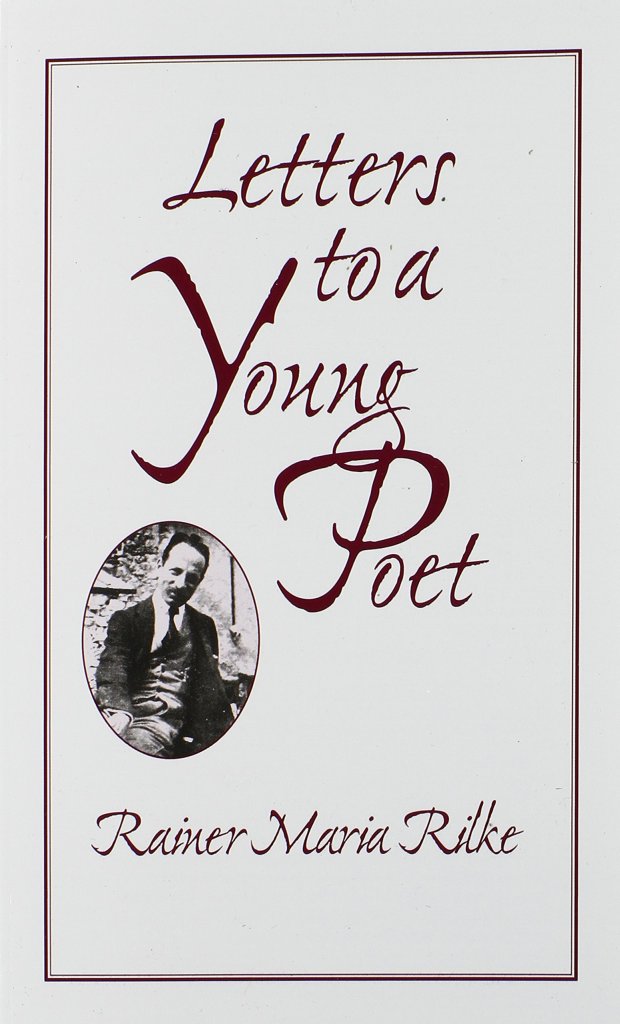
Letters to a Young Poet
A 1929 collection of ten letters written by the Bohemian-Austrian poet Rainer Maria Rilke, to a young officer cadet named Franz Xaver Kappus at the Theresian Military Academy in Wiener Neustadt, Austria between 1902 and 1908.
Kappus had written to Rilke, seeking advice on the quality of his poetry, to help him choose between a literary career, or one as an officer in the Austro-Hungarian Army. Kappus had been reading Rilke’s poetry when he discovered that Rilke had earlier studied at the academy’s lower school in St. Pölten, and decided to write to him for advice.
Rilke gave Kappus very little criticism or suggestions on improving his writing, and said that nobody could advise him or make life decisions for him. Over the course of ten letters, he instead provided essays on how a poet should feel and seek truth in experiencing the world around him. They offer insights into Rilke’s poetic ideas and themes, and his work processes.
Kappus did meet Rilke at least once, and despite his concerns about pursuing a military career, he continued his studies and served for 15 years as an army officer. During the course of his life, he worked as a journalist and reporter, and wrote poems, stories, novels, and screenplays. However, he never achieved lasting fame.
This is a book which features a future journalist – but one who yearns to become a poet. Is it a sign that Rory secretly wishes she could become a creative writer instead? Is she hoping that being successful in journalism will help her become a published author (it’s definitely a help in getting novels published, or at least considered). Is it even a hint that she will become a writer in the future, as she does in A Year in the Life, but is not destined to become famous from her writing? (Most published writers, even quite successful ones, don’t get famous, after all).
And is this correspondence between a poet and a student at a military academy meant to suggest that Rory is still thinking of Tristan, who went away to military school? Are she and Tristan actually writing to each other, or is the show leaving the door open for Tristan to possibly return in a future season, since they didn’t know how long One Tree Hill was going to last?
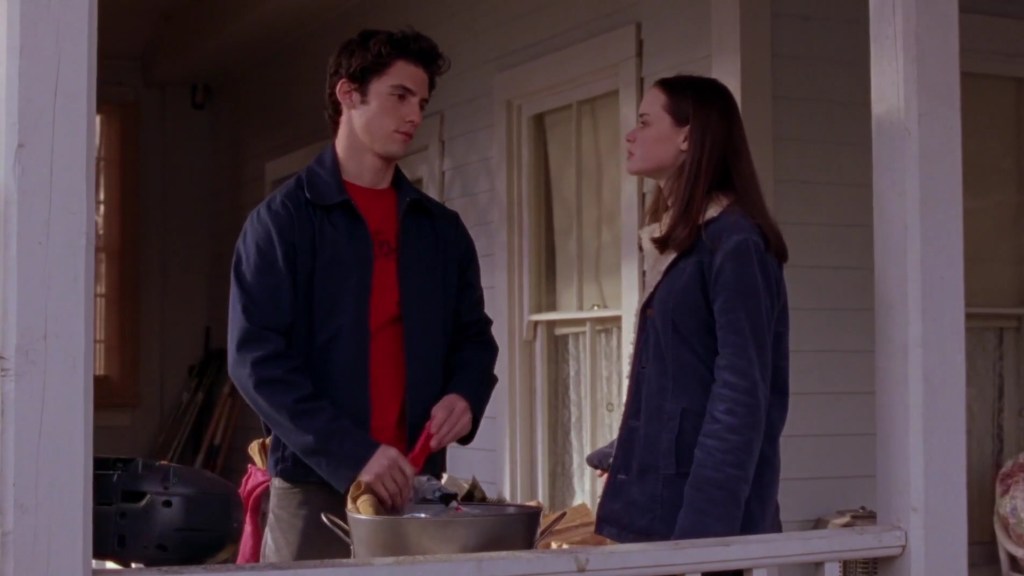
JESS: What makes you think I care about you? RORY: I don’t mean care care, like care. I mean if you like me at all . . . not like like. I just meant that if . . . if you think of me remotely as the sort of person that you could occasionally stand to talk to then you will try to get along with my mom, that’s all.
A very pertinent question from Jess. Rory acts as if they are already half-way to being in a relationship by telling Jess he has to be nicer and more polite to her mother. But as Jess notes, neither of them has said anything about having feelings for the other, even platonic feelings.
A flustered Rory quickly backpedals, but she has given Jess the opportunity to let Rory know how he feels. By agreeing to be nicer to Lorelai, he is tacitly saying he does care about Rory, at least as a friend. And by asking, Rory has let him know that she wants him to care for her.
LORELAI: Well, you know, there’s some really cool places over on Peach. Or on Plum. Hm, Orange. Basically, any of your fruit named streets are pretty nice.
This seems slightly naughty of Lorelai, since Dean lives on Peach Street. I’m sure Jess wouldn’t want Dean as a neighbour! It’s as if she’s telling Jess she’d prefer Rory to date someone who lives on Peach Street.
This might suggest that the streets named after fruit trees are in a particularly nice part of Stars Hollow.
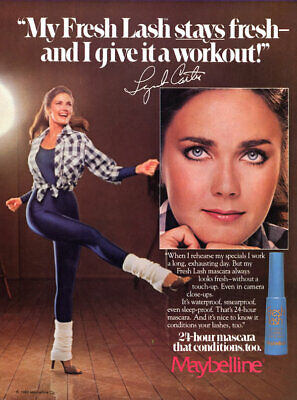
LORELAI: Sorry, it’s just. . .so excited about the ducks that, uh . . . do you want something to drink? You have good timing ‘cause we shopped yesterday, and in addition to a case of Maybelline Fresh Lash Mascara, I also bought some of that new, uh, freaky Coke with the lemon in it. It’s very addictive.
Coca-Cola with Lemon is a brand owned by the Coca-Cola company, introduced in 2001.
LORELAI: Sorry, it’s just . . . so excited about the ducks that, uh . . . do you want something to drink? You have good timing ‘cause we shopped yesterday, and in addition to a case of Maybelline Fresh Lash Mascara, I also bought some of that new, uh, freaky Coke with the lemon in it.
Maybelline is a multinational cosmetics company, founded in Chicago in 1914, and now based in New York. Since 1996, it has been a subsidiary of L’Oreal, previously discussed.
Maybelline’s Fresh Lash Mascara has now been replaced with Great Lash Mascara. In 1981, their Fresh Lash Mascara was advertised on television by Lynda Carter, who played superhero Wonder Woman, previously discussed as one of Lorelai’s favourites. I can imagine young Lorelai buying the mascara because of the face of the brand and remaining loyal to it.
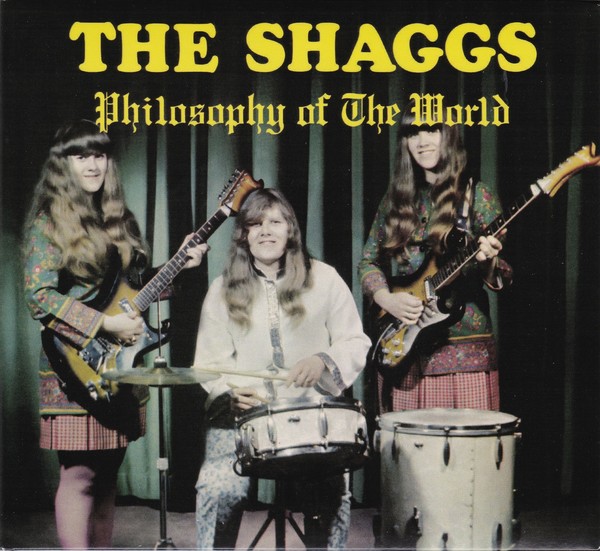
JESS: Here. [tosses her a CD] RORY: The Shaggs? JESS: Trust me.
The Shaggs were an all-female rock and outsider music band formed in New Hampshire in 1968, composed of sisters Dot, Betty, and Helen Wiggin; Rachel Wiggin joined later. Their father, Austin Wiggin, insisted they form a band based on a prediction his mother had made during a palm reading that his daughters would form a musical group.
The Shaggs only released one studio album, in 1969, called Philosophy of the World. It gained very little attention, but the band continued to play locally, sometimes accompanied by their brother, Austin Jr, and their nephew Robert. The Shaggs disbanded in 1975, after the death of their father.
The Shaggs are notable for their perceived ineptitude at playing conventional rock music. Rolling Stone once described them as sounding like “lobotomised Trapp Family singers”. They were rediscovered in the 1970s, thanks to the Dr Demento radio show, which specialised in novelty songs. Frank Zappa appeared on the show, listened to the album, and professed a love for the band. The Shaggs themselves were bewildered by their popularity and cult status, which has never disappeared.
Jess gives (or loans) Rory a CD version of Philosophy of the World. Such CDs are now worth hundreds of dollars. (The original vinyl album, of which only 1000 copies were made, is now a collector’s item and extremely valuable). Interest in The Shaggs had recently been renewed by the 2001 release of Better Than The Beatles – A Tribute to The Shaggs, a collection of their songs covered by indie rock and punk musical artists such as Ida and Deerhoof.
When Jess arrives to clean the gutters, he is wearing a tee-shirt advertising this underground punk magazine on it. Punk Planet was a bi-monthly punk zine founded in Chicago in 1994 that examined punk subculture and a wide variety of progressive issues, such as feminism, media criticism, and labour issues. It tried to review all punk records it was sent, so that its review section was very long.
The final issue of Punk Planet was sent out in 2007, due to rising costs, and the website closed down two years later. However, its entire print run is still available to read online as an internet archive.
RORY: That is the closest to a farm that I ever wanna get. LORELAI: Amen, sister friend.
As far as I’m aware, “Amen, sister friend” is 1990s American slang to give encouragement or validation to a female friend, with “sister friend” implying a bond as close as sisters. Please correct me if I’m wrong!
RORY: What are we waiting for? LORELAI: Patience, grasshopper.
Lorelai references the action-adventure Western martial arts television show Kung Fu, broadcast from 1972 to 1975. It follows the adventures of Shaolin monk named Kwai Chang Caine, played by David Carradine, as he travels through the American Old West, searching for his half-brother, Danny. Caine had an American father and a Chinese mother.
The show would often flashback to Caine’s training, where he was called “Grasshopper” by his master, a man named Po, in recall of this early scene:
Master Po: Close your eyes. What do you hear? Caine: I hear the water, I hear the birds. Po: Do you hear your own heartbeat? Caine: No. Po: Do you hear the grasshopper which is at your feet? Caine: Old man, how is it that you hear these things? Po: Young man, how is it that you do not?
This is where the name Grasshopper came from, and further flashbacks would see master Po giving the young Caine advice, such as “Patience, young Grasshopper”. Many of the aphorisms in the show are taken from the Tao Te Ching.
Kung Fu was very influential, and at the time highly acclaimed by critics, winning several major awards. These days it tends to be discussed for its representation of Asian character, and having a protagonist playing by an actor with no Chinese heritage. It has been adapted into film three times, and in 2021 was rebooted as a crime show television series with a female lead, played by Olivia Liang.
Some people incorrectly think “Patience, grasshopper” is a quote from the 1984 martial arts film, The Karate Kid.





 The Annotated Gilmore Girls