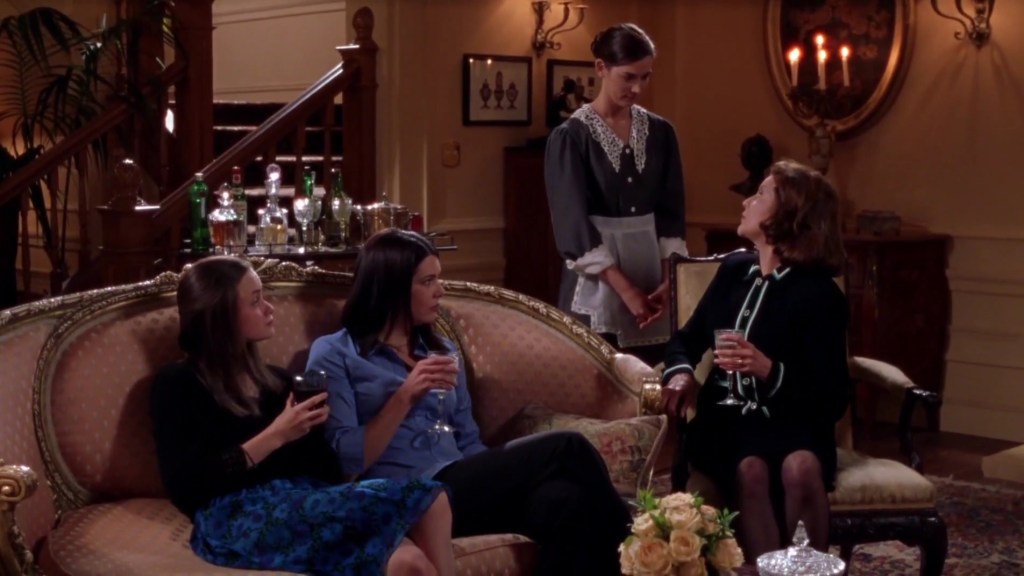
EMILY: Bless you, Inger. Please go tell Mr. Gilmore. He’s in his den.
Emily’s maid for this week is played by Inger Jackson, who was Alexis Bledel’s stand-in on Gilmore Girls. (A stand-in a person who takes the place of a principal actor for rehearsals, camera blocking, or lighting setups). Inger has a few other minor roles in later seasons.
LORELAI: I’m telling you, it’s knocking ‘Whatchoo talkin’ ’bout, Willis?’ right out of first place.
“Whatchoo talkin’ ’bout, Willis?”, is a catchphrase from the sitcom Diff’rent Strokes (1978-1985). The series stars Gary Coleman and Todd Bridges as Arnold and Willis Jackson, two African-American boys from Harlem, taken in by a rich white businessman and widower Phillip Drummond (played by Conrad Bain) – the former employer of their deceased mother – and his daughter Kimberly (played by Dana Plato). The show was known for its “very special episodes”, which would dramatically tackle serious issues such as drugs, alcoholism, eating disorders, and child abuse.
Arnold would say this line with great scepticism or confusion, his face screwed up in disbelief, whenever his older brother gave him information that came as a shock or didn’t sound right to him.
LORELAI: Huh. You know what I just realized? Oy is the funniest word in the entire world … I mean, think about it. You never hear the word oy and not smile. Impossible. Funny, funny word.
Oy, a Yiddish interjection expressing surprise and dismay. Often combined with vey, an interjection expressing distress or grief, to make oy vey (“oh no, woe is me”, more or less).
With the, a characteristic in Ashkenazi Jewish mode of speech in the US, meaning “in regard to, about, in the manner of”, generally in a disapproving tone to suggest that it’s too much or too often eg “You’re always with the jokes”, “Enough with the new house talk”.
Poodle, a curly-coated game dog which probably originated in Germany, first bred to retrieve wildfowl from water after hunting. It’s German name Pudel means “splash”, and it’s related to the English word puddle.
Already, a characteristic in Ashkenazi Jewish mode of speech in the US. At the end of a sentence, it expresses a frustrated impatience with a situation which should have been dealt with long ago eg “Will you two stop fighting and get a divorce already?”.
So Lorelai’s catchphrase means (roughly translated), “Oh no, there is a surfeit of poodles – this situation needs to be dealt with immediately, as it should have been rectified a long time ago!”.
Fans are divided as to whether Lorelai’s off-the-cuff catchphrase is actually funny. It’s certainly very Jewish.
SOOKIE: Hey, my cousin Carl canceled so I have two empty seats.
We learn surprisingly little about Sookie’s family, except that her mother passed away some time before the opening of the show in 2000. We end up knowing far about Luke and Jackson’s families, for example. However, here we discover that she has a cousin named Carl. Because Carl can’t come to the wedding, Sookie has two extra seats, and she asks Lorelai to invite Emily and Richard, as a thank you for Emily’s overbearing and impractical help. They will, of course, be insulted by this last minute invitation.
MICHEL: Well, I must say this has been especially challenging for me. I mean, when you are talking about a wedding with up to forty people all living within a five mile radius, how can one person be expected to keep track of all of that?
According to Michel, forty people are coming to Sookie and Jackson’s wedding, all of them living within five miles from Stars Hollow. That doesn’t sound right, because Jackson is shown to have a large family, and whenever they come to Stars Hollow, they need accommodation – something which wouldn’t be necessary if they’d only driven five miles. For that matter, why did Rune move to Stars Hollow if his home town was five miles away?
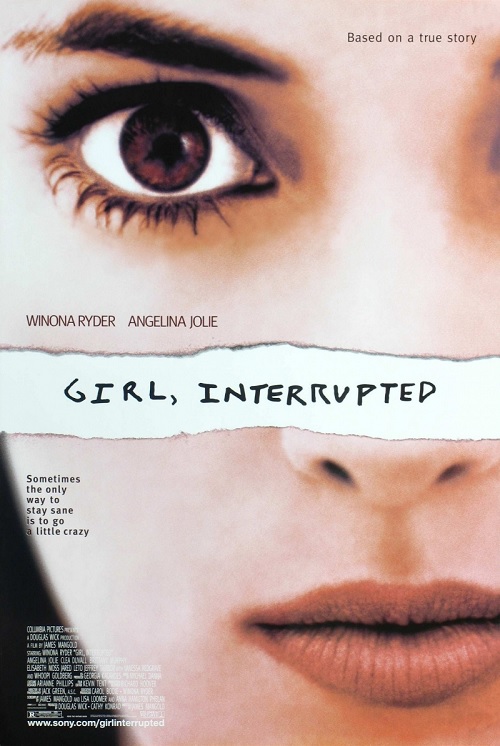
RORY: I’ll tell you what, Sookie. How about Lane and I come up with a few more suggestions for you? Still melodic, but not quite as Girl, Interrupted.
Girl, Interrupted, a 1999 psychological drama film directed by James Mangold, and based on the 1993 memoir of the same name by Susanna Kaysen. The memoir’s title comes from the Vermeer painting, Girl, Interrupted at Her Music. The film is set in New England in the 1960s, and follows a young woman, played by Winona Ryder, who spends 18 months in a psychiatric facility after a suicide attempt.
The film received only lukewarm reviews, with most of the praise for the performance of Angelina Jolie, who plays a sociopath. Jolie won the Academy Award for Best Supporting Actress. The author, Susanna Kaysen, didn’t like the film, accusing James Mangold of adding too many invented, melodramatic scenes. Mangold rewrote the story as a parallel toThe Wizard of Oz.
It seems possible that Rory could have read the book, either before or after the film came out. Not only does she enjoy female memoir and autobiography, but Susanna Kaysen was admitted to the same private psychiatric hospital where Sylvia Plath and Anne Sexton were treated, as well as John Nash.
A 1968 song by The Beatles, written by Paul McCartney, and released as a non-album single. The ballad evolved from “Hey Jules”, a song McCartney wrote to comfort John Lennon’s young son Julian, after Lennon had left his wife for the Japanese artist Yoko Ono. The lyrics espouse a positive outlook on a sad situation, while also encouraging “Jude” to pursue his opportunities to find love. Hey Jude went to #1 all over the world, and had the highest sales for any single that year. It was inducted into the Grammy Hall of Fame in 2001, and is regarded as one of the greatest songs of all time. Paul McCartney continues to perform it in concert, and sang it at the opening ceremony of the 2012 Olympics in London.
Seasons in the Sun
An English adaptation of the 1961 song “Le Moribond” (the Dying Man), by Belgian singer-songwriter Jacques Brel. The lyrics were rewritten in 1963 by singer-poet Rod McKuen, who thought Brel’s version was “too macabre”. In the original, the man dies of a broken heart as he says farewell to his friends, and to his wife, who has been unfaithful to him. Rod McKuen changed it so that the dying man gives his last words to his loved ones, and passes away peacefully. The song became a hit for Canadian singer Terry Jacks in 1974, and went to #1 around the world.
Cat’s in the Cradle
A 1974 folk rock song by Harry Chapin, from the album Verities & Balderdash. Partly based on a poem written by Harry’s wife, poet-singer and activist Sandy Gaston, the lyrics describe the relationship between a man who is too busy working to spend time with his son. When his son grows up, he is too busy working to spend any time with his father. It was Chapin’s only song to reach #1 in the US, is the best known of his works, and was inducted into the Grammy Hall of Fame in 2011.
Don’t Cry Out Loud
A 1976 song written by Australian singer-songwriter Peter Allen, with lyrics by Carole Bayer Sager. The song is about having to keep emotional pain to yourself. Although Sager wrote the lyrics, they seem to be inspired by Allen’s experience, as he was told to keep his “best face forward” after his father’s suicide when he was 14. The woman in the song has the same nickname as Peter Allen’s sister, Baby. First recorded by R&B group The Moments, it was a hit for Melissa Manchester in 1978, reaching #10 in the US and #9 in Canada.
LORELAI: Anybody not hanging out with Annie Sullivan by the water pump.
Anne Sullivan (1866-1936), the visually impaired teacher and lifelong companion of deaf, blind and mute student Helen Keller (1880-1968). She was the only person able to get through to Keller and help her learn to communicate with the outside world, and a result, both women became inspirational figures.
At first Sullivan made little progress with her student, until a breakthrough occurred when Sullivan held Keller’s hand under the water pump and repeatedly spelled out W-A-T-E-R into her palm. With great effort, Keller hesitantly said, “Wah-wah”, her first spoken word. Keller then touched the earth, asking for its name as well, and by the end of the day she had learned thirty words. It was the beginning of her learning to read, write, and speak.
These events are depicted in the film The Miracle Worker, previously discussed [pictured].
This is the song that Sookie has chosen for her wedding, and is playing it for Lorelai, Rory, and Michel to hear.
“I Can’t Get Started” is a 1936 popular song, composed by Vernon Duke with lyrics by Ira Gershwin. It was introduced in the film Ziegfield Follies of 1936, performed by Bob Hope and Eve Arden. The 1937 version by jazz trumpeter Bunny Berigan went to #10 in the charts and was inducted into the Grammy Hall of Fame in 1975.
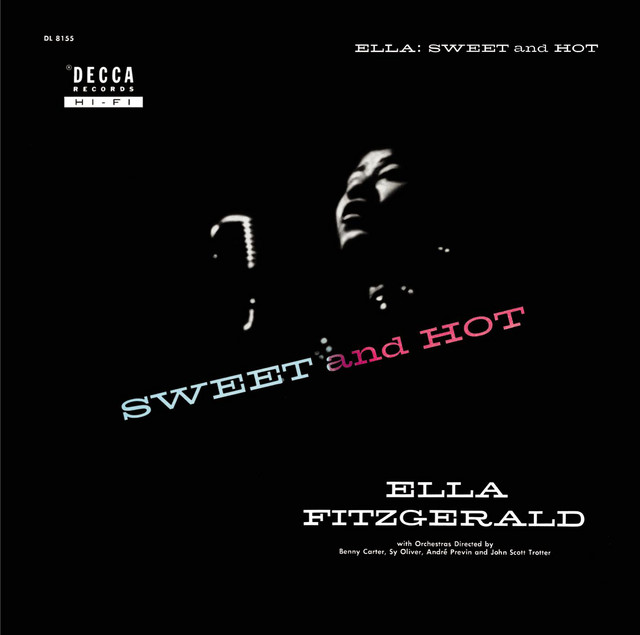
Sookie is playing Ella Fitzgerald’s version, which was included on her 1953 album, Sweet and Hot. It’s also on her 1973 live album, Newport Jazz Festival: Live at Carnegie Hall. This album also includes her song, “A-Tisket, A-Tasket”, which was previously used as an episode title on Gilmore Girls.
Lorelai protests that the lyrics are far too depressing for a wedding song, being about a relationship that will never get off the ground:
I’ve flown around the world in a plane I’ve settled revolutions in Spain The North Pole I have charted, but I can’t get Started with you
Around the golf course I’m under par And all the movies want me to star I’ve got a house, a show place, but I get no Place with you
You’re so supreme, lyrics I write of you Scheme, just for a sight of you Dream, both day and night of you And what good does it do?
In 1929 I sold short In England I’m presented at court But you’ve got me downhearted, cause I can’t get Started with you
You’re so supreme, lyrics I write of you Scheme, just for a sight of you Dream, both day and night of you And what good does it do?
It’s been chosen as the title of the episode, so we know that the season will end with at least one romantic whump!
This episode is centred around Sookie and Jackson’s wedding day, and the first shot is the poster the couple are using for the celebration. It’s a huge blown up photo of Sookie and Jackson against a field of flowers (possibly a standard photography studio background?), with Sookie holding a wedding cake, and Jackson in a Hawaiian shirt holding a bunch of bananas. It’s typical sweet goofiness from this so-far adorable couple.
Note that the wedding date is prominently displayed as May 19 2002, changed from the earlier May 15. And May 19 really was a Sunday in 2002! This is the first time we’ve got a rock-solid date for anything that actually fits into a real world time frame.
If you keep an eye out, you will see other photos of Sookie and Jackson used on decorative throw pillows and what not in this episode – I imagine that Jackson’s cousin with the printing business was called in to do these, and he quite likely made the poster as well.





 The Annotated Gilmore Girls