Pattypan Squash

SOOKIE: Uh, squash.
JACKSON: What?
SOOKIE: I need some.
JACKSON: Squash.
SOOKIE: Pattypan.

Pattypan squash is a variety of summer squash that is small, round, and with scalloped edges, and comes in white, green, and yellow varieties. It is also known by such names as button squash, custard marrow, scallopini, or (in Australia) as just “squash”.

Alaska and Hawaii

LORELAI: Maybe you could do them [the Baked Alaskas] in the actual shape of Alaska.
SOOKIE: Interesting.
LORELAI: Or you could do little baked Alaskas and Hawaiis.
SOOKIE: Because they joined the union last.

It would be very difficult to make Baked Alaska in the shape of Alaska and Hawaii as Alaska has a multitude of islands around its coastline, and Hawaii is a group of islands. I’m sure it can be done, with some artistic licence. Lorelai is joking though.

Alaska was purchased by America from Russia in 1867, and became a US territory in 1912. It was admitted as the 49th state of the US in January 1959.

The Kingdom of Hawaii was overthrown during a coup d’état in 1893, and the country was annexed by the US in 1898, becoming one of its territories. In August 1959 Hawaii was admitted to the union, becoming the 50th state of the US.

Hawaii is the state where Lauren Graham (who plays Lorelai Gilmore) was born, which might be why it is mentioned here. It also happens to be where Keiko Agena (Lane Kim) was born.

Baked Alaska

LORELAI: Oh! Meringue.
SOOKIE: Yeah, I thought I’d do a variation on a baked Alaska for dessert tonight.

Baked Alaska is a classic American dessert consisting of ice cream in a dish or baking tray which is lined with cake, then the whole thing covered in meringue and quickly browned in the oven. The ice cream won’t melt as the meringue protects it, and the oven is very hot so that cooking time is brief.

According to legend President Thomas Jefferson, earlier mentioned, was the first person to serve Baked Alaska, in 1802. He served a dessert which was warm ice cream in a pastry shell, so not really the same, but shows that the idea of baking ice cream had been around a fair while – and a presidential connection is always a cool thing to have.

The famous Delmenico’s Restaurant in New York City claimed that their chef Charles Ranhofer named the dessert to mark America’s purchase of Alaska from Russia in 1867. The actual dish was probably created some time after the purchase, and Ranhofer called his dessert “Alaska, Florida” to indicate the extremes of heat and cold in the dessert. He published the recipe in 1893.

The first known published recipe for something resembling Baked Alaska is in Mary J.B. Lincoln’s Frozen Dainties in 1888. It seems to be much the same as the modern dish and she calls the dessert Ice-cream en Deguiser (“ice cream dressed up”). Lincoln was the first principal of the Boston Cooking School, so the dish has a distinguished pedigree.

“Necesito las hojas grandes”

Sookie says this phrase to one of her kitchen assistants; it means “I need the large sheets of paper” in Spanish. She is making meringue, and needs the sheets of baking paper to line the baking tray.

The Spanish-speaking kitchen staff at the inn isn’t very realistic, as the Hispanic population in rural Connecticut isn’t that big, and the majority of Hispanics in Connecticut are American-born and would already speak English. It’s more in keeping with California, where Gilmore Girls was made, which has a Hispanic population of around 39% with a high rate of immigration from Latin America.

Jefferson Suite

LORELAI: OK, put them [the Ruckers] in the Jefferson suite tonight, move them back to their previously booked room tomorrow, and offer them dinner on the house for the inconvenience.

The suite is named after American statesman Thomas Jefferson (1743-1826), one of the Founding Fathers of the United States, and principal author of The Declaration of Independence. He served as the third President of the United States (1801-1809), and was the second Vice-President under John Adams (1797-1801). It is an appropriate name for a suite at the Independence Inn.

Spittoon

LORELAI: Well where did the Ruckers come from?
MICHEL: Well judging from their clothing, a town where high rubber fishing boots and spittoons would be considered formal wear.

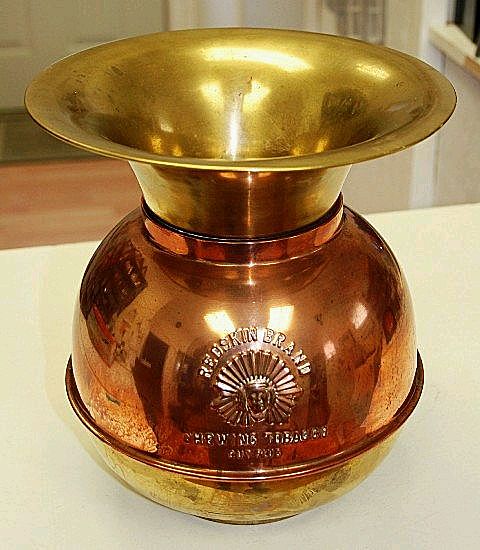
A spittoon is a receptacle made for spitting into, especially used by those using chewing tobacco. They were very common and displayed for public use in the US during the late 19th century, but use declined after the 1918 flu epidemic as they were considered unsanitary (before this, spittoons were actually considered hygienic, as previously people would spit on the ground or the floor). Chewing tobacco also went out of fashion, rendering spittoons less useful.

Spittoons were available in public buildings in the Southern states of the US into the 1970s. The United Sates Senate still has traditional spittoons in their public rooms, but these are just used as rubbish bins. Spittoons are still made, and used for smokeless tobacco, and for wine, coffee, and tea tastings. It is rare to see one in public though.

Taco Bell

(Michel tries to get Lorelai’s attention while she is studying)
MICHEL: Because learning the eating patterns of the average Taco Bell consumer is a vital lesson that –
LORELAI: Michel. What do you want?

Taco Bell is a chain of fast food restaurants that sell Tex-Mex foods such as as tacos, burritos, and nachos, serving 2 billion customers each year at over 7000 restaurants. It was founded in 1962 by restaurateur Glenn Bell, and first franchised in 1964. Since 1978 it has been part of the fast-food arm of PepsiCo.

Third Time’s a Charm

RORY: You’ve met him [Todd] twice.
LANE: But the third time’s a charm.

Third times a charm is the American version of the old saying, Third time lucky. It means that if you have failed in your first two attempts, you will probably succeed on the next one.

The origins of the proverb may be ancient, as the sacred power of things in threes is older than the Trinity, and can be found in Celtic magic and even fairy tales; it is a common idea in many cultures around the world.

Grandaddy

LANE: Hey, Grandaddy, new album used – I love a bargain.

Grandaddy is an American indie rock band formed in 1992, consisting of Jason Lytle, Aaron Burtch, Jim Fairchild, Kevin Garcia, and Tim Dryden. Their debut album came out in 1997, and they released four albums before disbanding in 2006. They reformed in 2012, and have made several live appearances. They released their fifth album in March 2017; two months later Kevin Garcia died from a stroke. Since then, the band have cancelled all planned engagements.

Their “new” album in 2001 was their second, The Sophtware Slump, which came out in May 2000. It gained widespread critical acclaim, and is regarded as one of the best albums of the 2000s.

That Lane buys even recently released albums second-hand demonstrates one way that she is able to afford so many CDs. My guess is that Apple Venus No. 2 was also a second-hand purchase, which is why she calls it “new” even four months after its release date.

Claudine Longet

LORELAI: Who the hell is that anyways?
RORY: Claudine Longet.
LORELAI: The chick who shot the skier?
RORY: Uh, sure, why not.
LORELAI: Wow – Renaissance woman.

Claudine Longet (born 1942) is a French singer, dancer, and actress who was popular during the 1960s and ’70s. In 1976 she was arrested and charged with fatally shooting her boyfriend, the American Olympic skier Vladimir “Spider” Sabich in Aspen, Colorado. She claimed that the gun had discharged accidentally while Sabich was showing her how it worked.

Although the Aspen police gained evidence that Longet had cocaine in her system, and that her relationship with Sabich had become unhappy, they made procedural errors which meant that their evidence could not be used in court. Prosecutors noted that the autopsy report showed that Sabich had been bent over, facing away, and at least six feet (1.8 m) from Longet, which isn’t the usual position you take when showing someone how to handle a gun.

The jury convicted her of negligent homicide, and she was sentenced to pay a small fine and to spend thirty days in gaol in the manner of her own choosing. She chose to serve her sentence as weekend detention, and attracted public censure for going on holiday with her married defense attorney; they eventually married and still live in Aspen.

Longet was sued by the Sabich family, and the case was settled out of court. The conviction essentially ended Longet’s career, and she has lived out of the public eye ever since.